


Cutting out onion and garlic forever isn't the answer for most people with FODMAP sensitivity. These alliums are high in fructans, carbohydrates that can reach the colon and ferment, causing gas, bloating, pain, or bowel changes in people with IBS. Tolerance often depends on the portion, the form used, and the rest of the meal.
Removing visible onion from soup or sauce may not help when fructans have already moved into the broth. Garlic powder, onion powder, stocks, seasoning blends, and restaurant gravies can also add hidden alliums, while garlic-infused oil, scallion greens, chives, and leek greens can provide familiar flavor. Monash FODMAP testing also distinguishes between plant parts and preparations, so a bulb and its green tops should not be treated as the same food.
Once symptoms are steadier, careful retesting can identify a comfortable amount without unnecessary long-term restriction. Testing one form at a time and limiting other high-fructan foods makes each result easier to interpret.
Onion and Garlic FODMAP Key Takeaways
- Onion, garlic, and shallot bulbs contain fructans that may trigger IBS symptoms.
- Portion size and total fructan load can affect whether a meal causes symptoms.
- Onion and garlic fructans can remain in water-based soups, stocks, sauces, and gravies.
- Garlic-infused oil provides flavor because fructans do not dissolve into oil.
- Scallion greens, leek greens, chives, and garlic chives can replace allium bulbs.
- Check labels for onion powder, garlic powder, stocks, seasoning blends, and extracts.
- Retest one onion or garlic form at a time after symptoms settle.
Why Do Onions and Garlic Upset Your Stomach?
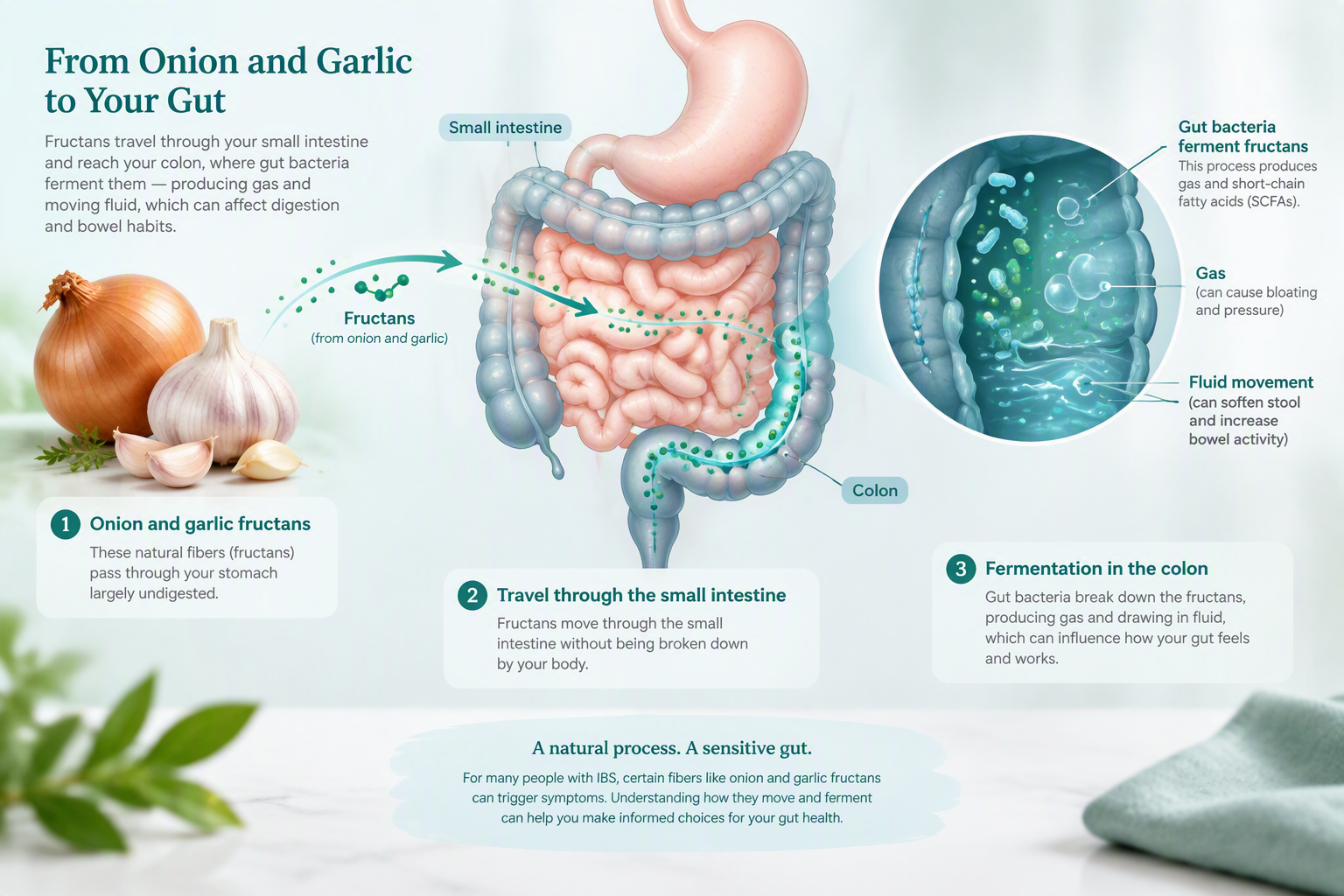
Onions, garlic, and shallots may upset your stomach because these nutritious Allium vegetables are high in fructans. Fructans are chains of fructose molecules, classified as oligosaccharides, or the "O" in fermentable oligosaccharides, disaccharides, monosaccharides, and polyols (FODMAPs). If you're asking why do onions upset my stomach, fructans are a likely clue, though they are not the only possible cause.
So, what are fructans in everyday terms? Fructans in onion and garlic are not fully broken down in the small intestine, so they can reach the colon where bacteria ferment them (source). Fermentation is normal, but the gas and fluid shifts it causes can become uncomfortable when they exceed your personal tolerance. Diet for gut health and IBS relief explains how food choices can fit into a broader approach to irritable bowel syndrome (IBS).
Onion and garlic fructans can cause symptoms through gas production, water movement into the bowel, and intestinal stretching:
- Gas and pressure: Fructans and gas may leave you feeling full, tight, or more flatulent than usual.
- Bloating or distension: Fructans and bloating often occur together when gas and extra fluid stretch the intestine, sometimes making your abdomen look larger.
- Cramps or pain: Bowel stretching can lead to pressure, cramping, or abdominal pain.
- Bowel changes: Fluid shifts and altered gut activity may contribute to diarrhea, constipation, or stools that switch between the two.
Fructans in onions and fructans in garlic can be especially bothersome with IBS or another functional gastrointestinal disorder. In these conditions, visceral sensitivity means ordinary digestive signals, such as gas or bowel stretching, may feel more painful or urgent. The symptoms are real, and this sensitivity does not mean your gut is damaged.
Symptoms after a meal containing alliums do not confirm fructan sensitivity. Portion size, other FODMAP ingredients, stress, bowel habits, food allergies, intolerances, and digestive conditions can overlap. Persistent, severe, new, or worrying symptoms need medical attention instead of long-term self-restriction.
Onions and IBS are a common pairing because onion FODMAP content is high in fructans. Garlic FODMAP content is higher still per gram, which is why garlic and onion low FODMAP swaps sit at the top of every IBS diet list.
How Do Fructans Trigger IBS Symptoms?
Because symptoms can overlap with other digestive causes, fructans in onion and garlic can contribute to IBS symptoms. If you have wondered what are fructans, they are not harmful on their own, and symptoms after eating them do not automatically signal a food allergy. Onion and garlic fructans can reach the large intestine in amounts that vary by serving and meal.
There, gut bacteria ferment them. This is why fructans and gas often occur together. Fermentable oligosaccharides, disaccharides, monosaccharides, and polyols, known as FODMAPs, can also draw water into the intestine. The National Institute of Diabetes and Digestive and Kidney Diseases notes that intestinal gas can cause bloating, visible distension, and discomfort (source).
With IBS, fructans and bloating may be more noticeable on some days than others. As a result, fructans and bloating may occur alongside wind, cramps, pain, diarrhea, constipation, or alternating bowel habits, even when fermentation is modest. FODMAP research supports this pattern, though a meal reaction can also reflect another ingredient or an existing IBS flare (source).
Garlic and IBS affect people differently. Fructans in garlic and onions and garlic FODMAP exposure may feel manageable in a small serving but cause symptoms when the portion increases or the full meal contains several fermentable foods.
A meal’s total fermentable load often matters more than a single ingredient:
- Portion size: A small amount of onion or garlic may fit your personal tolerance.
- Food stacking: Wheat, beans, asparagus, and onion or garlic can combine into a higher fructan load.
- Symptom baseline: A food tolerated on a settled day may feel harder to handle during a flare.
A low-FODMAP approach lowers overall exposure rather than requiring lifelong FODMAP-free eating. Systematic retesting can help identify portions that work for you without making meals unnecessarily restrictive.
Onion fructans and garlic fructans are FODMAP oligosaccharides, the O in FODMAP. IBS and FODMAPs go together because a sensitive gut feels the gas and water they draw in.
Which Onion and Garlic Parts Matter Most?
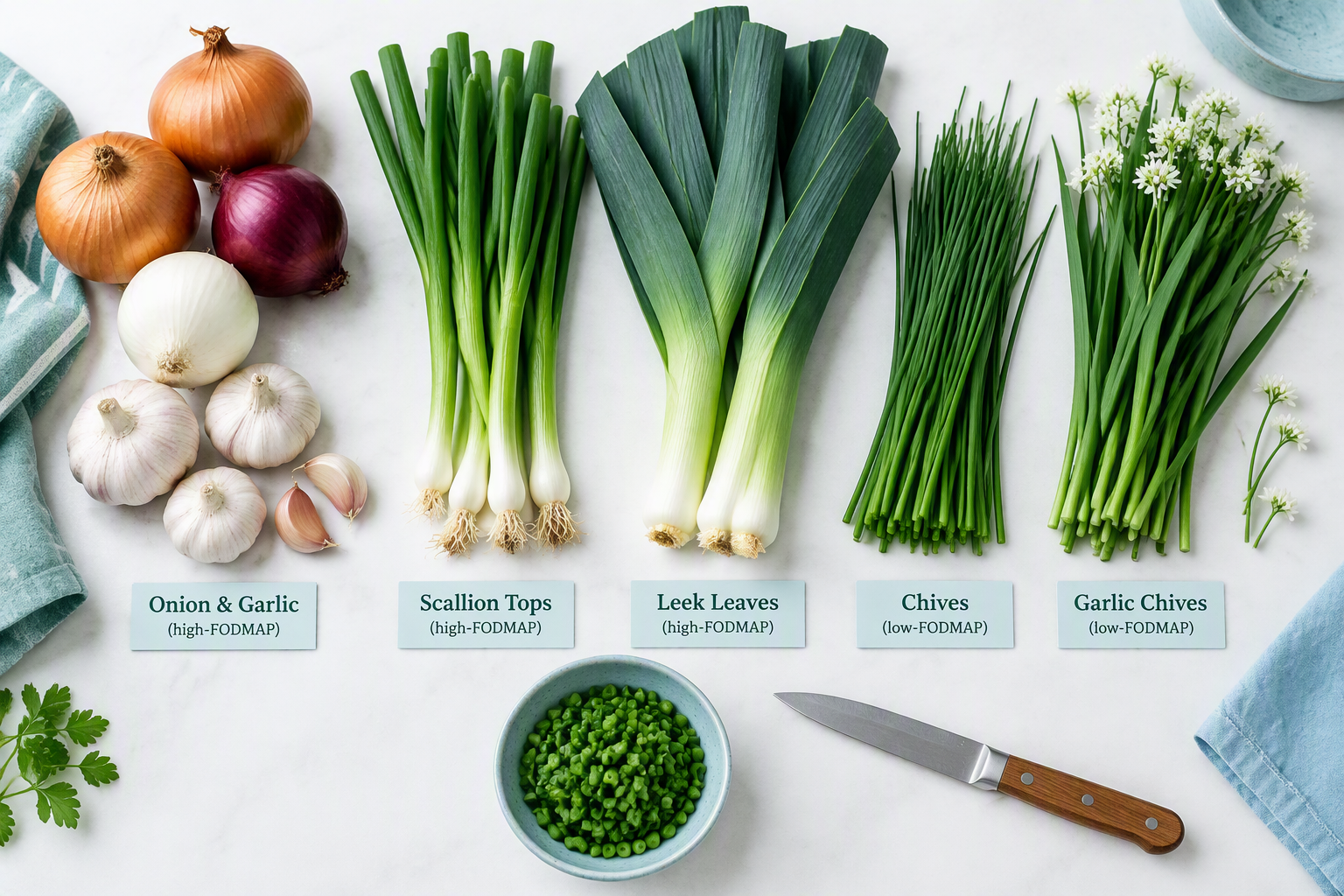
For choosing portions that fit your tolerance, onion, garlic, and shallot bulbs are the allium parts most likely to bring on symptoms during a low-FODMAP elimination phase. Their fructans make bulbs the main FODMAPs concern during elimination. If you’re wondering, are onions high FODMAP, the bulb matters more than its color.
Common onion bulbs deserve the same caution during elimination:
- Brown, white, and Spanish onions: These varieties can add fructans in onions to a meal.
- Red, yellow, and Vidalia onions: A different color does not automatically mean a lower onion FODMAP load.
Garlic can cause similar trouble because its fructans are concentrated in the clove. Is garlic high FODMAP? Fresh garlic, black garlic, garlic powder, and concentrated garlic products may all be difficult in small amounts. Garlic powder FODMAP concerns are easy to miss because it often appears in seasoning blends, sauces, soups, marinades, and packaged foods.
The greener parts of alliums can add familiar flavor while leaving the higher-FODMAP bulb behind:
- Scallion or spring onion: Scallion green tops are low FODMAP in typical culinary portions and add a mild onion flavor, while the white bulb is a different food choice.
- Leek: Green leek leaves can work well in soups, eggs, and sauces when you want a softer onion-like taste.
- Chives: Low FODMAP chives, garlic chives, and Asian chives add gentle allium flavor in usual cooking amounts.
Portion size still matters. Published Monash University limits can differ by onion variety and by the plant part tested, so check the current Monash FODMAP listing for the exact food and serving before restricting it or testing it again.
Replacing the bulb with a green portion while keeping the rest of the meal familiar makes symptom changes easier to spot. This approach also helps you avoid cutting out every allium for longer than necessary.
Red onion FODMAP and yellow onion FODMAP levels are both high in the bulb. Green onion FODMAP is low in the green tops. Shallots and FODMAPs run high, and low FODMAP leeks means the green leaves only (source).
Which Cooking Methods Carry Fructans?
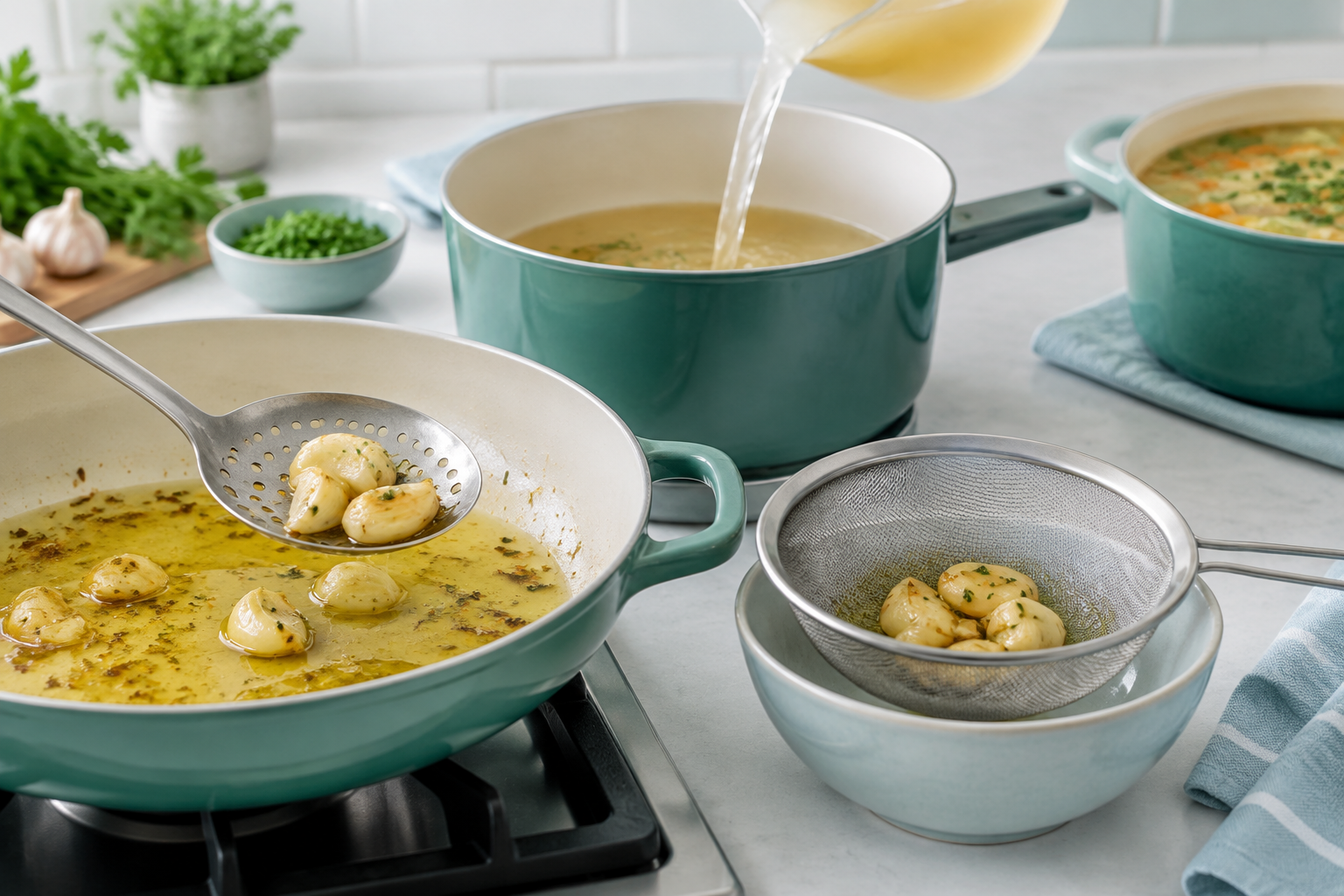
Even after leaving the higher-FODMAP bulb behind, fructans are water-soluble, so onion and garlic can leave them behind in soups, broths, stocks, sauces, and gravies even after the visible pieces are removed. That means a dish is not automatically low FODMAP just because no onion chunks or garlic cloves remain on your plate.
This matters especially in restaurant soups, jarred sauces, and gravies that start with an onion-and-garlic base, where it can be easy to miss.
A flavor-first cooking order helps limit that transfer:
- Briefly cook whole garlic cloves or large onion pieces in oil.
- Remove every solid piece before adding any water-based ingredient.
- Add the stock, tomatoes, cream, wine, or other liquid only after the onion and garlic are gone.
Garlic-infused oil and onion-infused oil keep familiar flavor because fructans do not dissolve into oil. A certified garlic infused oil low FODMAP product can be a practical choice when a packaged food or restaurant meal has unclear preparation. Garlic-infused oil low FODMAP options still need label checks, since added garlic powder, onion powder, or flavorings can change the final product.
Pickled onions need more caution. Fructans may move into the pickling liquid, so drained onions can be easier for some people to tolerate than fresh onion. Monash FODMAP testing shows serving guidance can range from 3 grams to 60 grams depending on the onion type and preparation, so drained or cooked onions belong in later tolerance testing rather than being assumed symptom-safe.
For meals away from home, snacks without hidden onion and garlic can give you a dependable option when ingredient details are unclear.
How Can You Spot Hidden Onion and Garlic?
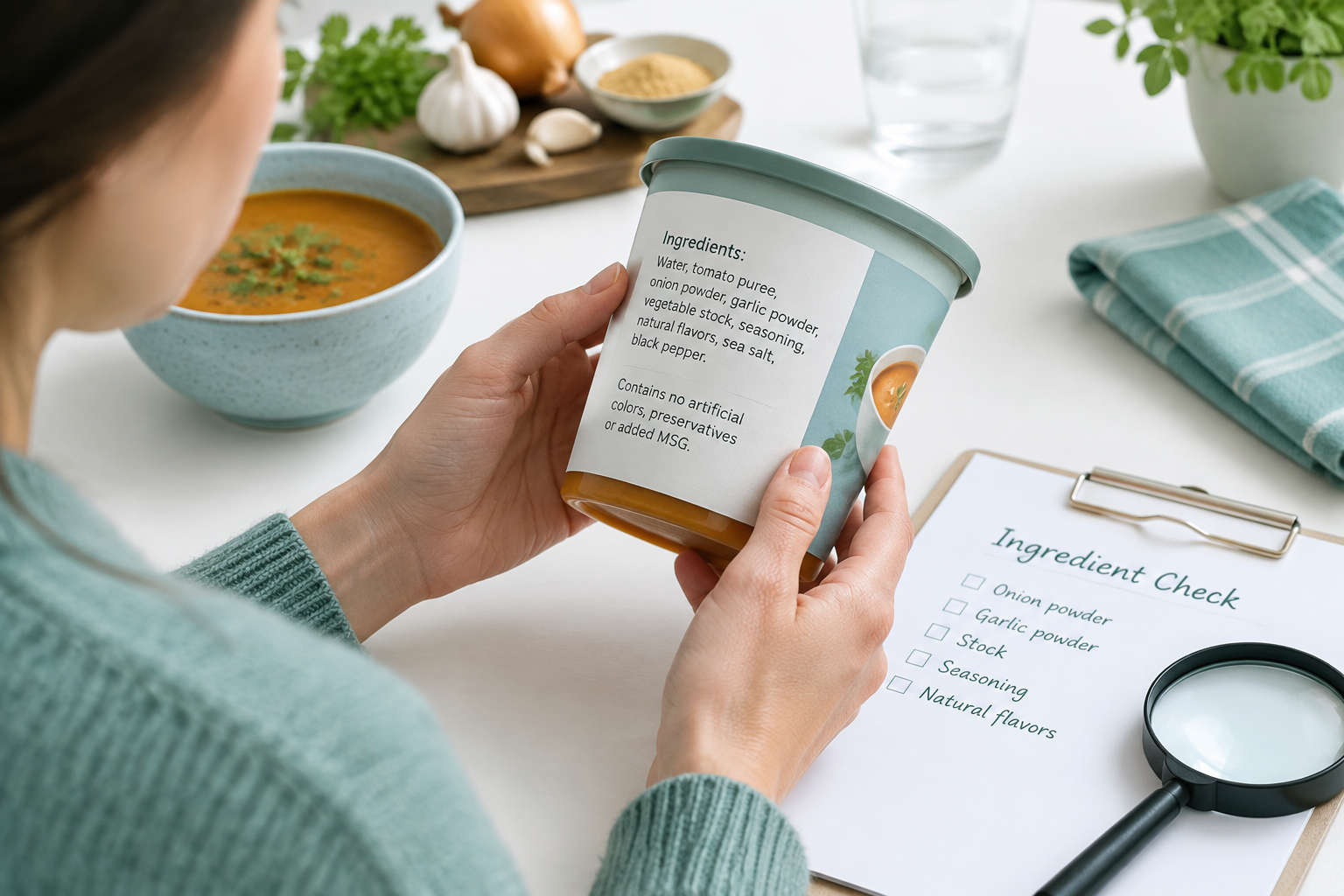
When ingredient details are unclear, front-of-pack claims such as "natural" or "made with real ingredients" do not reveal whether a food contains fructans. The ingredient list is where hidden onion and garlic powder usually shows up. During a strict low-FODMAP elimination phase, onion powder, garlic powder, and other concentrated allium seasonings are common ingredients to check on labels, since even small amounts may matter for sensitive readers (source). Knowing where they hide also matters later, when bringing FODMAPs back one at a time means testing a food whose label you have already read.
Use this scan order for packaged foods:
- Flag clear allium ingredients: Pause for onion, garlic, onion powder, garlic powder, dried onion or garlic, flakes, granules, onion salt, garlic salt, and extracts.
- Check the flavor base: Soup, stock, bouillon, gravy mixes, pasta-sauce mixes, dressings, marinades, spice rubs, and seasoning packets often contain onion powder hidden ingredients.
- Review every prepared component: Frozen meals, deli meats, snack seasonings, and meal kits can contain separate sauces, broths, or flavor blends that need their own ingredient check.
Broth needs special attention, particularly in soups with an onion- or garlic-based stock. Recipes for sauerkraut, kimchi, and other fermented foods and FODMAP load can also vary based on added alliums and portion size.
Terms such as natural flavors, spices, seasonings, vegetable extract, and unspecified flavor blends neither confirm nor rule out onion or garlic. While eliminating FODMAP triggers, products with fully listed ingredients or an explicit low-FODMAP designation create less uncertainty than an unclear label.
For a product you cannot identify, look for a fuller ingredient or allergen statement on the manufacturer's website. If it remains unclear, ask specifically about onion, garlic, powders, extracts, stocks, and flavorings. Set it aside until retesting if the company cannot confirm what it contains.
Label reading is temporary, not a lifelong demand for perfection. When retesting a questionable food, record the product, portion, other high-fructan foods eaten that day, and symptoms. Those details can help separate a possible allium reaction from dose stacking and support a diet built around your own tolerance.
Dried onion FODMAP and dried garlic FODMAP counts are concentrated, so onion powder in a seasoning blend hits harder than a slice of raw onion. Natural flavors FODMAP questions are unanswerable from the label, so treat unknown savory blends as suspect during elimination.
What Swaps Build Onion and Garlic Flavor?
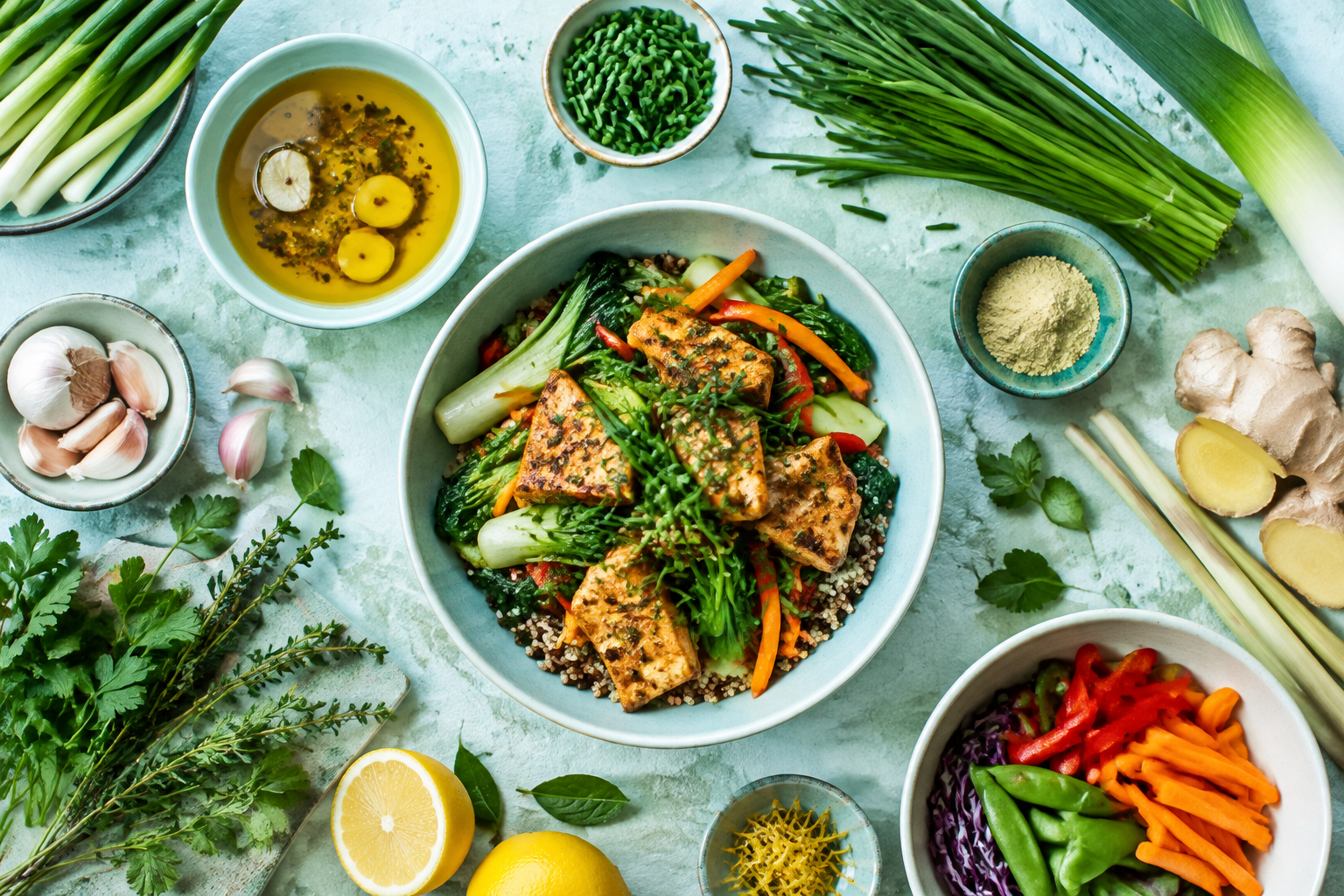
Garlic-infused oil and onion-infused oil create a familiar savory base for low-FODMAP cooking. Once every piece is removed, use the oil in roasted vegetables, sauces, marinades, soups, and stir-fries. A certified garlic infused oil low FODMAP option is convenient for busy weeknight cooking.
Low FODMAP onion alternatives and low FODMAP garlic alternatives can add flavor in different ways:
- Scallion or leek greens: Sauté the green tops first to create a cooked, onion-like aroma.
- Chives or garlic chives: Stir them in near the end for a mild, fresh note in eggs, potatoes, salads, dressings, and creamy sauces.
- Asafoetida, or hing: Asafoetida low FODMAP cooking starts with a tiny pinch briefly warmed in hot oil. It adds an allium-like aroma to curries, lentils, rice dishes, and savory sauces. The raw smell is strong, and some blends contain wheat flour, so check the label.
- Ginger, lemongrass, herbs, and citrus: Ginger and lemongrass bring warmth and brightness. Pepper, cumin, basil, oregano, lemon, lime, and citrus zest give the finished dish more character.
- Vegetable aromatics: Fennel, celery, bell pepper, carrot, and celeriac add cooked body when you need a low FODMAP onion substitute.
A layered combination usually works better than trying to duplicate onion or garlic exactly. Infused oil, vegetables, herbs, acid, and seasoning can make a dish taste complete without either bulb.
Homemade infused oil needs careful handling. Never store garlic or onion pieces in oil at room temperature. Make a small batch and strain out all solids. Use it immediately, or refrigerate it for no more than two to three days. Freeze portions for later cooking if you will not use the oil within that window.
After symptoms settle, bringing FODMAPs back one at a time can help you identify the onion or garlic amount and form that fit your tolerance.
Low-FODMAP onion substitutes and low-FODMAP garlic substitutes: garlic-infused oil, onion-infused oil, chives, spring onion green tops, leek greens, and asafoetida. Garlic substitutes for IBS and onion substitutes for IBS are the same short list, and low-FODMAP flavor swaps taste closer to the real thing than people expect.
How Can You Test Your Tolerance Again?

Retesting helps you find the onion or garlic form and amount that works for you, rather than avoiding both for life. If symptoms have settled and a clinician has not advised otherwise, the elimination phase of a low FODMAP diet typically lasts 2 to 6 weeks before systematic reintroduction and a broader, personalized diet. A gastrointestinal registered dietitian can help if eating has become restrictive or symptoms continue to disrupt daily life.
Keep each challenge simple enough to interpret:
- Test one form: Add a measured amount of cooked onion to an otherwise familiar meal, then test garlic on a later day. Cooked pieces, powders, and concentrated seasonings may cause different responses.
- Start small: Increase the portion only when the smaller serving feels comfortable. Symptoms after a larger amount do not mean every trace will bother you.
- Limit dose stacking: Avoid other high fructan foods and hidden alliums in stock, bouillon, sauces, marinades, seasoning blends, and restaurant meals on a test day.
- Reset between tests: Return to your usual lower-fructan meals between challenges so one trial does not blur into the next.
Dose stacking can make one ingredient seem responsible when the meal itself was too complicated. If symptoms follow a pasta sauce with onion, garlic, stock, and an unfamiliar side dish, simplify the meal and repeat the challenge later.
A notes page or printable log can reveal patterns that memory misses. Record:
- Food details: The onion or garlic form, portion, meal time, and other foods and drinks.
- Symptoms: Bloating, pain, gas, urgency, constipation or diarrhea, bowel changes, and when symptoms start and ease.
Stress, poor sleep, illness, or a different meal can muddy a single result, so look for repeatable patterns. The goal is a comfortable threshold, not a pass-or-fail food test. Keep tolerated forms and portions in regular meals, and save larger servings or concentrated ingredients for times when symptoms are manageable.
Seek clinical assessment instead of repeated challenges for severe or persistent symptoms, bleeding, unexplained weight loss, fever, vomiting, or new severe pain.
Retesting is the FODMAP challenge phase applied to one food: a small portion, then a larger one, over three days. Your FODMAP tolerance threshold is the largest portion that stays comfortable.
Onion and Garlic FODMAP Sensitivity FAQs
These FAQs cover common questions about onion and garlic FODMAP sensitivity, from IBS symptoms and ingredient labels to cooking methods and your personal tolerance.
1. Can Onion Allergy Mimic FODMAP Sensitivity?
Onion allergy can resemble onion and garlic intolerance, but the reactions are different. Allergy involves the immune system and may occur after even a small amount. Fructan sensitivity is a dose-dependent digestive response that is common with IBS and other functional GI disorders, often causing bloating, gas, pain, or bowel changes that shift with portion size and may improve with careful retesting. Immediate hives, itching, lip or throat swelling, wheezing, dizziness, or severe vomiting need prompt assessment. Trouble breathing or throat swelling requires emergency care.
2. Are Garlic Supplements High in FODMAPs?
Garlic supplements are not automatically low FODMAP. Fructans do not dissolve into oil, so garlic-infused oil can add flavor when all garlic pieces are removed, but powders, dried garlic, garlic salt, capsules, and concentrated extracts may still contain fructans that trigger IBS symptoms (source). Check the complete ingredient list and serving size rather than trusting terms like “natural flavor” or “garlic extract.” During FODMAP elimination or unsettled symptoms, a registered dietitian or clinician can help assess a specific product.
3. Can Fructans Cause Symptoms Without IBS?
Yes. Onion or garlic can cause bloating, gas, abdominal discomfort, or bowel changes even without an IBS diagnosis. With IBS or another functional gastrointestinal disorder, normal fermentation may feel more painful or disruptive, but a repeatable reaction does not diagnose IBS or prove fructans are the only cause.
New, severe, persistent, or unexplained symptoms need medical evaluation. A gastrointestinal registered dietitian can help you try a strict low-FODMAP elimination phase while maintaining nutritional balance and reintroducing foods appropriately.
4. Are Shallots and Leeks High in Fructans?
Shallots are high in fructans, like onion and garlic, so they usually do not fit the low-FODMAP phase. Fructans are oligosaccharides, the “O” in FODMAP, and may trigger IBS symptoms when your gut is sensitive to them.
With leeks, the plant part matters. The white bulb and base are higher in FODMAPs, while darker green leaves can add onion-like flavor in a tested serving. Check the latest Monash FODMAP App guidance before choosing your portion.
5. Are Onion-Infused and Garlic-Infused Oils Really Low FODMAP?
Yes. Fructans are water-soluble and not oil-soluble, so onion-infused oil low FODMAP and low-FODMAP garlic oil claims hold as long as the solids are strained out. Make it fresh or buy a commercial infused oil, since homemade oil with garlic left in carries a botulism risk.
6. Which Onion and Garlic Substitutes Work for IBS?
Chives low FODMAP status makes them the easiest swap, then spring onion green tops, leek greens, garlic-infused oil, and a pinch of asafoetida. Onion and garlic substitutes cover most recipes, and low-FODMAP onions do not exist as a bulb, only as the green parts.