


Finishing the low FODMAP elimination phase doesn't mean you need to avoid those foods indefinitely. Reintroducing FODMAPs methodically helps you find the groups and portion sizes your body handles comfortably, while returning more variety to meals. The goal is a personalized eating pattern, not a permanent list of off-limits foods.
A reaction after a mixed meal can't show whether fructans, lactose, GOS, or another group caused the problem. Keep your usual low-FODMAP meals steady, test one group with a plain challenge food, and track symptoms as portions increase. The Monash FODMAP App can help confirm suitable challenge foods and serving sizes, while a symptom diary makes patterns easier to interpret.
Results are most useful when they account for dose, timing, stress, sleep, bowel habits, and other changes that may affect IBS symptoms. A tolerated food can stay in rotation, while a reaction at a larger serving may simply identify a personal limit.
FODMAP Reintroduction Key Takeaways
- Begin challenges when symptoms are near your usual baseline.
- Test one FODMAP group at a time while keeping background meals low in FODMAPs.
- Choose a plain food that mainly represents the subgroup being tested.
- Increase challenge portions gradually and stop if symptoms become significant or uncomfortable.
- Record portions, symptoms, timing, and possible confounders in a consistent diary.
- Mild symptoms at larger portions may indicate a personal threshold rather than complete intolerance.
- Build long-term meals around tolerated foods and retest unclear triggers when symptoms are stable.
When Should You Start FODMAP Reintroduction?
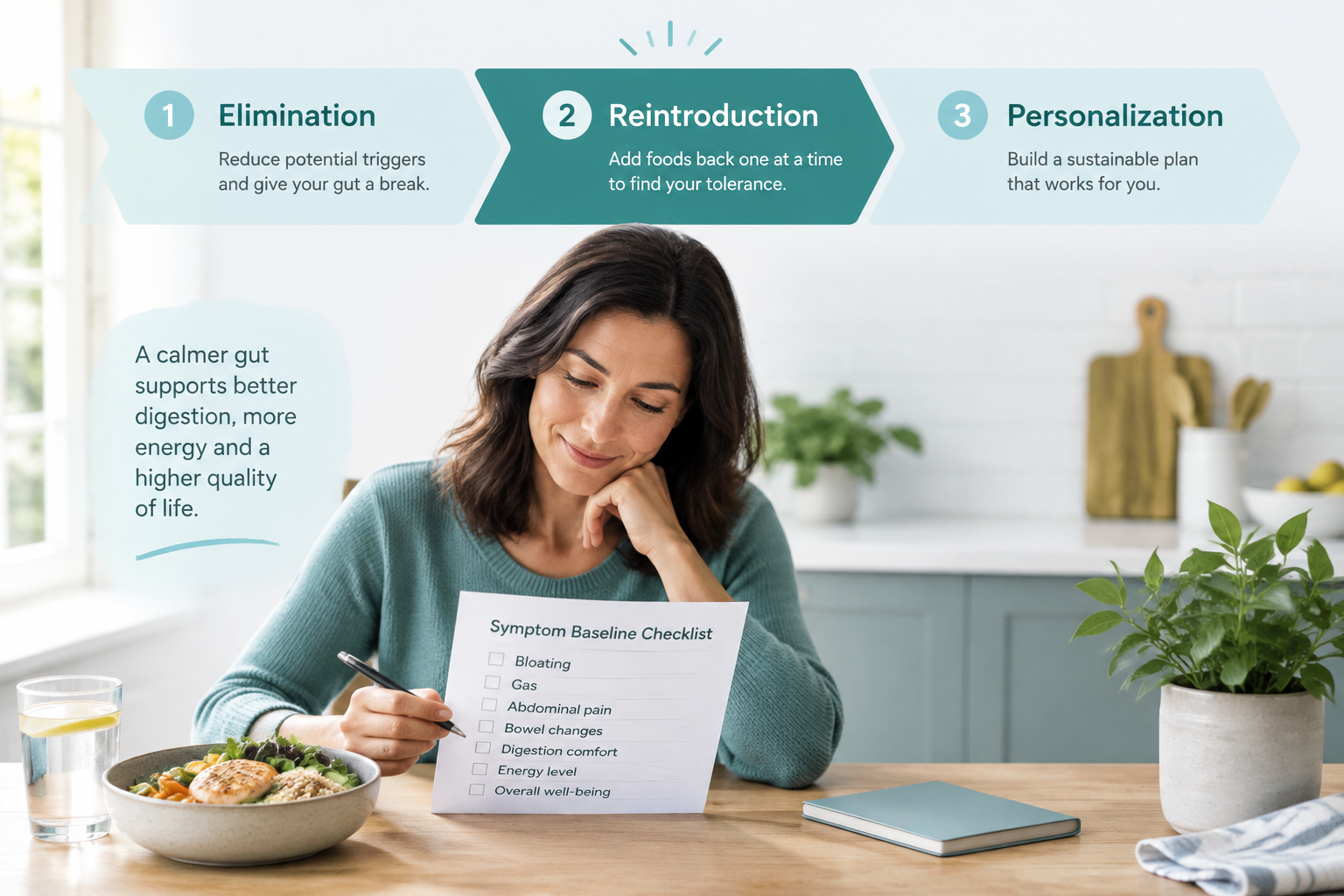
FODMAP reintroduction starts after the FODMAP elimination phase has given your digestive symptoms a chance to settle. It is the second step of the low FODMAP diet, between short-term restriction and personalized long-term eating. Across the low FODMAP diet phases, this step checks whether reducing fermentable oligosaccharides, disaccharides, monosaccharides, and polyols made a meaningful difference, rather than turning restriction into a permanent routine.
The low FODMAP diet reintroduction phase usually starts after 2 to 6 weeks on the elimination phase, once symptoms are well controlled or close to your usual baseline (source, source). A gut health diet after low FODMAP puts that transition in the context of a more flexible eating pattern.
A few mild digestive sensations do not have to disappear before you begin. What matters is a steady baseline that makes a reaction easier to spot. Postpone the FODMAP challenge phase if an active flare, illness, travel, major diet change, or unusual stress could muddy the results.
If symptoms remain unsettled after the initial restriction period, keep your usual low-FODMAP background meals briefly without cutting out additional foods. Even when meals stay the same, sleep changes, illness, stress, and disrupted routines can affect symptoms, so resume challenges when your baseline returns rather than extending strict elimination without a clear purpose.
Long-term restriction can narrow food choices, reduce fiber variety that supports the gut microbiome, and make family meals, travel, and social eating harder. Testing one FODMAP group at a time while keeping the rest of your diet generally low in FODMAPs helps identify tolerated foods, comfortable portions, and personal thresholds. That structure is the clearest way to learn how to reintroduce FODMAPs without changing several variables at once.
A gastrointestinal registered dietitian can help when symptoms never settle enough for testing, restriction feels stressful, or meals become nutritionally difficult to manage. New, severe, or concerning digestive symptoms need medical evaluation before challenges continue.
The FODMAP reintroduction phase is step 2 of the low-FODMAP diet, after the elimination phase and before the FODMAP personalization phase (source). A strict low-FODMAP diet is not meant to last, so the FODMAP reintroduction protocol starts as soon as symptoms are steady.
Which FODMAP Group Should You Challenge First?
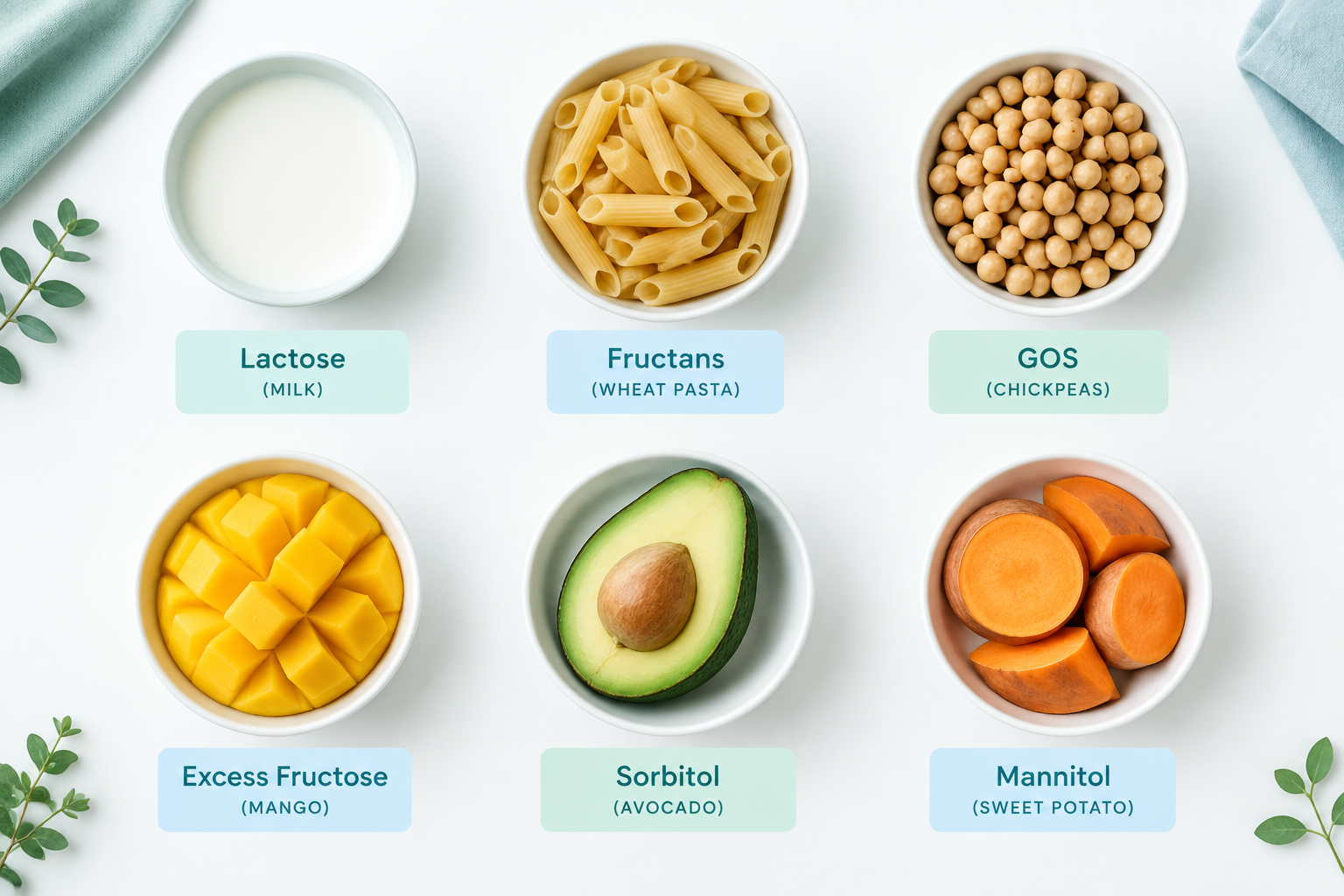
Once symptoms have settled enough for testing, no single FODMAP reintroduction order is biologically required. Start with the food question that would make everyday eating easier, then use each result to shape what you test next. Monash University supports a flexible order based on the foods that matter most to you (source).
The core FODMAP reintroduction rules remain the same regardless of where you begin: testing FODMAP groups one at a time while keeping the rest of your meals at your low-FODMAP baseline. A meal with several high-FODMAP ingredients may cause symptoms, but it cannot identify the carbohydrate behind them.
The fermentable oligosaccharides, disaccharides, monosaccharides, and polyols (FODMAP) groups include:
- Excess fructose: Honey or mango can represent this group.
- Lactose: Plain cow’s milk is a familiar lactose challenge food.
- Fructans: Garlic, onion, and grain-based wheat foods test different fructan sources. Testing onion and garlic separately answers a different food question than wheat pasta, which primarily tests fructans in grains.
- Galacto-oligosaccharides (GOS): Chickpeas or lentils can test this carbohydrate group.
- Sorbitol: Avocado can be used for a separate sorbitol challenge.
- Mannitol: Sweet potato or cauliflower can represent mannitol.
Although sorbitol and mannitol are both polyols, challenge them separately. Tolerating one does not reliably predict how you will respond to the other. Fructans are the group most people fail first, and testing onion and garlic again later, in smaller portions, is where many find a tolerance after all.
A practical FODMAP challenge protocol can begin with a missed staple, such as wheat pasta if it would simplify family dinners or work lunches. Starting with a food you expect to tolerate can also build confidence that restriction is not permanent. If a suspected trigger is affecting daily choices, testing it earlier may provide a clearer answer.
Choose a plain food that mainly represents 1 subgroup rather than a mixed dish with several possible triggers. The Monash FODMAP App can help you choose challenge foods, check serving guidance, find meal ideas, and record reintroduction results. Complex symptoms, multiple dietary restrictions, or uncertainty about food choices may make registered dietitian support especially useful.
The order of FODMAP reintroduction usually starts with a confidence builder such as lactose or a single fructan food, then moves through the harder groups. Staple foods FODMAP testing comes first for a reason: mango FODMAP, chickpeas FODMAP, and sweet potato FODMAP answers matter more than exotic ones.
How Does a Three-Day FODMAP Challenge Run?
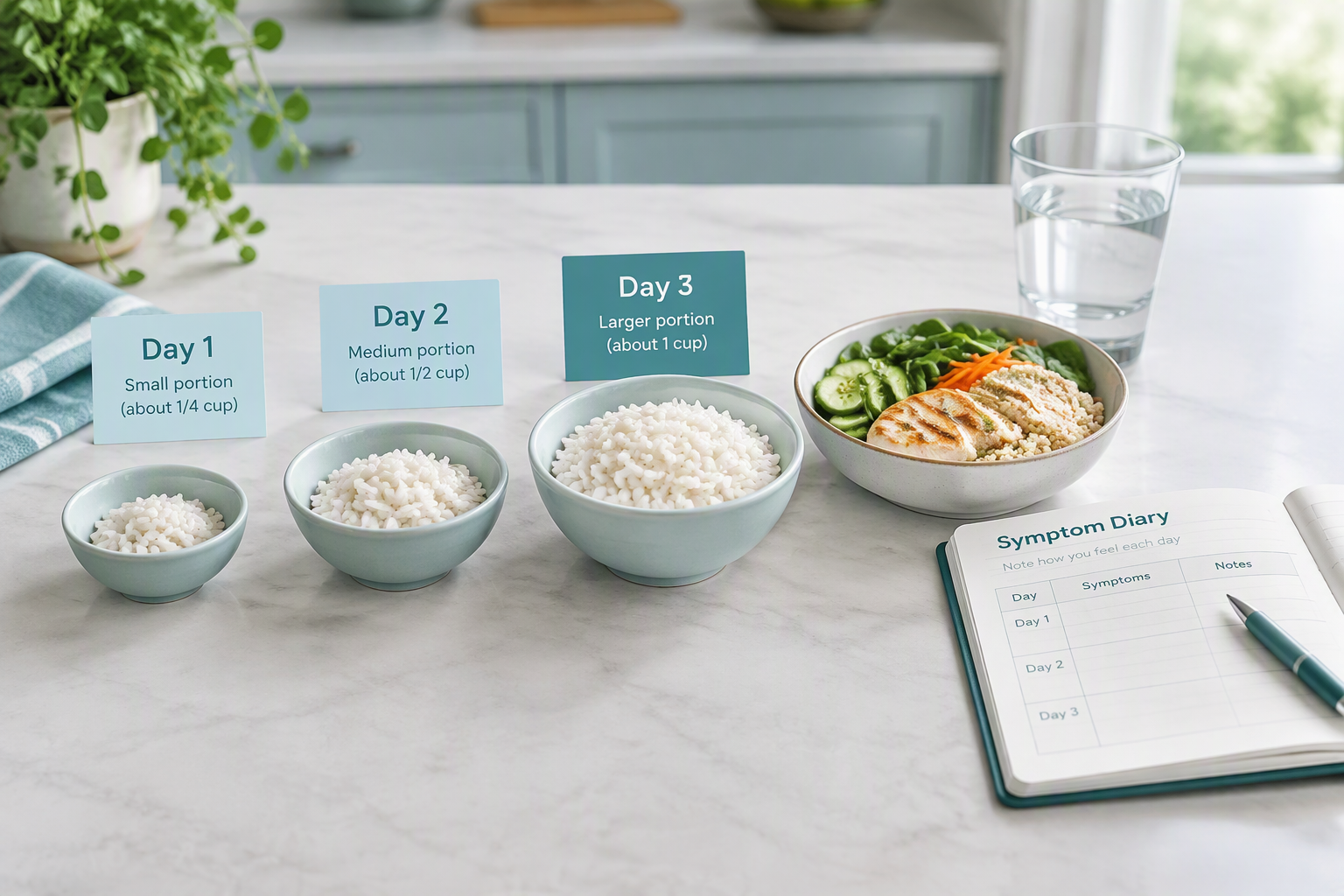
After selecting a FODMAP group and a plain challenge food, a three-day FODMAP test works best when your symptoms are absent or close to their usual level. Keep your low-FODMAP meals, supplements, daily routine, and stress levels as consistent as practical so changes in bloating, pain, gas, or bowel habits are easier to connect to one food.
Testing FODMAP groups one at a time helps identify what you tolerate. Choose a simply prepared food that represents only the group you are testing, then confirm its low, medium, and high FODMAP portion sizes in the current Monash FODMAP Diet App. Sauces, toppings, seasonings, and mixed dishes can add other FODMAPs and make the result harder to interpret.
A FODMAP challenge protocol gradually increases the amount:
- Day 1: Eat the smallest app-referenced portion with a familiar low-FODMAP meal. Do not repeat that food later the same day.
- Day 2: If symptoms stayed manageable, have the medium portion.
- Day 3: If the Day 2 serving was comfortable, try the large or full portion. This progression shows your personal tolerance range rather than labeling a food as simply good or bad).
Portions depend on the specific food. For example, a milk lactose challenge may increase from one-quarter cup on Day 1 to one-half cup on Day 2 and one cup on Day 3, but those amounts do not apply to other foods or FODMAP groups). Follow the app guidance for the exact challenge food instead of using a generic schedule.
A FODMAP symptom diary can reveal patterns that are easy to miss during a busy week. Recording symptoms after each meal works in a notebook, spreadsheet, or notes app if you use the same format each day.
Include these details in each entry:
- Test details: Date, FODMAP group, food, exact portion, meal time, and other foods or drinks.
- Symptoms: Bloating, gas, abdominal pain, constipation, diarrhea, urgency, and stool changes.
- Timing and severity: Symptom onset, one consistent severity scale, and symptoms that appear the day after Day 3.
Knowing when to stop a FODMAP challenge matters. If symptoms become significant or uncomfortable, stop the test food rather than pushing through. Return to your established low-FODMAP baseline and take 2 to 3 rest days after FODMAP challenge, or wait until symptoms fully settle, before testing another group. Severe, persistent, or concerning symptoms need clinician guidance.
A FODMAP reintroduction schedule uses standard FODMAP servings and a FODMAP portion size increase each day, with a FODMAP washout period of a couple of days before the next group. Keep the background low FODMAP diet steady during each challenge, and use a FODMAP reintroduction tracker, paper or app, so FODMAP symptom tracking is not from memory.
How Do You Interpret Challenge Symptoms?
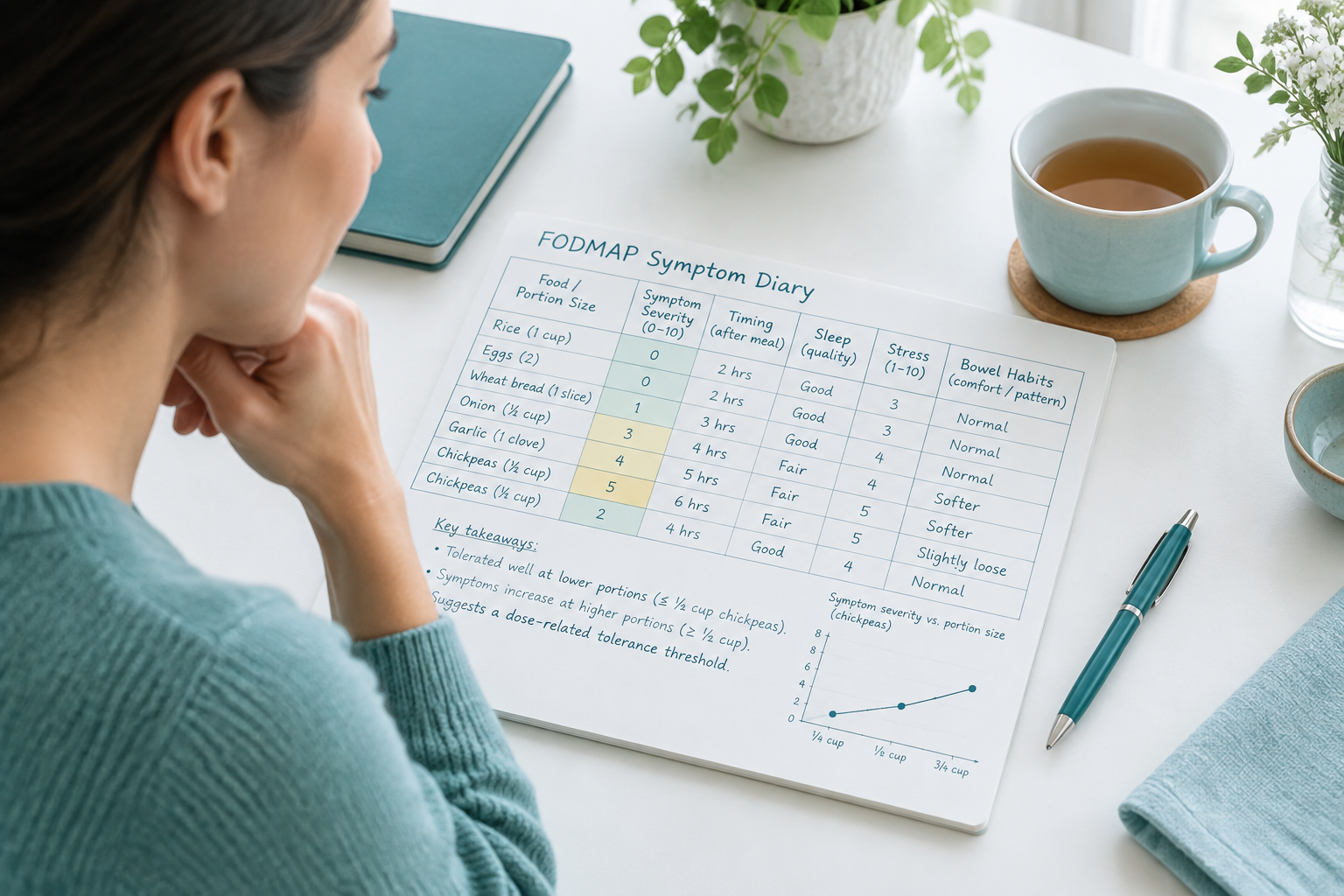
To interpret the portions and symptoms you recorded, use a FODMAP symptom diary to compare patterns across challenges, recording the Fermentable Oligosaccharides, Disaccharides, Monosaccharides and Polyols (FODMAP) group consistently with the same severity scale.
Identifying FODMAP tolerance means looking at dose and timing together. No meaningful symptoms across increasing portions suggests tolerance at those tested amounts. Mild or moderate symptoms only with the largest portion often point to a personal threshold, while a response that builds as portions rise is more likely tied to the challenge. Personal FODMAP trigger foods tend to create this repeatable pattern rather than symptoms after one random serving.
IBS can flare for reasons unrelated to the food you are testing. A result is more convincing when symptoms were near baseline before the challenge, begin within a plausible timeframe, and return or increase with each larger portion. Keep regular meals during reintroduction and your usual low-FODMAP routine as steady as practical. Stress, poor sleep, menstrual-cycle changes, illness, travel, alcohol, caffeine changes, constipation, large or fatty meals, and new foods can blur the picture. When several factors overlap, mark the result as unclear rather than assuming FODMAP food intolerance.
Symptoms that intensify on Day 2 or Day 3 strengthen the case for a FODMAP challenge response. Use the washout to confirm that symptoms resolve before deciding whether to retest. A FODMAP reintroduction failed challenge after a strong but non-alarming response is not lifelong intolerance. Retesting later from a smaller portion may show that the amount, not the food itself, was the issue.
Seek medical evaluation instead of continuing self-testing when symptoms are severe, persist after stopping and washing out, or differ noticeably from your usual IBS pattern. Prompt assessment matters for:
- Rectal bleeding
- Unexplained weight loss
- Fever
- Persistent vomiting
- Dehydration
- Symptoms that wake you from sleep
- New digestive symptoms later in life
A gastrointestinal registered dietitian can help interpret unclear results and build a varied long-term eating pattern.
Mild FODMAP symptoms on the largest portion mean a tolerance, not a fail. Moderate FODMAP symptoms on the first portion mean that group is a trigger for now. FODMAP trigger identification is a portion question more than a yes or no.
FODMAP tolerance thresholds differ by group, so testing FODMAP tolerance is about FODMAP portion tolerance for each one. FODMAP challenge quantities matter: a fail at the large portion with a pass at the small one is a threshold, and individual FODMAP tolerance is exactly that number.
How Do You Build Your Personalized FODMAP Diet?
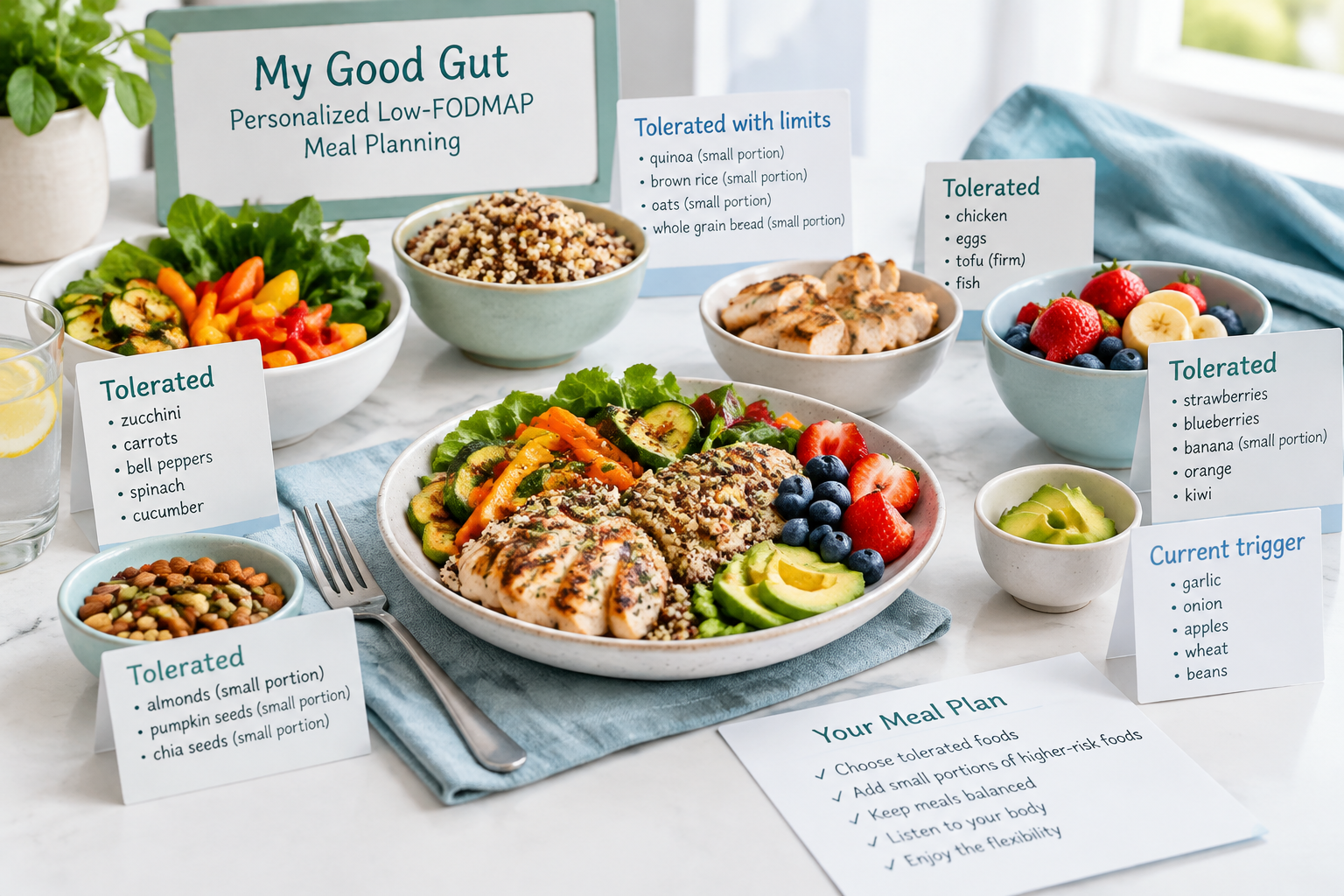
After interpreting your challenge results, a personalized FODMAP diet uses your challenge results to expand food variety while limiting only the foods, portions, and FODMAP groups that reliably cause symptoms. Reintroducing FODMAPs helps you apply those results to the foods and serving sizes that fit your usual routine.
Turn each completed challenge into practical meal-planning guidance:
- Tolerated: Keep foods and portions that caused no meaningful symptoms in regular breakfasts, lunches, snacks, and family dinners.
- Tolerated with limits: Record foods that feel comfortable only in a smaller serving or less often. Spacing similar FODMAP-containing foods across the day may help prevent symptoms from adding up.
- Current trigger: Mark foods, portions, or FODMAP groups that repeatedly cause substantial symptoms. During an IBS flare, limiting that specific trigger can support low FODMAP diet symptom management without removing foods you handle well.
Include symptoms and likely confounders in each record, such as constipation, illness, stress, menstrual-cycle changes, or major changes to your usual meals. A food that seems troublesome during a stressful week with constipation may be worth retesting when your symptoms and routine are steadier.
Personal FODMAP trigger foods are often more specific than expected. Many people react to only some FODMAP categories, and tolerance for one food does not automatically predict your response to every food in that category. Still, there is no reason to avoid a food simply because it is high in a category you tolerate.
Mild reactions at the largest challenge portion do not always require eliminating that food. Keeping a smaller comfortable serving, eating it less often, and avoiding oversized meals that combine several tolerated FODMAP foods can make symptoms easier to predict.
Tolerance can shift with bowel habits, stress, illness, routines, and time. Retest past triggers when symptoms are otherwise stable, and seek support from a registered dietitian if many foods remain restricted or your challenge results are hard to interpret.
A personalized low-FODMAP diet, sometimes called individualized FODMAP tolerance, keeps the groups you passed at the portions you passed them at. Long-term low FODMAP maintenance is the opposite of the goal. Dietitian-led FODMAP reintroduction speeds this up and catches low FODMAP diet social eating problems early.
The three-step low FODMAP diet is elimination, reintroduction, and personalization, and step 3 FODMAP personalization is the only step meant to last. Food triggers for IBS found this way are portion-specific, and FODMAP dietitian guidance turns them into meals rather than a list of bans. Foods to eat on a low-FODMAP diet grow with every passed challenge.
FODMAP Reintroduction FAQs
These FAQs cover common concerns during FODMAP reintroduction, including timing, symptom patterns, and retesting foods. They can help you make sense of your experience while recognizing that tolerance differs from person to person.
1. Can I Reintroduce FODMAPs During an IBS Flare?
It’s usually best not to start or continue FODMAP food intolerance testing during an IBS flare. Wait until symptoms are absent or close to your usual baseline, and keep your regular low FODMAP meals in place between challenges for clearer low FODMAP diet symptom management.
Knowing when to stop a FODMAP challenge is important. Significant discomfort, especially on Day 2 or Day 3, means returning to baseline eating and allowing an extended washout until symptoms settle. If flares persist or results are hard to interpret, a gastrointestinal-focused registered dietitian can help tailor a sustainable plan.
2. Should I Repeat a Failed FODMAP Challenge?
A failed FODMAP reintroduction challenge means the food triggered symptoms at that portion, not that you failed or must avoid the whole FODMAP group forever. No symptoms suggest you likely tolerate the tested amount, while mild or moderate symptoms may reveal a lower portion that works for you.
Wait until symptoms return to your usual baseline before retesting. The usual rest period after a FODMAP challenge is 2 to 3 days, but substantial symptoms may need a longer washout. Then, retry a smaller portion if including the food in regular meals matters to you.
3. Do FODMAP Tolerances Change Over Time?
FODMAP tolerance can shift with an IBS flare, portion size, health changes, and the combined FODMAP load of a meal. Identifying FODMAP tolerance means spotting patterns, not giving foods a permanent pass-or-fail label. Build your personalized FODMAP diet around comfortable variety: keep tolerated foods in rotation, choose smaller or less frequent portions for mild symptoms, and temporarily limit reliable triggers during flares. Retest unclear foods when symptoms settle to refine safe FODMAP serving sizes, and discuss persistent changes with a registered dietitian or healthcare professional.
4. Can Children Follow FODMAP Reintroduction?
Children should not begin FODMAP reintroduction on their own. A pediatric registered dietitian with gastrointestinal expertise can tailor challenge portions, interpret symptom patterns, and help protect growth, energy intake, and overall nutrition as foods are added back.
The aim is to identify the FODMAP groups, amounts, and serving sizes your child tolerates, rather than maintain broad restrictions. This individualized approach supports the widest practical food variety while limiting unnecessary long-term dietary limits.
5. How Do You Do FODMAP Reintroduction at Home?
How to do FODMAP reintroduction at home: keep the low-FODMAP base, pick one group, eat a small serving on day one, a medium on day two, a large on day three, rest a couple of days, and log symptoms each day. A FODMAP reintroduction plan on paper keeps you honest.
6. What Does FODMAP Personalization Mean?
FODMAP personalization is step 3: the personalized low-FODMAP diet that keeps only the groups and portions that caused symptoms, and returns everything else. Individualized FODMAP diet plans change over time, so retest failed groups after a few months.