


Adding more insoluble fiber foods can help constipation by adding bulk and structure to stool, but a sudden increase may worsen bloating, gas, or loose stools. Insoluble fiber is a plant carbohydrate that does not dissolve in water and passes through the digestive tract largely intact.
Wheat bran, vegetable skins, whole grains, beans, and berries all contribute, yet most plant foods contain a mix of soluble and insoluble fiber. A food comparison table, symptom-based choices for constipation or diarrhea, and a gradual step sequence can help you adjust portions without changing every meal at once. For IBS, comfortable regularity matters more than forcing a high-fiber target.
Insoluble Fiber Foods Key Takeaways
- Insoluble fiber adds bulk and structure to stool.
- Wheat bran, whole grains, skins, seeds, and vegetables provide insoluble fiber.
- Most plant foods contain both soluble and insoluble fiber.
- Gradual changes can reduce gas, bloating, and cramping.
- Regular fluids help support softer stools as fiber intake rises.
- Insoluble fiber may worsen loose stools for some people.
- IBS symptoms can help determine the fiber type and portion that feels tolerable.
What Does Insoluble Fiber Do for Digestion?
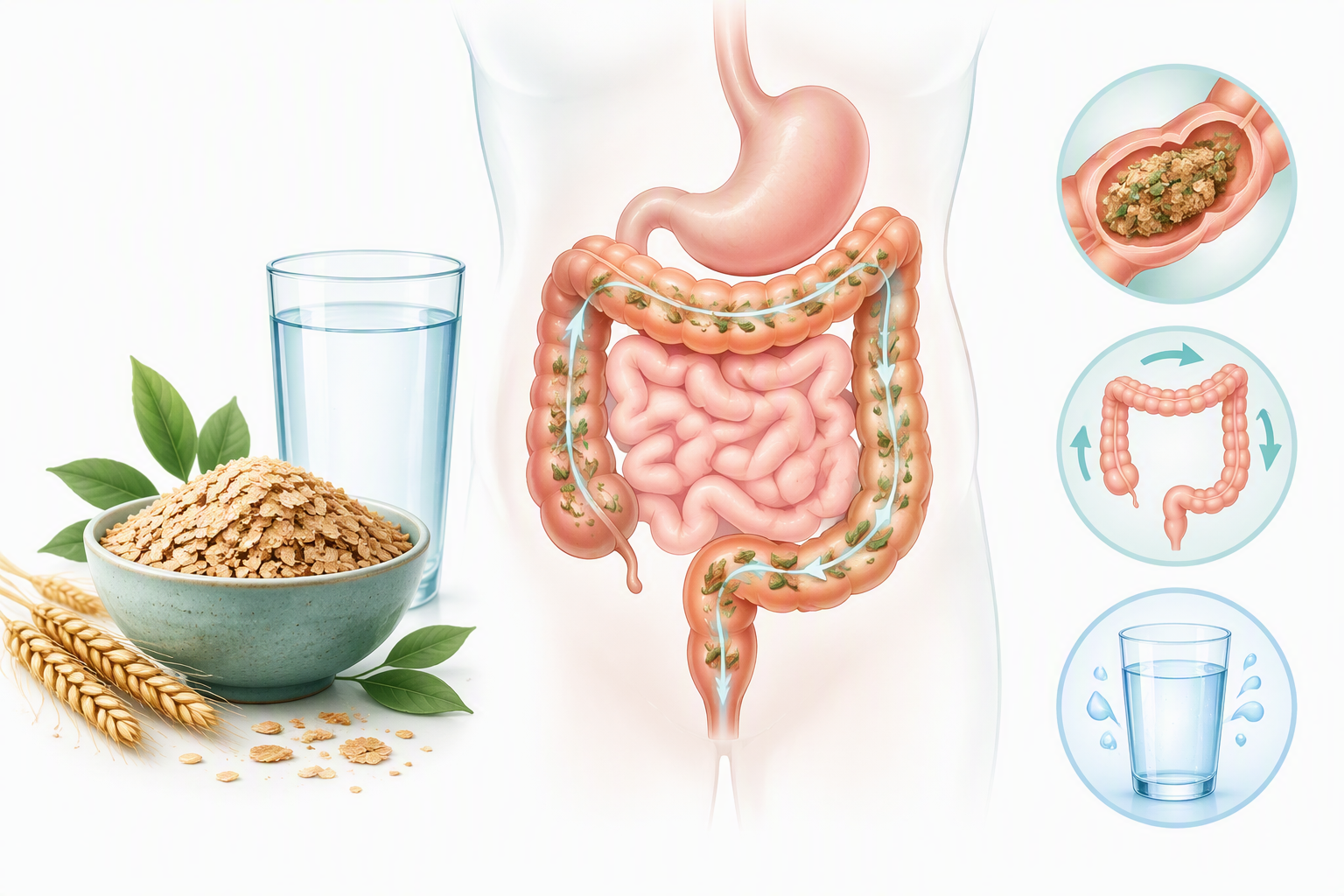
If you’re wondering what is insoluble fiber, it is a plant-based carbohydrate that human digestive enzymes do not break down. In water, insoluble fiber does not dissolve or form the gel-like texture associated with soluble fiber. During insoluble fiber digestion, it passes through the gastrointestinal tract largely intact and changes stool’s physical form rather than being absorbed as a nutrient.
One of the key insoluble fiber benefits is that insoluble fiber adds bulk to stool, increasing its weight, volume, and structure. That added bulk may support peristalsis, the wave-like muscle contractions that move food and waste through the intestines. the gut health diet as a whole works best when food choices fit your symptoms and usual eating patterns, rather than requiring a sudden high-fiber shift.
The two main types of fiber behave differently:
Fiber type | What happens in water | Main role in digestion |
|---|---|---|
Soluble fiber | Forms a gel-like texture | Can help soften stool and slow digestion |
Insoluble fiber | Does not dissolve | Adds structure and bulk to stool |
This is one way insoluble fiber helps food move through the gut, but faster is not always better. The goal is comfortable regularity at a pace that suits your body. Bulkier stools may be easier to pass when stools are hard, small, or pebble-like. Constipation can include fewer than three bowel movements a week, painful passage, or stools that are difficult to pass (source).
Water matters because insoluble fiber can retain fluid in the digestive tract. Regular fluids may help support softer stools and reduce straining, while a large fiber increase without enough to drink can worsen bloating, discomfort, dryness, or constipation for some people.
A gradual, symptom-aware approach is often easier to tolerate:
- Add one higher-fiber food at a time instead of changing every meal at once.
- Drink fluids regularly as fiber intake rises.
- Watch for changes in constipation, gas, bloating, loose stools, or pain.
Persistent or changing bowel habits deserve medical evaluation, especially when food changes do not improve comfort.
The insoluble fiber definition is simple: a nondigestible carbohydrate that does not dissolve in water and does not form a gel, so insoluble fiber and stool bulk go together and insoluble fiber speeds gut transit by giving the bowel something to move. How insoluble fiber affects digestion is mostly that mechanical push, which is why insoluble fiber for constipation is the classic use and why insoluble fiber and bowel regularity improve when intake is steady.
Which Foods Provide Insoluble Fiber?
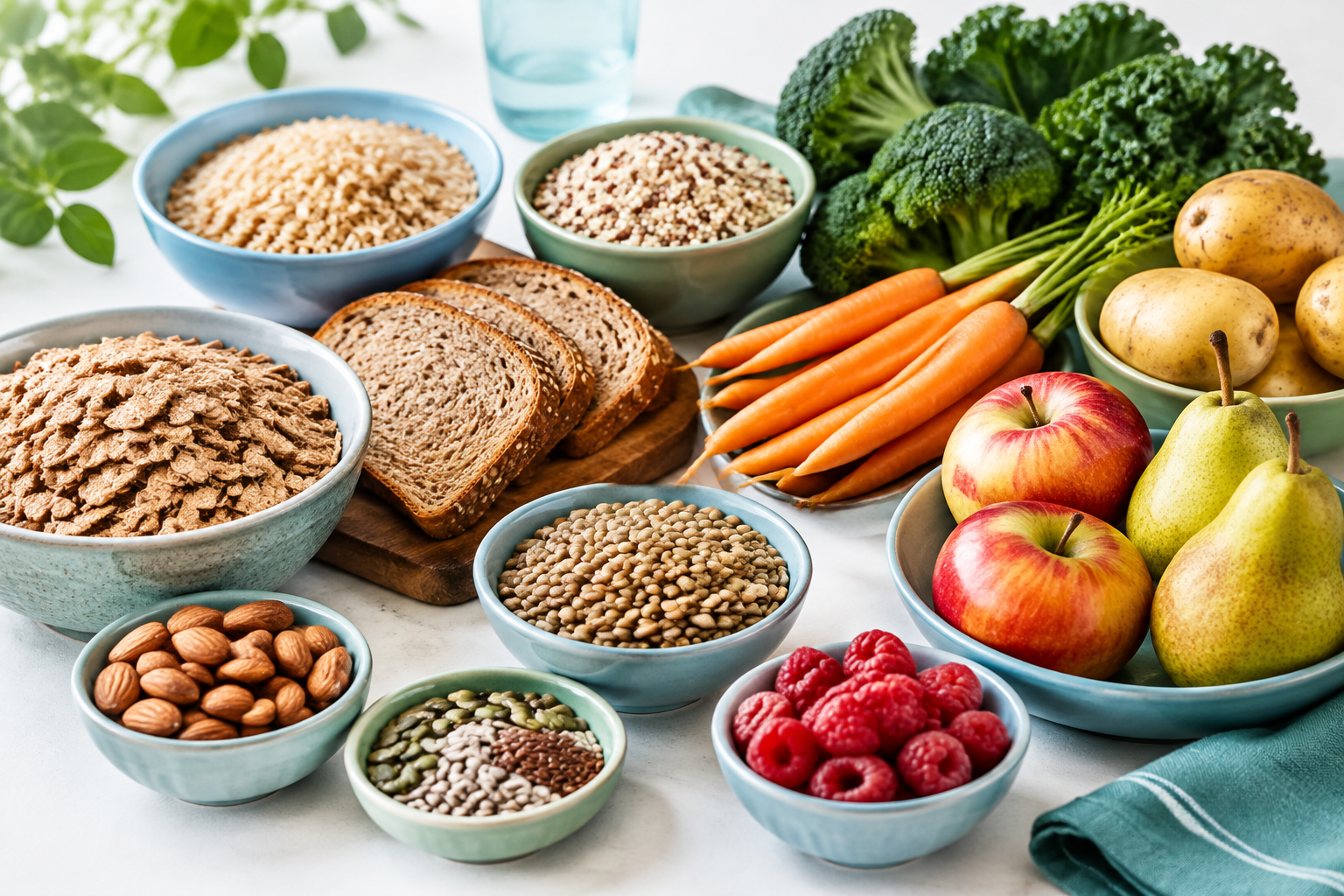
To increase fiber gradually, focus on insoluble fiber foods most concentrated in plant bran, outer skins, edible seeds, and firm structural parts. Because most plants provide both soluble and insoluble fiber, comparing the two within the same household portion gives a clearer picture. The fiber estimates below use matching serving sizes from USDA FoodData Central (source).
Food and portion | Total fiber | Insoluble fiber |
|---|---|---|
Wheat bran cereal, 1/3 cup | 8.6 g | 7.2 g |
Dry bran, 1/4 cup | 6 g | 6 g |
Wheat bran, 1/2 cup | 12.3 g | 11.3 g |
Green beans, cooked, 1/2 cup | 2.8 g | 1.7 g |
Spinach, cooked, 1/2 cup | 1.6 g | 1.1 g |
Carrot, raw, 1 medium | 2.3 g | 1.2 g |
Cauliflower, cooked, 1/2 cup | 1 g | 0.6 g |
Apple or pear with skin, 1 small | n/a | 1.8 g |
Blackberries, 3/4 cup | 6 g | 4 g |
Light kidney beans, 1/2 cup | 7.9 g | 5.9 g |
Lentils, 1/2 cup | 5.2 g | 4.6 g |
Chickpeas, cooked, 1/2 cup | 4.3 g | 3 g |
Almonds, 6 whole | 0.6 g | 0.5 g |
Sesame seeds, 1 tablespoon | 0.8 g | 0.6 g |
Sunflower seeds, 1 tablespoon | 0.5 g | 0.3 g |
Walnuts, 2 whole | 0.3 g | 0.2 g |
Wheat bran fiber is particularly concentrated, while whole grains can be easier to work into regular meals. Bulgur, whole-wheat bread, whole-wheat pasta, brown rice, quinoa, barley, rye, and corn bran are practical insoluble fiber sources when a large serving of bran does not suit you.
High-fiber vegetables include broccoli, Brussels sprouts, kale, collards, beets, celery, bell peppers, and potatoes eaten with their skins. Keeping apple and pear skins on, and choosing raspberries, blackberries, or strawberries with their edible seeds, preserves more of the fiber-rich outer parts.
Beans, lentils, nuts and seeds supply both types of fiber. Everyday high-fiber foods can help you build meals beyond foods high in insoluble fiber.
If constipation, bloating, or irritable bowel syndrome (IBS) symptoms are part of the picture, begin with familiar foods and modest portions while drinking enough fluids. Scale back any food that repeatedly brings on pain, gas, bloating, or bowel changes, since the best choices are those your digestion tolerates.
The best sources of insoluble fiber are whole grains high in insoluble fiber (wheat bran, whole wheat, brown rice), vegetables high in insoluble fiber (green beans, cauliflower, potatoes with skin, carrots), fruit skins and insoluble fiber go together, and nuts and seeds with insoluble fiber round out the list. Legumes and insoluble fiber are a mixed case, since beans and lentils carry both types.
How Does Insoluble Fiber Compare With Soluble Fiber?
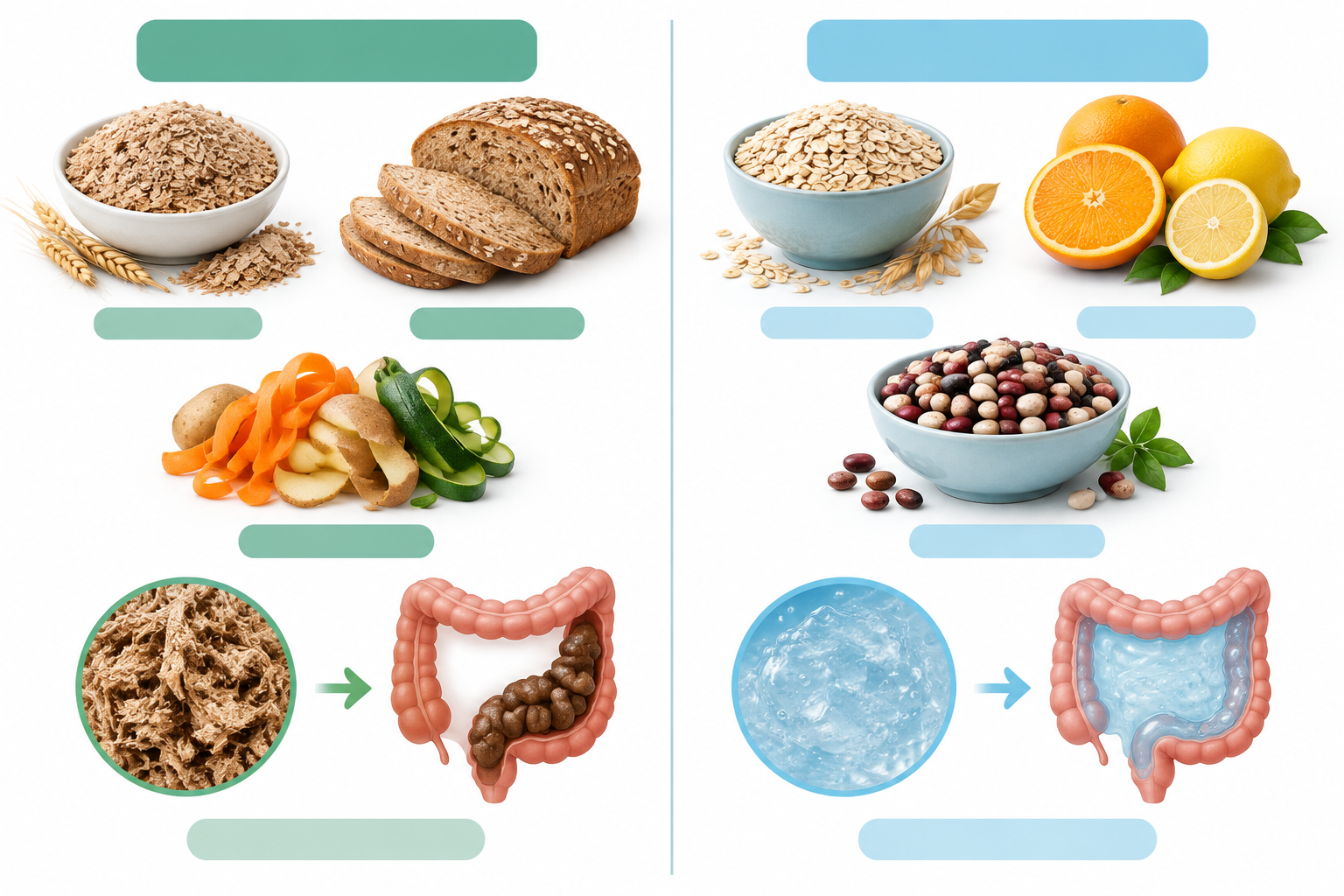
Because the foods above often supply both types, soluble and insoluble fiber can affect digestion differently. Neither type is better overall. Both can support regular bowel movements, though they affect stool differently (source).
Fiber type | What it does with water | Main digestive role | Common food examples |
|---|---|---|---|
Insoluble fiber | Does not dissolve | Adds bulk to stool and may help material move through the intestines | Wheat bran, vegetable skins, whole grains |
Soluble fiber | Dissolves and forms a gel-like texture | Holds water, slows digestion, and can make loose stools more formed | Oats, beans, citrus fruits |
Insoluble fiber's fermentation can vary by food. Some fiber is broken down by bacteria in the gut microbiome, but insoluble fiber is generally less fermentable than many soluble fibers. The exact amount of fermentation varies by food, which helps explain why certain high-fiber foods cause more gas or bloating than others.
Most plant foods provide a mix rather than fitting neatly into one category, which is why your total daily fiber target matters more than the split. One small apple with skin contains about 1 gram of soluble fiber and 1.8 grams of insoluble fiber, while one-third cup of plain oatmeal contains about 1.4 grams of soluble fiber and 1.3 grams of insoluble fiber. Oats are often linked with soluble fiber, but they still supply both types.
Symptoms can help guide your starting point:
- Hard or infrequent stools: Insoluble fiber may add stool bulk and help material move through the intestines.
- Loose stools: Soluble fiber may be a better starting point because gel-forming fiber holds water.
- Bloating or gas: Introduce fiber gradually and switch foods if discomfort becomes harder to manage.
A varied pattern of fruits, vegetables, beans, and whole grains supplies both fiber types without forcing you to rely on a single food, and soluble fiber sources such as oats and apples belong in that mix.
Fiber fermentability is the second difference: gut bacteria and fiber interact mostly on the soluble side, while insoluble fiber passes through largely unfermented, which is why it adds less gas (source). Foods containing soluble fiber, such as oats, beans, and citrus fruits, usually carry some insoluble fiber too, so a balanced fiber intake comes from variety rather than from choosing sides.
How Can You Add Insoluble Fiber Gradually?
With the two fiber types and their symptom effects in mind, build up dietary fiber from your usual intake instead of trying to reach the National Academy of Medicine's adult target of 21 to 38 grams overnight (source). A rapid increase in high-fiber foods can cause gas, bloating, or cramping, which can be especially frustrating when IBS symptoms already vary from day to day.
A gradual routine gives you a clearer sense of which foods support bowel regularity and which portions feel like too much:
- Start with one modest change: Add a slice of whole-wheat bread to a familiar sandwich, a medium carrot at lunch, or three-quarters of a cup of blackberries as a snack. These portions provide about 1.6 grams, 1.2 grams, and 4 grams of insoluble fiber, respectively.
- Keep the portion steady: Stay with that change long enough to see how your body responds before adding another. If symptoms stay stable, you can add the next change gradually (source, source). Introducing bran-heavy foods, large servings of beans, and several new fiber choices at once can make symptoms harder to trace.
- Spread fiber through meals: Fruit with skin may fit at breakfast, while vegetables can work at lunch or dinner. Brown rice, quinoa, lentils, barley, legumes, or other whole grains can round out another meal. A half-cup of lentils provides about 4.6 grams of insoluble fiber, while a half-cup of cooked barley provides about 3.3 grams.
- Include fluids and track symptoms: Drink water or other suitable fluids regularly as fiber rises. With insoluble fiber, fluids help stools remain softer and easier to pass.
A brief note about the new food, portion, fluids, bowel regularity, and any bloating, gas, cramping, urgency, or pain can show patterns over time. If symptoms worsen, return to the last tolerated amount before increasing dietary fiber more slowly.
How to increase fiber gradually is the same for both types: one new food at a time, insoluble fiber and water together, and a few weeks before judging. Daily fiber targets are covered on the fiber intake page, so here the point is the step, not the total. If food alone leaves stools hard, psyllium husk and bowel regularity is the usual next step before any other supplement.
How Should You Adjust Fiber for Symptoms?

As you build fiber gradually, adjust fiber based on your main symptom rather than adding several high-fiber foods at once. Fiber and digestive health are closely linked, but the best amount, type, and preparation can differ with constipation, diarrhea, bloating, or IBS.
For insoluble fiber and constipation, small, hard, or difficult-to-pass stools may respond to gradual additions of:
- Wheat bran. – Vegetables. – Fruit skins.
Regular fluids support easier stool passage as insoluble fiber intake rises. Softer, more regular stools may also mean less straining and less pressure linked with hemorrhoids and diverticular disease.
Symptoms that call for a different approach include:
- Loose stools: Fiber can add form to watery stool, but increasing insoluble fiber may make diarrhea worse. Temporarily cut back on coarse bran, fruit skins, raw vegetables, and large whole-grain portions. Smaller servings of cooked or peeled foods are often easier to tolerate, then foods can return one at a time as stools settle.
- Insoluble fiber bloating: Gas or fullness often signals that changes are happening too quickly, not that all fiber must go. Keep fluid intake steady, change one food or portion at a time, and pair insoluble choices with soluble-fiber foods.
- Insoluble fiber and IBS: Psyllium may help constipation-predominant IBS, although it increases gas for some people. Its gel behaves differently from coarser food-based fibers. Start gradually and take each dose with at least 8 ounces of water. Fiber supplements can affect medication absorption. If psyllium repeatedly worsens bloating, methylcellulose or partially hydrolyzed guar gum may be options to discuss with a clinician or registered dietitian.
Crohn’s disease, bowel narrowing, and active intestinal inflammation need individualized food changes. During flares, skins, seeds, bran, and raw produce may need modification. Seek clinical guidance for a history of bowel blockage, persistent diarrhea, unintended weight loss, rectal bleeding, or worsening abdominal pain.
Insoluble fiber and diverticular disease is a common question: a higher-fiber diet is recommended for diverticulosis, and the old advice to avoid nuts and seeds has not held up. Fiber and hemorrhoids follow the constipation logic, since softer, bulkier stool means less straining, and fiber for diarrhea usually means the soluble type rather than insoluble fiber.
Insoluble Fiber Foods Digestion FAQs
These FAQs cover common questions about insoluble fiber foods and digestion, including constipation, bloating, and changes in stool habits as you adjust your meals.
1. What Food Is Highest in Insoluble Fiber?
Wheat bran fiber and corn bran are among the most concentrated insoluble fiber sources, though the food highest in insoluble fiber depends on serving size and preparation. Dry bran generally provides more than whole-wheat bread, flour, or pasta. Among foods high in insoluble fiber, cooked kale provides 5.1 grams per cup, compared with 2.2 grams in whole-grain pasta. Lentils, almonds, pears with skin, quinoa, berries, high-fiber vegetables, and nuts and seeds also contribute. Peeling, refining, cooking, and portion size can all change fiber content.
2. Is Insoluble Fiber Digestible?
No. Human digestive enzymes do not break down insoluble fiber. Rather than dissolving in water or forming a gel, insoluble fiber passes through the intestines largely intact, adding bulk to stool rather than providing absorbed energy. Because plant foods contain mixed fibers, the gut microbiome may ferment some components, though insoluble fiber is usually less fermentable than many soluble fibers. This helps explain why foods can affect symptoms differently.
3. Does Insoluble Fiber Help You Poop?
Insoluble fiber and constipation are linked because insoluble fiber adds bulk to stool, which can stimulate intestinal contractions and support bowel regularity. While insoluble fiber helps food move through the gut and may make stool easier to pass, increasing it without enough fluids can harden stools or worsen discomfort. These insoluble fiber benefits may help constipation tied to low fiber intake, not every cause. New or persistent constipation needs medical attention.
4. Can Insoluble Fiber Cause Bloating?
Yes. Insoluble fiber bloating can occur when high-fiber foods are added too quickly, as your digestive system adjusts to more stool bulk and fermentation. Insoluble fiber and IBS may be especially uncomfortable during a flare. Introduce new foods gradually over days or weeks, and drink enough water to help stools stay softer and move through the digestive tract. Severe, persistent bloating or bloating with concerning symptoms needs clinical attention.
5. Is Wheat Bran Cereal High in Insoluble Fiber?
Wheat bran cereal can be a high-insoluble-fiber choice because it is made from whole-grain wheat, but like other high-fiber foods and whole grains, it contains both soluble and insoluble fiber. Check your package’s nutrition label for total dietary fiber and serving size, since recipes vary and labels may not separate fiber types. The amount that feels manageable depends on your usual fiber intake, symptoms, and whether you eat it dry or softened with milk or toppings.
6. What Is the Difference Between Soluble and Insoluble Fiber?
Soluble fiber dissolves in water and forms a gel that softens stool and slows digestion. Insoluble fiber does not dissolve in water, adds bulk, and speeds transit. Most plant foods carry both, and soluble vs. insoluble fiber matters less than eating enough of each.
7. How Much Insoluble Fiber Should You Eat Per Day?
Daily fiber recommendations do not split the types: 25 grams for women and 38 grams for men covers both. Fiber intake per day from whole grains, vegetables, fruit, legumes, and nuts and seeds delivers plenty of insoluble fiber without counting it separately.