


Alcohol does not usually kill probiotic supplements after an occasional drink, but frequent heavy drinking can disrupt the gut microbiome and worsen digestive symptoms. Alcohol used to disinfect surfaces is commonly about 70% alcohol, far stronger than beer, wine, or spirits consumed as beverages. The gut microbiome is the community of microorganisms that lives in your digestive tract.
Alcohol concentration, food, stomach acid, capsule design, and the specific probiotic strain all affect survival during digestion. The evidence does not support a required three- to four-hour gap between alcohol and probiotics, while symptom patterns such as bloating, reflux, loose stools, or IBS flares can offer more useful personal guidance. Strain codes, CFU claims, kombucha limits, gut-barrier effects, and warning signs that need medical care help separate practical choices from unsupported claims.
A probiotic cannot offset alcohol-related microbiome disruption or protect against the effects of repeated heavy drinking. Reducing or avoiding drinks that repeatedly trigger symptoms is more meaningful than trying to perfect supplement timing.
Alcohol and Probiotics Key Takeaways
- An occasional drink is not known to reliably kill a swallowed probiotic dose.
- Human studies do not support a required waiting period between alcohol and probiotics.
- Frequent heavy drinking can disrupt the gut microbiome and strain the intestinal barrier.
- Probiotics do not offset alcohol-related digestive or microbiome effects.
- Strain codes and formulation matter more than a species name or high CFU claim.
- Hard kombucha is not a dependable probiotic source because finished-bottle viability is uncertain.
- Persistent symptoms, bleeding, severe pain, or alcohol withdrawal symptoms need medical care.
Does Alcohol Kill Probiotics?
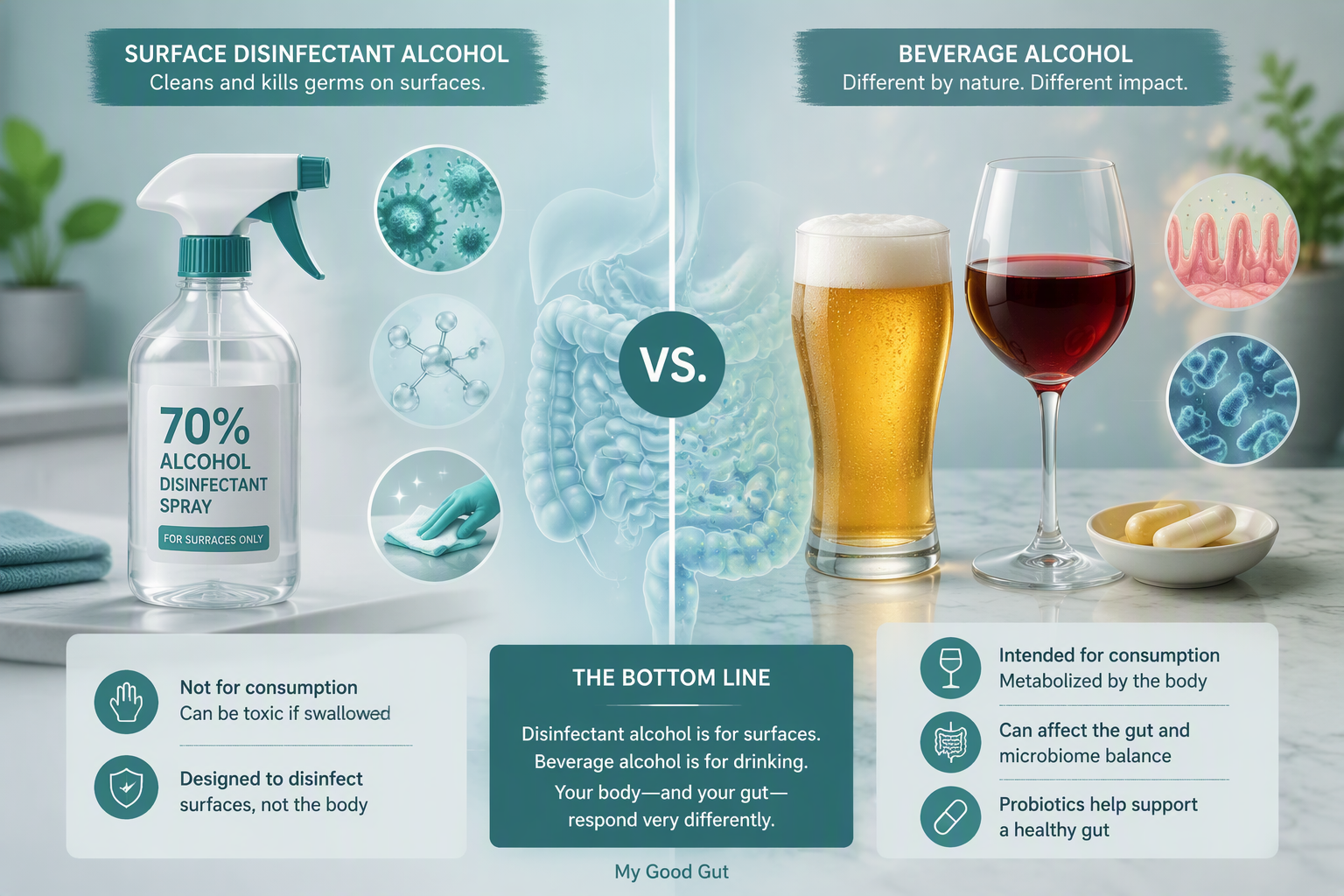
A typical alcoholic drink is not expected to instantly kill every probiotic organism you swallow or sterilize your gut. Whether organisms survive exposure and whether they provide a measurable health benefit are separate questions.
Alcohol used to kill bacteria on surfaces is commonly about 70% alcohol, which is far stronger than beer, wine, or spirits as people drink them. A single drink is unlikely to erase a dose, but alcohol and probiotics can still interact through alcohol's broader effects on digestion and the gut microbiome.
The gut microbiome is the community of microorganisms that lives in your digestive tract. Heavy or frequent drinking may disrupt this community, irritate the gut lining, and affect digestion over time, making it harder for probiotic supplements to support your gut health as intended.
The practical differences are worth keeping in mind:
- Occasional drinking: One or two drinks on occasion are not known to reliably eliminate a swallowed probiotic dose, but direct human evidence on probiotic survival after drinking is limited.
- Frequent heavy drinking: Repeated high alcohol intake may contribute to digestive symptoms and microbiome disruption over time.
- Supplement limits: Research does not establish that a probiotic can offset alcohol-related effects on the gut.
- Symptom patterns: Loose stools, constipation, gas, pain, reflux, or bloating after drinking may be more useful clues than whether alcohol literally killed the supplement.
Alcohol can be especially relevant if you have irritable bowel syndrome (IBS), which is a condition marked by recurring abdominal pain and changes in bowel habits. A probiotic may still be present in your digestive tract without overcoming an ongoing trigger, such as alcohol-related diarrhea or bloating. An informal note of drinks, symptoms, and bowel changes can help you recognize a pattern without assuming alcohol affects everyone the same way.
Probiotic results also depend on more than drinking habits. The specific strain, dose, product quality, storage, usual diet, medications, and underlying digestive conditions all affect whether a product is a reasonable fit. A species name alone is less precise than a strain code, and a large colony-forming unit (CFU) claim does not by itself show that a product will help your symptoms.
There is usually no need to panic if you take a probiotic and later have a drink. What to expect when starting a probiotic can help you separate possible supplement effects from symptoms that follow alcohol.
Does Alcohol Directly Kill Probiotic Supplements?
Alcohol can harm microbes in laboratory tests, but human studies have not shown that a drink reliably destroys the live organisms in probiotic supplements. So, does alcohol kill probiotics? The evidence cannot give a clear yes or no because the alcohol concentration, exposure time, and digestive location are not known in a way that predicts what happens after you swallow a supplement.
Laboratory findings do not neatly translate to probiotic survival during ordinary drinking. Researchers can hold microbes in a set ethanol level for a specific period. Inside your digestive tract, alcohol combines with food, water, stomach acid, and other digestive fluids, then moves onward as it is diluted.
Several factors affect how many organisms reach the intestine:
- Alcohol concentration: Beer, wine, and spirits begin with different ethanol levels, and each becomes less concentrated after mixing with stomach contents.
- Contact time: A meal and the speed of stomach emptying can change how long a beverage and supplement might be in the stomach at the same time.
- Digestive conditions: Stomach acid, bile, food intake, strain traits, dose, and formulation all affect survival before organisms reach the intestine.
- Product design: A probiotic delivery system may use a capsule or enteric coating that remains intact for part of digestion and releases its contents later.
Taking a probiotic before, during, or after alcohol may change when the two overlap in your stomach, but no evidence-based waiting period guarantees probiotic viability. Meal size, beverage choice, digestion speed, and product formulation vary too much for timing to be a proven protection or a proven problem.
A capsule does not mean alcohol immediately reaches every organism inside it, and enteric-coated products are made to resist stomach conditions for a limited time, although the degree of protection differs by product. Storage still matters: heat, moisture, expiration, and handling can reduce probiotic viability before the supplement is taken, so follow its label directions.
Supplement delivery is different from whether a probiotic helps a symptom. Research on a specific strain may relate to digestive symptoms, but it does not prove that the strain survives alcohol exposure or offsets alcohol-related gut effects. Products without a clinical strain code also make it difficult to connect the label to research on a particular organism.
Occasional drinking does not show that your probiotic has been neutralized. Heavier or repeated alcohol use may still worsen digestive symptoms and affect the gut microbiome through effects that go beyond direct contact with a supplement.
How Does Alcohol Affect Your Gut Microbiome?
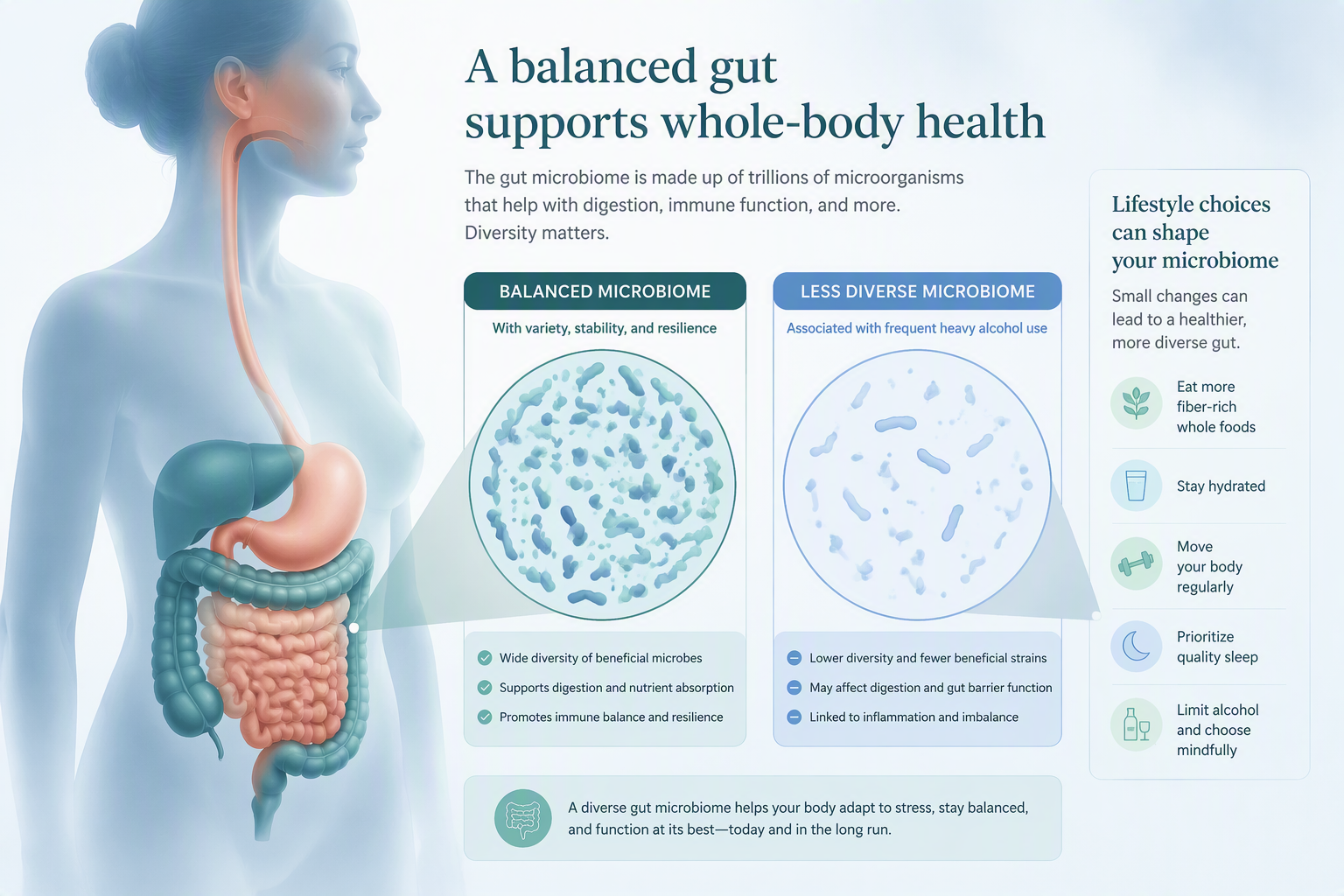
Beyond direct effects on a supplement, alcohol does not eliminate all of the gut microbiome. Frequent or heavy intake can alter the balance and activity of gut microbes, strain the intestinal barrier, and add inflammatory stress, although the effects vary with your drinking pattern, diet, medications, health conditions, and biology.
The gut microbiome can change in response to alcohol exposure. Alcohol-related dysbiosis is an imbalance in that community, and research has associated heavier alcohol use with reduced microbial diversity, meaning fewer types of microbes may be present (source).
Reported shifts are not the same as a guaranteed outcome for every person who drinks. Studies have associated frequent or heavy alcohol use with lower levels of Akkermansia, Roseburia, Faecalibacterium, and Bacteroides, while Gammaproteobacteria and other opportunistic microbes may become more common.
Several related changes may occur:
- Lower diversity: A less varied microbial community may be less steady when illness, dietary changes, stress, or medications affect your digestion.
- Less butyrate production: Roseburia and Faecalibacterium help produce butyrate, a short-chain fatty acid that provides fuel for colon-lining cells.
- Mucus-layer disruption: Alcohol-related imbalance may affect the protective mucus layer between gut microbes and the intestinal surface.
- Higher gut permeability: Gut permeability describes how easily substances pass through the intestinal lining. Alcohol may increase that passage, allowing bacterial components to enter the bloodstream more easily.
Butyrate helps maintain the intestinal barrier, so reduced activity from butyrate-producing microbes may leave the colon lining less supported. This does not mean symptoms will always follow, but it may contribute to bowel changes in people with sensitive digestion.
“Leaky gut” is a common online term, not a medical diagnosis. Increased intestinal permeability is the more precise description of one possible pathway in which repeated heavy drinking allows bacterial products to move beyond the intestine, adding to immune activity and inflammation.
Alcohol can also irritate the digestive tract directly. If you have IBS, bloating, diarrhea, constipation, or abdominal pain, that irritation may combine with microbiome and barrier changes to make symptoms more likely, though digestive symptoms have many possible causes.
Symptoms that can occur in susceptible people include:
- Gas and bloating: Changes in fermentation and intestinal sensitivity can make gas more uncomfortable.
- Loose stools: Alcohol can affect fluid handling and bowel movement patterns, especially after larger amounts.
- Abdominal discomfort: Irritation, altered gut movement, and IBS sensitivity can overlap.
- IBS flares: Alcohol may be one trigger among others, including certain foods, stress, sleep disruption, and hormonal changes.
The gut-liver axis is the two-way connection between the digestive tract and the liver. Blood from your intestines reaches the liver through portal circulation, so bacterial byproducts that cross a strained barrier can reach the liver while it is processing alcohol.
Repeated heavy drinking is more concerning for this system than occasional use, and probiotics cannot fully offset its effects. A probiotic may offer a strain-specific digestive benefit, but it does not establish protection against alcohol-related microbiome changes, gut permeability, or gut-liver axis stress.
Persistent, severe, or worsening symptoms, or concerns about alcohol use, warrant guidance from a qualified healthcare professional.
Should You Separate Probiotics and Alcohol?
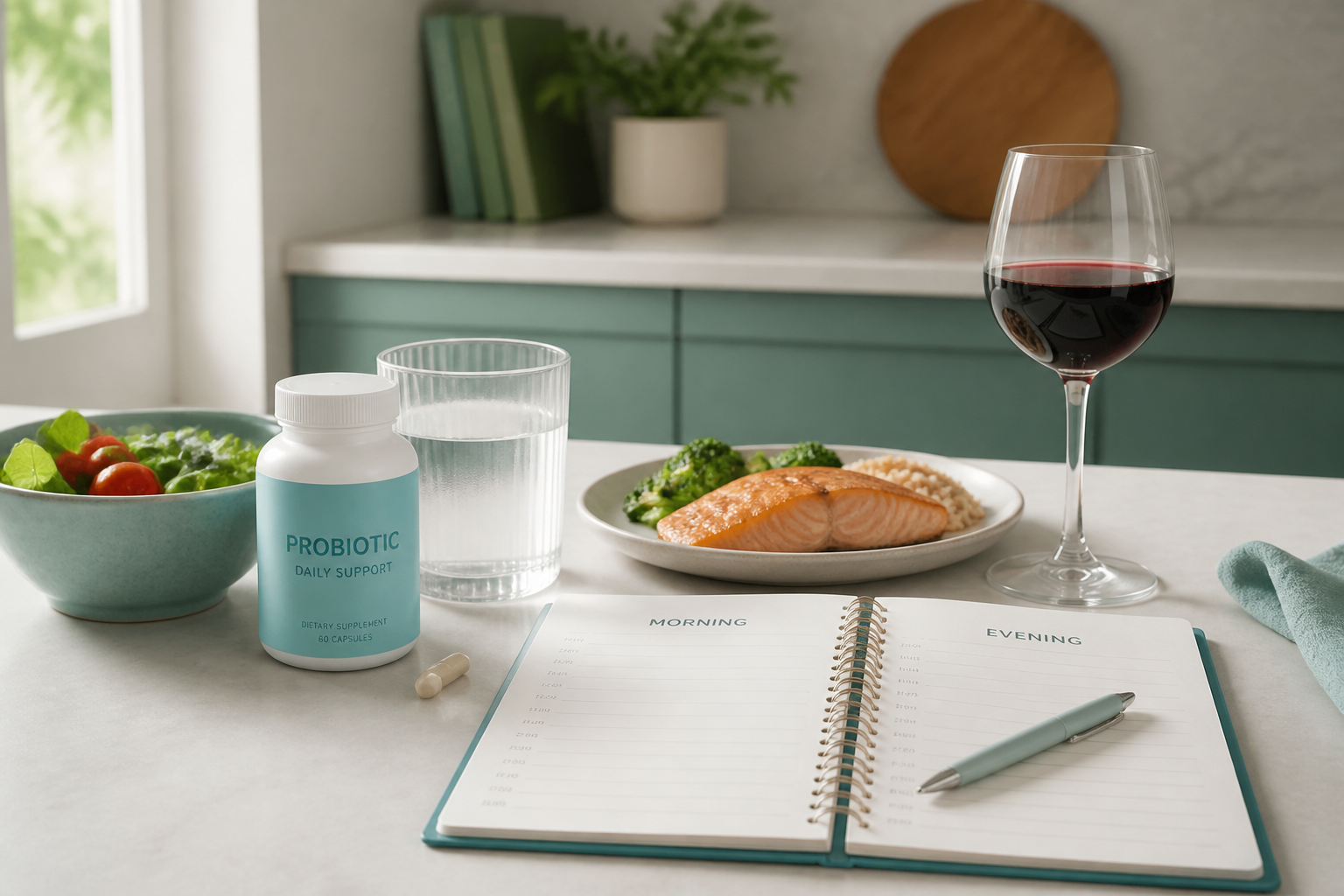
Despite alcohol’s broader effects on the gut microbiome, an occasional alcoholic drink is not known to be dangerous with a probiotic. For alcohol and probiotics, human research has not shown that taking them at the same time makes the supplement ineffective or that a set time gap improves results.
The more relevant issue is alcohol’s effect on your digestive symptoms and the broader gut microbiome. Alcohol may worsen bloating, reflux, loose stools, or abdominal discomfort, especially if you have IBS or already know that certain drinks or meals trigger symptoms.
A three- to four-hour gap, or taking a probiotic in the morning before drinking in the evening, can be a reasonable personal preference. Spacing them apart may mean less overlap in the stomach, but no human clinical trials establish a three-to-four-hour or 10-plus-hour buffer as medically necessary or as protection for probiotic organisms.
A steady routine is usually more useful than trying to time every drink perfectly:
- Take your probiotic at its regular time, following the label’s directions about food.
- Drink later if that fits your normal routine.
- Do not skip a planned dose or take an extra dose to create more time between alcohol and the supplement.
- Resume your usual schedule the next day if you miss a dose while drinking.
People with a sensitive stomach may prefer to take a probiotic on days when they are not drinking, particularly during an initial supplement trial. This can make it easier to notice whether alcohol, the supplement, or a large meal is linked to symptoms, but it is not a proven way to preserve the probiotic or improve its effects.
Product details do not change the lack of evidence for a required timing gap. A species name, strain code, CFU amount, and human trial evidence each describe different parts of a probiotic product. Evidence for one strain does not automatically apply to another, and evidence of digestive benefit does not show that a strain prevents alcohol-related microbiome changes.
If symptoms repeatedly flare, try changing your usual supplement timing or avoid alcohol while you assess how the probiotic affects you.
How Do Probiotic Strains Change the Answer?
A probiotic's digestive benefit does not prove alcohol tolerance or protection from alcohol exposure. Probiotic viability and probiotic survival vary by the exact strain, dose, probiotic delivery system, storage conditions, and outcome studied, so alcohol does not affect every product in the same way.
A genus or species name is not enough to match a supplement to the research. Lactobacillus or Bifidobacterium longum identifies a broad group, while a strain code identifies the specific organism tested. The most useful label details are:
- Strain code: Codes such as 299v, 35624, GG, and LRa05 distinguish the studied strain from other organisms in the same species.
- CFU amount: Colony-forming units estimate live organisms at the point stated on the label, but more CFUs do not automatically produce better results.
- Study match: Useful evidence matches the strain, formula, dose, and symptom or condition you want to address.
Scientific names can change, but the strain code usually remains the clearest match. For example, 299v may appear under Lactobacillus or Lactiplantibacillus, yet the 299v code identifies the organism studied. A product that lists only B. longum does not tell you whether its research applies to your digestive concern.
Strain | Research context | What it does not show |
|---|---|---|
Lacticaseibacillus rhamnosus GG | Stronger evidence for antibiotic-associated and pediatric diarrhea than IBS symptom control | Benefits for every L. rhamnosus product or alcohol exposure |
Lacticaseibacillus rhamnosus LRa05 | Different research outside IBS | Results for GG, IBS, or drinking-related symptoms |
B. longum subsp. infantis 35624 | Clinical evidence for IBS symptoms | Effects of other B. longum strains or direct alcohol protection |
B. longum BL21 | Studied for glycemic control | IBS benefit or alcohol resilience |
Formulation also affects how many organisms reach the gut. Acid-resistant capsules may help a probiotic pass through stomach acid, while powders, capsule design, shelf stability, refrigeration, and storage instructions can alter the live dose you receive. These features do not establish that the product withstands alcohol or helps a particular symptom.
Multi-strain products need the same careful matching. Adding one researched strain does not validate an entire blend, particularly after ingredients or amounts change. Prebiotics such as inulin and chicory root may also increase gas, bloating, or discomfort for people sensitive to fermentable fibers, regardless of alcohol use.
Direct studies of alcohol with specific probiotic strains and formulas remain limited, so firm timing rules are not supported. If you take medication, how probiotics interact with medicines is also relevant when reviewing your routine with a qualified healthcare professional.
What About Kombucha and Hard Kombucha?
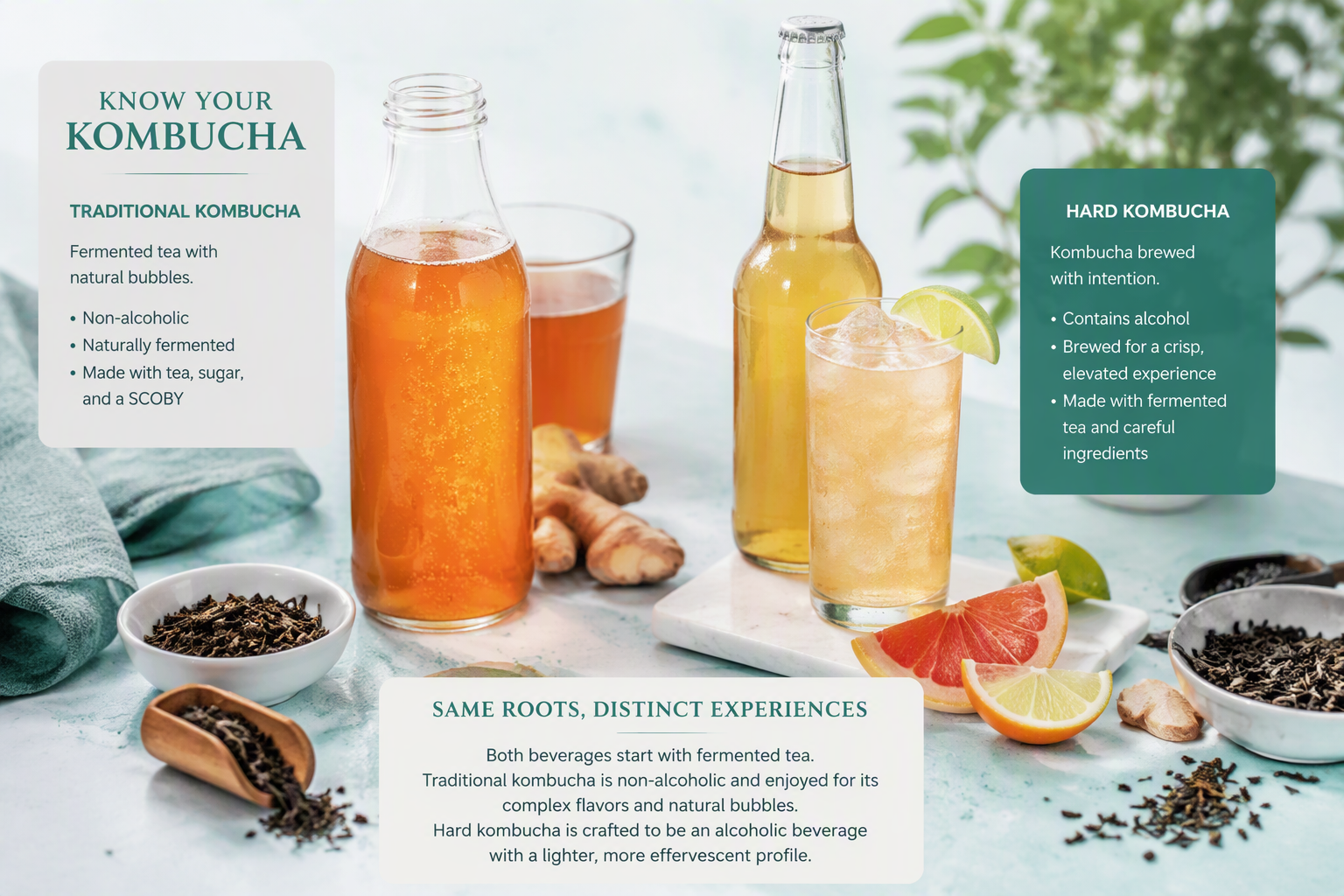
With strain-specific survival still uncertain, alcohol does not necessarily kill the probiotics in kombucha. Traditional kombucha and hard kombucha are fermented beverages, not dependable probiotic sources, because using cultures during brewing does not confirm a meaningful number of live organisms in the finished drink.
Traditional kombucha is fermented tea, and many commercial products are 0.5% ABV or lower. Hard kombucha is made and sold as alcohol, usually at 4% to 8% ABV. Neither label tells you which organisms remain, how many are alive, or whether they affect your digestive health.
The alcohol content in kombucha creates an important difference:
Beverage | Alcohol level | What the label means |
|---|---|---|
Traditional kombucha | Often 0.5% ABV or less | “Fermented” does not confirm strain identity, live-culture counts, or viability at purchase. |
Hard kombucha | Roughly 4% to 8% ABV | Higher alcohol is less favorable for many live microbes, so it is not a reliable probiotic product. |
Lactobacillus and Acetobacter are bacteria that can tolerate acidic, mildly alcoholic brewing conditions. Trace alcohol may not eliminate every organism in the brewing vessel, but that survival does not verify live cultures in a bottle when you open it. What reaches you in a hard kombucha bottle is therefore even less predictable.
Finished-bottle viability can also change after brewing. Refrigeration, shelf time, heat during shipping or storage, filtration, pasteurization, and formulation all affect whether cultures remain alive. A fermented claim alone does not identify the organisms, their amount, or their condition when you drink the beverage.
Kombucha probiotics must clear two separate hurdles before they could affect the lower gut:
- Bottle survival: Organisms need to remain alive through production, storage, and purchase.
- Digestive survival: Live organisms must withstand dilution, stomach acid, bile, and the digestive tract.
This is why kombucha is not interchangeable with a supplement that names specific strains and states viable amounts through its expiration date. Even a strain-identified supplement does not establish that its organisms survive alcohol exposure or prevent alcohol-related gut effects.
Symptoms often matter more than marketing language when deciding whether traditional kombucha fits your routine. Acidity, carbonation, sugar, alcohol, and fermentable ingredients can worsen bloating, reflux, diarrhea, or gas after starting a probiotic, whether or not live cultures are present.
Treat traditional kombucha as an occasional fermented beverage rather than a measured probiotic dose. Use extra caution with hard kombucha if alcohol triggers symptoms.
How Should You Protect Your Gut When Drinking?
Reducing how often and how much you drink, or avoiding alcohol that repeatedly triggers symptoms, is the most reliable way to limit alcohol-related effects on gut health. Heavy or frequent drinking can disrupt the gut microbiome and may affect the gut barrier, which helps control what passes from the intestines into the bloodstream. A typical drink is not the main concern when alcohol repeatedly affects your digestion.
Symptoms are a better guide than trying to time a supplement around alcohol. If drinking repeatedly leads to bloating, bowel changes, reflux, or abdominal pain, cutting back or taking a break is more useful than trying to offset those effects with probiotics. For IBS, recording the drink type, amount, food eaten, and symptoms can reveal personal tolerances that broad rules may miss.
A lower-risk routine can include:
- Alcohol-free days: Build regular days without alcohol into your week.
- Flare awareness: Avoid alcohol during diarrhea, abdominal pain, reflux, or an active digestive flare.
- Food and fluids: Eat regular meals, avoid drinking on an empty stomach, and have water alongside alcohol.
- Sleep routine: Return to a regular sleep schedule, since alcohol can disrupt sleep and make digestive symptoms harder to manage.
- Symptom limits: Stop or pause drinking when the same drink or amount repeatedly worsens discomfort or changes bowel habits.
Probiotics are optional support, not protection from alcohol-related harm. No human evidence supports using timing as protection from alcohol-related gut effects, and taking a supplement with food or at another time may suit your routine, but it is not a proven method for improving probiotic survival after alcohol exposure.
A probiotic label needs more than a species name before it can be matched to research. Consider the exact strain code, colony-forming unit (CFU) claim, formulation, and relevant human evidence before assuming a benefit applies to your product. Many digestive supplements do not name a clinical strain code, so findings on a similarly named species may not transfer.
Regular meals and balanced foods between drinking occasions may help you feel more comfortable, but they do not cancel the effects of high alcohol intake. Fiber-rich plant foods can support digestion, although a gradual increase is often easier if fermentable fiber worsens gas or bloating, while fermented foods, including yogurt, kefir, kimchi, and sauerkraut, are optional and can increase gas for some people.
Hydration, food, and adequate sleep may ease discomfort after drinking, but they are not a detox or a safeguard against heavy intake. In 40 people hospitalized for alcohol dependence, intestinal permeability and blood endotoxin were raised on admission and had returned to normal after a three-week withdrawal program, an improvement that came from stopping alcohol rather than from separating probiotics from it (source). Reducing or pausing alcohol remains the more meaningful recovery step when drinking affects your digestion.
Seek prompt advice from a qualified healthcare professional for:
- Persistent, severe, or worsening digestive symptoms
- Vomiting or blood in stool
- Unexplained weight loss
- Concern about alcohol use
This information is educational and cannot diagnose the many possible causes of digestive symptoms or replace individualized advice about drinking, diet, or supplements.
When Should You Seek Medical Support?
If cutting back on alcohol does not resolve them, digestive symptoms that persist, come back, worsen, or interfere with daily life should be evaluated, especially if they continue after you cut back on alcohol. A probiotic cannot diagnose or rule out an alcohol-related digestive, liver, or pancreatic condition.
A short-lived upset stomach after drinking may pass. Bloating, abdominal pain, diarrhea, constipation, nausea, reflux, or appetite changes need attention when they disrupt eating, sleep, work, or family life. Symptoms that reliably flare after alcohol also warrant a conversation with a primary care clinician or gastroenterologist.
Alcohol can alter the microbiome, but it does not simply kill all gut bacteria. It may reduce beneficial compounds such as butyrate, increase inflammation, affect gut permeability, and disrupt the gut-liver axis. These possible effects are reasons to seek an assessment for ongoing symptoms, not to self-treat with a supplement.
Prompt medical care is needed for these warning signs:
- Vomiting blood or passing black or bloody stools
- Severe or worsening abdominal pain
- Persistent vomiting or an inability to keep fluids down
- Fainting, confusion, or fever with substantial abdominal symptoms
- Dehydration, including dizziness and very little urine
Call emergency services for severe symptoms or a possible alcohol overdose. Frequent heavy or binge drinking, prolonged alcohol use, a history of liver or pancreatic disease, and digestive symptoms that follow alcohol use all make a clinician’s assessment more important.
Liver-related symptoms have several possible causes, but timely care matters when they occur with alcohol use or digestive changes. Yellow skin or eyes, dark urine, pale stools, persistent itching, abdominal or leg swelling, easy bruising, unusual fatigue, and unexplained weight loss should not be ignored.
Cutting back may also require medical support. Shaking, sweating, agitation, hallucinations, or seizures after reducing alcohol can signal withdrawal, and suddenly stopping after heavy regular use may be unsafe without supervision. The National Institute on Alcohol Abuse and Alcoholism publishes guidance on alcohol’s effects throughout the body (source).
Probiotics may fit an individualized digestive-health plan, but they do not replace medical evaluation or prescribed treatment. Pregnancy also calls for individualized supplement advice, including guidance on probiotic safety in pregnancy.
Results vary by person, so consult a qualified healthcare professional for persistent, severe, or worsening symptoms.
Does Alcohol Kill Probiotics FAQs
These FAQs address how alcohol may relate to probiotic supplements, the gut microbiome, and digestive symptoms, with clear evidence limits around drinking patterns and supplement timing.
1. Does Alcohol Kill Probiotics in Yogurt?
There is no good evidence that an alcoholic drink directly kills yogurt’s live active cultures after you eat it. Yogurt’s proteins, fat, and carbohydrates may help protect cultures during digestion, but they cannot ensure that every organism survives stomach acid or reaches the colon alive.
A live-culture label means the yogurt contained living bacteria when made and, when stated, through its shelf life. It does not mean yogurt offsets alcohol’s broader effects on your gut microbiome. Frequent or heavy drinking may disrupt the gut environment, which is different from alcohol instantly killing yogurt bacteria.
2. Do Enteric-Coated Probiotics Resist Alcohol Better?
Enteric-coated or acid-resistant capsules can help probiotic organisms survive stomach acid and release farther along the digestive tract. Delivery may improve, but the result depends on the specific strain and formulation, not the coating alone.
No established evidence shows that enteric coating makes a probiotic resistant to alcohol or supports a precise waiting period before drinking. Alcohol can still affect your broader gut environment, regardless of capsule type, particularly when it worsens bloating, diarrhea, or other digestive symptoms.
3. Can Alcohol-Based Mouthwash Harm Oral Probiotics?
Alcohol-based mouthwash has a different effect than drinking alcohol or swallowing a probiotic because it touches oral bacteria and an oral probiotic directly. It may affect these organisms while it is in your mouth, but evidence does not show that one use sterilizes the mouth or permanently changes the oral microbiome.
If mouthwash seems connected to lasting irritation, dry mouth, digestive symptoms, or worries about an oral probiotic, discuss the pattern with a dentist or qualified clinician. Digestive symptoms can have many causes, and persistent, severe, or worsening symptoms need personalized medical evaluation.