


Gas or bloating after starting a probiotic doesn't automatically mean it is harmful, but it can mean the product or dose isn't a good fit. Probiotics can cause gas when changes in fermentation make hydrogen, methane, and carbon dioxide more noticeable, especially during the first few days.
An inulin- or FOS-containing synbiotic can cause symptoms independently of its probiotic strains, and IBS can make ordinary gas feel painful because of visceral hypersensitivity. Check the Supplement Facts panel for the full strain code, CFU amount, and added fibers, then keep meals and other new supplements steady during a 14-day tolerance check.
Pause the product and seek qualified medical advice when symptoms persist beyond about two weeks, worsen, or interfere with eating, sleep, or daily life. Severe abdominal pain, vomiting, fever, blood in the stool, or marked swelling need prompt attention.
Probiotics and Gas Key Takeaways
- Probiotics can cause mild, temporary gas or bloating when fermentation changes after starting them.
- Symptoms often improve within days, but persistent discomfort beyond two weeks deserves reassessment.
- Inulin, FOS, GOS, sweeteners, and other added ingredients may cause gas independently.
- IBS-related visceral hypersensitivity can make normal amounts of gas feel more painful or intense.
- Check labels for strain codes, CFU amounts, prebiotic fibers, and multi-ingredient combinations.
- Test one product at a time and keep diet and other supplements steady for 14 days.
- Stop the probiotic and seek care for severe pain, vomiting, fever, blood in stool, or worsening symptoms.
Can Probiotics Cause Gas and Bloating?

Yes. Probiotics can cause mild gas, bloating, or abdominal discomfort when you first start taking them. These live microorganisms can shift fermentation, the process in which gut microbes break down carbohydrates and produce gas. The resulting discomfort can be frustrating, but it is not automatically harmful.
Some people find probiotics helpful, while others have gas after starting probiotics. Effects vary by the exact strain, dose, formulation, and length of use, so a product that causes symptoms for one person may feel fine for someone else. Probiotics and bloating do not have one predictable pattern, especially if you already have digestive symptoms.
Mild gas or bloating can happen when you first start a probiotic, and these symptoms may improve within a few days (source). Focus on the overall pattern instead of one difficult day: a steady easing of symptoms is reassuring, while digestive discomfort from probiotics that persists, gets stronger, or disrupts meals, sleep, or daily activities deserves a closer look.
Probiotics causing gas may not be the only explanation. Common overlapping factors include:
- Added ingredients: Prebiotics in probiotics, such as inulin and fructooligosaccharides, can ferment and create gas in sensitive people. Fermentable sweeteners, flavorings, and gummy or chewable ingredients can also be triggers.
- The specific product: Different strains, doses, and delivery forms can affect you differently. A higher dose or multi-strain blend is not automatically a better fit.
- Other digestive triggers: Diet changes, high-fermentable foods, constipation, stress, illness, and other digestive conditions can overlap with the start of a new supplement.
- Irritable bowel syndrome (IBS) or possible small intestinal bacterial overgrowth (SIBO): If you are already prone to bloating, fermentation changes may feel more noticeable. SIBO can involve gas, bloating, and cramping, but symptoms alone cannot diagnose it.
A probiotic adjustment period is easier to judge when you change only one thing at a time. Keep a brief record of the product name, exact strain code, dose, start date, and symptom changes. A label that lists only a species, without a strain code, makes it harder to tell what you tolerated or whether research on another product applies to yours.
Avoid starting a probiotic alongside a digestive enzyme, fiber supplement, or separate prebiotic. Combination products can make it difficult to identify whether the live microorganisms or another ingredient is behind the symptoms. This matters most for people with IBS, since evidence for one strain does not automatically apply to every probiotic or every IBS symptom.
Probiotic side effects can be mild and short-lived, but certain symptoms need prompt medical advice. Stop self-managing and contact a qualified healthcare professional if you have:
- Severe abdominal pain
- Marked abdominal swelling
- Vomiting or fever
- Blood in your stool
- Symptoms that persist, worsen, or interfere with eating and daily life
Why Might a Probiotic Make You Gassy?
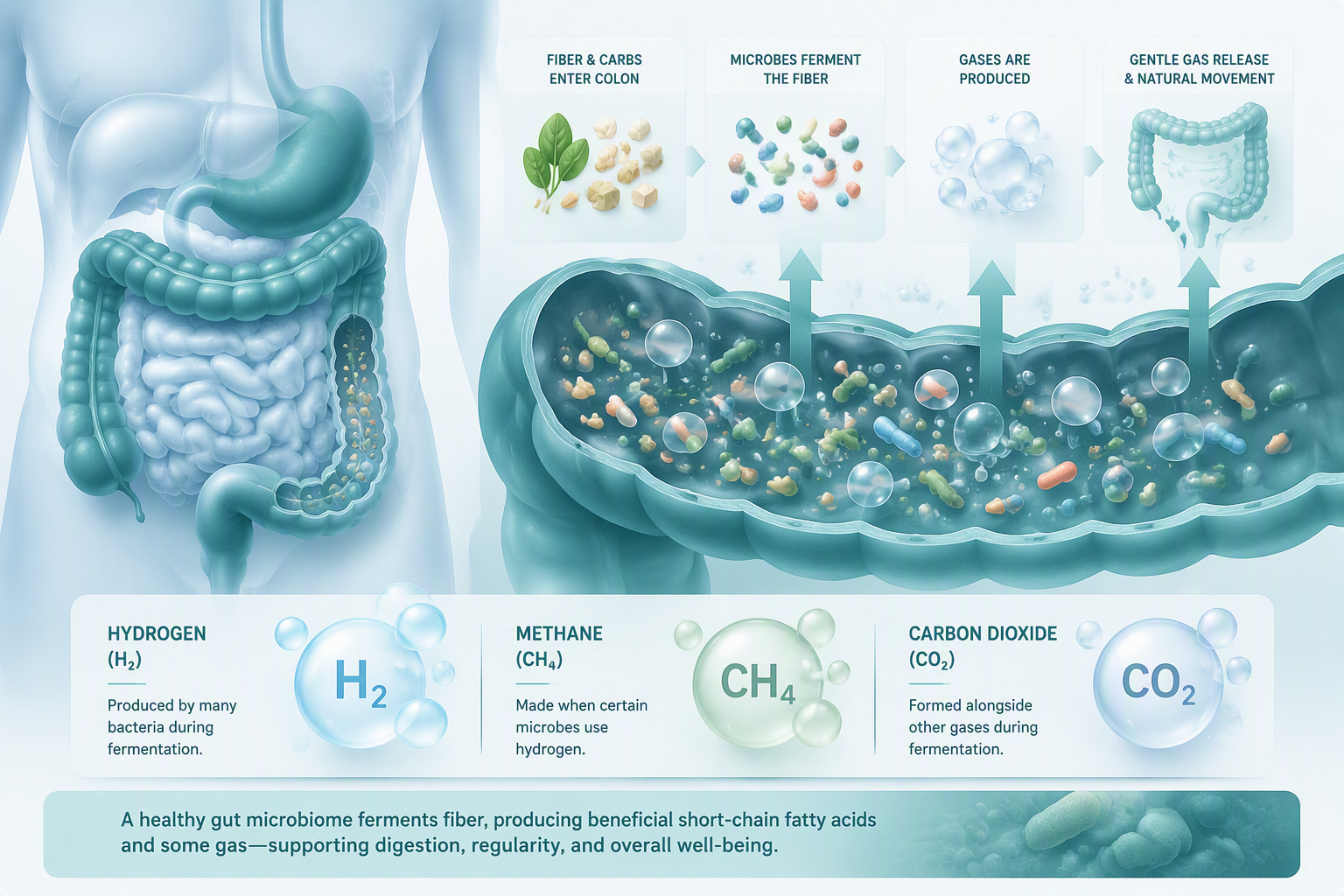
Alongside added ingredients and other digestive triggers, probiotics can make you gassy, especially when you first start one or switch formulas. That does not automatically mean the product is harmful or ineffective. Gut bacteria fermentation can change for a time as newly introduced bacteria become active, making ordinary digestive processes more noticeable.
Some carbohydrates are not fully absorbed in the small intestine. They then reach the colon, where bacteria use them for fuel and release hydrogen, methane, and carbon dioxide, gases that can cause burping, probiotic gas and flatulence, abdominal fullness, or bloating.
A probiotic can affect which microbes are most active and how they process fiber and incompletely digested carbohydrates. These gut flora changes, also called microbe shifts, may make gas more noticeable for a while. A diet high in fermentable foods can add to the effect, while eating quickly, chewing gum, and carbonated drinks may increase swallowed air.
Several factors can make probiotics and bloating more likely:
- Added prebiotic fibers: Some formulas contain prebiotics in probiotics, such as inulin or fructooligosaccharides (FOS). These fibers feed certain bacteria, but rapid fermentation can increase gas or bloating if you are sensitive.
- A higher starting amount: Colony-forming units (CFUs) describe the amount of live microorganisms in a product. A high-CFU, multi-strain formula creates a larger initial bacterial load and may intensify fermentation-related symptoms for some people.
- Your overall diet: Beans, onions, garlic, wheat-based foods, some fruits, and certain sweeteners contain fermentable carbohydrates. Starting a probiotic during a period of higher intake can make the source of discomfort harder to identify.
- The full formula: CFU count alone does not determine tolerance. Strains, added fibers, flavorings, enzymes, your diet, and your digestive system can all affect your response.
The Supplement Facts panel and ingredient list can help you separate probiotic strains from added ingredients. For a focused tolerance trial, a product with a clearly named strain and fewer extras is often easier to assess than a combination product containing probiotics, digestive enzymes, and prebiotic fiber. Keeping the trial to one product gives you a clearer comparison.
IBS can also change how gas feels. Many people with IBS have visceral hypersensitivity, meaning the nerves in the gut react more strongly to normal stretching and movement. During an IBS flare, even a modest amount of gas may feel like painful pressure, cramping, or severe bloating.
That sensitivity is separate from whether a probiotic strain has been studied for IBS symptoms. A strain that may help manage symptoms for some people can still cause temporary gas, and a product’s strain, formula, and your individual response all matter.
A simple trial can make the pattern clearer:
- Choose one clearly identified probiotic product or strain instead of changing several supplements at once.
- Keep meals and other new supplements reasonably consistent while monitoring gas, bloating, bowel changes, and pain.
- Check for inulin, FOS, or other fermentable added ingredients before assuming the probiotic itself is the problem.
- Reassess the product if symptoms persist, become more disruptive, or clearly worsen rather than pushing through ongoing discomfort.
Possible SIBO deserves extra care. With SIBO, bacteria may ferment food earlier than usual in the digestive tract, which can make gas, bloating, and cramping more pronounced. These symptoms have many possible causes, so self-diagnosis is not reliable.
How Can You Check Your Probiotic Label?
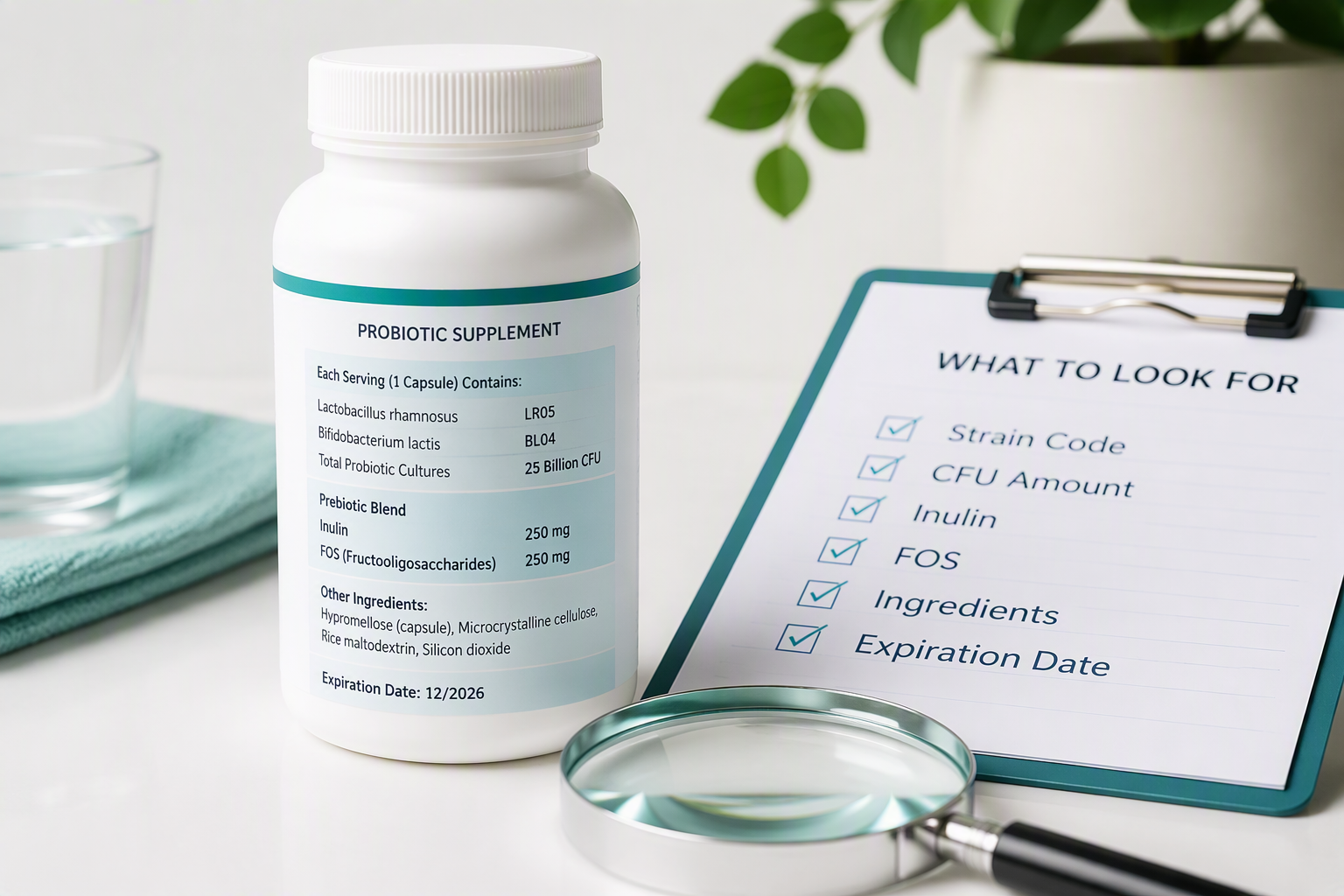
To separate a probiotic's effects from the fermentation and formula factors discussed above, front-label claims such as "digestive support" are not enough to tell whether a probiotic could be contributing to gas. Check the Supplement Facts panel for the full genus, species, and strain code, such as Bifidobacterium longum subsp. infantis 35624 or Lactiplantibacillus plantarum 299v. Genus names may change with scientific classification, but the strain number is the more dependable identifier.
That detail matters because effects are specific to the strain and the finished product. Findings tied to 35624 or 299v do not automatically apply to a product labeled only Bifidobacterium infantis or Lactobacillus plantarum. When a strain code is missing, it is harder to judge what changed when symptoms begin.
Several label details can help narrow the possible cause:
- Daily dose: Check the colony-forming units, or CFUs, per capsule or full daily serving. Also look for whether that count is guaranteed through the expiration date rather than only at the time of manufacture.
- Directions for use: Note whether the formula calls for one capsule, multiple capsules, or use with food. CFUs and bloating may be linked during the first days, particularly if you begin with a high dose while gas is already bothersome.
- Strain count: A multi-strain blend is not automatically a poor choice. Still, many strains combined with a high CFU count create more possible reasons for a reaction.
- Prebiotic fibers: Inulin, FOS, galactooligosaccharides (GOS), chicory root, and artichoke extract can ferment quickly in the colon. Inulin and gas can occur in sensitive digestion, while FOS gas may arise from the fiber rather than the probiotic.
- Other ingredients: Review the full ingredient and allergen list for dairy or lactose, soy, gluten, egg, sweeteners, flavorings, capsule ingredients, digestive enzymes, and added fiber. "Sugar-free" and "natural" do not mean a product has no potential digestive triggers.
A synbiotic combines probiotics with prebiotic fiber. To reduce probiotic gas, a probiotic-only formula without added inulin, FOS, artichoke extract, or other prebiotics may offer a clearer comparison than a gummy, flavored powder, or combination product with enzymes and fibers.
Starting probiotics slowly can also make symptoms easier to interpret. Taking probiotics every other day is one cautious approach for some people, but follow the product directions and guidance from a qualified healthcare professional. A clearly labeled single-strain product with a stated dose is often easier to assess over a short period than a broad blend, even though it is not necessarily better for everyone.
A short daily record can help separate a less-tolerated formula or dose from unrelated digestive changes.
- Record the product name, complete strain designation, number of strains, daily CFUs, and whether the CFU count is guaranteed through expiration.
- Note added prebiotics, enzymes, sweeteners, fibers, and the exact directions you follow.
- Track the start date and daily symptoms, including gas, bloating, abdominal discomfort, constipation, diarrhea, and bowel changes.
- Include major diet changes, fiber intake, new foods, and other supplements.
- Avoid changing another probiotic, enzyme, or prebiotic during the 14 days when it is safe to do so.
This record can make it easier to work out how to stop gas from probiotics without guessing. If you take prescription medicine, probiotic drug interactions may affect whether a particular product is appropriate.
Pregnancy involves separate safety considerations beyond gas or bloating. Review probiotics during pregnancy with a qualified healthcare professional before starting or changing a supplement.
How Can You Reduce Gas From Probiotics?
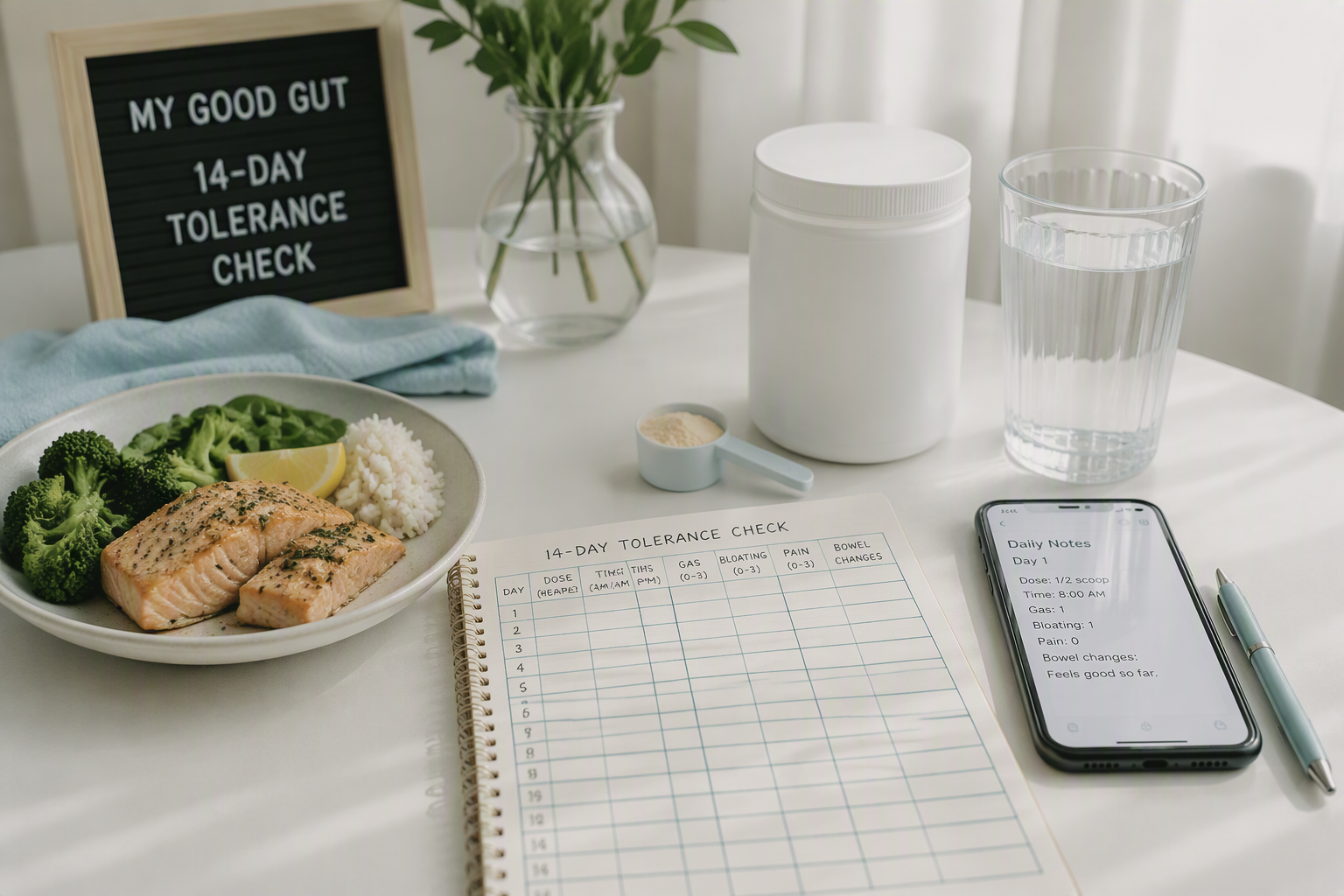
Once the label has helped identify the strain, dose, and added ingredients, a slow, one-variable approach can help you tell whether a probiotic is a good fit. Mild gas may ease as your digestive system adjusts to gut flora changes, but pain, worsening bloating, or symptoms that disrupt daily life are not symptoms you need to push through. Keeping the trial to one variable also means noticing what else you consumed, since drinking while taking a probiotic can produce bloating that has nothing to do with the supplement.
Follow the label’s directions for dose, timing, food, and storage. Research on probiotics and IBS may identify strains associated with symptom relief, but it does not show that those strains prevent startup gas. Your gut microbiome, the specific strain or blend, and any added ingredients can all affect tolerance.
When the label and manufacturer allow it, begin with half the suggested dose for three to five days. Increase only when symptoms are manageable. A lower colony-forming unit (CFU) product may be easier to adjust than a standard capsule. Never open, crush, or split a capsule unless the manufacturer confirms that it is safe and that the dose will remain accurate.
A cautious adjustment plan can include:
- Start with a lower dose: Stay at the reduced amount for three to five days before increasing, rather than moving to the full dose as soon as you have one better day.
- Use alternate-day dosing if needed: If a smaller dose is not practical or gas continues, take the same product, amount, and timing every other day at first. Move toward the labeled daily schedule only if you tolerate it.
- Change only one variable: Do not increase both the dose and frequency at once. Keeping the rest of your routine steady makes it easier to identify what is affecting your symptoms.
- Take it with a light meal when compatible: A light breakfast or lunch may make gas or stomach discomfort less noticeable for some people. Empty-stomach instructions on the label always take priority.
- Support regular bowel movements: Fluids and gentle movement may help when constipation adds pressure and bloating. They will not fix a product or ingredient that does not agree with you.
Use a 14-day tolerance check rather than changing your entire diet at the same time. Each day, note the full strain name or code, whether the product is a single strain or blend, the CFU amount, dose, timing, and changes in gas, bloating, pain, and bowel habits. This record can be particularly useful when you are considering probiotics and SIBO, since bloating may already be part of the symptom picture and can need individualized medical guidance.
Keep the trial simple so other changes do not blur the result:
- Check added fermentable ingredients: Inulin, fructooligosaccharides (FOS), and galactooligosaccharides (GOS) can cause gas independently of the probiotic organisms.
- Avoid adding other supplements: Do not introduce a prebiotic, digestive enzyme, or fiber supplement during the same trial.
- Keep food patterns steady: Major changes in beans, cruciferous vegetables, carbonated drinks, or restrictive diets can change gas and bowel habits on their own.
Terms such as microbe shifts and probiotics microbiome stabilization can sound reassuring, but they do not predict how you will feel. A probiotic that causes persistent symptoms may not be a good match, regardless of its strain list or marketing.
Stop the probiotic instead of repeatedly raising the dose if symptoms are severe, worsening, or unchanged after the adjustment period. Seek advice from a qualified healthcare professional for persistent symptoms or warning signs such as:
- Severe or escalating abdominal pain
- Vomiting, fever, or signs of dehydration
- Blood in the stool or black, tar-like stool
- Unintentional weight loss
- New bowel changes that continue or wake you from sleep
What Does IBS Evidence Actually Show?
IBS can make a small amount of gas feel far more intense than it is. Visceral hypersensitivity means your gut nerves react strongly to normal stretching, so ordinary gas may feel like painful pressure, cramping, or bloating. Fermentation can add gas, but symptom severity does not reliably show how much gas is present.
Slower gut movement, trapped gas, low-grade inflammation, and other IBS-related changes can also drive symptoms. That means digestive discomfort from probiotics alone does not prove that a product is helping or harming your IBS. Temporary probiotic side effects can occur after you begin a new product, and how long probiotic gas lasts varies with the strain, formula, dose, and your usual symptom pattern.
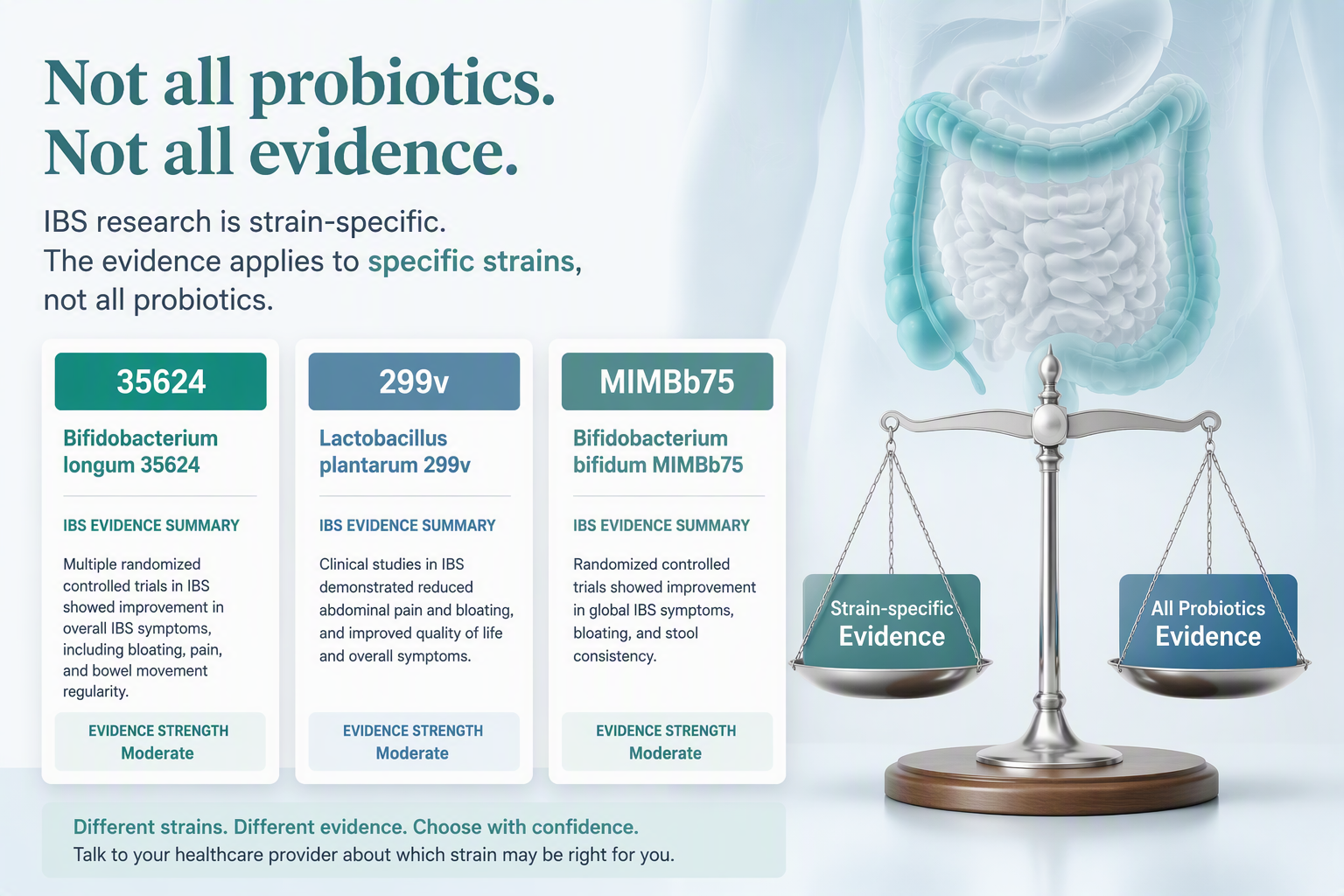
Research findings apply to the exact strain studied, not to every product within a species. Labels may use an older or newer genus name, but the strain code is the dependable match. For example, Bifidobacterium longum 35624 may still appear as Bifidobacterium infantis 35624, while Lactiplantibacillus plantarum 299v may be listed as Lactobacillus plantarum 299v or DSM 9843.
Several strains have IBS research, but none has been shown to prevent gas for everyone or treat IBS universally:
- Bifidobacterium longum 35624: A multicenter, randomized, double-blind, placebo-controlled dose-ranging trial enrolled 362 primary-care patients with IBS across bowel-habit subtypes. The study included women only, so its results are not established for men. The publication reported support from Procter & Gamble and included authors affiliated with the company (source). An earlier trial found improvement in every measured symptom except bowel-movement frequency and stool consistency. That earlier trial randomized 77 participants and reported product support from Procter & Gamble (source).
- Lactiplantibacillus plantarum 299v: In a small trial of 40 people, all 20 taking 299v reported abdominal-pain resolution, compared with 11 of 20 taking placebo (source). The result is encouraging, but it cannot predict your response or show that every L. plantarum product works the same way.
- Bifidobacterium bifidum MIMBb75: A randomized, double-blind, placebo-controlled trial reported better IBS symptoms and quality of life with MIMBb75 (source). That evidence belongs to MIMBb75, not to every supplement labeled B. bifidum.
- Lactobacillus acidophilus DDS-1: A 2023 network analysis ranked DDS-1 first for improvement on the IBS Symptom Severity Scale, with a Surface Under the Cumulative Ranking curve, or SUCRA, value of 92.9 percent (source). This is a ranking within a network of studies, not direct head-to-head proof that DDS-1 is better than every other probiotic for every person.
The same analysis did not formally pool adverse-event data because many trials did not determine whether symptoms were caused by the probiotic or reflected a usual IBS flare. That limitation matters when you are trying to interpret new bloating or cramping.
A short, focused trial can make your response easier to judge:
- Use one clearly identified product at a time. Adding a probiotic alongside a prebiotic or digestive enzyme makes the cause of new symptoms harder to identify.
- Watch the full symptom pattern. One day of bloating may not mean much when your IBS symptoms already change from day to day.
- Reassess after about two weeks. If gas, bloating, or cramping continues, worsens, or feels different from your normal pattern, discuss the strain, formula, and dose with a qualified healthcare professional.
Probiotics and SIBO need added caution. With suspected or diagnosed SIBO, extra microbes may make gas, bloating, or cramping more noticeable for some people.
When Should You Stop and Seek Care?
Whether symptoms occur during an IBS flare or a probiotic trial, mild gas, bloating, or looser stools can happen when you start a probiotic and often settle within a few days or a few weeks. If those symptoms have not clearly improved after about two weeks, pause the probiotic and consult a qualified healthcare professional. The strain, dose, or added ingredients may not suit you, or another digestive condition may be involved.
Severe, persistent, worsening, sharp, or recurring abdominal pain is not a typical adjustment symptom to push through. Stop the probiotic and seek medical advice promptly if pain disrupts sleep, meals, work, or other daily activities, especially if it occurs with marked abdominal swelling or tenderness. A supplement may be part of the picture, but it should not be assumed to be the only cause.
If you develop any of the following, stop the probiotic and contact a clinician promptly:
- Ongoing or severe diarrhea.
- Repeated vomiting.
- Fever.
- Blood in your stool.
- Severe or rapidly worsening abdominal pain.
- Abdominal pain with substantial swelling or tenderness.
These symptoms may point to dehydration, infection, inflammation, bleeding, or another problem that needs evaluation. Seek urgent care sooner if symptoms become severe quickly, you cannot keep fluids down, or you feel faint or unusually weak.
Possible allergic reactions also require immediate attention. If you develop hives, a widespread rash, notable new skin changes, or itching with swelling, stop the product and get professional advice before restarting a probiotic after any new skin reaction.
Emergency care is needed for signs of a serious allergic reaction, including:
- Wheezing or trouble breathing.
- Throat tightness.
- Swelling of the lips, tongue, or face.
A clear increase in bloating, gas, diarrhea, or discomfort after starting a probiotic can overlap with symptoms sometimes associated with SIBO. Brain fog or short-term memory problems alongside worsening digestive symptoms are additional reasons to stop the product and discuss the pattern with a clinician. Reports suggest an association in some cases, not proof that probiotics cause SIBO. IBS flares, food intolerances, medications, infections, and other digestive conditions can cause similar symptoms.
When symptoms are mild but still concerning, changing one factor at a time can make the pattern easier to interpret:
- Pause the probiotic rather than increasing the dose in the hope that symptoms will pass.
- Note when symptoms began, how they changed, and whether they eased after you stopped the product.
- Bring the product label, including strain names and added ingredients, to a qualified healthcare professional.
- Discuss whether another strain, a lower dose, or a non-supplement option better fits your symptoms before trying another product.
Extra caution is appropriate if you have a weakened immune system, serious illness, or a medically complex condition. Individualized medical advice is important before starting, restarting, or continuing a probiotic because rare bacterial or fungal infections may pose greater risk in these situations.
This information is educational and does not replace personalized medical advice.
Probiotics and Gas FAQs
These FAQs address common concerns about probiotics and gas, from temporary digestive changes to symptoms that may need personalized guidance.
1. Do Probiotics Cause Gas at First?
Yes. Mild gas, bloating, or abdominal discomfort can occur as new probiotic microbes interact with bacteria already in your gut and ferment carbohydrates and fiber, producing hydrogen and methane. Starting probiotics slowly or taking probiotics every other day may reduce probiotic gas, which often improves within 3 to 14 days. For how to stop gas from probiotics, reassess the product and speak with a qualified healthcare professional if symptoms persist beyond two weeks, worsen, or become severe.
2. Does Probiotic Timing Affect Gas?
Timing can affect comfort, though no schedule works best for everyone. A light meal may feel gentler as your gut microbiome adjusts to changes in gut bacteria fermentation, but follow the label if it calls for an empty stomach. Take it consistently, stay hydrated, and consider every-other-day use if daily dosing clearly increases gas or bloating. Stop experimenting and speak with a qualified healthcare professional if symptoms persist, become severe, or worsen.
3. Can Probiotic Foods Cause Gas?
Yes. Fermented foods, including yogurt, kefir, kimchi, sauerkraut, and kombucha, can cause gas as live cultures ferment fiber and undigested carbohydrates in your colon, creating hydrogen, methane, and carbon dioxide. Other ingredients matter too. Lactose in yogurt or kefir may cause bloating, cramps, or gas if you do not digest it well, and larger portions can be harder to tolerate. If symptoms occur with one food only, its ingredients and serving size may be the cause rather than a probiotic capsule’s strain or excipients.
4. What Foods Worsen Probiotic Gas?
Probiotic gas and flatulence can feel worse when several fermentable foods, such as beans, broccoli, cabbage, or fiber-rich foods you do not tolerate well, are eaten together. Carbonated drinks add swallowed air, and dairy may contribute if you have lactose intolerance. Sugar alcohols, including sorbitol, xylitol, and erythritol, can also trigger bloating. Check the label for inulin and gas concerns, FOS gas, or artichoke extract. Try changing one food or product feature at a time to pinpoint the cause.
5. Are Probiotics Working If You Have Gas?
Gas alone does not show whether a probiotic is helping or harming you. Over the first 3 to 14 days, notice the overall trend: gas should ease rather than worsen, your original symptoms may improve, and eating, sleeping, working, and using the bathroom should feel more comfortable. An adjustment period is only worth continuing when benefits outweigh discomfort.
Responses vary by strain, formulation, dose, and duration of use. If gas or bloating lasts beyond about two weeks, becomes severe, or occurs with sharp pain or other concerning symptoms, speak with a qualified healthcare professional.