


Iberogast, sold as STW 5, is one of the few herbal options for IBS with placebo-controlled trial data behind it. In a randomized, double-blind trial of 208 people, it reduced overall IBS symptom scores by 1.5 points more than placebo. That's a real difference, and it's also a modest one, which is the honest starting point for deciding whether to try it.
This guide covers what a 2 to 4 week trial should look like, how to tell whether it's working for your particular IBS pattern, and the point at which continuing stops making sense. It also covers the parts that tend to be buried: the liquid drops are 31% ethanol, and the US label rules the product out entirely during pregnancy and breastfeeding.
There's also the six-herb and nine-herb confusion. The US and European products contain different ingredient lists, most of the published research was done on the European version, and one of the extra European herbs is the reason for much of the liver-safety attention this product receives.
Iberogast for IBS Key Takeaways
- A randomized, double-blind, placebo-controlled trial in 208 IBS patients found a 1.5-point greater symptom reduction than placebo, at p below 0.0004.
- Use either labeled liquid drops or softgels, taken three times daily before or during meals, and do not mix formats.
- Liquid drops contain 31% ethanol, about 0.31 mL per 20-drop serving, while softgels contain less than 2% but are not alcohol-free.
- Track symptoms before and during the trial to identify consistent changes rather than isolated good days.
- The US label says do not use during pregnancy or breastfeeding, or under age 18.
- Avoid it with pre-existing liver disease unless a clinician approves, and stop immediately for jaundice, dark urine, pale stools, severe fatigue or upper-right abdominal pain.
- The label's own limits override a 2 to 4 week trial: seek advice if symptoms persist beyond a week, and stop if diarrhea lasts more than two days.
- The US product is a six-herb blend; the European nine-herb version adds angelica, milk thistle and greater celandine.
Does Iberogast STW 5 Improve IBS Symptoms?
Iberogast is also sold as STW 5, including a liquid herbal preparation. If you're considering Iberogast for IBS, the practical issue is whether it may help manage abdominal pain, cramping, bloating, gas, constipation, diarrhea, or alternating bowel habits that disrupt your day.
Symptoms can shift without a clear food trigger. A short, structured trial is more useful than judging the product by a promise to remove IBS. Track changes in your usual symptoms and daily function instead.
Compared with other IBS supplements, Iberogast has a broader proposed action:
- Fiber: Changes stool form and may be more relevant when constipation or loose stools is the main concern.
- Digestive enzymes: Target the breakdown of particular foods.
- Probiotics: Act on the gut's microbial environment.
- STW 5 Iberogast: Is intended to affect the gut wall, including digestive movement and sensitivity to normal gut signals.
That difference may suit symptoms that don't track consistently with one food. It's a weaker substitute for a targeted approach when a specific food repeatedly causes symptoms.
IBS can involve several processes at once, including faster or slower movement through the digestive tract, increased sensitivity to normal stretching, and fermentation-related gas. A multi-target herbal product may therefore fit a mixed symptom pattern better than a product focused only on stool consistency. That rationale does not mean every symptom will improve to the same degree.
The most directly relevant IBS trial reported the following:
Endpoint | Comparison | Effect | P-value | Participants |
|---|---|---|---|---|
Overall IBS symptom score | STW 5 versus placebo | 1.5 points greater reduction with STW 5 | <0.0004 | 208 |
In a randomized, double-blind, placebo-controlled trial, 208 people with IBS had a 1.5-point greater reduction in overall symptom scores with STW 5 than with placebo. The difference was statistically significant and described as clinically meaningful. A review of 12 STW 5 trials in functional dyspepsia and IBS, conducted since 1990, also reported statistically significant effects in double-blind randomized studies. One trial found efficacy comparable to cisapride, a drug that increases digestive movement. Reported adverse drug reactions across those trials occurred in 0.04% of participants (Ottillinger B, Storr M, Malfertheiner P, Allescher HD, Wiener Medizinische Wochenschrift, 2013, source).
Those findings need two qualifications. The review was associated with the manufacturer rather than being an independent systematic review. In addition, much of the underlying research involved a nine-herb European formulation, while the product sold to many US readers contains six herbs. Neither issue cancels the results, but both limit confidence that the findings apply exactly to the product in your cabinet.
For Iberogast bloating, abdominal pain, and cramps, expectations should remain modest. A 1.5-point advantage over placebo suggests a real but limited average benefit, not a transformative change in IBS. Pain or cramping may offer the earliest useful signal, while gas, bloating, and stool regularity may change more slowly or not at all.
A short trial may be reasonable if notable pain or cramping occurs with bloating and unpredictable bowel habits. Use a simple record that separates symptoms from major food or lifestyle changes:
- Set a baseline: Note pain, bloating, stool pattern, and how much symptoms interfere with your routine before starting.
- Watch the early signal: Look for meaningful change in cramping or discomfort during the first week, without expecting every symptom to shift together.
- Use a stopping rule: If the planned trial period brings no clear benefit, stopping is more sensible than continuing indefinitely.
Results vary by person, and supplement advice should be individualized. This content is for educational purposes only and is not a substitute for personalized medical advice. Digestive symptoms can have many causes, so consult a qualified healthcare professional for persistent, severe, or worsening symptoms.
How Should You Take Iberogast Safely for IBS?
You can take Iberogast in a steady, meal-based routine, but the appropriate format depends on your symptoms, preferences, and safety needs. Iberogast is not for children under 18. If you have severe, worsening, or unexplained digestive symptoms, speak with a clinician before starting because they may point to a condition beyond irritable bowel syndrome (IBS).
Bloating after lunch, cramps during a workday, and unpredictable bowel movements can make a product trial difficult to judge. Keeping your routine steady and recording simple symptom notes can help you see whether anything changes without altering several IBS habits at once.
For adults 18 and older, the labeled dose is:
- Liquid drops: Take 20 drops, about 1.0 mL, three times daily before or during meals.
- Softgels: Take 1 softgel three times daily before or during meals.
Anchor each dose to meals you actually eat. Use either liquid drops or softgels according to that product's label, and don't combine formats or borrow a dose from another product.
The liquid drops are the preparation used in the clinical evidence discussed above. They contain Bayer's STW 5 six-herb blend and 31% ethanol by volume. Measure 20 drops with the built-in dispenser. If you mix the drops into a beverage, drink it right away rather than saving it for later. The ingredient list, ethanol amount, and liver safety information for this preparation should not be applied automatically to a different herbal blend, and no other herbal product should be treated as a substitute.
- Iberogast Softgels, 30 count, rated 4.3 stars from about 4,000 reviews. This is the practical default if you want a measured, swallow-and-go option for a workday or want to avoid most of the alcohol in the drops. The manufacturer describes the softgels as containing less than 2% ethanol and the same six-herb blend in capsule form. Take one with water at each scheduled meal. If you miss a dose, don't double it, just resume at the next meal.
- Iberogast Gummies, 30 count, elderberry flavored, rated 4.2 stars. Gummies may work for someone who dislikes swallowing pills, but they deserve more caution for IBS. Sweeteners and flavoring can worsen symptoms for some people, and a gummy provides less dosing control than measured drops. Check the ingredient panel for sugar alcohols before choosing this format.
Possible side effects and the full stop-use guidance appear in the safety review below. For this decision, confirm that you're an adult, choose one labeled format, take it with meals, and track symptoms consistently.
What Should You Expect During a 2 to 4 Week Trial?
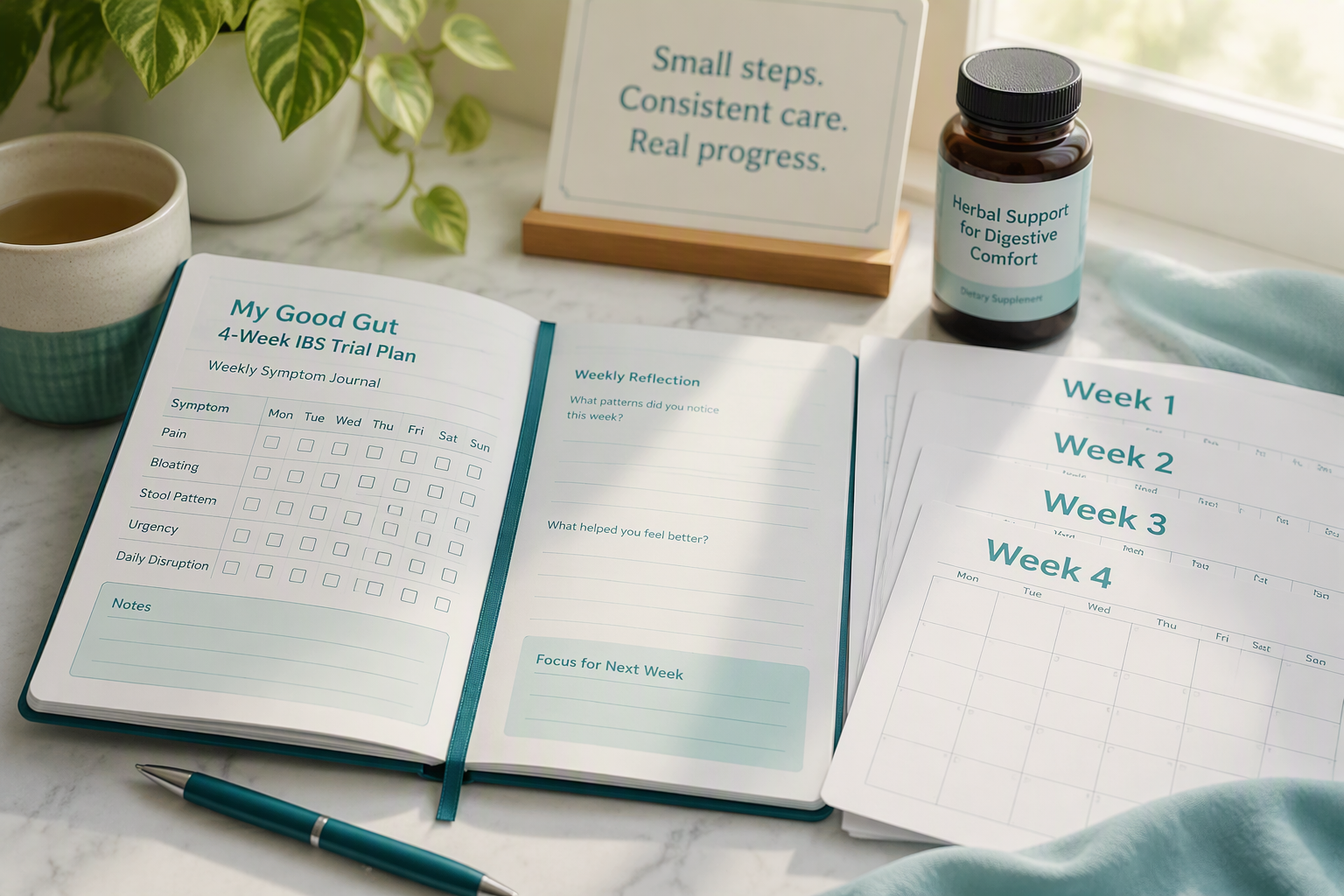
A 2 to 4 week Iberogast trial should assess whether your symptoms become easier to manage, not promise a cure. IBS symptoms can shift from one day to the next, so early progress may look like less discomfort before bowel habits become more predictable.
Iberogast IBS relief is often considered for bloating, cramps, and discomfort across different IBS patterns. Less abdominal pain or post-meal discomfort may appear before changes in stool frequency, urgency, or consistency. Comfort may come first, while bowel regularity takes longer.
The statement that Iberogast works within 15 to 30 minutes needs careful context. The manufacturer and some users describe quick, subjective easing after a dose, but that experience does not show a lasting change in your IBS pattern. One dose cannot tell you whether Iberogast is helping overall, so avoid making a decision after a single use.
Keep the trial readable by changing one major factor at a time. If you're still adjusting a fiber supplement, complete that process before adding Iberogast. Starting Metamucil psyllium safely involves gradual dose changes over several weeks, and starting both experiments together makes it harder to identify the cause of a benefit or side effect.
The same caution applies to lactase and enzyme blends when you're testing a specific trigger food. These are separate options, not competing treatments, but combining them can make both results difficult to interpret.
Define improvement according to your IBS subtype:
IBS pattern | Changes worth watching |
|---|---|
IBS-D, or diarrhea-predominant IBS | Less urgency, fewer disruptive bathroom trips, and more formed stools |
IBS-C, or constipation-predominant IBS | Easier bowel movements, less straining, and a steadier rhythm |
IBS-M, or mixed IBS | Fewer swings between constipation and diarrhea, with more predictable days |
During weeks 1 and 2, look for a repeatable pattern instead of relying on one good day. Track your main symptom, stool pattern, urgency, meals that may have affected you, and whether symptoms interrupted work, sleep, travel, or class. Judge constipation and diarrhea by the direction of your overall pattern, not by a small shift in one symptom.
Weeks 3 and 4 are the decision window. Continue only if improvement is consistent and meaningful enough to reduce daily disruption. If symptoms remain essentially unchanged after four weeks, stopping is reasonable because additional cost does not make an unhelpful response more likely.
Safety concerns take priority over this timeline. Pregnancy or breastfeeding, a history of liver problems, or concern about the product's ethanol content may make Iberogast unsuitable. Check the package information and speak with a qualified healthcare professional before use when any of these concerns apply.
This content is for educational purposes only and is not a substitute for personalized medical advice. Digestive symptoms can have many causes. Consult a qualified healthcare professional for persistent, severe, or worsening symptoms. Results vary by person, and supplement advice should be individualized. A shorter, calmer episode or fewer daily interruptions can be a useful result even if bowel habits have not fully settled.
Who Should Avoid Iberogast and When to Stop?
Iberogast isn't for everyone. Consider it only when your symptoms resemble a typical IBS pattern, such as recurring bloating, cramps, or changing bowel habits. Its role is to help manage symptom comfort, not to provide a diagnosis or replace prescribed care.
Get clinician input before trying it if you have warning signs that could point to another condition:
- Unexplained weight loss: Unplanned weight loss needs medical evaluation rather than self-treatment.
- Blood in your stool: Visible blood or black, tarry stool should be assessed promptly.
- Fever: Fever with digestive symptoms may signal infection or inflammation.
- Anemia: Low iron or anemia can have causes that IBS does not explain.
- New or severe symptoms: Rapidly worsening pain, bowel changes, or other unusual symptoms warrant a clinician's review.
The US label excludes some people outright. Iberogast Liquid is labeled for adults age 18 and older and says not to use the product during pregnancy, while breastfeeding, or if you're allergic to any ingredient. These are label directions, not situations for trying a smaller dose or waiting to see what happens (source). Pregnancy and breastfeeding status may be especially relevant because IBS is diagnosed more often in women.
A history of liver disease changes the decision. Avoid Iberogast unless a clinician confirms it's appropriate if you have pre-existing liver disease or previously developed liver problems after taking a medicine or supplement. Bayer's professional information specifically directs people with pre-existing liver disease to consult a doctor before starting (source).
This restriction applies to Iberogast, not automatically to every IBS supplement. If this product isn't suitable, a clinician or pharmacist can help you consider options that act locally in the gut rather than relying on liver processing. Probiotics act in the gut lumen rather than through liver metabolism, and matching probiotic strains to symptoms is the step that decides whether one is worth trying. Collagen trials for IBS sit on thinner evidence, but they carry no liver-related caution either.
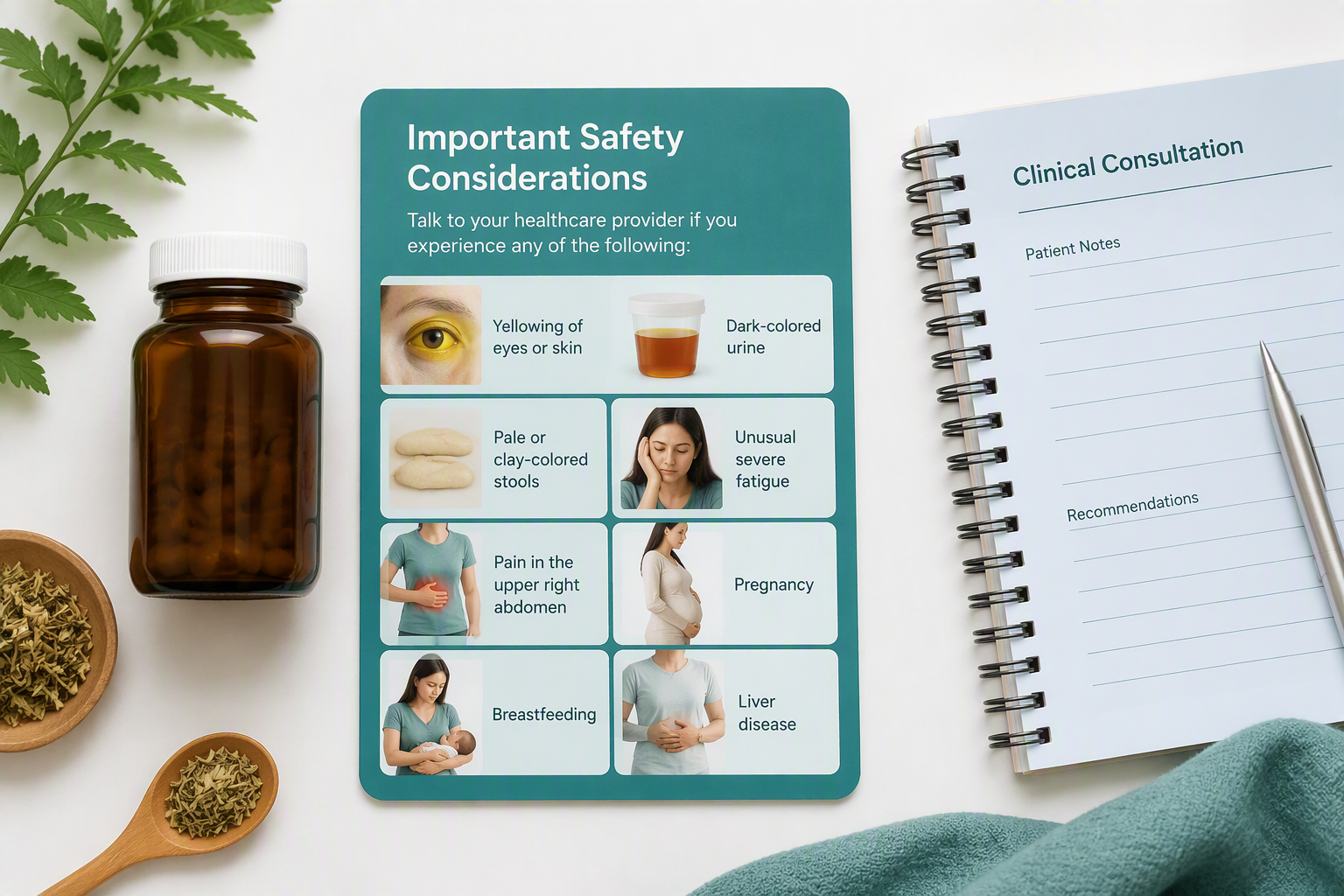
Stop Iberogast immediately and seek medical care if possible side effects suggest liver injury. Do not wait for these symptoms to fade:
- Yellowing skin or eyes: Jaundice can signal impaired liver function.
- Dark urine: A noticeable color change needs prompt attention.
- Pale or discolored stools: This can occur with problems affecting bile flow.
- Severe fatigue: Marked tiredness is more concerning when it appears with other liver symptoms.
- Persistent upper-right abdominal pain: Ongoing pain in this area should not be monitored at home.
Rare does not mean impossible. A 2022 case report described a 32-year-old woman with no prior medical history who developed abdominal pain, jaundice, and itching. Doctors found acute severe hepatitis and attributed it to Iberogast (source). Set that against the 0.04% adverse drug reaction rate cited in the evidence section: serious liver events appear uncommon, and rare is exactly why the warning signs are worth memorizing rather than assumed away.
The US label also sets safety checkpoints that override a planned 2-to-4-week trial:
- Get medical advice if symptoms worsen: Don't continue the trial while symptoms are moving in the wrong direction.
- Consult a healthcare professional if symptoms persist for more than one week: This is the label's limit for ongoing symptoms.
- Stop use and consult a healthcare professional if diarrhea lasts more than two days: Severe or persistent diarrhea can cause dehydration and may indicate something other than IBS.
The longer trial window helps you judge whether Iberogast provides benefit, while these shorter limits tell you when continuing is no longer appropriate. Stop sooner if side effects outweigh any improvement, and bring your symptom and food notes to a clinician rather than abandoning care.
This content is for educational purposes only and is not a substitute for personalized medical advice. Digestive symptoms can have many causes, so consult a qualified healthcare professional for persistent, severe, or worsening symptoms. Results vary by person, and supplement advice should be individualized.
How Do the 6 Herb and 9 Herb Versions Differ?
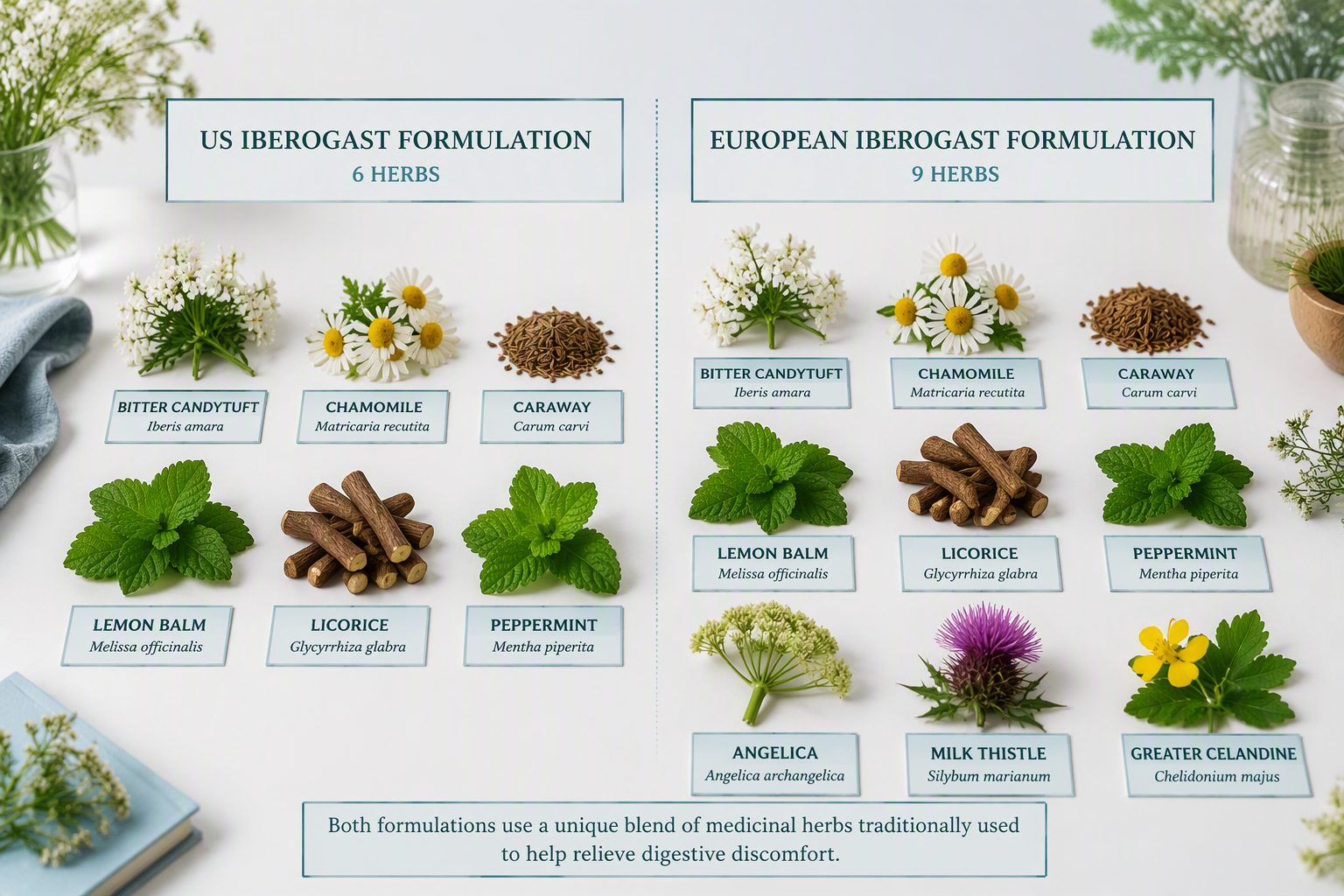
The Iberogast version you have is determined mainly by where you bought it. In the United States, the product is a 6-herb blend. In Europe, it is sold as a registered herbal medicine with 9 herbs. Different ingredient lists do not mean one source is wrong; the plant-extract composition varies by regional formulation.
The six herbs on the US Supplement Facts panel are:
- Bitter candytuft: Iberis amara, whole plant
- German chamomile: Matricaria recutita, flower
- Caraway: Carum carvi, fruit
- Lemon balm: Melissa officinalis, leaf
- Licorice: Glycyrrhiza glabra, root
- Peppermint: Mentha x piperita, leaf
Water and ethanol are listed as other ingredients. For the most accurate match, compare your bottle with the US label rather than relying on a general ingredients search (source).
The European formulation includes those six herbs and three additional ones:
- Angelica: Angelica archangelica, root
- Milk thistle: Silybum marianum, fruit
- Greater celandine: Chelidonium majus
These additions appear on the European package leaflet, not the US Supplement Facts panel. Greater celandine is the ingredient linked to much of the European regulatory attention concerning liver safety, so the regional distinction matters when you review product warnings.
Ingredient count alone does not make the US product a diluted or weaker version. The formulations share the main group of herbs used in published Iberogast research, although much of that trial evidence involved the European product. Findings may apply reasonably to the US formulation, but the match is not exact because the extracts differ by region.
Before a short trial, inspect the bottle itself:
- Six herbs only: The product matches the US formulation.
- Angelica, milk thistle, or greater celandine: The product matches the European formulation and is not automatically counterfeit or mislabeled.
A US bottle containing any of those three additions deserves extra caution. Check its market, read the package warnings, and ask a qualified healthcare professional whether its different ingredient profile is suitable for you.
Iberogast for IBS FAQs
These Iberogast for IBS FAQs cover practical questions about evidence, expected symptom relief, short-term use, and safety concerns that may call for guidance from a qualified healthcare professional.
1. Do gastroenterologists recommend Iberogast for IBS?
Some gastroenterologists do recommend Iberogast for IBS, but it isn't a first-line treatment in major U.S. IBS guidelines. Iberogast STW 5 is more often considered as an add-on when pain, cramping, or bloating continues despite standard approaches. Iberogast IBS relief may be possible, but expectations should remain realistic.
Guidelines prioritize treatments supported by larger, more consistent trial evidence, while Iberogast has a smaller placebo-controlled research base. A clinician may still consider tolerability, your symptom pattern, and what you've already tried. Bring those details to your appointment, including any liver history, since it may rule Iberogast out. Ask whether a short, time-limited trial fits your situation rather than whether the product is recommended in general.
2. Does Iberogast contain alcohol?
Yes. Iberogast liquid drops contain 31% ethanol by volume. Ethanol is the extraction solvent that draws active compounds from the herbs, a standard method for herbal tinctures. The US Supplement Facts panel lists water and ethanol (31%) under Other Ingredients (source).
The concentration can sound alarming, but the labeled amount is small. One serving, or 20 drops, contains 0.31 mL of ethanol, roughly 240 mg. At three servings per day, the total is about 0.93 mL. For context, one 20-drop dose is equivalent to about 6 mL of beer or 2.6 mL of wine, closer to a sip than a drink.
Alcohol still matters if you avoid it for religious or recovery reasons, take a medication that interacts with alcohol, or notice that alcohol worsens your IBS symptoms, which is common enough in this audience to be worth checking against your own symptom log before starting.
Softgels contain less than 2% ethanol, so they substantially reduce exposure but are not ethanol-free (source). If you need zero ethanol, neither format is suitable.
3. Can you take Iberogast with other IBS treatments?
Usually, you can take Iberogast with other IBS treatments, but a pharmacist or clinician should review your full medication and supplement list first. Combining treatments also creates a trial-design problem because starting Iberogast for IBS alongside another new approach makes it hard to tell what helped or caused possible side effects.
Iberogast STW 5 contains herbs that may interact with medications, and its liver-safety considerations call for more care than a fiber supplement. Keep other variables steady for 2 to 4 weeks, including during a fiber titration or elimination diet. Ask which possible side effects require stopping, and seek medical advice if they occur. Testing one change at a time takes longer, but gives you a clearer answer.
4. Can you take Iberogast long term?
Iberogast for IBS is generally studied as a defined trial, not as an indefinite daily treatment. Continued use should be a choice you make with a clinician, rather than an automatic refill. That approach differs from fiber, which many people use continuously when it fits their needs. For Iberogast STW 5, a helpful first month does not remove the need to review liver safety or decide whether ongoing treatment remains appropriate.
Liver-related events are uncommon, so this caution is not a reason for alarm. However, possible side effects are one reason periodic check-ins make sense instead of treating Iberogast as a standing daily routine. If a 2- to 4-week trial helps, episodic use during flare periods may reduce total exposure while still supporting symptom relief. Keep the liver warning signs from earlier in this guide in mind throughout use. Stop taking it and seek medical care if any appear, and discuss another option with your clinician before restarting.
5. Is Iberogast better than peppermint oil for IBS?
Neither option is clearly better for IBS, because each fits a different symptom pattern. Enteric-coated peppermint oil for abdominal pain has the larger IBS-specific evidence base, especially for pain and cramping, while Iberogast is a multi-herb product designed for a broader mix of digestive symptoms.
Peppermint oil may suit you when pain and cramps dominate your symptom picture. Iberogast may be worth considering when your symptoms span upper and lower gut complaints together, such as bloating alongside unpredictable bowel habits and abdominal cramping.
Side-effect profiles usually decide it rather than a head-to-head comparison, because no trial has tested the two against each other. Peppermint oil can worsen reflux or heartburn, which rules it out for some people with overlapping upper-gut symptoms. Iberogast carries the liver-related considerations covered earlier in this guide. Match the option to the risk you can live with, not to a ranking.