


If your bloating, cramping or bowel habits changed after you started or switched birth control, you’re probably trying to work out whether the two are connected. The honest answer is that they might be, and that timing alone can’t prove it.
This guide separates three things people tend to blur together: whether contraception can cause or worsen IBS, whether your flares are actually tracking your cycle, and whether an IBS flare can stop your pill from working. That last one has real rules attached, and they’re not what most people assume. Vomiting is judged by how soon it follows your dose. Diarrhea is judged by how severe it is and how long it lasts, not by how close it was to the pill.
You’ll also find a straight comparison of every method by whether your gut affects it at all, which is the question a general contraception guide never asks. Patches, rings, injections, implants and IUDs bypass digestion entirely. If severe flares regularly disrupt your pill routine, that fact matters more than which hormone you’re taking.
None of this replaces a conversation with a clinician, and the last section covers what to bring so that conversation goes somewhere useful.
IBS and Birth Control Key Takeaways
- Birth control may improve or worsen IBS symptoms, but timing alone cannot prove causation.
- Hormonal changes can affect gut movement, stool consistency, cramps, and pain sensitivity.
- One mild loose stool usually does not reduce pill effectiveness.
- Vomiting soon after dosing or severe diarrhea can limit oral contraceptive absorption.
- Patches, rings, injections, implants, and IUDs bypass digestive absorption concerns.
- Symptom and cycle tracking can clarify patterns for clinician discussions.
- Blood in stool, fever, dehydration, weight loss, or severe pain requires medical evaluation.
Can Birth Control Cause or Worsen IBS Symptoms?
Hormonal birth control may ease IBS symptoms for some people and worsen bloating, abdominal pain, gas, constipation, diarrhea, or cramps for others. A change after starting or switching methods can suggest a connection, but it does not prove birth control caused IBS or every flare.
That distinction matters. Similar symptoms can reflect different patterns:
- New symptoms: Constipation or diarrhea begins after contraception starts in someone without a previous IBS diagnosis.
- Worsening symptoms: Established IBS becomes more intense after starting, stopping, or changing a method.
- Cycle-related changes: Menstrual symptoms become easier to predict or less severe when hormone levels are steadier.
Improvement in period-related symptoms does not mean the contraceptive treats IBS. Menstrual timing, stress, diet, illness, medication changes, and another digestive condition can also affect symptoms. Reviewing other triggers behind IBS symptoms can help keep contraception from becoming the only explanation.
Sex-hormone receptors are found throughout the gastrointestinal tract. Estrogen, progesterone, and synthetic progestin may affect gut movement, digestion, sensitivity to normal intestinal activity, fluid balance, and stool consistency. Those effects could make stools harder or looser, or make ordinary gas and intestinal movement feel more painful.
Progestin may relax smooth muscle in the digestive tract and slow intestinal movement. For some people, that may contribute to constipation, bloating, gas, fullness, or abdominal discomfort. The response can differ by formulation and dose, while symptoms may overlap with genetic risk, dietary changes, stress, medication effects, or another condition. That is why a progestin-only method should be viewed as an individual pattern rather than a predictable pairing. Information about IBS genetics causes may also help place symptoms in context.
The gut microbiome, meaning the community of microorganisms in the digestive tract, is another possible pathway. Early findings and symptom reports link oral contraceptive use with microbial changes and symptoms such as bloating, diarrhea, constipation, gas, abdominal pain, pressure, fullness, or cramps. This evidence is still emerging. It does not establish combined pills or progestin-only pills as a direct cause of IBS.
Research presented to the American College of Gastroenterology reported an association between combined oral contraceptives and a higher risk of new constipation-predominant, diarrhea-predominant, or mixed-pattern IBS (source). Two things limit what it can tell you. It came from observational research, which can identify an association but cannot establish cause and effect. And it was presented as a conference abstract rather than a full peer-reviewed paper, so the result is preliminary; abstracts do not receive the same review as completed journal articles.
A symptom-and-cycle record can make a healthcare visit more useful. For several weeks, track:
- Contraception details: Record the method, dose if known, and dates you started, stopped, or changed it.
- Menstrual timing: Note bleeding and whether symptoms appear before, during, or after your period.
- Digestive symptoms: Record stool frequency and consistency, pain, bloating, gas, nausea, cramps, and pressure.
- Other influences: Include stress, illness, major diet changes, and medication changes.
- Absorption concerns: Mark missed pills, vomiting, or severe diarrhea, since these may affect oral contraceptive absorption.
This record can help separate a contraceptive effect from a short-lived illness or a cycle-related flare. Discuss the pattern and possible alternatives with a qualified healthcare professional rather than stopping prescribed contraception on your own. Persistent, severe, or worsening symptoms need medical evaluation, and the safest option depends on both symptom control and your contraceptive goals.
How Do Hormones and Menstrual Cycles Affect IBS?
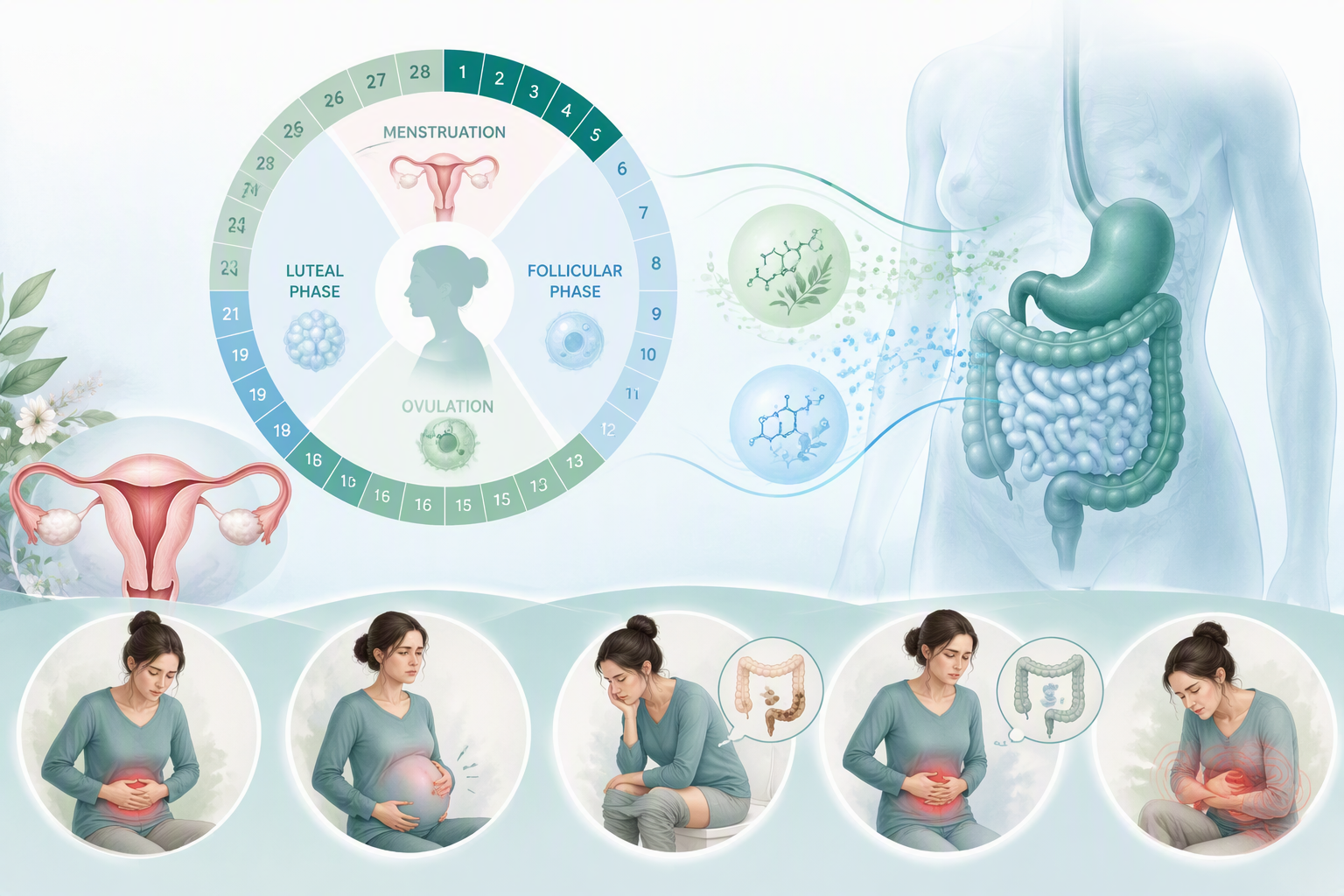
Hormones can affect IBS symptoms by changing how quickly the intestines move, how much fluid remains in stool, and how strongly the gut responds to normal stretching. That means menstrual hormones and IBS flare-ups may be related, but a new symptom, worsening IBS, and a cycle-linked flare are not automatically the same problem.
The gut contains receptors for estrogen, progesterone, and synthetic progestins used in some contraceptives. Signals through these receptors may influence gastrointestinal motility, digestion, fluid balance, and visceral sensitivity, which describes how the nervous system senses discomfort from the gut. The result may include constipation, diarrhea, urgency, bloating, nausea, or abdominal pain.
Timing often matters more than a single hormone level. Estrogen shifts around ovulation may coincide with bloating, cramps, pain, or slower bowel movements. During the luteal phase, progesterone changes can affect nausea, abdominal discomfort, and bowel speed. Progesterone also declines before menstruation, and that shift may change stool consistency or make existing symptoms easier to notice. This helps explain why hormonal changes and bowel symptoms can overlap without following exactly the same schedule each month.
Menstruation can resemble or intensify an IBS flare because prostaglandins and menstrual cramping affect nearby systems. Prostaglandins help the uterus contract, but they may also stimulate intestinal activity, leading to cramps, urgency, loose stools, or diarrhea. The uterus, pelvic organs, and bowel sit close together, so overlapping signals can heighten visceral sensitivity and make menstrual and intestinal pain feel stronger. When symptoms start before bleeding, separating a period from an IBS flare can be especially difficult.
Many people report changes in pain, bloating, constipation, diarrhea, nausea, or urgency before or during menstruation, but this pattern is not universal. Poor sleep, anxiety, caffeine, dietary changes, and pain can occur at the same time and intensify symptoms. A single hormone should not automatically receive the blame, and hormonal triggers for IBS can be considered alongside these other factors.
Hormonal contraception may help when symptoms closely follow menstruation. Some methods smooth or suppress the natural rises and declines of the cycle, which may reduce period-related cramping and bowel changes. Lower pelvic prostaglandin activity may also reduce menstrual pain that aggravates nearby gastrointestinal discomfort.
The evidence does not support one answer for everyone:
- What may fit a cycle-linked pattern: Symptoms that reliably increase before or during bleeding may respond when a method reduces hormonal fluctuations or menstrual cramping.
- What remains uncertain: Research into gut hormone receptors, visceral sensitivity, and the microbiome may help explain different responses, but it cannot show that a specific contraceptive caused or relieved one person’s IBS.
- What personal reports can show: An individual may notice better or worse symptoms after starting, stopping, or switching methods, but that experience cannot predict what will happen to someone else.
Some people have fewer cramps but still notice heavy bleeding, fatigue, breast soreness, or mood changes. Others develop more bloating, nausea, pain, or bowel changes after changing methods. Hormonal contraception is not an IBS treatment, so track bleeding, pain, stool pattern, and timing before making a change, then discuss the pattern with a qualified healthcare professional.
Can Diarrhea or Vomiting Reduce Pill Effectiveness?
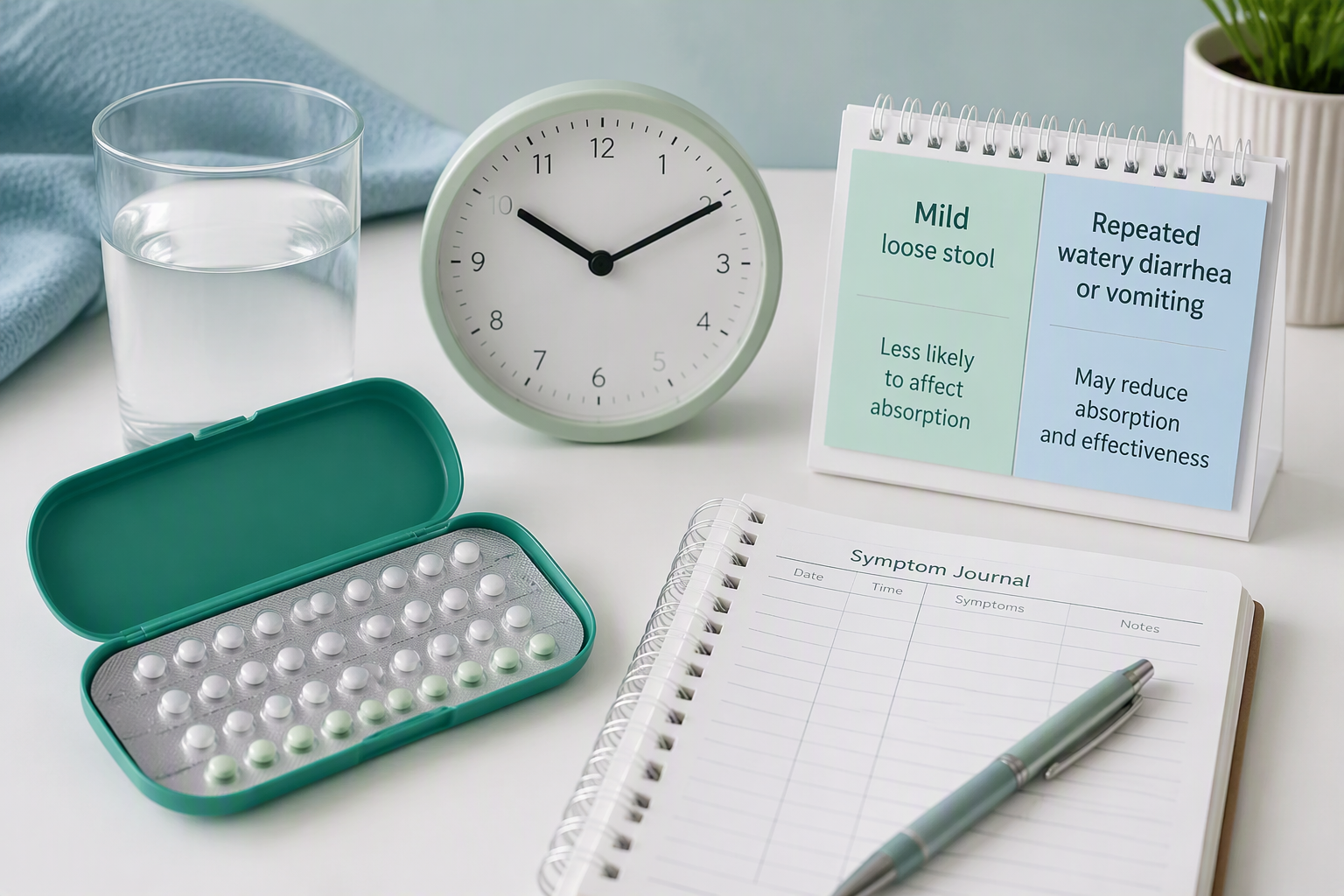
Vomiting or severe diarrhea can reduce how much hormone your body absorbs from an oral contraceptive, but an IBS flare alone does not automatically make the pill ineffective. Vomiting is judged by how soon it happens after your dose. Diarrhea is judged by its severity and duration, not by how close it occurs to the dose.
Oral contraceptive hormones must pass through the digestive tract before entering your bloodstream. Rapid transit, repeated watery stools, or vomiting can limit absorption. Mild bloating, abdominal pain, or a single loose bowel movement during an IBS flare usually does not require the same response. That distinction matters, because otherwise every IBS-D symptom starts to feel like a contraceptive emergency.
Vomiting roughly two to three hours after taking a combined pill may mean the dose was not fully absorbed. Guidance varies by product. NHS guidance advises taking another pill as soon as possible when vomiting occurs less than three hours after a combined pill, with the window extending to four hours for some brands, including Qlaira and Zoely (source). Other guidance uses a two-hour window (source).
Check your package leaflet rather than relying on one number. Vomiting well after your product’s absorption window generally means the pill has already been absorbed. Progestin-only pills have different, often shorter, timing windows and different backup periods, so follow the instructions for your specific product.
Mild or one-time loose stools do not usually affect absorption. Severe watery diarrhea, often described as several watery stools in 24 hours, is the concern. If severe diarrhea continues for more than 24 hours, keep taking your pills as usual, treat each affected day like a missed pill, and use condoms until seven days after the diarrhea stops (source).
When illness affects the final seven active pills before a pill-free break or inactive pills, the usual combined-pill instructions change:
- Take the remaining active pills as scheduled.
- Skip the pill-free break or dummy pills and start the next pack immediately.
- Use condoms until you have taken seven pills without vomiting or severe diarrhea.
This approach avoids a longer hormone-free interval when absorption may already have been reduced. It is easy to miss, and product instructions can differ, especially for progestin-only pills, so a pharmacist can confirm the correct backup precautions for your brand.
Record the details that will help a clinician or pharmacist assess the situation:
- Dose timing: Note when you took the pill and when vomiting or diarrhea began.
- Symptom pattern: Record the number of bowel movements, whether they were watery, and how long symptoms lasted.
- Replacement dose: Write down whether another pill was taken and stayed down.
- Pregnancy risk: Include any unprotected sex during the illness.
Contact a pharmacist or clinician if you cannot keep pills down, missed more than one pill, had unprotected sex during the illness, or are unsure which rule applies to your product. Seek medical care for dehydration, blood in the stool, severe abdominal pain, fever, or symptoms lasting more than a couple of days.
These absorption rules apply only to oral contraception. Patches, vaginal rings, injections, implants, and intrauterine devices do not pass through the digestive tract, so vomiting and diarrhea do not affect them. A non-pill method may be worth discussing if digestive illness repeatedly disrupts your pill routine.
Which Contraceptive Methods May Suit Different IBS Patterns?

Method | Hormones | Affected by vomiting or diarrhea? | Practical notes for IBS |
|---|---|---|---|
Combined pill | Estrogen and progestin | Yes, because it's swallowed | Absorption guidance applies, and daily timing matters |
Patch | Estrogen and progestin | No | Changed weekly and bypasses the gut |
Vaginal ring | Estrogen and progestin | No | Used monthly and bypasses the gut |
Progestin-only pill | Progestin | Yes | Absorption can be affected, and timing windows are often tighter |
Injection | Progestin | No | Given every few months |
Implant | Progestin | No | Works for multiple years and is among the most effective reversible methods |
Hormonal IUD, such as Mirena | Mostly local progestin | No | Works for multiple years and is among the most effective reversible methods |
Copper IUD | None | No | Hormone-free, but may increase cramping and menstrual bleeding |
Condoms | None | No | Hormone-free and effective when used consistently and correctly |
Frequent vomiting or severe diarrhea can make the delivery route as important as the hormone itself. Non-oral methods bypass gastrointestinal absorption entirely, which is worth weighing if unpredictable symptoms make daily pill-taking difficult.
Avoiding absorption problems doesn’t guarantee fewer digestive symptoms. Patches, rings, injections, implants, and IUDs each have different hormone exposure, schedules, side effects, and effectiveness considerations. No route is predictably gentler on the gut for every person.
Combined pills, patches, and rings all contain estrogen and progestin, but the body receives those hormones through different routes. Implants and injections deliver progestin throughout the body, while a hormonal IUD releases most of its progestin in the uterus. Some enters the bloodstream, so “mostly local” doesn’t mean digestive symptoms are impossible.
Your options also need to fit your pregnancy-prevention goals and daily routine. IUDs and implants are among the most effective reversible methods, with effectiveness comparable to sterilization. Pills, patches, rings, and condoms depend more on consistent use, correct timing, or replacing the method as directed. Symptom management should not come at the cost of protection that matters to you.
Hormone-free methods avoid contraceptive hormones, but they aren’t automatically the right choice. Condoms don’t depend on gastrointestinal absorption, although their effectiveness depends on correct use every time. A copper IUD may suit someone who suspects hormonal contraception is contributing to symptoms, yet it commonly increases menstrual bleeding and cramping. That can be a difficult tradeoff if your symptoms already flare around your period.
IBS is different from inflammatory bowel disease (IBD), including Crohn’s disease and ulcerative colitis. Estrogen-containing methods may need extra review during active IBD, after surgery, or with a history of blood clots (source). This concern doesn’t apply to IBS alone, so an IBS diagnosis shouldn’t be treated as though it carries the same clot risk.
A short symptom record can make the clinical conversation more useful. Include:
- Timing: When contraception started, stopped, or changed, along with when bleeding began and ended.
- Bowel pattern: Stool frequency and whether stools were hard, loose, or mixed.
- Digestive symptoms: Bloating, abdominal pain, nausea, vomiting, or unusually severe diarrhea.
- Possible triggers: Symptoms after taking a pill, during the hormone-free interval, or around your menstrual cycle.
- Absorption concerns: Any missed pill or episode of vomiting or diarrhea that might have affected absorption.
This record can help distinguish a possible contraceptive reaction from an existing IBS flare or a period-related pattern. A qualified healthcare professional can help you weigh three priorities: removing absorption worries, avoiding hormones, or maximizing effectiveness. Digestive symptoms can have many causes, so persistent, severe, or worsening symptoms deserve medical evaluation.
How Can You Track IBS Symptoms and Know When to Seek Care?

A symptom-and-cycle diary can help you compare three possibilities: contraception may be causing new symptoms, worsening existing IBS, or easing period-related flares. It cannot prove the cause, but it gives you and a qualified healthcare professional a clearer pattern to discuss.
Begin with a daily baseline. Record the date, menstrual-cycle day, bleeding or spotting, contraception name and formulation, and the time you take it. Note any recent start, stop, missed dose, or method change. Describe your usual IBS pattern as diarrhea-predominant, constipation-predominant, or mixed, rather than treating every digestive change as a contraceptive effect.
Use one diary for bowel and whole-body symptoms. Record each bowel movement with its Bristol stool pattern, urgency, constipation, or diarrhea. Add abdominal pain severity and location, bloating, nausea, vomiting, meals, caffeine, stress, sleep, and anxiety. Because stress linked to IBS can overlap with contraceptive timing, tracking both may prevent a misleading conclusion.
Mark vomiting and prolonged diarrhea separately from ordinary stool changes. Either may affect oral contraceptive absorption, and backup advice depends on the specific pill and how long symptoms continue. Check the medication instructions or contact a pharmacist or clinician instead of guessing.
Review the diary once a week. Compare when symptoms began and how severe they were with contraception changes, menstrual phases, and overlapping triggers such as coffee, stress, or poor sleep. Repeated timing can guide a clinician discussion, but it cannot establish that contraception caused the symptoms.
Use the strength of the available information to frame your interpretation:
- Established guidance: Missed pills, vomiting, and diarrhea may require method-specific instructions about missed doses or backup contraception.
- Emerging research: Early observational findings about hormones, gut movement, and the microbiome may suggest possible connections, but they do not show that a contraceptive caused your symptoms.
- Anecdotal experience: Individual accounts and online discussions may offer topics to raise with a clinician, but they are not proof. Digestive symptoms can improve, worsen, or stay the same with a particular contraceptive.
At the end of each week, summarize symptom days, the most disruptive symptom, bleeding pattern, bowel pattern, pill-taking consistency, and any backup contraception used. Bring the diary, medication packaging, and exact method details to your appointment. These prompts can help focus the conversation:
- Timing: Did symptoms begin after starting, stopping, or changing a method?
- Pattern: Do symptoms follow bleeding, pill timing, or both?
- Possible cause: Does the pattern fit IBS fluctuation, a contraceptive side effect, or another condition?
- Personal goals: Is your main priority pregnancy prevention, lighter bleeding, or fewer period-related flares?
Do not stop or switch contraception based only on diary entries. Seek prompt medical evaluation for persistent, severe, or worsening symptoms. Arrange urgent care for:
- Bleeding: Blood in the stool or recurring bloody diarrhea.
- Systemic symptoms: Unexplained weight loss, marked fatigue, or fever.
- Fluid loss or pain: Dehydration, repeated vomiting, or severe or escalating abdominal pain.
- Sleep disruption: Symptoms that regularly wake you.
These signs may need evaluation for inflammatory bowel disease or another condition instead of being attributed to IBS or contraception. Keep the record simple enough to maintain daily, because consistent timing is more useful than perfect detail.
IBS and Birth Control FAQs
These IBS and birth control FAQs cover common questions about digestive symptoms, hormonal changes, period-related flares, and oral contraceptives. They also highlight topics to discuss with a qualified healthcare professional before you change your contraception.
1. Can IBS medications interact with birth control?
IBS itself doesn’t automatically interact with birth control, but a specific medicine or supplement can. Before starting, stopping, or combining contraception with a prescription, over-the-counter product, fiber supplement, probiotic, or herbal remedy, ask a pharmacist or clinician to review it.
Share your contraceptive method, whether it’s a combined or progestin-only pill, patch, ring, injection, implant, or IUD, since guidance differs between them. Report vomiting or severe diarrhea too, because either may reduce absorption of an oral medication even when there is no direct drug interaction.
2. Should you stop birth control during an IBS flare?
An IBS flare alone usually isn’t a reason to stop birth control. Stopping suddenly can remove pregnancy protection and may not ease digestive symptoms. Unless a healthcare professional tells you otherwise, continue your method according to its product instructions and discuss ongoing symptoms before making changes.
Vomiting or severe diarrhea is a different matter. Vomiting within about two to three hours of taking a pill, or severe diarrhea lasting more than 24 hours, may reduce protection. Follow the product instructions for your specific pill, contact a healthcare professional, and use condoms when advised.
3. Can switching contraception improve IBS symptoms?
Switching contraception may ease cramps, bloating, diarrhea, constipation, or irregular bowel habits for some people, while others experience worse symptoms. Improvement after a method change can suggest a timing-related association, but it cannot prove that contraception caused IBS or that switching will help everyone.
Before changing methods, compare symptom and bleeding changes with the timing of combined or progestin-only pills, IUDs, implants, patches, rings, or injections. A qualified clinician can help weigh those patterns, pregnancy-prevention needs, and each method’s benefits and drawbacks. Avoid stopping abruptly without a replacement plan.
4. How should you discuss IBS with your clinician?
Bring a brief timeline to your clinician: “My bowel symptoms began or changed after I started, stopped, or changed contraception, and they worsen around menstruation.” Note whether your pattern is diarrhea-predominant, constipation-predominant, or mixed, plus bloating, abdominal pain, vomiting, or unusually severe diarrhea. Hormonal contraception affects people differently, so ask about the possible connection without assuming it caused IBS.
Bring your contraceptive name, dosing schedule, medical history, medicines, supplements, and any vomiting or prolonged watery diarrhea that could affect pill absorption. Ask whether you need backup contraception or another method, but don’t change birth control without medical advice. Report blood in stool, unexplained weight loss, fever, worsening pain, nighttime symptoms, or persistent vomiting or diarrhea promptly.
This content is for educational purposes only and is not a substitute for personalized medical advice. Digestive symptoms can have many causes, and results vary by person. Consult a qualified healthcare professional for persistent, severe, or worsening symptoms, and follow the instructions that came with your own contraceptive rather than any general guidance on this page.