


Meals leave you bloated, your bowel pattern has shifted, and the supplement aisle offers about forty answers. Which one helps depends far less on the CFU number than on whether the strain in that bottle was ever tested for your symptom.
Three strain codes carry most of the IBS evidence: Bifidobacterium longum subsp. infantis 35624, Lactiplantibacillus plantarum 299v, and Bifidobacterium bifidum MIMBb75. A product listing only Lactobacillus or Bifidobacterium can't be matched to any of it. Yogurt and kefir add live cultures to a meal, though the amounts are rarely stated, which makes a supplement easier to judge when you're testing one symptom.
Give any trial a single variable and a single outcome. Changing your fiber intake and starting a probiotic in the same week guarantees you won't know which one did anything.
Probiotics for Digestion Key Takeaways
- Digestive effects depend on the strain, the dose, and your own response.
- Three strain codes carry most of the IBS evidence: 35624, 299v, and MIMBb75.
- A species-only label cannot be matched to any published trial.
- Fermented foods add live cultures, but rarely state how much.
- Temporary gas or bloating is common in the first days.
- Change one variable at a time or the result means nothing.
- Weakened immunity, serious illness, or recent surgery calls for medical guidance first.
How Do Probiotics Support Digestion?
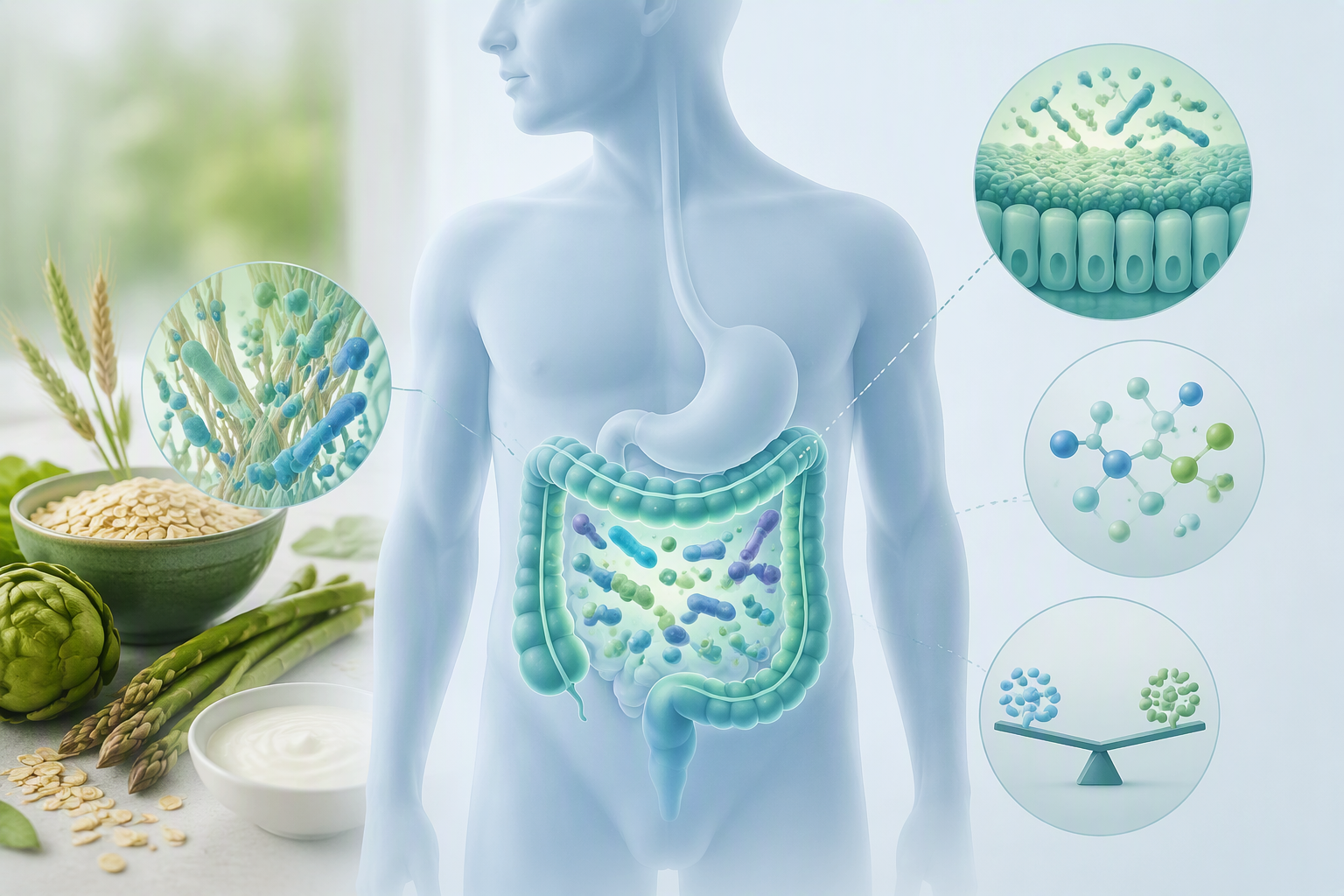
Probiotics are living microorganisms, mainly bacteria and some yeasts, that may benefit health when consumed in adequate amounts. They work chiefly in the digestive tract by interacting with the gut microorganisms already present. That means how probiotics help digestion depends on the exact strain, the symptom studied, and factors such as your diet, medications, and health conditions.
Much of this activity is indirect. Fibers that pass through the small intestine undigested reach the colon, where microbes ferment them into short-chain fatty acids. These compounds nourish colon-lining cells and help maintain a favorable gut environment, while probiotic foods and supplements may complement this process but cannot replace a varied diet that includes fiber-containing foods. Digestion is one strand of the broader benefits of probiotics, and it is the one with the most day-to-day evidence behind it.
Probiotics may support digestive health in several ways:
- Microbiome balance: Certain strains may compete with less-helpful microbes for nutrients and space.
- Gut-barrier support: Some may help reinforce the intestinal lining, a selective barrier between gut contents and the rest of the body.
- Food processing: Microbes can break down some food components, create useful byproducts, and recycle bile acids used in fat digestion.
- Digestive and immune activity: The gut and immune system are closely connected, which helps explain interest in probiotics for immune system.
These actions may support bowel regularity, comfort, and nutrient handling, but they do not guarantee relief from bloating, gas, constipation, or diarrhea.
Strain names matter more than a genus name or a high colony-forming unit count. For IBS-related symptoms, research has examined specific strains including Bifidobacterium longum subsp. infantis 35624, Lactiplantibacillus plantarum 299v, and Bifidobacterium bifidum MIMBb75. Evidence for 35624 does not apply automatically to every product labeled Bifidobacterium. The strain code is the key identifier, even when a label uses an older or newer genus name.
That wider evidence is most relevant when a product identifies its strain and the available research matches your concern. Probiotics are not a replacement for medical evaluation or prescribed treatment.
Which Digestive Symptoms May Probiotics Improve?
With strain-specific effects in mind, probiotics may help certain digestive symptoms, but they are not a catch-all solution for digestive health. Any benefit depends on the exact product, its clinically studied strain code, the dose and length of use, the symptom you want to address, and your individual response. They cannot diagnose an underlying condition or replace medical treatment.
Symptoms that some probiotic strains may support include:
- Antibiotic-associated diarrhea: Certain strains may help lower the chance of diarrhea during or after an antibiotic course and help bowel habits return to normal.
- Bloating, gas, and abdominal discomfort: Some strains have been studied for these symptoms, which may also be affected by signaling along the gut brain axis.
- Constipation and bowel irregularity: Some products may support faster gut transit, meaning the time stool takes to move through the intestines, or more frequent bowel movements.
- Irritable bowel syndrome (IBS): Particular clinically studied strain codes may ease pain, bloating, or flatulence for some people, although results vary by symptom, strain, and trial length.
Antibiotic-associated diarrhea is one of the clearer reasons to consider a probiotic, but the evidence applies only to the specific strain studied. Severe, persistent, bloody, or dehydrating diarrhea needs prompt medical care rather than a supplement trial.
For IBS, a strain code matters more than a high live-culture count, species name, or broad multi-strain blend. Research on one product does not carry over to another product with a different code, even when the labels name the same species. This is a common reason expensive supplements fail to match their marketing claims.
Temporary gas or bloating can occur when you start a probiotic. Choose one symptom to monitor, such as bowel frequency or abdominal pain, rather than expecting broad “gut support.” Probiotics are also not a weight-loss treatment, as discussed in do probiotics help you lose weight.
Persistent, severe, or worsening symptoms deserve individualized guidance from a qualified healthcare professional.
Are Probiotic Foods or Supplements Better for Digestion?

Because symptom-specific strain selection matters, probiotic foods and probiotic supplements are not interchangeable, and neither is automatically better for digestion. Yogurt and kefir are practical cultured dairy choices that can add nutrients and variety to meals. A supplement may be more useful when you want to try one identified strain for a particular symptom.
Other fermented foods may contain live microbes, but the amount and type can vary:
- Food choices: Sauerkraut, kimchi, miso, kombucha, fermented pickles, and some cottage cheese products may fit a digestive-friendly eating pattern if you tolerate them.
- Live-culture limits: Fermentation does not automatically mean a food has probiotic benefits. Heat treatment, pasteurization, storage, and manufacturing can reduce or remove living cultures, so sourdough and shelf-stable fermented foods may not provide live organisms.
- Label details: A live and active cultures statement is more useful than assuming every fermented product contains probiotics.
Labels for probiotic foods rarely identify the genus species and strain, the number of live organisms through the end of shelf life, or the symptom studied. That makes food a less precise option when you are trying to assess bloating, abdominal pain, or IBS-like symptoms.
For a symptom-specific trial, clearly labeled probiotic supplements can be easier to evaluate because the strain and dose are usually more specific than with many foods. Choose a product that names the full strain code and lists colony-forming units through expiration. For 35624, 299v, or MIMBb75, compare Bifidobacterium or Lactobacillus labels with the cited evidence.
Try one approach at a time:
- Include small, regular portions of tolerated fermented foods as part of your usual eating pattern.
- If testing a supplement, use a clearly labeled single-strain product rather than changing several foods and products at once.
- Stop and reassess if kombucha, kimchi, or similar foods increase gas or bloating.
How Do You Choose a Probiotic Strain?
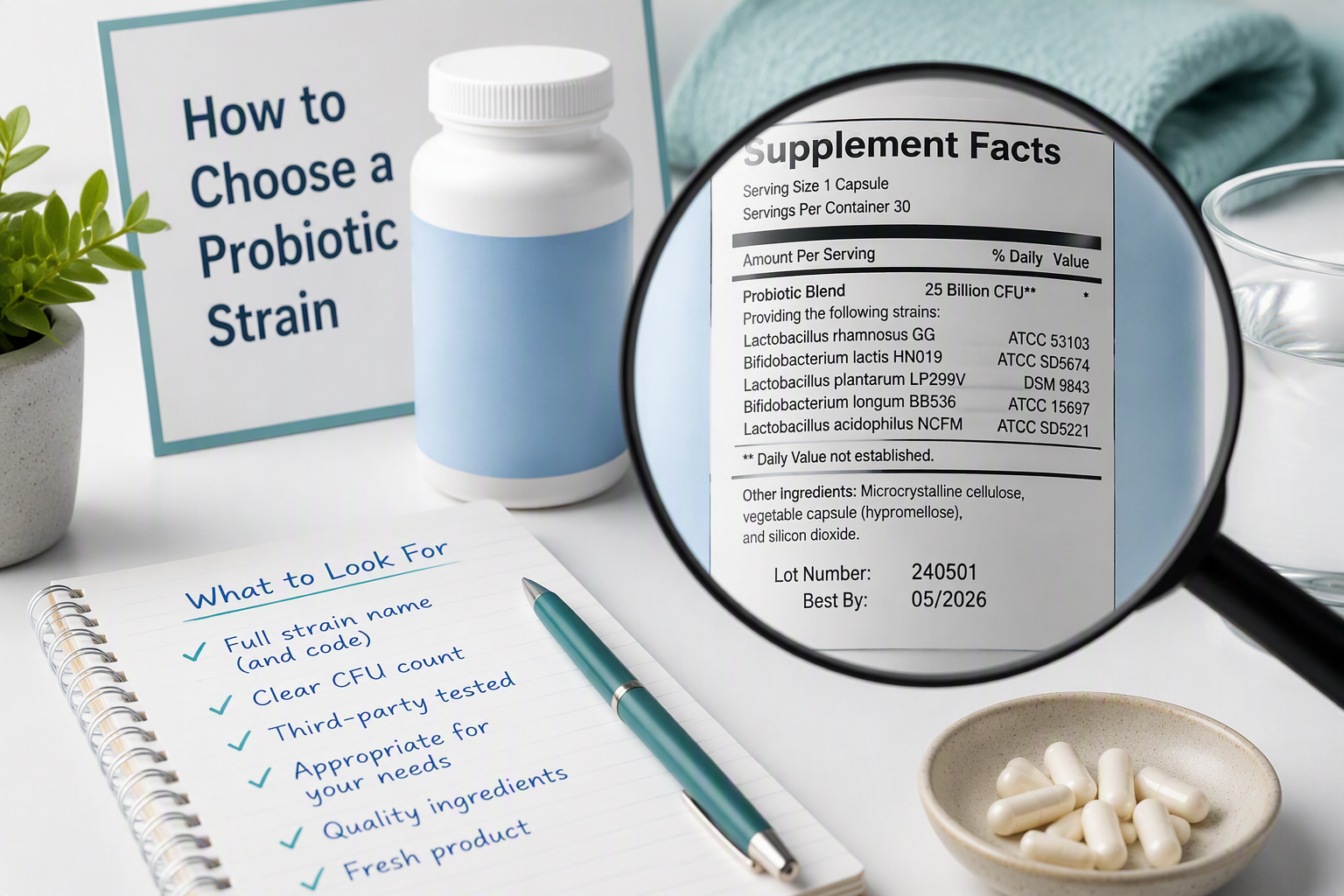
Choose probiotic strains by the exact strain code and the symptom studied, not by a large CFU count or a familiar genus name. The genus, species, and strain hierarchy works like a family name, first name, and specific ID: Bifidobacterium is a genus, bifidum is a species, and MIMBb75 identifies one strain. A label that lists only Bifidobacterium or Lactobacillus does not tell you whether it contains the organism studied.
For irritable bowel syndrome, strain-specific research is a more useful starting point:
- Bifidobacterium longum subsp. infantis 35624: Among the options discussed here, Bifidobacterium longum subsp. infantis 35624 has some of the most established IBS-specific evidence, but the best choice still depends on the exact symptom and product studied (source, source). Earlier research found improvement in measured symptoms compared with placebo, except bowel movement frequency and stool consistency.
- Lactobacillus plantarum 299v: A small trial reported abdominal-pain relief with 299v. Some labels use the newer name Lactiplantibacillus plantarum, but the unchanged 299v code is what connects the product to the study.
- Bifidobacterium bifidum MIMBb75: A randomized, double-blind, placebo-controlled trial found symptom and quality-of-life improvements for MIMBb75 specifically. Those results do not automatically apply to every B. bifidum product.
Colony-forming units, or CFUs, estimate the number of live organisms expected through the end of a product's shelf life. CFUs do not show whether a product fits your bloating, diarrhea, constipation, or abdominal pain. When comparing probiotic supplements, prioritize an identified strain, a viable dose used in research on that strain, and a formulation designed to support survival during storage and digestion.
A label listing only B. infantis, B. bifidum, or L. plantarum provides too little detail to match a product with a studied probiotic strain. High-count blends without strain codes may sound impressive, but the count alone cannot predict a symptom benefit.
Yogurt cultures such as Lactobacillus bulgaricus and Streptococcus thermophilus can be enjoyable fermented-food choices, but they do not by themselves establish relief for a particular digestive symptom. Choose fermented foods for dietary fit, and consider supplements only when the strain, intended use, dose, and evidence are clear.
How Long Should You Try Probiotics for Digestion?
After choosing a strain for a symptom, a probiotic trial works best when it has a defined check-in date rather than continuing indefinitely. Your response may depend on the exact strain code, the symptom being targeted, the studied dose, and the trial length. A label with 10 billion colony-forming units (CFUs) is not automatically more relevant than one with 1 billion CFUs. Evidence for one Bifidobacterium strain does not transfer to another product from the same species.
When human research is available, follow the duration studied for that specific strain and dose. Digestive probiotic studies often run for several weeks, but the right trial length depends on the exact strain and symptom being studied. For example, Bifidobacterium bifidum BBi32 was assessed for gastrointestinal tolerability and symptoms over eight weeks. Switching products every few days makes it difficult to identify what may be causing a change.
A practical trial routine includes:
- Pick one main symptom to follow, such as bloating, abdominal pain, gas, urgency, stool frequency, or stool consistency.
- Use only one new probiotic approach consistently, while noting major food, medication, and routine changes.
- Reassess at the planned end date. Continue only if the benefit feels meaningful and side effects remain tolerable.
Gas, bloating, or changes in bowel habits can occur after starting a probiotic, but these effects do not show that it is helping. If your symptoms do not improve, stopping is usually more useful than increasing the dose or purchasing another high-CFU product.
Talk with a qualified healthcare professional if symptoms are severe, persistent, worsening, or noticeably different from your usual digestive pattern.
How long to persist is really a question of whether you should be taking one at all, which who should take probiotics works through in more detail.
When Are Probiotics Unsafe to Take?

Even when a trial is planned carefully, probiotics are usually well tolerated by healthy adults, but they are not appropriate or low-risk in every situation. A new probiotic food or supplement can temporarily cause gas, bloating, constipation, loose stools, or stomach discomfort, which can resemble the symptoms you hoped to manage.
Stop the product and seek medical advice if symptoms are severe, persistent, or worsening. Probiotics usefulness and safety depend on your health status, the specific strain, and why you are taking it, not on a "natural" claim on the label.
Medical guidance is especially important before using live-bacteria or yeast supplements in these situations:
- Weakened immune system: Conditions or medicines that suppress immune function can increase the risk from live organisms.
- Serious illness or recent medical care: Acute illness, hospitalization, major surgery, or an indwelling medical device call for individualized advice. Rare bloodstream and other infections have occurred in medically vulnerable people.
- Inflammatory bowel disease: Evidence for probiotics in IBD, including Crohn's disease and ulcerative colitis, remains inconclusive. During a flare, your gastroenterology team should consider disease activity, medications, and possible complications before you try one.
- Pregnancy, children, or chronic digestive conditions: A clinician or registered dietitian can help you weigh whether a product fits your medical needs and diet.
The FDA states that probiotics may be regulated as dietary supplements, foods, or drugs depending on the product's intended use, so they do not all go through the same premarket review as prescription medicines (source). Choose a label that names the full strain or strain code, includes storage instructions and an expiration date, and remember that those details do not guarantee organism identity, amount, or survival through digestion.
Whether a probiotic suits you depends on your symptoms, medical history, and treatment plan. Probiotics should support, not replace, prescribed treatment, medical evaluation, or nutrition guidance.
How Probiotics Help Digestion FAQs
These FAQs address common questions about probiotics and digestion, from realistic expectations to symptoms that may need medical attention. They can help you make informed choices that support your digestive health.
1. Should You Take Probiotics With Antibiotics?
Taking a probiotic with antibiotics may reduce antibiotic-associated diarrhea or digestive upset for some people, but the effect depends on the strain. Saccharomyces boulardii and certain bacterial strains have evidence for this use, while many products have not been studied. If a clinician or pharmacist says it is appropriate, starting within two days of your first antibiotic dose may be more helpful than waiting for symptoms. They can also advise whether to separate bacterial probiotics from the antibiotic and whether S. boulardii suits your health situation.
2. Should You Take Probiotics Before or After Meals?
Follow your product label first, since probiotic supplements vary by strain, delivery format, and amount per serving. Instructions to take it with food, before a meal, or at another time are more useful than a blanket rule based on CFUs alone. Food can temporarily affect stomach conditions, but the strain and manufacturer testing also matter. Unless your clinician advises otherwise, choose a consistent time you can remember.
3. Can Probiotics Help After a Stomach Bug?
Hydration, electrolytes, rest, and bland foods you can tolerate come first after a stomach bug. Probiotics do not treat the infection, and evidence is mixed, though selected, clearly named strains may modestly reduce infectious diarrhea for some people. Get medical care for dehydration, bloody stool, high fever, severe abdominal pain, worsening symptoms, or diarrhea that continues, especially for young children, older adults, and people with weakened immune systems.
4. Do Probiotics Survive Stomach Acid?
Some probiotic cells make it through stomach acid, but survival varies by strain, dose, formulation, and whether food buffers acidity. A high count of colony-forming units, or CFUs, or a long species list does not confirm that organisms reach the digestive tract alive. Look for a clearly named strain code and evidence for the finished product, since findings for one strain do not automatically apply to another strain in the same species.
5. Can Prebiotics Improve Probiotic Benefits?
Prebiotics are nondigestible carbohydrates that feed beneficial gut bacteria, whereas probiotics are live microorganisms. When they appear together, they’re called synbiotics, though that pairing does not make a product more effective for every digestive symptom or person. Oats, beans, onions, garlic, bananas, and asparagus are high-fiber foods that add prebiotics and dietary fiber to support gut health.
A gradual, food-first increase is usually easier than starting prebiotic supplements or adding a large amount of fiber at once. With IBS-like symptoms, fermentable fiber can temporarily increase gas, bloating, or discomfort, so reduce the portion or choose foods you tolerate better.