


Whether a probiotic helps your diarrhea depends on what caused it. Antibiotic-associated, acute infectious, travelers', and IBS-related diarrhea carry different evidence, and treating them as one problem is why so much advice misses.
The contrast is stark. For diarrhea that follows antibiotics, probiotics cut episodes from 17.7% of controls down to 8.0%. An acute stomach bug is a different matter, and a Cochrane review covering 82 trials and 12,127 participants found little or no effect on diarrhea lasting 48 hours or more.
Rehydration comes first either way. A probiotic is at most an addition, and only when your type of diarrhea matches what the strain was actually tested for. Lactobacillus rhamnosus GG and Saccharomyces boulardii carry the strongest record, and both earned it in trials run alongside antibiotics rather than against a stomach bug.
Key Takeaways
- The type of diarrhea decides whether a probiotic has supporting evidence.
- Antibiotic-associated diarrhea is the clearest case for trying a probiotic.
- For acute infectious diarrhea, large trials found little or no benefit.
- Guidelines advise against routine probiotics for acute gastroenteritis in children.
- L. rhamnosus GG and S. boulardii carry the strongest antibiotic-associated evidence.
- Rehydration is the priority in any acute episode, with or without probiotics.
- Blood, fever, dehydration, or diarrhea beyond a few days needs medical assessment.
What Should You Do First for Diarrhea?

Fluid replacement comes first. Before trying a supplement or stopping every loose stool, replace the water and salts your body is losing. Take frequent, small sips if larger drinks worsen nausea. After substantial fluid loss, a properly prepared oral rehydration solution has the glucose-and-sodium balance that helps the intestines absorb fluid. Oral rehydration salts are often called ORS.
Plain water can help, but it may not replace enough electrolytes after significant diarrhea. Zero-sugar sports drinks are also different from an oral rehydration solution. Avoid drinks sweetened with sorbitol or xylitol, since these sugar alcohols can make diarrhea worse for some people.
When food feels manageable, eat small amounts of bland, familiar foods instead of fasting or attempting a restrictive cleanse. Tolerable first-day options include:
- Rice, toast, potatoes, bananas, or plain soup.
- Small meals spread through the day rather than one large meal.
- Foods and drinks that have not clearly worsened your symptoms.
Avoid alcohol, large fatty meals, and personal trigger foods while symptoms are active. An acute episode can temporarily reduce lactose tolerance, so dairy foods such as milk or ice cream may cause more discomfort than usual. The aim is tolerable nourishment alongside steady hydration.
An over-the-counter anti-diarrheal containing loperamide may help with a familiar, uncomplicated episode or a known irritable bowel syndrome with diarrhea (IBS-D) pattern when taken exactly as labeled. It is not a daily answer to unexplained diarrhea. Avoid loperamide when any of these warning signs are present:
- Fever.
- Bloody or black stool.
- Severe abdominal pain.
- Dehydration signs, including very little urination, dizziness, confusion, or an inability to keep fluids down.
These symptoms need medical assessment rather than self-treatment. Loperamide can reduce symptoms, but it is not infectious diarrhea treatment and cannot identify or treat the underlying cause.
The timing and setting of diarrhea can help guide the next step. Symptoms that begin during or soon after antibiotics may reflect disruption to beneficial gut microbes. Diarrhea following sick contacts, questionable food, or travel may be infectious, while recurring symptoms without a clear trigger need a different discussion with a qualified healthcare professional, especially if they become persistent diarrhea.
Probiotics are an optional later consideration for mild symptoms without warning signs, not first-line emergency care. There is no universal probiotic for diarrhea because possible effects depend on the specific strain, dose, and condition. A broad digestive blend, a high colony-forming unit count, or a familiar brand name does not show that a product fits your situation. Probiotics for other digestive symptoms are not automatically appropriate for acute diarrhea. The same caution applies to probiotics for irregular bowel movements.
Monitor whether fluids stay down, urination remains fairly normal, and symptoms are easing. Persistent, severe, or worsening symptoms warrant prompt guidance from a qualified healthcare professional.
When Might Probiotics Help Diarrhea?
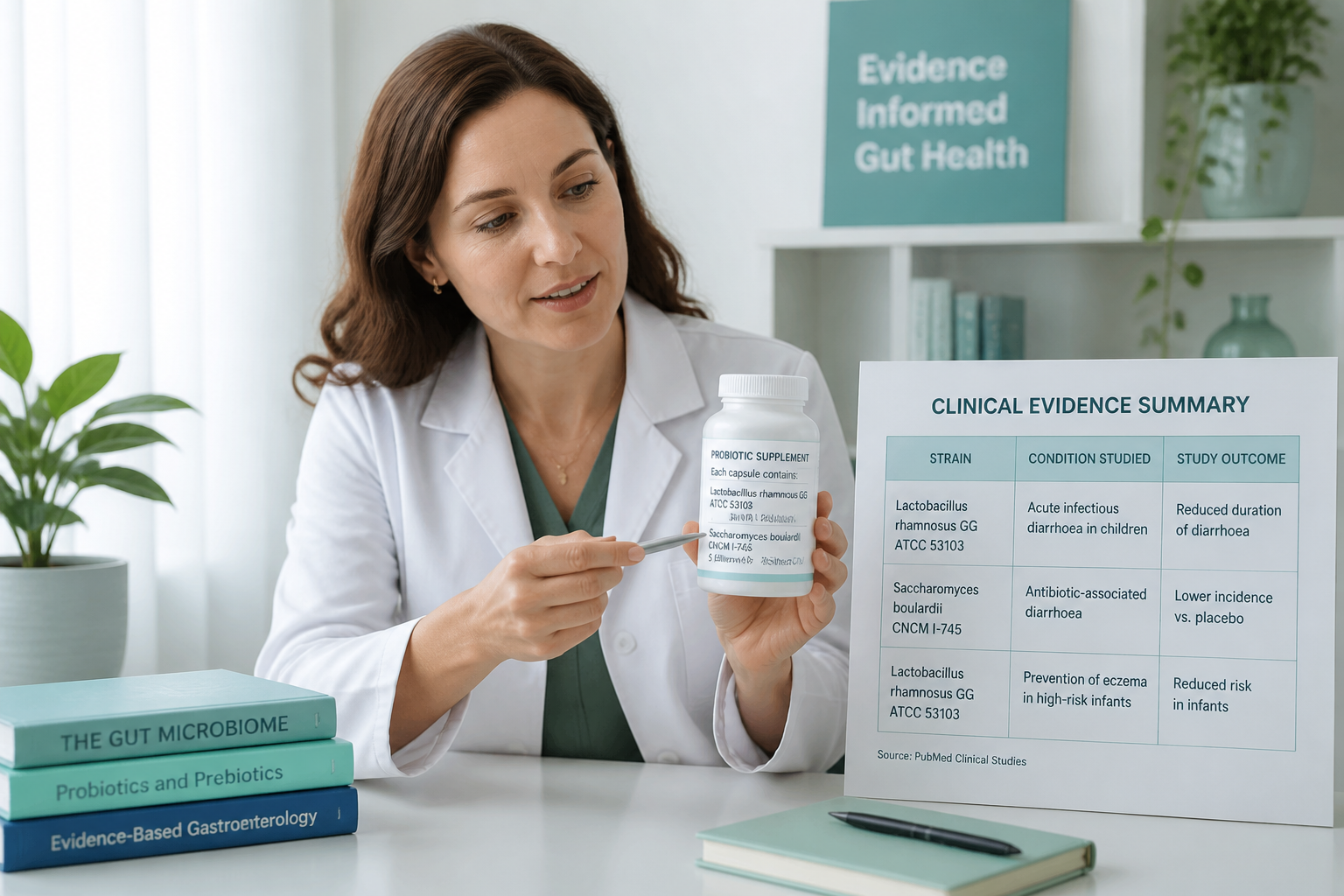
Probiotics may be a reasonable add-on for selected cases of diarrhea, especially antibiotic-associated diarrhea, but they do not replace fluid replacement or medical care. The cause matters more than the highest colony-forming unit, or CFU, count. Any benefit depends on specific probiotic strains rather than the broad label on the front of the box.
Antibiotics can disrupt the intestinal microbiome, making this the clearest situation in which a probiotic may help prevent diarrhea. A systematic review and meta-analysis of 63 randomized controlled trials involving nearly 12,000 participants found a 42% lower diarrhea risk with probiotics taken alongside antibiotics versus placebo (source). This finding applies to prevention in some children and adults. It does not guarantee relief after diarrhea starts or justify stopping a prescribed antibiotic.
Mild loose stools during or shortly after an antibiotic course may be antibiotic-associated diarrhea, but the medication is not always the cause. Severe, persistent, or worsening symptoms need medical evaluation because antibiotics can also be linked to infections that should not be self-treated with a supplement.
For a short-lived stomach virus or suspected foodborne illness, evidence is mixed. Results differ by age, setting, cause, and the strain studied, so oral rehydration, symptom monitoring, and appropriate medical advice come first. A probiotic remains optional rather than a dependable way to shorten every episode.
A label should identify the exact organism studied for the intended use:
- Genus: The first word, such as Bifidobacterium or Lactobacillus.
- Species: The second word, such as longum or rhamnosus.
- Strain code: The letters and numbers that identify the researched organism, such as Bifidobacterium longum subsp. infantis 35624.
A high CFU count or a long multi-strain ingredient list does not establish that a product will help diarrhea. If a qualified healthcare professional agrees that a probiotic fits your situation, match the complete strain code to the purpose. Evidence for one Lactobacillus rhamnosus strain, for example, does not automatically apply to every product carrying that species name.
Other digestive conditions call for different guidance. Probiotics for lactose malabsorption and probiotics in small intestinal bacterial overgrowth, or SIBO, should not be approached as general diarrhea treatment.
Seek prompt medical care rather than relying on probiotics or loperamide if you have:
- Blood or black stool.
- Fever or severe abdominal pain.
- Dehydration signs, including very little urine, dizziness, or confusion.
- Diarrhea that persists, worsens, or occurs with serious illness or a weakened immune system.
How Does Antibiotic-Associated Diarrhea Differ?
Antibiotic-associated diarrhea is loose or more frequent stool that starts during an antibiotic course or after it ends. While antibiotics treat an infection elsewhere in the body, they can also disrupt the usual balance of intestinal bacteria. That makes this pattern different from diarrhea caused by a stomach virus, food poisoning, or an ongoing digestive condition.
Symptoms are often mild and short-lived. Loose stools commonly begin in the final day or two of treatment or shortly after the last dose, though cases have been reported up to two months later. Across randomized trials in outpatients, it occurred in 17.7% of people not given a probiotic (source). Tell a qualified healthcare professional about any antibiotic course from the past two months, even if you finished it weeks ago.
Persistent, severe, or worsening diarrhea should not automatically be treated as a routine medication side effect. In some cases, antibiotics allow Clostridioides difficile, often called C. difficile, to multiply and cause colitis, which is inflammation of the colon. C. difficile needs prompt medical assessment rather than self-treatment alone.
Seek prompt medical advice when diarrhea occurs with any of the following:
- Frequent, severe, persistent, or worsening diarrhea
- Fever, severe abdominal pain, or marked weakness
- Blood or black stool
- Dehydration signs, including very little urine, dizziness, dry mouth, or unusual sleepiness
- Symptoms that develop after a recent hospital or other healthcare stay
Do not stop, skip, or change a prescribed antibiotic unless the prescriber advises it. Fluids matter while symptoms are present, and a pharmacist or qualified healthcare professional can help determine whether an oral rehydration drink, food changes, or testing makes sense. Do you need probiotics after antibiotics offers more context on probiotic use after treatment.
Research on probiotics in this setting is strain-specific. Saccharomyces boulardii and Lactobacillus rhamnosus GG are among the strains studied for helping prevent antibiotic-associated diarrhea, but a similar-sounding species name on a label does not indicate the same effect. A probiotic may be a supportive option to discuss with a pharmacist or qualified healthcare professional, especially when you start an antibiotic, but it cannot guarantee prevention or relief.
Why Is Acute Infectious Diarrhea Different?
Acute infectious diarrhea differs from antibiotic-associated diarrhea because it may be caused by a virus, bacteria, or parasite. It can follow contaminated food or water, travel, or close contact with someone who is ill. Antibiotic-associated diarrhea develops after an antibiotic alters the usual balance of intestinal microbes.
This distinction affects what comes first. Infectious diarrhea treatment may require an assessment for the cause, particularly when a bacterial or parasitic infection is possible. A probiotic cannot identify a pathogen or replace stool testing, prescribed medicine, or other care a clinician recommends.
Preventing dehydration takes priority over selecting a probiotic. Frequent watery stools and vomiting can quickly reduce the fluids and salts your body needs. An oral rehydration solution uses a specific glucose-and-sodium formula to improve fluid absorption after diarrheal losses.
ORS, also called oral rehydration salts, is not interchangeable with typical sports drinks or zero-sugar electrolyte beverages. Those products are not formulated for diarrheal fluid loss, and drinks sweetened with sugar alcohols such as sorbitol or xylitol may worsen diarrhea for some people. Focus on the fluids you can keep down.
Routine probiotics for acute infectious diarrhea have uncertain benefits. A 2020 Cochrane systematic review included 82 randomized controlled trials with 12,127 participants, yet 11,526 participants were children and only 412 were clearly identified as adults. Cochrane has examined this question for many years (source). Results from varied, mostly pediatric studies do not establish that a probiotic will help an adult or a child being cared for at home.
The more reliable studies were less encouraging. In lower-risk-of-bias trials involving 1,770 participants, probiotics did not reduce diarrhea lasting 48 hours or longer. The risk ratio was 1.00, with a 95% confidence interval of 0.91 to 1.09. Illness duration was estimated at 8.64 hours shorter, but the range extended from 29.4 hours shorter to 12.1 hours longer, leaving very low certainty that the difference mattered.
When all eligible studies were combined, probiotics appeared to lower prolonged diarrhea and shorten illness by about 21.3 hours. However, results differed greatly between studies, and publication bias suggested that smaller favorable studies were more likely to be published. That weakens the case for probiotics as standard treatment.
Medical evaluation matters more when any of these signs are present:
- Fever, blood in the stool, or black stool.
- Severe or worsening abdominal pain.
- Dehydration symptoms, including very little urine, marked dizziness, confusion, or an inability to keep fluids down.
- Recent travel or exposure to unsafe water or high-risk food.
- Diarrhea that persists or worsens rather than improving.
A probiotic should not delay medical care, clinician-directed testing, or prescribed treatment.
Does the Probiotic Match Your Type of Diarrhea?

Diarrhea is not a single condition, so a probiotic’s value depends on the type of diarrhea it was studied for, not simply on what the bottle contains. Evidence for antibiotic-associated diarrhea does not automatically carry over to an acute stomach bug, travelers’ diarrhea, or IBS-related loose stools.
The differences matter because the likely cause, useful self-care, and safety considerations can change:
- Antibiotic-associated diarrhea: This can occur during or after antibiotic treatment, which may disrupt the microbes in your intestines.
- Acute infectious diarrhea: A short-term illness caused by a virus, bacteria, or parasite calls for careful hydration and may require medical care rather than a supplement-first approach.
- Travelers’ diarrhea: Food, water, destination, and illness severity can affect the cause, so findings from another form of diarrhea may not apply.
- IBS-related diarrhea: Recurring loose stools related to IBS are different from an infection. A product studied for a brief stomach illness should not be assumed to help manage an IBS flare.
Broad claims such as “digestive health support” do not establish that a product helps with any particular kind of diarrhea. A high CFU count, meaning colony-forming units, and a familiar brand name do not replace condition-specific research.
That distinction also applies to well-known ingredients. Lactobacillus rhamnosus GG, Lactobacillus reuteri, and Saccharomyces boulardii are different probiotic strains, not interchangeable options. Research on one organism does not transfer automatically to another species or strain, and advice for children with acute infectious diarrhea may differ from guidance for antibiotic-associated diarrhea in adults.
The most useful label detail is the strain code, which ties a bottle to a specific study. The following section matches probiotic strains and their codes with the types of diarrhea in which they were tested.
Which Strains Have Evidence for Which Diarrhea?
Probiotic evidence is tied to both the full strain name and the type of diarrhea. For antibiotic-associated diarrhea, Lactobacillus rhamnosus GG and Saccharomyces boulardii have the most consistent findings, but a popular product or high CFU count does not make it a match for your symptoms.
The strain-to-diarrhea map is limited but useful:
- Antibiotic-associated diarrhea: Lactobacillus rhamnosus GG and Saccharomyces boulardii have the strongest consistent evidence in this setting.
- Acute diarrhea in children: Saccharomyces boulardii CNCM I-745 and Lactobacillus reuteri DSM 17938 appear in pediatric acute-diarrhea research. Lactobacillus rhamnosus LRa05 has also been studied in a randomized trial of pediatric acute diarrhea.
- Acute infectious diarrhea: Professional guidance recommends against probiotics for acute infectious gastroenteritis in children. A larger CFU number does not change that advice, even when children with diarrhea are uncomfortable and you want a quick option.
The letters and numbers after a species name are essential. Lactobacillus rhamnosus is not enough to identify Lactobacillus rhamnosus GG, and S. boulardii does not confirm CNCM I-745. Many products name only the genus and species, so there is no way to tell whether they contain the organism evaluated in human research.
Results also do not carry over from one cause of diarrhea to another. A strain studied for antibiotic-associated diarrhea has not automatically been shown to shorten a viral illness.
Before buying a probiotic, use this quick label check:
- Identify the complete strain name, including all letters and numbers.
- Confirm that human research covers your type of diarrhea and age group.
- Treat a product that names neither a full strain nor a relevant use as unevidenced for your situation.
Who Should Avoid Probiotics or Seek Care?
Probiotics are not appropriate self-care for everyone. Probiotic safety needs extra attention when your body is under major stress, because the rare risk of infection from probiotic bacteria or yeast carries more weight for medically vulnerable people.
Talk with your treating clinician before starting or continuing a probiotic if any of these apply:
- You are severely ill, hospitalized, or recovering from major surgery.
- You have significant immune compromise, such as receiving chemotherapy, taking high-dose immunosuppressive medication, living with advanced immune deficiency, or preparing for or recovering from an organ or stem-cell transplant.
- You have central venous access, including a central line, implanted port, or peripherally inserted central catheter (PICC), particularly while receiving IV treatment or nutrition.
- You have severe pancreatitis, major heart or liver disease, short bowel syndrome, recent gastrointestinal surgery, or another serious ongoing illness.
A product that is tolerated by a healthy adult may have a very different balance of possible benefit and risk in these circumstances. Rare bloodstream infections have been linked to probiotics in vulnerable patients with central access, so supplements should not be assumed harmless.
Frequent, severe, or worsening diarrhea during or after antibiotics needs prompt medical assessment rather than a probiotic trial. It may signal Clostridioides difficile (C. difficile) colitis, which can become life-threatening without testing, hydration guidance, diagnosis, and prescribed treatment. A probiotic should not delay care for increasing weakness, frequent diarrhea, or worsening abdominal symptoms.
Inflammatory bowel disease (IBD) also needs condition-specific guidance. Probiotics are not supported for treating Crohn’s disease, while the limited potential benefit in mild-to-moderate ulcerative colitis applies only to certain formulations. New or worsening diarrhea may reflect a flare or complication, especially when it occurs with:
- Blood in the stool or black stool.
- Increasing abdominal pain, fever, or vomiting.
- Unintended weight loss or trouble keeping fluids down.
- Dizziness, fainting, very little urine, or other signs of dehydration.
Adverse events can be difficult to separate from the digestive symptoms that led someone to try a probiotic. A 2023 review of randomized trials found similar reported overall adverse events in probiotic and placebo groups, but the authors did not conduct a formal safety comparison because many studies did not assess whether the product caused the event.
When Does Diarrhea Need Medical Attention?
Most brief diarrhea improves with rest, fluids, and simple self-care. Get medical care instead when symptoms suggest dehydration, bleeding, a serious infection, or a condition that needs diagnosis rather than more diet changes, probiotics, or over-the-counter medicine.
Get medical care instead of self-treating if any of these signs are present:
- Dehydration signs: Very dark urine, little or no urination, dry mouth, intense thirst, dizziness, fainting, unusual weakness, confusion, or a racing heartbeat can mean fluid losses are outpacing intake. Young children, older adults, and people with chronic health conditions can become dehydrated more quickly.
- Fever or concerning stool changes: Fever, blood in the stool, or black, tarry stool needs prompt assessment. These signs may point to infection, intestinal bleeding, or another serious problem, so do not manage them with a probiotic or antidiarrheal medicine.
- Severe or worsening abdominal pain: Intense, localized, or escalating pain needs urgent evaluation, especially with a swollen or rigid abdomen, repeated vomiting, fever, or bloody stool.
- Symptoms outside a short-term pattern: Contact a clinician if diarrhea is not beginning to improve after a few days, lasts longer than expected, keeps returning, wakes you from sleep, causes unintended weight loss, or marks a meaningful change in your usual bowel habits. Persistent diarrhea and unexplained recurrences need an explanation, not repeated self-treatment.
When fluid loss is substantial, replacing fluids is the first priority. Oral rehydration salts contain a specific glucose-and-sodium balance that helps the body absorb water. Zero-sugar sports electrolytes are not the same as oral rehydration salts, and products sweetened with sugar alcohols such as sorbitol or xylitol may worsen diarrhea for some people.
Antibiotic-associated diarrhea needs extra attention because it can start during treatment or up to two months afterward. Rates vary with the antibiotic and the population treated. Two to four loose stools a day for a couple of days may be mild, but frequent watery diarrhea, worsening cramps, fever, or blood may signal Clostridioides difficile (C. difficile) infection and needs prompt testing and treatment.
Loperamide may be a short-term, label-directed rescue option for a familiar diarrhea pattern without warning signs. It is not a daily solution for unexplained symptoms or a way to stretch out an acceptable diarrhea duration. Do not use it with fever, blood or black stool, severe pain, or dehydration signs. Supplements and symptom medicines do not replace medical evaluation.
Probiotics for Diarrhea FAQs
Common questions about probiotics for diarrhea often focus on strain-specific evidence, safety, and possible causes of symptoms. These FAQs provide context for informed choices without assuming every episode of diarrhea needs the same approach.
1. Can Probiotics Worsen Diarrhea?
Probiotics may briefly cause gas, bloating, or looser stools when you start them, but ongoing or worsening diarrhea is not something to dismiss. Adverse events can overlap with everyday digestive symptoms, yet a strain, added ingredient, product-quality issue, or unrelated infection may be the cause. Stop self-treating and seek prompt medical care for dehydration, fever, blood in stool, severe pain, persistent diarrhea, or if you are seriously ill or immunocompromised.
2. Are Probiotic Foods Effective for Diarrhea?
Fermented foods, including yogurt, kefir, cottage cheese, miso, sauerkraut, kimchi, fermented pickles, and kombucha, may contain live cultures, but they have not been studied as consistently for diarrhea as strain-specific supplements. Look for “live and active cultures,” since heat and processing can destroy them.
Their strains and live-culture amounts vary by recipe, storage, and serving size, including for children with diarrhea. Sweetened kombucha adds sugar, while yogurt and kefir contain lactose that may worsen symptoms. These foods are optional, not a replacement for hydration, medical care, or an appropriate strain-specific product.
3. Can Children Take Probiotics for Diarrhea?
Some children can take a probiotic for diarrhea, but oral rehydration solution and regular fluids come first when fluid loss is a concern. Speak with a pediatrician before giving any supplement, especially to infants or children with chronic conditions, weakened immune systems, or severe symptoms.
Any benefit depends on the cause of diarrhea and the specific strain, not a general probiotics for kids label. Lactobacillus rhamnosus LRa05 has been studied in pediatric acute diarrhea, but results vary. Probiotics do not replace rehydration or medical evaluation.
4. Do Probiotics Help IBS-Related Diarrhea?
Probiotics do not work the same way for everyone with IBS-related diarrhea. Research is often brief and varies by strain, dose, product blend, and symptom tracking, so improvement with one product does not predict your response to another. Some Bifidobacterium-containing products, including Bifidobacterium longum subsp. infantis 35624, may ease overall IBS symptoms for some people, but results are strain-specific and not guaranteed.
Seek medical evaluation for persistent, worsening, or unexplained diarrhea, especially with blood in the stool, weight loss, fever, severe pain, or dehydration. Supplements should not replace identifying the cause.
5. Can Probiotics Prevent Travelers’ Diarrhea?
Probiotics are not a reliable way to prevent travelers’ diarrhea. Evidence is mixed, and any possible benefit depends on the specific strain and your health history. Discuss a product with a qualified healthcare professional instead of relying on a general travel probiotic claim. Careful food and water choices, safe fluids, and an oral rehydration solution for substantial fluid loss matter more. Seek prompt medical advice for fever, bloody or black stool, severe pain, dehydration signs, or a concerning diarrhea duration.