


Yellow diarrhea doesn't automatically mean a liver problem or a food intolerance. Often, loose stool looks yellow because fast intestinal transit leaves bile less time to change from yellow-green to brown. Bile is a fluid made by the liver that helps digest fat.
A stomach bug can produce sudden yellow watery diarrhea, while Giardia may cause foul-smelling, greasy, floating stools after contaminated water exposure. Repeated oily or hard-to-flush bowel movements, weight loss, or fatigue raise more concern for fat malabsorption, including celiac disease or exocrine pancreatic insufficiency. A brief symptom check can help separate food-color changes from patterns that may warrant a fecal elastase-1 stool test.
Color alone cannot name the cause, and it shouldn't be used to self-diagnose. The National Institute of Diabetes and Digestive and Kidney Diseases advises medical care for diarrhea with dehydration, high fever, severe pain, blood or black stool, or symptoms that persist. Tracking stool pattern, recent meals, illness, travel, and fluid intake makes the next step clearer.
Yellow Diarrhea Causes Key Takeaways
- Fast transit can leave bile pigments yellow-green, causing loose yellow stool.
- Brief yellow diarrhea from a stomach bug often improves within days.
- Giardia can cause greasy, foul-smelling, floating diarrhea after contaminated water exposure.
- Recurrent greasy or hard-to-flush stools can signal fat malabsorption.
- Food pigments may tint stool yellow but usually do not cause diarrhea.
- Fecal elastase-1 helps assess pancreatic enzyme insufficiency, though watery samples can read falsely low.
- Seek prompt care for dehydration, severe pain, high fever, bloody or black stool, or worsening illness.
Why Can Diarrhea Look Yellow?
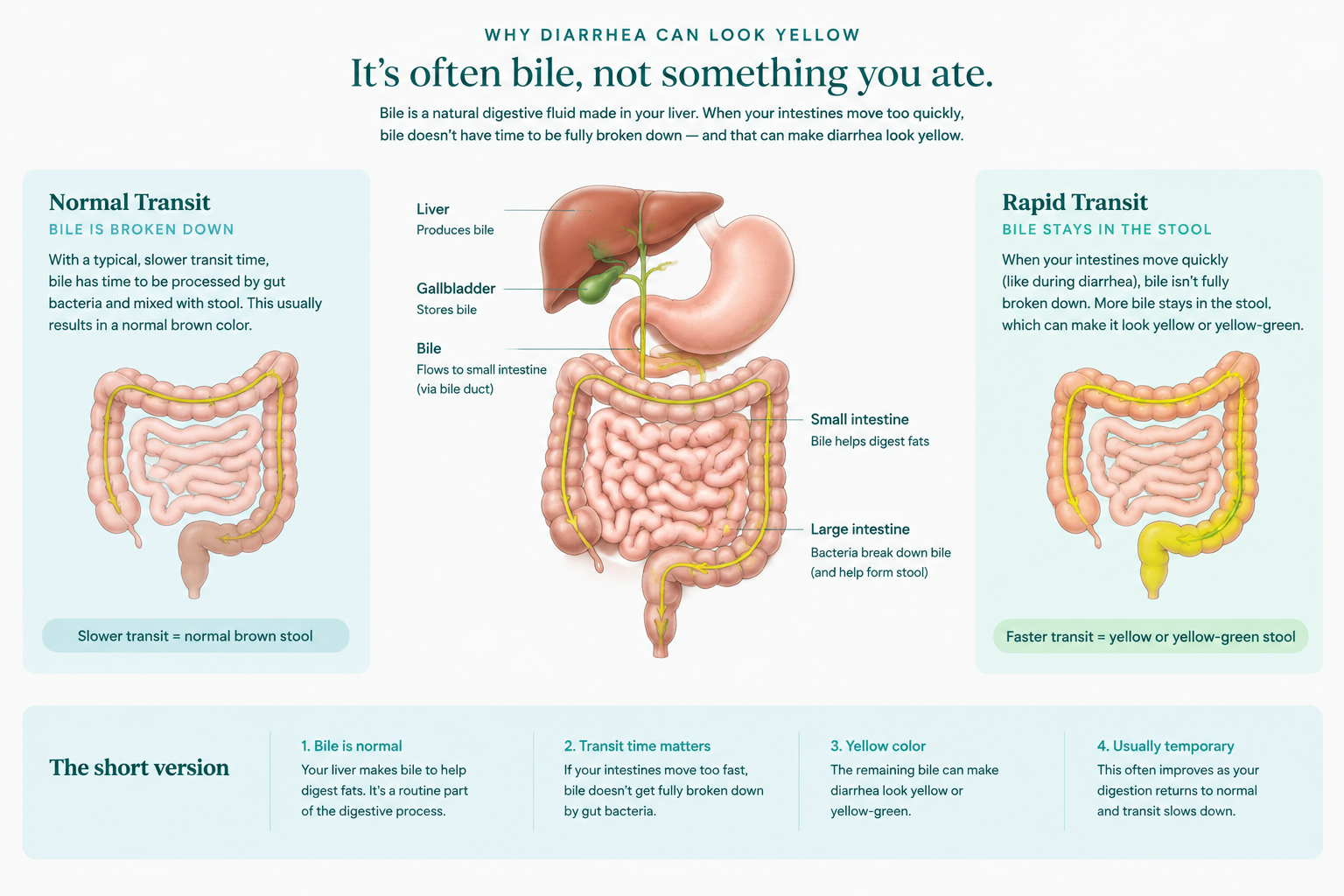
Yellow diarrhea often means stool moved through your intestines too quickly for its usual color changes. It can look alarming, but a short-lived change does not automatically mean something serious. Digestive symptoms and their warning signs can help you consider stool color alongside the rest of your symptom pattern.
Bile and stool color are closely related. Bile is a yellow-green fluid made by the liver that helps digest fat, while bilirubin, a pigment produced when red blood cells break down, also gives intestinal contents yellow, green, and orange tones. As waste moves through the gastrointestinal tract, bile pigments change and much of the bile is reabsorbed. Given enough time, the remaining pigments help turn a formed bowel movement brown.
Rapid intestinal transit means stool passes through the intestines faster than usual. During diarrhea, there is less time for bile reabsorption and pigment changes, leaving more of bile's original yellow-green shade visible. That is a common answer to why is my diarrhea yellow when loose stools begin suddenly.
An occasional yellow stool can be temporary and may settle as the gut returns to normal, but ongoing yellow diarrhea or stool changes that keep coming back should be checked by a clinician (Mayo Clinic on stool color). It may simply reflect a temporary digestive change.
Color alone cannot identify the cause. Closer attention is warranted when the pattern:
- Keeps returning
- Lasts beyond a brief episode
- Worsens or occurs with other symptoms
Food-related changes, infections, and impaired fat absorption can also affect stool appearance. The timing, accompanying symptoms, and food pattern usually offer more useful clues than color alone.
What Causes Fast-Transit Yellow Diarrhea?
Fast intestinal transit is one of the more common causes of yellow diarrhea. When stool moves through the small intestine and colon too quickly, there is less time to absorb water or change bile pigments to their usual brown color. A short spell of yellow, watery diarrhea during a digestive upset is common and often temporary.
Bile acids help drive the water-pulling effect of rapid transit. Most bile acids are normally reabsorbed in the last part of the small intestine. With rapid transit, more bile acids reach the colon, where they pull water into stool and increase bowel activity. The result can be loose, urgent yellow diarrhea.
A stomach bug can speed up intestinal movement. Viruses such as norovirus and rotavirus, along with bacteria such as Salmonella and Escherichia coli, may cause watery stool that looks yellow. Stool color alone cannot identify the infection or confirm any one cause.
Gallbladder removal can create a different pattern. After this surgery, bile may flow more continuously into the intestine instead of being stored in the gallbladder and released around meals. In some people, bile acid malabsorption means excess bile acids remain in the colon, causing recurring watery diarrhea, urgency, and sometimes yellow stool, especially after eating.
The timing and pattern offer practical clues:
- More likely short-term: Yellow diarrhea starts with a stomach bug or brief digestive upset and improves within a few days.
- Worth discussing with a clinician: Diarrhea keeps returning, happens after meals, began after gallbladder surgery, or does not improve.
- Needs prompt care: Signs include dehydration, severe belly pain, fever, bloody stool, or black stool.
A note of recent illness, meals, and surgery history can give a clinician more useful information than stool color alone.
Could an Infection Cause Yellow Diarrhea?

Beyond fast intestinal transit from other digestive triggers, infections can cause yellow watery diarrhea when intestinal inflammation moves stool too quickly for bile pigments to change from yellow-green to brown. A short-term stomach bug such as norovirus or rotavirus can do this, as can bacterial infections including Salmonella and Escherichia coli.
Common infection symptoms include:
- Sudden watery diarrhea and cramps.
- Nausea or vomiting.
- Fever.
- Mucus showing up in loose stools.
Stool color by itself cannot identify a specific germ or confirm a liver or pancreatic condition. The fuller pattern matters, including sick people at home, questionable food, recent travel, vomiting or fever, and whether symptoms start improving within a few days. One yellow bowel movement is usually less concerning than diarrhea that continues or returns.
Giardia can cause bright yellow diarrhea that smells unusually foul and may look greasy or float. Bloating, cramps, nausea, headache, fatigue, and unintended weight loss can also occur. Greasy, floating stool may point to poor fat absorption as well as rapid transit. Exposure is more likely after swallowing contaminated water while camping or swimming, eating contaminated food, close contact with an infected person, or contact with infected stool. Giardia symptoms often begin one to two weeks after exposure, though some people have mild illness or no symptoms (CDC on Giardia). A camping trip or swim can be easy to overlook once symptoms start.
A clinician can test stool for Giardia and other intestinal infections when diarrhea persists, recurs, or follows a likely exposure. Because the parasite may not appear in every bowel movement, samples collected on different days may be needed.
Seek prompt medical care for:
- Dehydration, such as very little urination, dizziness, or trouble keeping fluids down.
- Blood in the stool.
- Severe abdominal pain.
- High fever.
- Illness that worsens instead of improving.
When Does Yellow Diarrhea Signal Fat Malabsorption?
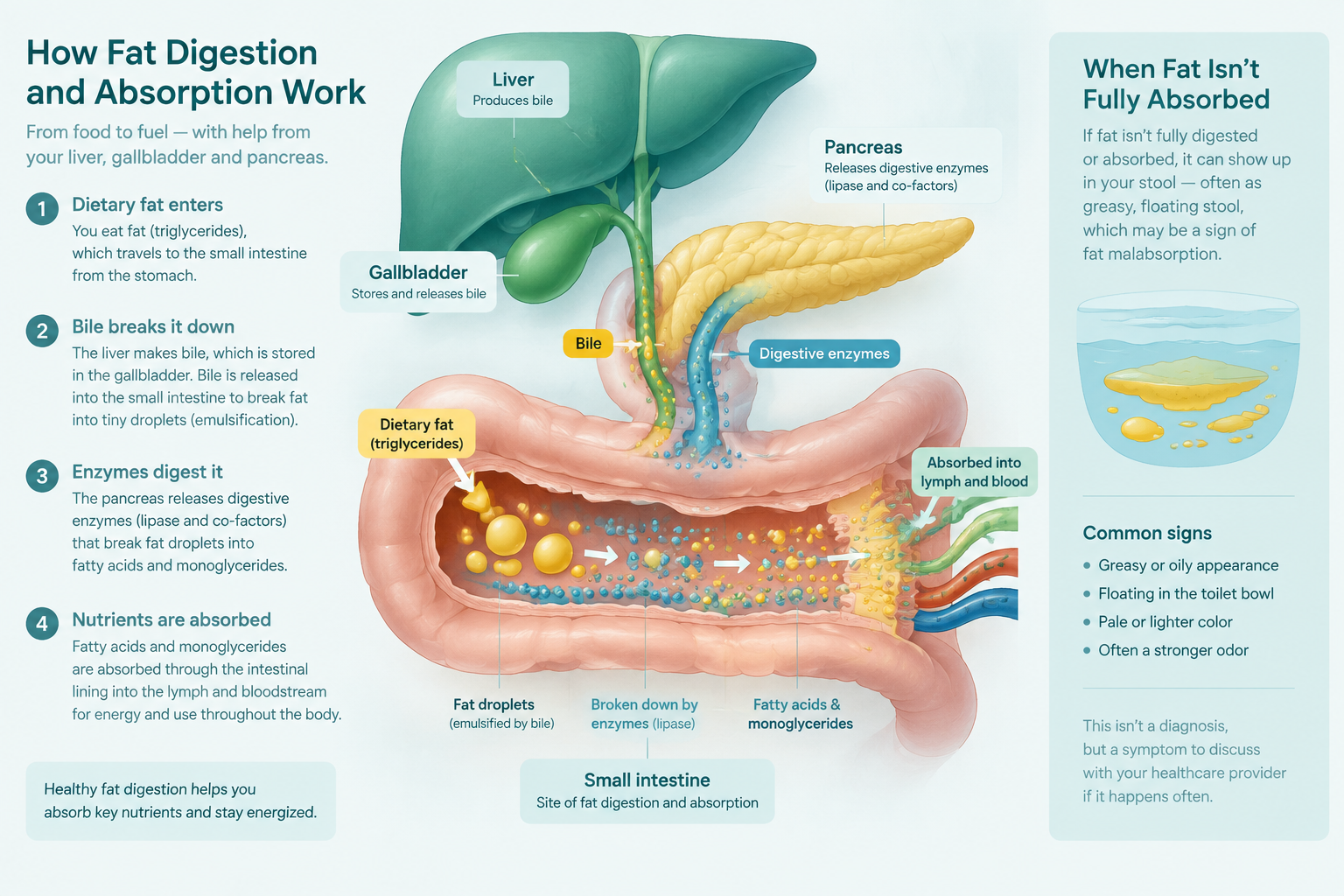
When yellow diarrhea keeps returning rather than resolving like a short-term infection, fat malabsorption is more concerning with signs of unabsorbed fat, not after one pale or floating bowel movement. Steatorrhea means stool contains excess fat that was not absorbed. A greasy stool may look oily or frothy, smell unusually foul, float repeatedly, leave toilet residue, or resist flushing. sticky, hard-to-flush stool can also have other causes, so stool appearance alone cannot confirm fat malabsorption.
Symptoms that make malabsorption more likely include:
- Repeated stool changes: Greasy, yellow, frothy, or floating stool that continues for several days or returns often.
- Meal-related symptoms: Diarrhea, bloating, excess gas, nausea, or urgency that repeatedly follows meals.
- Nutrition or weight changes: Fatigue, unintended weight loss, or difficulty maintaining weight.
Over time, poor fat absorption can lower calorie and nutrient intake. This may contribute to vitamin deficiencies, iron-deficiency anemia, poor bone health, or malnutrition.
Several conditions can interfere with fat digestion or absorption:
- Exocrine pancreatic insufficiency: The pancreas does not produce enough digestive enzymes, sometimes due to pancreatic disease or a blocked duct. The National Institute of Diabetes and Digestive and Kidney Diseases includes greasy, foul-smelling stools and weight loss among possible symptoms (NIDDK on exocrine pancreatic insufficiency).
- Celiac disease: Damage to the small intestine can limit nutrient absorption.
- Crohn's disease: Inflammation affecting the small bowel can interfere with absorption.
- Liver or bile-flow disease: Bile helps digest dietary fat, so impaired bile flow may lead to fatty stools.
Giardiasis, an intestinal parasite infection, can cause a similar greasy, foul-smelling pattern. That overlap makes self-diagnosis unreliable.
A clinician may order a fecal elastase-1 stool test when greasy or floating yellow diarrhea raises concern about low pancreatic enzyme production. Common reference ranges are:
Result | General meaning |
|---|---|
Above 200 micrograms per gram | Generally normal |
100 to 200 micrograms per gram | Possible mild-to-moderate insufficiency that needs follow-up |
Below 100 micrograms per gram | Consistent with severe exocrine pancreatic insufficiency |
A very watery stool sample can dilute fecal elastase-1 and produce a falsely low result. Interpretation also considers your symptoms, stool consistency, medical history, and changes in weight or nutrition. Recurring greasy yellow diarrhea deserves a medical appointment, even when it comes and goes.
Could Food Be Causing Yellow Stool?
A yellow stool after eating carrots, sweet potatoes, winter squash, turmeric, or a turmeric supplement is often a temporary pigment change. These foods can tint formed stool yellow or orange-yellow, and the color should fade after your usual diet resumes. Yellow food coloring in drinks, candy, frosting, and packaged snacks can cause a similar brief shift.
Color alone is less concerning than a change in bowel habits. Unless consumed in large amounts, natural pigments and food dyes do not usually cause diarrhea. Rich, high-fat meals may loosen stool or trigger an urgent bowel movement after eating.
A food intolerance may be worth considering when the same food repeatedly brings on symptoms. Lactose, gluten-containing grains, eggs, seafood, and soy can cause cramping, gas, urgency, or diarrhea for some people. One episode of yellow poop does not identify an intolerance, but a repeatable pattern is worth noting. Yellow diarrhea after eating needs medical evaluation if it persists, returns often, or becomes watery. Food pigments do not explain warning signs such as:
- Greasy or hard-to-flush stool: This can suggest impaired fat absorption.
- Unintended weight loss, fever, or severe abdominal pain: These symptoms need prompt attention.
- Dehydration, blood, or black stool: These are not typical food-color changes.
Fast intestinal transit, infection, and impaired fat absorption can also cause these symptoms. Persistent yellow stool is a reason to seek medical guidance rather than relying on food avoidance alone.
How Can You Check Your Symptoms?

To help separate a food-related color change from the other patterns described above, a brief yellow-diarrhea episode after a food change may be reasonable to monitor if you otherwise feel well. Note when it began, how many loose stools occur each day, and whether the pattern is improving, staying the same, or getting worse. Stool details can help distinguish rapid intestinal transit from possible fat malabsorption. Record whether stools are watery, pale, frothy, foul-smelling, unusually large, or floating. A greasy stool or floating stool that keeps happening may point to poorly absorbed fat. Also note blood or black stool, cramping, significant abdominal pain, bloating, urgency, nausea, or vomiting.
Whole-body symptoms and recent exposures also matter:
- Fever, fatigue, or unintentional weight change.
- Signs of dehydration, such as very dark urine, dry mouth, dizziness, or urinating less often.
- Recent travel, unsafe food or water, sick contacts, antibiotic use, or another illness.
After substantial fluid loss, fluids and oral rehydration solutions can replace water and electrolytes. The National Institute of Diabetes and Digestive and Kidney Diseases advises medical care for diarrhea with dehydration, high fever, severe pain, blood or black stools, or symptoms that persist (NIDDK on diarrhea).
A short food-and-symptom log can reveal repeat patterns without requiring a restrictive diet. Record meals, meal timing, stool appearance, and symptoms, then watch for symptoms that repeatedly follow high-fat foods, dairy, alcohol, caffeine, or a suspected intolerance. Bland foods may be easier to tolerate during an active episode.
When Should You Seek Medical Care?
Although many brief episodes can be monitored with the symptom details above, yellow diarrhea alone is rarely an emergency. The right level of care depends on dehydration, other symptoms, duration, and your overall health. An occasional mild episode that improves within a few days can often be watched at home.
Seek emergency care immediately for any of the following:
- Confusion, fainting, very low blood pressure, or a racing heartbeat.
- Severe dehydration, inability to keep fluids down, or diarrhea that prevents you from drinking.
- Severe or rapidly worsening abdominal pain.
- Bloody stool or black, tar-like stool.
- Pale or yellow diarrhea with jaundice, dark urine, fever, vomiting, or significant upper-abdominal pain. These signs can point to impaired bile flow, including bile duct obstruction, liver disease, or pancreatitis.
Other situations usually fit one of these care levels:
Care level | When it fits | What to know |
|---|---|---|
Same-day medical advice | Fever with ongoing diarrhea, visible blood, worsening pain, dehydration that does not improve with fluids, or diarrhea frequent enough to stop normal activity | Get advice sooner for young children, older adults, pregnant people, and anyone with immune suppression or serious chronic illness. |
Routine appointment | Yellow diarrhea keeps returning or does not settle | Greasy, floating, unusually foul-smelling, pale, or hard-to-flush stools need evaluation, especially with unintended weight loss, poor appetite, fatigue, or possible nutrient deficiencies. |
Home monitoring | Mild diarrhea is improving and has no warning signs | Frequent fluids, simple foods, and brief symptom tracking are reasonable. The National Institute of Diabetes and Digestive and Kidney Diseases advises medical care when diarrhea persists or occurs with concerning symptoms. |
Do not use over-the-counter antidiarrheal medicine instead of an evaluation when warning signs are present.
A clinician may order fecal elastase-1, a stool test that helps assess pancreatic enzyme insufficiency. For fecal elastase-1, results above 200 micrograms per gram should be read alongside stool consistency because watery samples can read falsely low. Mention active diarrhea when discussing the test.
For mild symptoms, sip fluids often and use oral rehydration solution after substantial fluid loss. Eat simple foods as tolerated, and avoid alcohol, very fatty foods, and sugar alcohols such as sorbitol or xylitol.
Over one to two days, track stool color and frequency, fever, pain, foods, and fluid intake, and seek personalized care if symptoms persist, become severe, or get worse.
Yellow Diarrhea FAQs
These FAQs address common concerns about yellow diarrhea, including symptom patterns and when medical follow-up may be appropriate. They offer clear context for stool color changes without assuming a cause.
1. Can IBS Cause Yellow Diarrhea?
IBS-D can sometimes cause yellow diarrhea during a flare because stool moves through the intestines quickly, leaving less time for bile pigments to change it to brown. This pattern alone does not confirm IBS. Persistent or repeatedly greasy, frothy, foul-smelling, bulky, or floating yellow stool is less typical of IBS and may suggest poor fat absorption, an infection, or another digestive condition. Seek medical evaluation for a new or worsening pattern.
2. Can Anxiety Cause Yellow Diarrhea?
Yes. Anxiety can speed intestinal movement through the brain-gut connection, leaving bile less time to change from yellow to brown. That can cause brief, loose yellow diarrhea during acute stress, and it can feel alarming without meaning anxiety is the only cause.
Do not blame anxiety alone if diarrhea lasts more than a few days, is severe or worsening, or includes greasy, floating, foul-smelling stools. Significant pain, fever, fatigue, nausea, appetite loss, or dehydration may signal an infection, fat malabsorption, or another condition that needs guidance from a qualified healthcare professional.
3. Can Antibiotics Cause Yellow Diarrhea?
Antibiotics can disrupt the usual balance of bacteria in your intestines and cause diarrhea. When stool moves through too quickly, bile may remain yellow-green rather than turning brown, making loose stool look yellow during or soon after treatment. Color alone cannot identify the cause.
Persistent, worsening, or severe diarrhea after antibiotics needs prompt medical advice, especially with fever, significant belly pain, blood or black stool, dehydration, or frequent watery stools. These symptoms can signal an antibiotic-associated infection such as C. difficile, according to MedlinePlus (MedlinePlus on pale stools).
4. Does Yellow Diarrhea Indicate Liver Disease?
Yellow diarrhea alone does not diagnose liver disease. Fast intestinal transit, a short-term infection, or food-related color changes are more common explanations. More concerning is pale, putty-like, or clay-colored stool with jaundice, dark urine, abdominal pain, fever, nausea, or vomiting. This pattern can mean bile is not reaching the intestine because of a liver, gallbladder, or bile duct obstruction. Seek prompt medical evaluation rather than self-diagnosing.
5. Is Yellow Diarrhea Different in Babies?
Yellow stools are often normal in babies, especially breastfed infants, whose stools may be loose, mustard-yellow, and seedy. A formula change, starting solids, or a brief digestive upset can also change stool color. Yellow watery diarrhea may point to an infection when it is frequent or paired with a noticeable change from your baby’s usual pattern or behavior.
Continue breast milk or usual formula unless a pediatric clinician advises otherwise. Ask before offering oral rehydration solution or other drinks to a young infant. Get prompt medical advice for fewer wet diapers, dry mouth, no tears when crying, a sunken soft spot, unusual sleepiness or lethargy, blood in the stool, fever, poor feeding, repeated vomiting, or diarrhea that persists or worsens. Avoid over-the-counter antidiarrheal medicine unless a clinician directs its use.