


After antibiotics, food-first gut recovery is usually gradual, and probiotics are optional rather than a universal reset. Regular meals and a varied range of tolerated plant foods can support the microbes that remain while bloating, gas, loose stools, or constipation settle.
Capsules marketed to restore the gut can sound more certain than the evidence allows. Probiotic effects depend on the specific formula and symptom, while fermented foods, fiber, and prebiotic foods may also worsen gas when introduced too quickly, especially with IBS. Severe watery diarrhea, fever, significant abdominal pain, or blood in the stool after antibiotics can signal Clostridioides difficile infection.
Avoiding needed antibiotics or stopping a prescribed course early does not protect gut health. A steady, symptom-sensitive routine offers more support than cleanses, restrictive diets, or forcing foods that make eating difficult.
Food-First Gut Recovery Key Takeaways
- Antibiotics can temporarily change gut microbes and bowel habits.
- Recovery varies with the medicine, treatment length, prior use, and digestive sensitivity.
- Regular meals and varied tolerated plant foods support gradual recovery.
- Add fiber, prebiotic foods, and fermented foods slowly when symptoms are active.
- Probiotics may help some antibiotic-associated diarrhea but cannot recreate your prior microbiome.
- Finish antibiotics exactly as prescribed and contact your prescriber about treatment concerns.
- Seek prompt care for severe diarrhea, fever, dehydration, blood in stool, or significant abdominal pain.
Why Antibiotics Change Your Gut
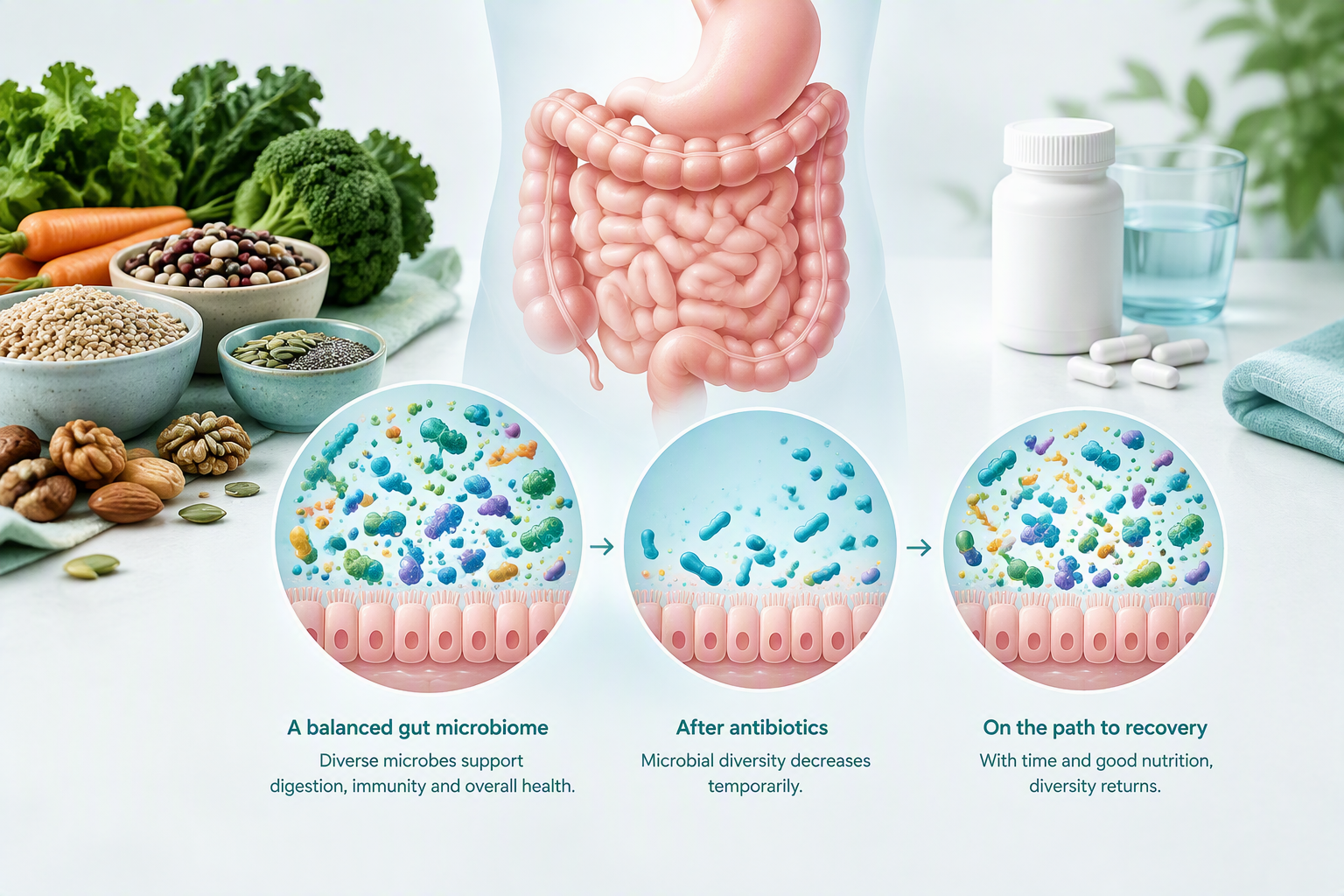
Antibiotics can affect resident gut microbes as well as the bacteria causing an infection. This temporary imbalance, known as dysbiosis after antibiotics, can change digestion and contribute to gas, bloating, loose stools, constipation, or different bowel habits. Medically necessary antibiotics should not be avoided, but knowing what changes can occur may make recovery feel less confusing.
Your gut microbiome is a living community that develops throughout life. How the gut microbiome is built is shaped by food, environment, illness, medicines, and daily routines. Resilience comes from microbial variety and functional overlap, meaning several microbes can perform similar jobs that support digestion, immune signaling, and resistance to unwanted microbes.
Bacteroidetes and Firmicutes are major microbial groups in the large intestine. They break down different parts of plant foods, especially fiber, and produce compounds that help maintain the gut environment. Alongside them, Actinobacteria and other groups also support vitamin production, immune regulation, barrier maintenance, and pathogen resistance. No single group is always good or bad.
The intestinal barrier includes the mucus lining, gut cells, and immune defenses that keep microbes and food particles appropriately separated from the rest of your body. Antibiotics can reduce both the amount and variety of helpful bacteria and may temporarily disrupt this mucus layer.
To restore gut bacteria after antibiotics, a varied eating pattern is usually more useful than relying on one superfood or fiber supplement. Fiber-rich plants for gut health give surviving microbes different fuel sources:
- Vegetables and fruits
- Beans and lentils
- Whole grains
- Nuts and seeds
These high-fiber foods are practical foods to restore gut microbiome function over time. If bloating or irritable bowel syndrome (IBS) symptoms are active, introduce fermentable foods gradually and stay within your tolerance. A varied, digestive-friendly pattern can support your gut health without making meals feel like a stressful experiment.
What Happens to Your Microbiome After Antibiotics?
Antibiotics treat bacterial infections, but they cannot fully distinguish harmful bacteria from helpful microbes in your digestive tract. As a result, the microbiome after antibiotics may temporarily shift in both total microbial abundance and variety. This loss of microbial diversity is a common form of gut microbiome disruption, not a personal failure or proof of permanent damage. UCLA Health reports that antibiotics can temporarily reduce gut microbial communities (source).
Antibiotics and gut bacteria are affected differently based on several parts of treatment:
- Antibiotic type: Broad-spectrum medicines generally affect a wider range of bacteria.
- Dose and course length: Higher exposure or longer treatment can cause more noticeable changes.
- Your starting point: Age, usual diet, recent antibiotic use, and digestive conditions such as IBS can shape both recovery and symptoms.
Bifidobacterium and Lactobacillus, groups involved in carbohydrate fermentation and other digestive functions, may drop sharply after treatment. Lower levels alone do not explain persistent symptoms or confirm damage.
Antibiotic side effects related to these changes can include:
- Gas or bloating after antibiotics.
- Loose stools or constipation.
- Different reactions to foods that were previously easy to tolerate.
- More noticeable symptoms when IBS is already present.
Research reviews find that the antibiotic used, length of exposure, and repeat courses can influence recovery and favor bacteria with antibiotic-resistance traits (source). Repeated treatment can extend the adjustment period, although antibiotics and gut health should not be a reason to avoid medicine that is medically needed. Take antibiotics exactly as prescribed, and do not seek them for viral illnesses they cannot treat.
A varied plant-food diet can nourish the microbes that remain, but it cannot prevent or instantly reverse these changes. Focus on supporting your gut health while your microbial community adjusts, and contact a healthcare professional if symptoms are persistent, severe, or getting worse.
How Long Does Recovery Take?
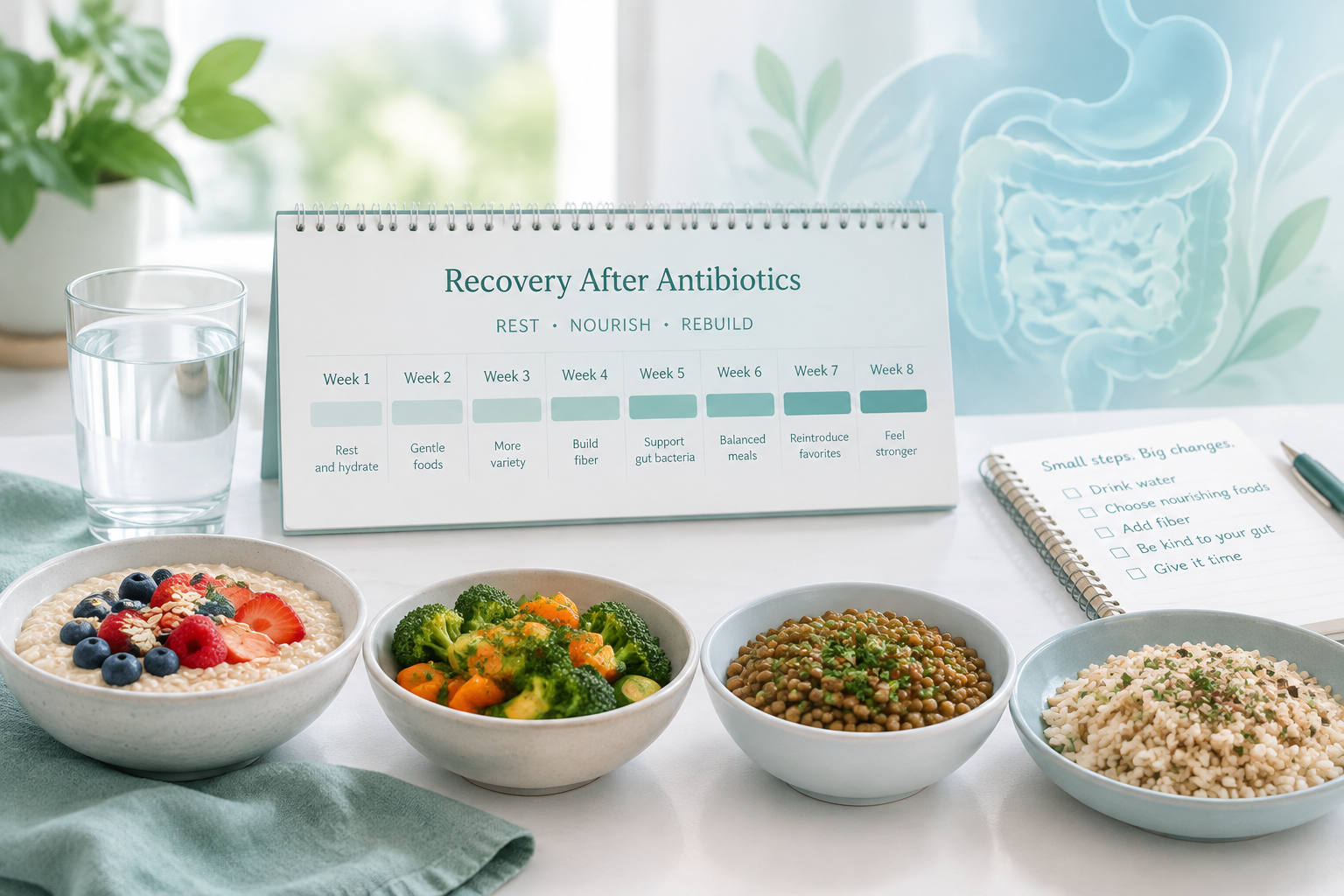
Because symptoms can settle before the microbial community fully rebounds, feeling better after antibiotics does not always mean full gut recovery after antibiotics. Loose stools, gas, and appetite changes may settle first, while the prior mix of microbes and their everyday jobs can take longer to return. A rebound in total bacterial load does not show that gut microbial diversity, meaning the range of species present, or microbial function has returned to its pre-antibiotic state.
Many otherwise healthy adults have substantial recovery within roughly two to eight weeks after one antibiotic course. For weeks to several months, partial recovery may continue. Research has found diversity changes one day after treatment ends that can persist for up to six months, and some species or functions may stay reduced longer (source).
How long does it take for gut bacteria to recover also depends on the antibiotic type, course length, time since the prescription ended, your starting microbiome, and digestive sensitivity. More intensive treatment, including Helicobacter pylori eradication therapy, can cause greater gut microbiome disruption. In one study, alpha diversity, a measure of variety within a sample, was still not fully restored four weeks later, with some Bifidobacterium species remaining depleted.
Restoring microbiome diversity is gradual. Your microbiome may settle into a somewhat different pattern than before antibiotics while still supporting digestion.
Once the course is complete, these symptom-sensitive habits can support gut recovery:
- Loose stools: Choose regular meals and foods you tolerate rather than sharply restricting your diet.
- Constipation: Add fiber-containing foods gradually within a steady eating routine.
- Bloating or IBS concerns: Make one food change at a time and move slowly if your digestion feels reactive.
Cleanses, aggressive detoxes, restrictive diets, and attempts to flush the microbiome are not useful shortcuts. Watch for patterns over several weeks instead of judging recovery by one difficult day. Severe, worsening, or persistent digestive symptoms deserve a conversation with a healthcare professional.
A realistic gut microbiome recovery timeline is weeks for most of the community and longer for some species, which is why the research describes antibiotic-induced dysbiosis as usually temporary but not always complete. There is no way to detox the microbiome or speed that up beyond food, time, and not taking antibiotics you do not need.
What Speeds Recovery?
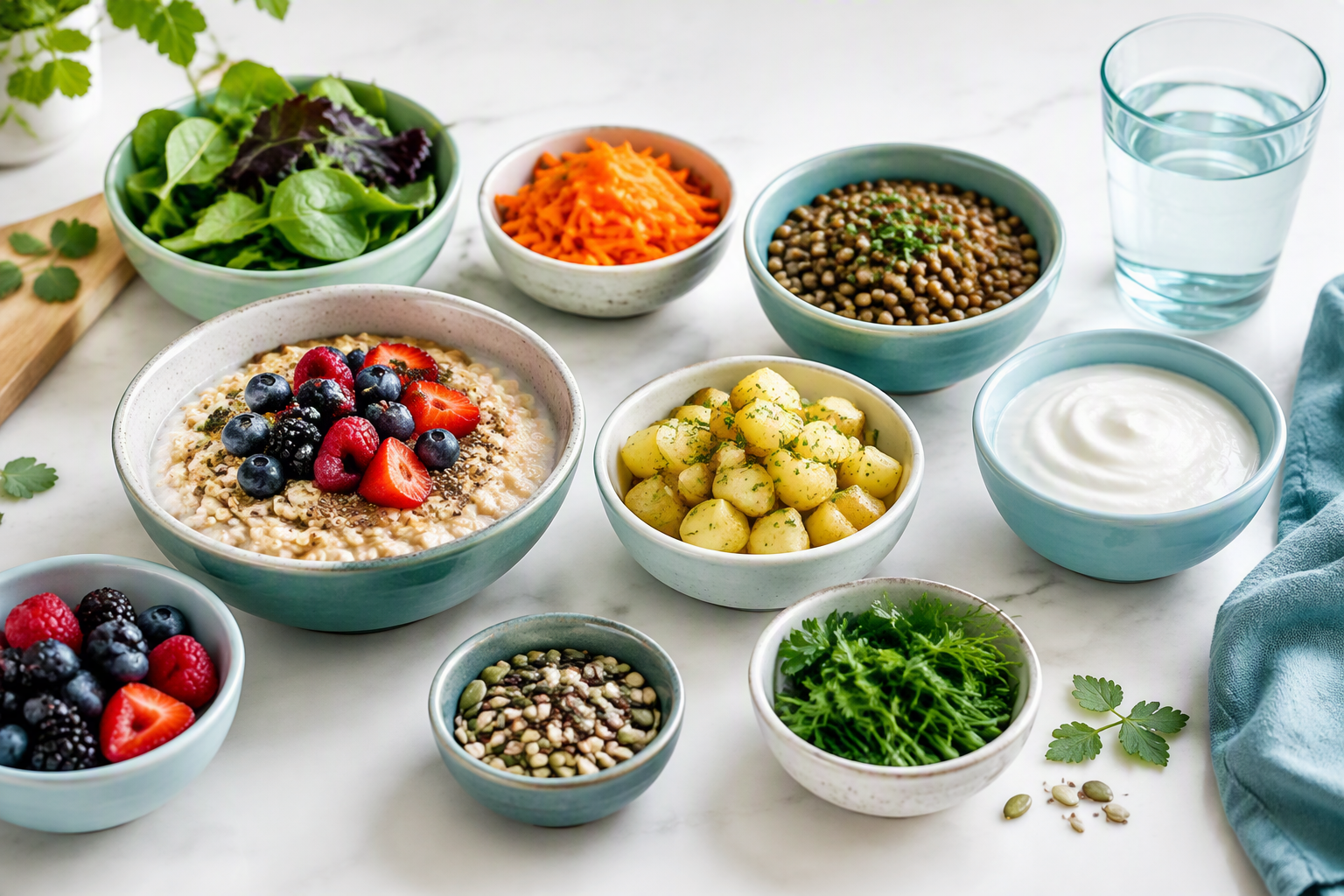
Within that gradual recovery process, a food-first pattern can support gut recovery by giving surviving bacteria steady fuel without overwhelming a sensitive digestive system. The best foods to restore gut microbiome balance are familiar, tolerated choices, not a restrictive reset or a single superfood. Build meals around vegetables, fruit, beans, lentils, whole grains, nuts, and seeds, with smaller portions when appetite, gas, or stool changes are still unsettled.
Plant variety helps because fiber-rich plants for gut health contain different fibers and plant compounds. To make how to restore gut bacteria after antibiotics feel more manageable, track unique plants over a week. Rotate berries, apples, leafy greens, carrots, beans, oats, brown rice, herbs, and seeds rather than relying on the same high-fiber foods every day.
Prebiotic foods need a slow introduction, especially if you have IBS. Garlic, onions, leeks, asparagus, oats, slightly green bananas, and Jerusalem artichokes feed gut microbes, but garlic, onions, and leeks contain inulin and fructooligosaccharides that can increase gas or cramping. Cooked, modest portions and gentler choices such as oats are often easier to tolerate.
Cooked-and-cooled potatoes or rice, lentils, and chickpeas provide resistant starch, which reaches the large intestine and feeds microbes. This can make cooked-and-cooled potatoes or rice a practical option within a varied diet. Reheating is fine. Regular variety matters more than large servings when symptoms are active.
A gradual routine can make these changes easier to tolerate:
- Add one food or portion at a time: Abruptly increasing beans, bran, or raw vegetables can worsen bloating, pain, gas, or loose stools.
- Include fermented foods for gut health if tolerated: Plain yogurt or kefir with live cultures, sauerkraut, kimchi, miso, and tempeh can add variety, but they are optional and do not make probiotic supplements necessary.
- Choose polyphenol-rich foods: Berries, grapes, cocoa, olive oil, tea, herbs, and spices add plant compounds alongside fiber.
- Keep fluids steady: Water, soup, and other tolerated drinks can be especially helpful after diarrhea.
- Limit common irritants: Highly processed foods, added sugars, greasy meals, and excess alcohol may aggravate symptoms.
Feeding the microbiome back after antibiotics is gradual, not a test of willpower. Do not force more fiber when symptoms make eating and drinking difficult.
What Are Signs Your Microbiome Has Not Recovered?

Digestive changes can continue while your gut microbiome readjusts.
The trend matters more than one uncomfortable day. Symptoms that gradually ease are more reassuring than those that stay the same or worsen, and symptoms alone do not prove permanent microbiome damage. These signs your microbiome has not recovered can help put lingering digestive changes in context.
Foods can also seem harder to tolerate temporarily. A meal that was previously fine may bring bloating, cramping, urgency, gas, or a different stool consistency as your digestion adjusts. A few uncomfortable meals do not automatically mean you have developed a lasting food intolerance, so avoid cutting out many foods based on short-term symptoms alone.
Manageable bloating, occasional gas, or bowel changes that are clearly improving can often be monitored while you eat regular, simple meals and stay hydrated. Contact a clinician promptly for:
- Persistent or worsening diarrhea: This includes antibiotic-associated diarrhea that does not start to settle.
- No improvement within several weeks: Ongoing symptoms deserve assessment even without a dramatic change.
- Significant abdominal pain, fever, blood in the stool, or dehydration.
- Severe watery diarrhea or cramping with fever after antibiotics: These symptoms need prompt healthcare contact because they may signal Clostridioides difficile infection.
Antibiotics can reduce the gut’s resistance to opportunistic organisms. That change may allow C. difficile to overgrow, while Candida and other resident organisms can contribute to digestive changes in some cases. Bloating or irregular stools cannot identify an infection or overgrowth, so diet changes and supplements cannot determine the cause.
Recovery varies from person to person, and symptoms are useful clues rather than proof that a probiotic will restore your previous baseline. When symptoms disrupt eating, sleep, work, hydration, or daily life, or resemble an ongoing IBS pattern, healthcare evaluation can help rule out infection and guide an appropriate plan.
How Does a Thinned Microbiome Affect Immunity?
Beyond the digestive changes that can linger during recovery, a thinned microbiome can temporarily change communication between your gut lining and immune system, without showing that you will develop an immune disease or infection. Diverse microbes help intestinal immune cells tolerate ordinary foods and harmless organisms while responding to potential threats. The immune effects of a thinned microbiome may include less of this balancing input as the microbial community rebuilds.
Beneficial bacteria also support the intestinal mucus layer. When they break down dietary fiber, they make compounds that help nourish the gut lining. A temporary drop in these microbes may leave the surface more exposed to irritants and microbial signals, which can coincide with gas, bloating, loose stools, or other bowel changes that often ease during recovery.
The microbiome also provides colonization resistance. In simple terms, beneficial microbes take up nutrients and space that other organisms could use. When antibiotics reduce that competition, antibiotic-resistant or opportunistic organisms may expand, including:
- Clostridioides difficile: This bacterium can cause severe diarrhea after antibiotic treatment.
- Candida: This yeast may increase when bacterial competition is reduced.
- Other organisms: Clostridium perfringens, Staphylococcus aureus, and Klebsiella oxytoca can also take advantage of a disrupted microbial balance.
Microbiome disruption does not mean an overgrowth or infection will occur. Still, changes in fiber breakdown, vitamin synthesis, barrier support, immune regulation, and pathogen resistance can alter gut chemical signals. Persistent inflammation, food-related discomfort, or sluggish digestion may be associated with these shifts, but symptoms alone cannot identify their cause. The National Center for Complementary and Integrative Health notes that probiotic effects depend on the specific organism and health situation, not a general rule that more bacteria are better (source).
Medical evaluation is important after antibiotics when symptoms suggest more than a temporary adjustment:
- Severe, persistent, or worsening diarrhea: Especially when it makes it hard to drink enough fluids.
- Fever or significant abdominal pain: These symptoms can signal an infection or another condition needing prompt care.
- Dehydration: Marked thirst, dizziness, very little urine, or unusual weakness need attention.
- Blood in the stool: This requires prompt assessment.
Symptoms that continue or worsen deserve attention, even if bloating and bowel changes first seemed like a routine part of recovery.
What Can Probiotics Actually Do?
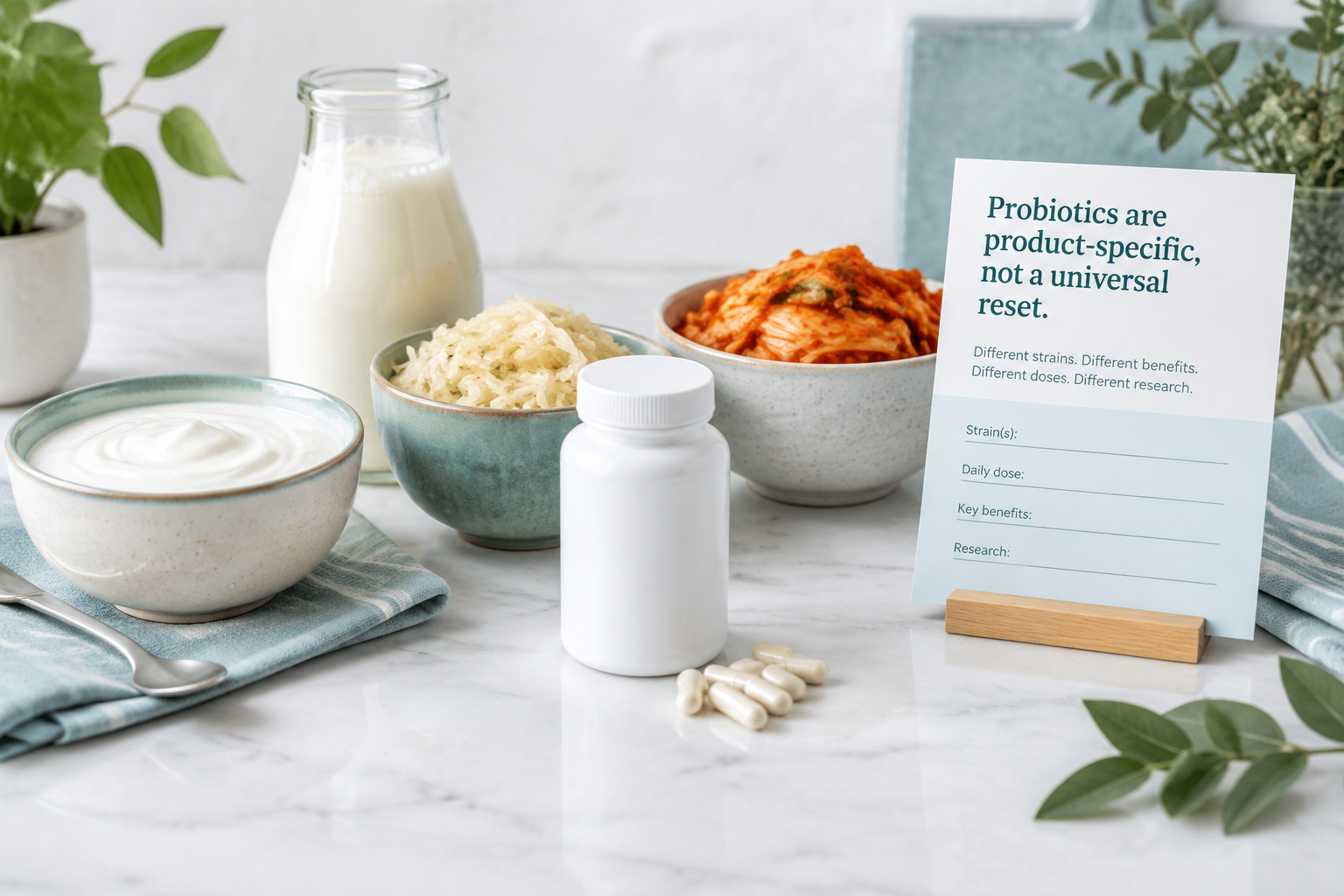
Despite the microbiome's roles in gut and immune function, probiotics after antibiotics are optional. They may modestly lower the risk of antibiotic-associated diarrhea in some situations, but they do not rebuild your exact pre-antibiotic gut microbiome. A 2023 meta-analysis found no reliable restoration of overall microbiome diversity, so no capsule is a universal gut reset.
What matters is the specific formula studied, not a large total colony-forming unit (CFU) claim or a long organism list. Some formulas may help, while generic blends may do little and could temporarily slow the return of native microbes. Evidence does not support one probiotic for everyone after an antibiotic course.
A label is more useful when it includes:
- Full organism name: The complete scientific name, not only a broad category.
- Strain code: The letters or numbers identifying the version evaluated in research.
- Per-strain amount: A total blend amount cannot reveal how much of each strain you receive.
- Research match: A formula comparable to the one tested for the symptom you want to address.
Synbiotics combine probiotics with prebiotics, which are ingredients intended to feed certain gut microbes. They may affect selected microbes or microbiome-derived compounds, but research is still emerging. A lengthy strain list without individual amounts cannot be matched to research doses, and prebiotic fibers may worsen gas or bloating for people sensitive to fermentable fibers.
If you use a bacterial probiotic while taking an antibiotic, separating the two by at least two hours may be helpful with clinician guidance. This timing does not make a product more effective or appropriate for every person.
Yogurt for gut bacteria, kefir for gut health, and other fermented foods for gut health can be enjoyable options when they fit your symptoms. Choices may include yogurt, kefir, sauerkraut, kimchi, miso, and kombucha. One fermented-milk study found stool microbiota more similar to participants’ baseline at day 42, but that does not make all fermented foods interchangeable or prove full microbiome recovery.
Mild gas or short-lived stool changes may settle with symptom-sensitive meals. Prompt medical care is important for:
- Persistent or severe watery diarrhea
- Fever or significant abdominal pain
- Blood in the stool or dehydration
- Possible Clostridioides difficile (C. difficile) symptoms
Probiotics should never delay evaluation of warning signs.
Why Should You Finish Your Antibiotic Course?
Finishing your antibiotic course exactly as prescribed gives the treatment its intended chance to clear the bacterial infection. Symptoms can improve before all bacteria are gone, so stopping early may allow the infection to return. Do not shorten, extend, or stop the medicine on your own. Contact your prescriber or pharmacist promptly if you have side effects, miss a dose, feel worse, or question whether the diagnosis is correct.
Antibiotics and gut health can be affected differently from person to person. Digestive changes may reflect the specific medicine, dose, treatment length, and your microbiome before treatment began. Broad-spectrum antibiotics affect a wider range of bacteria, but digestive concerns should not keep you from taking treatment that is medically necessary.
Antibiotic stewardship means using the most appropriate antibiotic for a confirmed bacterial infection, ideally a narrower-spectrum option when it fits the situation. Antibiotics do not treat colds or most influenza. Unneeded repeat courses can further reduce microbial diversity, extend digestive symptoms, and favor bacteria that resist treatment.
Useful questions for your healthcare professional include:
- Whether testing can help confirm the cause of your symptoms.
- Whether an antibiotic is necessary.
- Whether a narrower-spectrum medicine may be suitable.
- What treatment duration fits your infection.
Food, fiber, fermented foods, and probiotics should match your symptoms, the antibiotic used, and whether the course is complete. A plan that accounts for ongoing loose stools, constipation, or bloating is more useful than a one-size-fits-all recovery routine.
Microbiome After Antibiotics FAQs
These FAQs cover common questions about microbiome changes after antibiotics, including digestive symptoms and practical recovery options. They can help you interpret changes without assuming every symptom has the same cause.
1. Which Antibiotics Harm Gut Bacteria Most?
Broad-spectrum antibiotics often disrupt more gut bacteria than narrowly targeted drugs, but there is no universal “worst” option. The effects of antibiotics and gut bacteria depend on the medication, dose, course length, repeated prior use, age, diet, and your starting microbiome. Ciprofloxacin has been linked to a larger, longer-lasting drop in microbial diversity than streptomycin. Repeated courses may also favor drug-resistant bacteria, while Bifidobacterium and Lactobacillus can fall sharply. Discuss concerns with your prescriber before changing a prescribed course.
2. What Is the 90-60 Antibiotic Rule?
The 90-60 antibiotic rule is not a recognized clinical guideline for gut microbiome recovery. Don’t use it to change, stop, or shorten prescribed antibiotics, since the medication, dose, treatment length, and infection all shape your needs. Recovery is usually better supported by time and normal, symptom-sensitive meals than restrictive diets or attempts to flush the microbiome. Follow your prescriber’s instructions, then tailor food and routine changes to your symptoms and whether treatment has ended.
3. Can Antibiotics Cause Long-Term Gut Changes?
Antibiotics can cause longer-lasting shifts in some gut bacteria and digestive functions, but one course does not automatically mean permanent damage. For many healthy adults, substantial recovery happens within roughly two to eight weeks, although how long does it take for gut bacteria to recover depends on the antibiotic, treatment length, and time since treatment ended. Studies have found reduced diversity from one day after treatment through six months, with some species recovering more slowly. Seek medical attention for persistent or worsening diarrhea, significant abdominal pain, fever, blood in the stool, or symptoms that are not improving after several weeks.
4. Should You Avoid Alcohol After Antibiotics?
Avoiding or limiting alcohol can make sense while digestion is unsettled after antibiotics, especially if you have bloating, nausea, cramps, or loose stools. Alcohol can irritate the gut lining, and heavier drinking may further reduce microbial diversity during microbiome recovery, but avoiding it is a comfort and hydration choice, not a guaranteed treatment.
Loose stools can cause fluid loss, so prioritize water and other tolerated fluids. Seek medical care for severe, persistent, or worsening diarrhea, abdominal pain, fever, or signs of dehydration.