


Choosing high-fiber foods for gut health does not mean piling beans, bran, and raw vegetables onto every meal. Gentler digestion usually comes from adding tolerated plant foods gradually, spreading them across the day, and paying attention to how your stools and bloating respond. Oats, fruit, cooked vegetables, whole grains, nuts, seeds, and legumes each offer different forms of fiber.
A large serving of lentils or chia may work well for one person but bring gas or cramping for someone with IBS. USDA FoodData Central values can help compare practical portions, while meal-based food lists make it easier to start with familiar breakfasts, snacks, lunches, and dinners. Smaller servings of cooked vegetables, oats, bananas, or barley can be a more comfortable starting point before adding more fermentable foods.
High Fiber Foods for Gut Health Key Takeaways
- Build fiber intake gradually instead of changing every meal at once.
- Spread fiber-rich foods across meals to support comfort and regularity.
- Soluble fiber may help soften stools and add form to loose stools.
- Whole grains, legumes, fruits, vegetables, nuts, and seeds provide different fibers.
- Cooked vegetables may feel easier to tolerate than large raw salads.
- IBS tolerance varies, especially with beans, onions, garlic, and other fermentable foods.
- Water and other fluids can make higher-fiber meals more comfortable.
Which High Fiber Foods Support Gut Health?
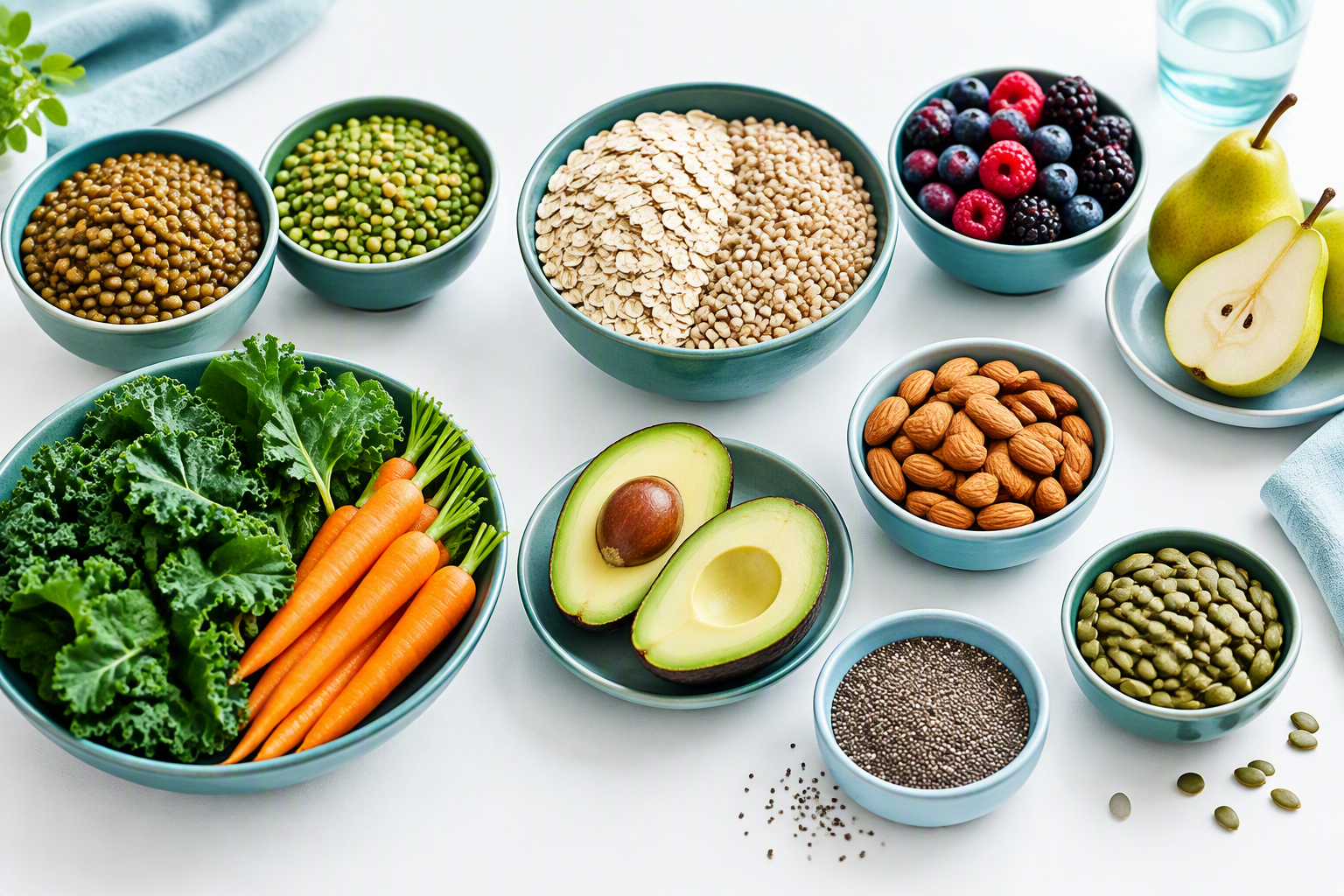
High fiber foods for gut health come from legumes, whole grains, fruits, vegetables, nuts, and seeds. Most adults need about 22 to 34 grams of fiber daily, although age, sex, and calorie needs affect the right amount (source). Build up slowly and drink enough fluids, especially with bloating, constipation, irregular stools, or irritable bowel syndrome (IBS).
A diet that supports digestion spreads fiber for gut health across meals instead of relying on one oversized serving, and knowing how much fiber a day helps digestion gives you a comfortable starting point.
This high fiber foods list shows practical servings. Fiber amounts are from USDA FoodData Central (source):
Category | Food and serving | Fiber |
|---|---|---|
Legumes | Split peas, 1 cooked cup | About 16 grams |
Legumes | Lentils, 1 cooked cup | 15.5 grams |
Legumes | Black beans, 1 cooked cup | 15 grams |
Legumes | Canned white beans, 1 cooked cup | 13 grams |
Legumes | Chickpeas, 1/2 cup | About 6.5 grams |
Whole grains | Pearled barley or whole-wheat spaghetti, 1 cooked cup | About 6 grams each |
Whole grains | Quinoa, 1 cooked cup | 5 grams |
Whole grains | Instant oatmeal, 1 cooked cup | 4 grams |
Whole grains | Cooked barley, 1/2 cup | 4.2 grams |
Whole grains | Whole-wheat bread, 1 slice | 1.9 grams |
Fruits and vegetables | Green peas, 1 cup | About 9 grams |
Fruits and vegetables | Raspberries, 1 cup | 8 grams |
Fruits and vegetables | Blackberries, 3/4 cup | About 6 grams |
Fruits and vegetables | Cooked broccoli or turnip greens, 1/2 cup | About 5 grams |
Fruits and vegetables | Small apple with skin | About 2.8 grams |
Nuts and seeds | Chia seeds, 1 ounce | About 10 grams |
Nuts and seeds | Almonds, 1 ounce | 3.5 grams |
Nuts and seeds | Pistachios, 1 ounce | 3 grams |
Beans and lentils fiber can rise quickly because these are among the best legumes for fiber. They also provide plant protein, soluble and insoluble fiber, resistant starch, and fermentable carbohydrates. Kidney beans and edamame offer variety, but smaller portions may be easier if gas is a concern.
Fiber rich foods do not need to crowd every plate. High fiber fruits and vegetables such as pears, avocado, kiwi, bananas, berries, and greens can balance meals, while chia in oatmeal or yogurt and a handful of nuts make modest additions easier to tolerate.
The best high-fiber foods for digestion are the ones you can eat most days: fiber-rich legumes, high-fiber whole grains, high-fiber vegetables, high-fiber fruits, and high-fiber nuts and seeds. That variety of fiber-rich foods matters more than any single pick, because different foods feed different gut bacteria.
How Does Fiber Support Digestion?
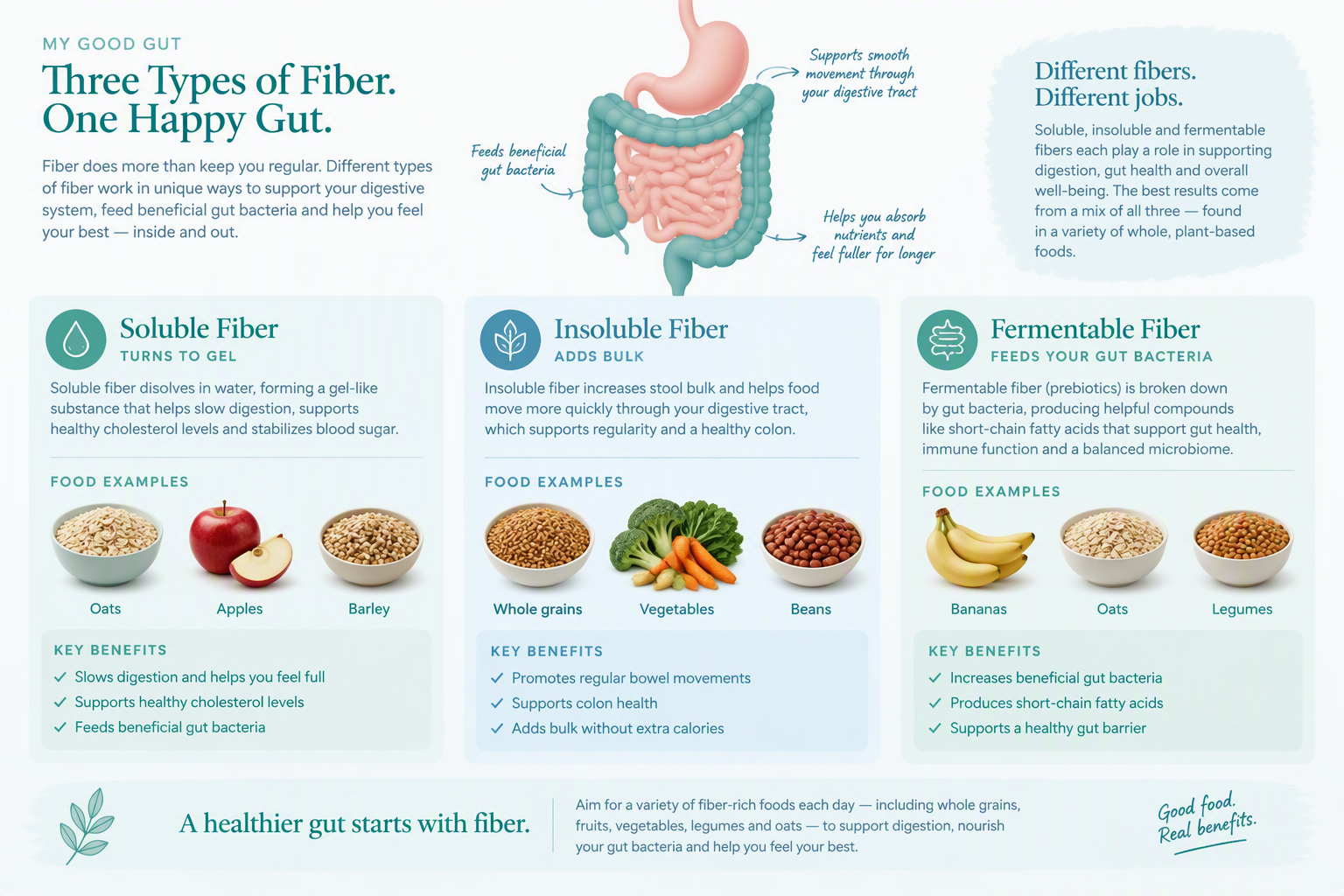
Because the foods on that list contain different fibers, dietary fiber for digestion is not one uniform nutrient. Some fibers hold water and can help stools pass more smoothly, while coarser fibers add bulk that may prompt movement through the large intestine. Together, these effects can support fiber and bowel regularity, although the mix that feels best depends on your symptoms and usual diet.
Soluble fiber absorbs water and forms a gel-like texture. It may give loose stools more form while helping keep stools softer when constipation is a concern. Beans, lentils, apples, and oats are familiar sources, but most plant foods contain a blend of fiber types.
Insoluble fiber remains more intact as it moves through the digestive tract, increasing stool bulk and supporting intestinal motility. Insoluble fiber and stool bulk can be especially relevant when stools are infrequent. Everyday sources include:
- Vegetables
- Nuts
- Whole grains
- Wheat bran
- Legumes
Fermentable fibers are foods that feed good gut bacteria. Gut bacteria can break down fermentable fibers and produce short-chain fatty acids, which can help nourish colon cells and support the gut barrier (source). Foods with fermentable fiber include:
- Asparagus, oats, and apples
- Onions, garlic, and leeks
- Bananas and avocado
Gas and bloating can increase when you add these foods quickly, particularly with IBS. A gradual change gives you a clearer sense of which foods and portions work for you.
Resistant starch is another fermentable carbohydrate that reaches the large intestine without being fully digested. Cooked then cooled potatoes or rice, along with green or slightly underripe bananas, provide resistant starch that bacteria can ferment. A varied pattern of fiber for gut health gives the gut microbiome a wider range of materials than relying on a single food.
Fiber for digestion works best when changes fit your tolerance and fluid intake. General dietary fiber needs vary by age, sex, and energy intake (source). Foods that support smooth digestion are the foods you can eat consistently without making symptoms harder to manage.
Fermentable fiber foods such as beans, oats, and onions act as prebiotic foods, feeding beneficial gut bacteria, so fiber and gut microbiome health run together. Fiber that adds bulk to stool, mostly from whole grains and vegetable skins, is the other half of fiber and digestion.
Which Foods Work for Breakfast and Snacks?
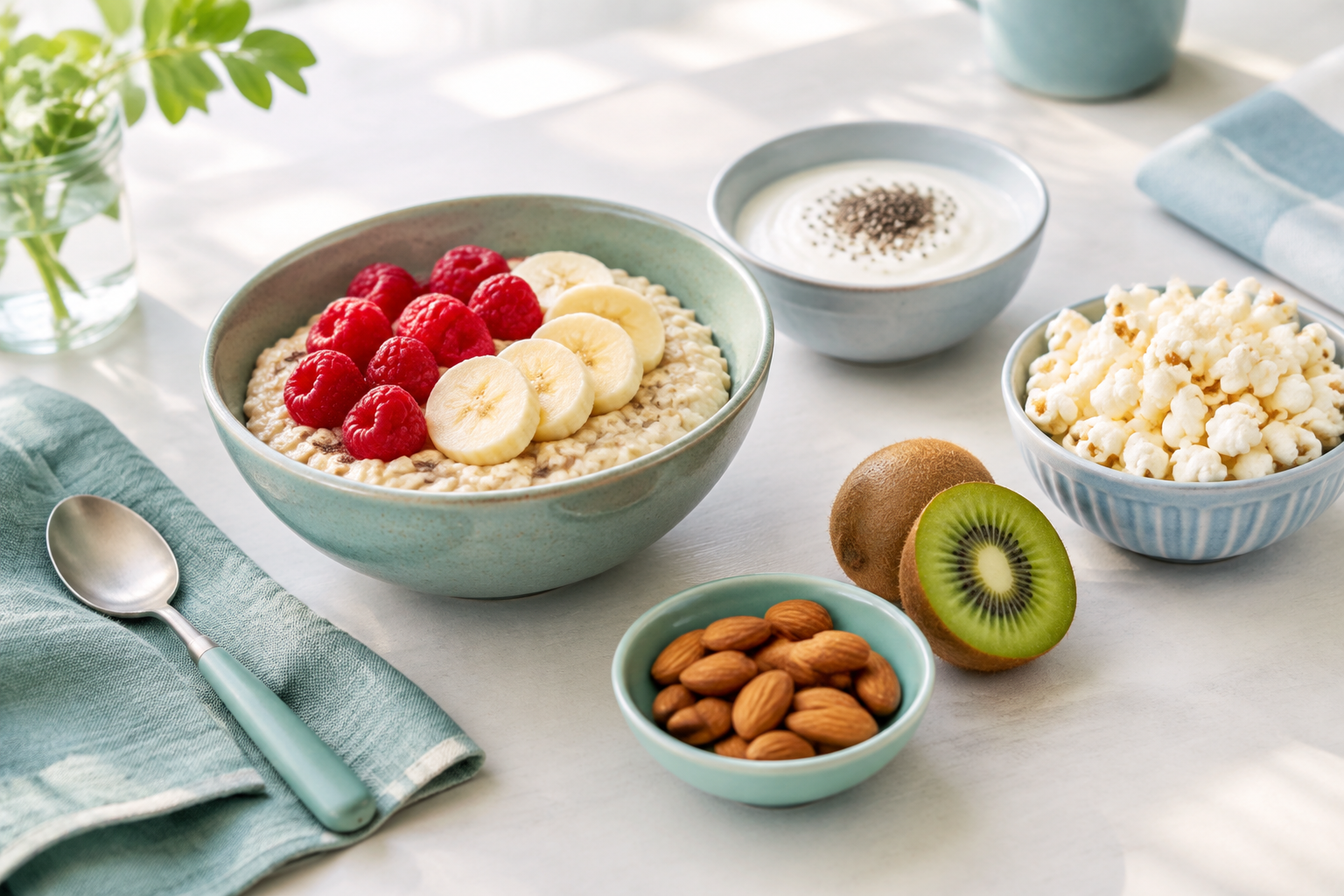
For a tolerable start to the day, a high fiber breakfast is often easier to tolerate when it starts with one familiar food rather than several fiber-rich toppings in the same bowl. Choose plain oats instead of sugary instant packets, then add tolerated fruit and protein, such as yogurt or eggs. Oats fiber can be a steady starting point, especially when you begin with a modest bowl.
USDA FoodData Central lists these serving amounts and fiber values:
Food | Practical serving | Fiber |
|---|---|---|
Plain oatmeal | 1/3 cup dry | 2.7 grams |
Raspberries | 1 cup | 8 grams |
Pear with skin | 1 medium | 5.5 grams |
Apple with skin | 1 medium | 4.4 grams |
Banana | 1 medium | 3 grams |
Chia seeds | 2 tablespoons | 10 grams |
Ground flaxseed | 2 tablespoons | 3.8 grams |
Almonds | About 23, or 1 ounce | 3.5 grams |
Shelled pumpkin seeds | 1 ounce | 5.2 grams |
Fruit adds water, vitamins, antioxidants, and fiber to breakfasts and snacks. Raspberries’ fiber content makes them a filling option, while pears’ fiber and apples’ fiber come with the skin. These fruits high in fiber can still trigger IBS symptoms for some people, so a smaller portion may feel better than a large fruit bowl.
A spoonful of chia or ground flaxseed works well in oatmeal, yogurt, or a smoothie, and chia pudding is another easy option. Start with half a serving rather than adding both seeds at once, especially if bloating is a concern.
Portable snack choices can stay simple:
- Nuts or seeds: Pair a measured handful with fruit you tolerate.
- Simple trail mix: Choose a mix without lots of added sugar or chicory root.
- Air-popped popcorn: Use it in place of heavily processed snack bars when it suits your digestion.
As you add more fiber, drink water regularly and introduce one new food or a smaller serving at a time, scaling back if bloating, cramping, or stool changes worsen. Persistent or severe symptoms warrant healthcare guidance.
A high-fiber breakfast and a couple of high-fiber snacks can carry most of a daily fiber goal before dinner.
Which Foods Build Fiber Rich Meals?
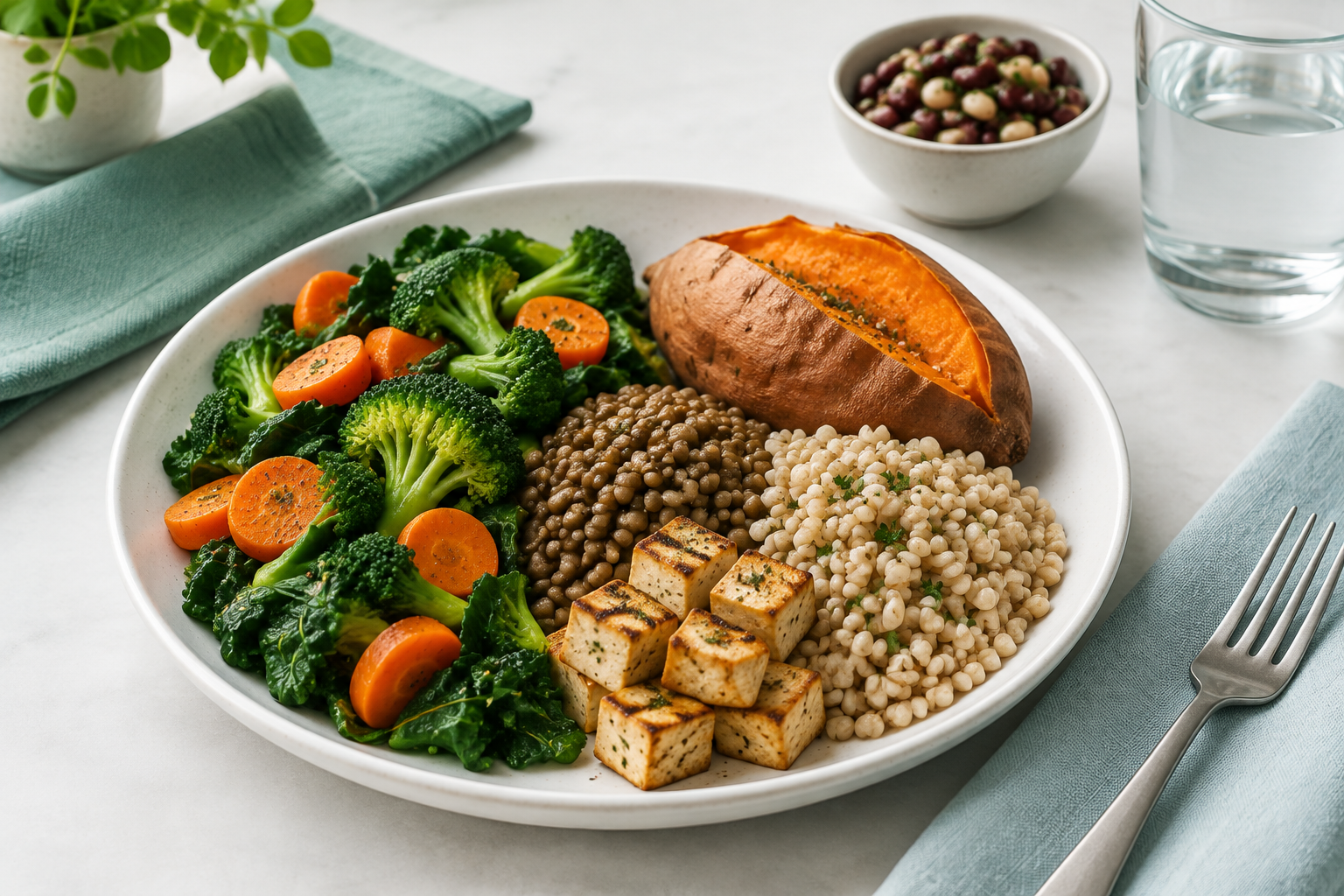
Beyond breakfast and snacks, a flexible lunch or dinner plate is built with about half vegetables, a protein you enjoy, and a whole grain or skin-on potato. This approach makes it easier to raise fiber without changing every part of a familiar meal:
- Half the plate filled with vegetables. – Beans, lentils, chicken, fish, eggs, tofu, or another preferred protein. – Whole grains high in fiber or a baked white or sweet potato with the skin.
Whole grains for digestion keep the bran, germ, and endosperm that refined grains remove. Oats, barley, quinoa, brown rice, whole-wheat bread or pasta, and plain air-popped popcorn are practical options (source).
Beans and lentils fiber can anchor soups, grain bowls, salads, tacos, and pasta dishes. The best legumes for fiber include black beans and lentils, while a bowl with beans, cooked barley, roasted vegetables, and chicken, fish, eggs, or tofu offers a balanced starting point.
USDA FoodData Central reports the following fiber amounts by serving:
Food and portion | Total fiber | Soluble fiber | Insoluble fiber |
|---|---|---|---|
Cooked medium artichoke | 6.5 g | 4.7 g | 1.8 g |
Frozen peas, 1/2 cup | 4.3 g | 1.3 g | 3 g |
Brussels sprouts, 1/2 cup | 3.8 g | 2 g | 1.8 g |
Cooked black beans, 1/2 cup | 6.1 g | 2.4 g | 3.7 g |
Cooked lentils, 1/2 cup | 5.2 g | 0.6 g | 4.6 g |
Cooked barley, 1/2 cup | 4.2 g | 0.9 g | 3.3 g |
Artichokes contain fermentable prebiotic inulin. Broccoli, carrots, leafy greens, and peas can also support regular bowel movements and a diverse gut microbiome.
A bean-and-vegetable lunch with 1/2 cup black beans and peas provides about 10 grams of fiber, moving you toward roughly 25 grams daily. Dinner with barley, Brussels sprouts, and a skin-on sweet potato adds more. If IBS or bloating is a concern, start with smaller portions and add one fermentable food at a time. Repeated gas or discomfort after these foods deserves attention.
A one-day high-fiber meal plan looks ordinary once you see it: oatmeal with berries in the morning, a bean and vegetable lunch, fruit and nuts as high-fiber snacks, and a dinner built on lentils or barley. That is a high-fiber diet without a special shopping list.
Which High Fiber Foods Are Gentler?
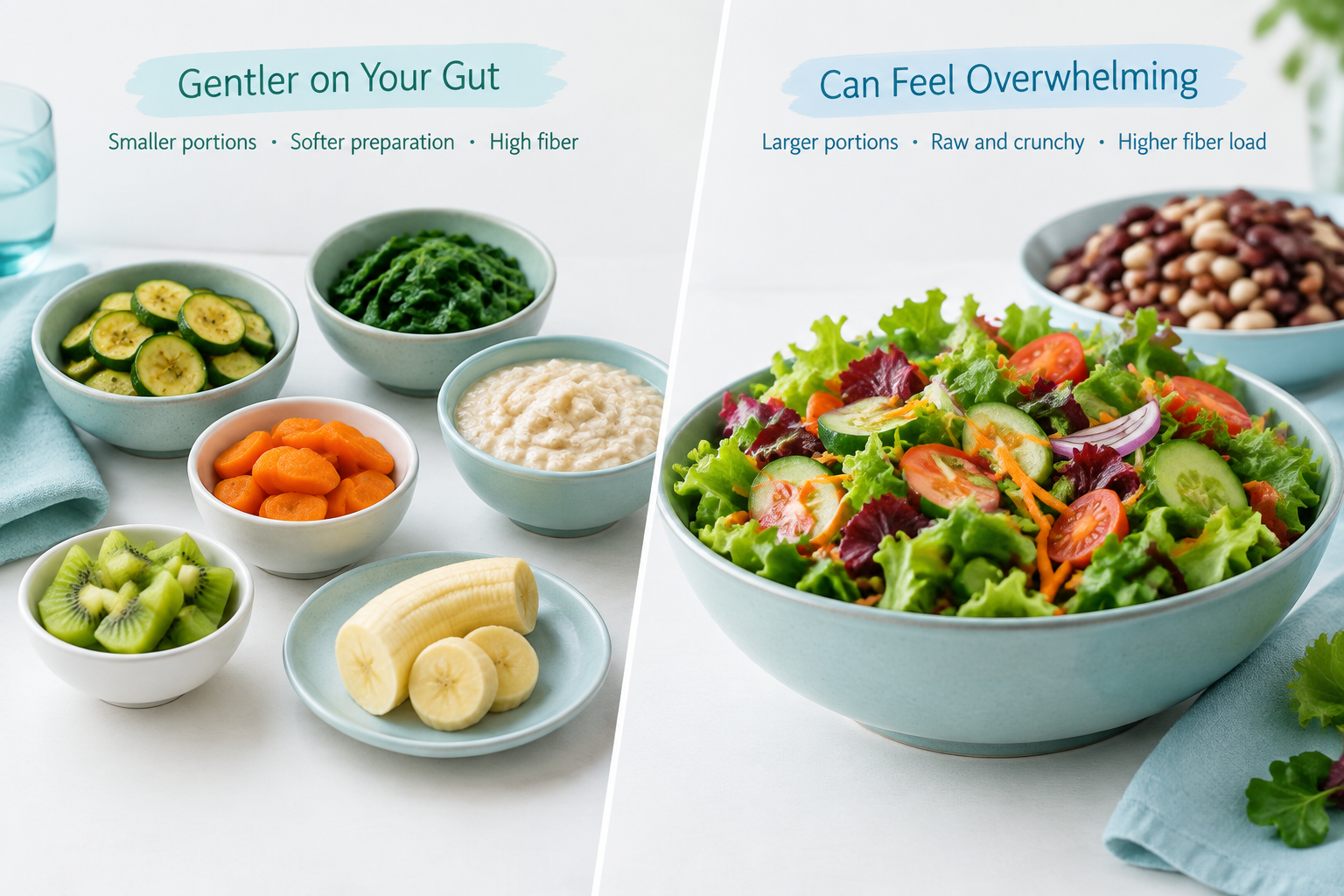
Bloating, constipation, diarrhea, and IBS can change how the same high-fiber food feels. Fiber that adds bulk may help when constipation is the concern but may not suit loose stools in the same way, and the same symptom test applies when picking a fiber supplement. For fiber and bloating, symptoms and stool patterns are more useful guides than a rigid list of "good" or "bad" foods, especially if you follow a low-FODMAP eating pattern.
Cooked vegetables can be a more comfortable place to start than a large raw salad because cooking softens their texture. Try a small serving of cooked zucchini, spinach, canned carrots, or broccoli, then bring back raw vegetables if they feel comfortable. Avoiding raw produce automatically can make meals more limited than they need to be.
Soluble and insoluble fiber can affect stools differently. Along with their effects on stools, soluble and fermentable fibers can also act as foods that feed good gut bacteria. Those bacteria produce short-chain fatty acids, which help support the gut lining, but fermentable foods can still cause gas during a flare. Small portions of banana, cooked barley, asparagus, or avocado fiber can help you identify what works for you.
A gradual approach makes new foods easier to assess:
- Start with a small serving of one new fiber food. – Keep the rest of the meal familiar, so changes are easier to notice. – Spread fiber-rich foods across the day instead of loading them into one meal. – Increase portions gradually over several weeks, especially if your usual eating pattern has been low in fiber.
Oats, bananas, apples, avocado, asparagus, garlic, leeks, and onions may support beneficial gut bacteria, yet IBS tolerance varies widely. During a flare, a smaller portion or cooked preparation may be easier than cutting out the food completely. Persistent or worsening symptoms deserve attention.
Low-FODMAP high-fiber foods such as oats, quinoa, carrots, kiwi, and firm bananas are the usual starting point for fiber foods for IBS, since they add fiber without the fermentable sugars that drive gas. Foods for bloating and foods for constipation overlap here: cooked vegetables and oats suit both.
How Can You Make Easy Fiber Swaps?
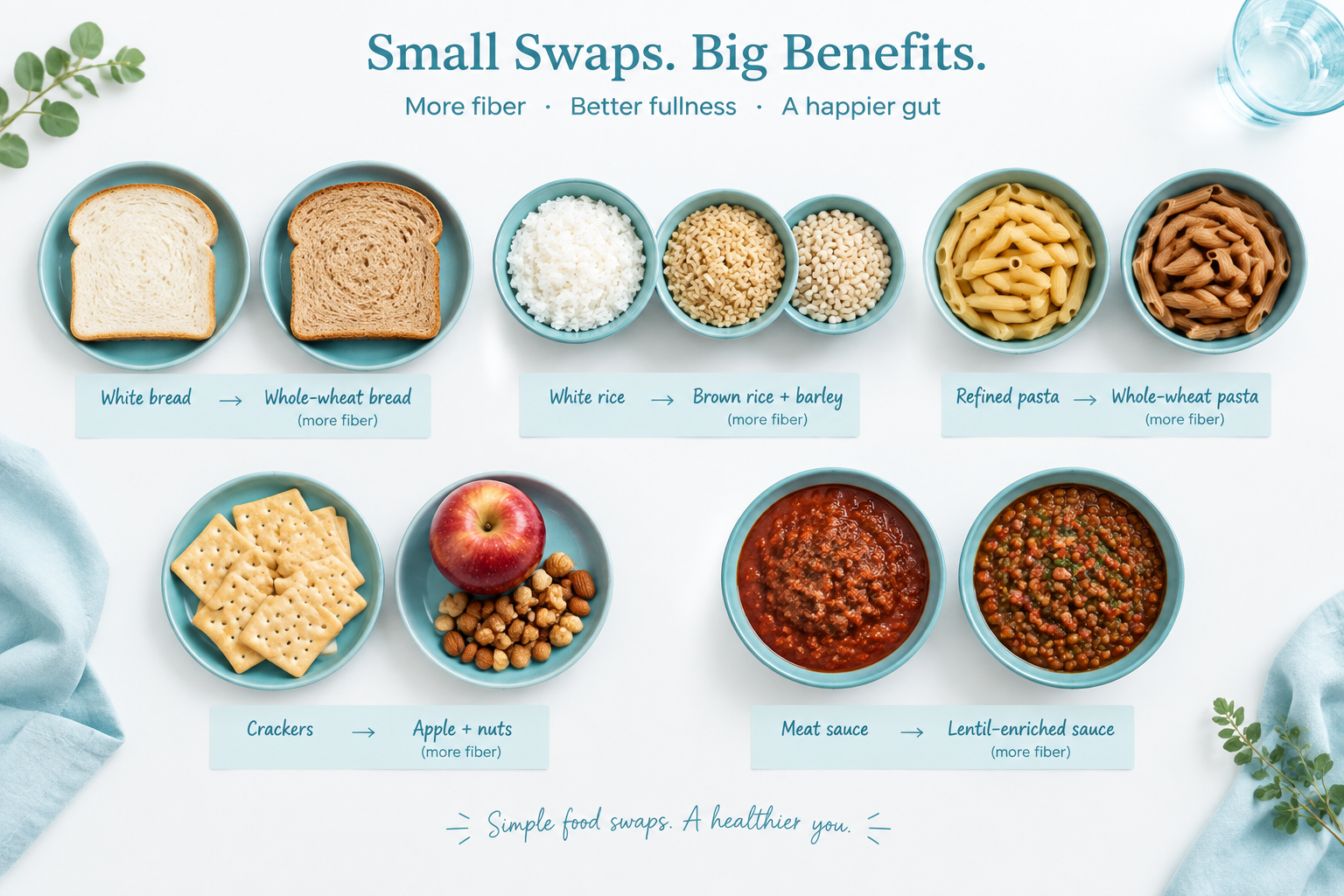
To make that symptom-guided approach practical, small swaps can move your meals toward a useful daily fiber range without relying on a single “superfood.” Daily fiber goals vary by age and sex. Whole foods are usually a better starting point than fiber-fortified bars or cereals because they also bring vitamins, minerals, and other nutrients.
Grain swaps can fit foods your family already eats:
- Replace white toast or sugary cereal with whole-wheat bread, plain oats, or an unsweetened higher-fiber cereal.
- Choose brown rice or barley instead of white rice when the meal suits their chewier texture.
- Use whole-wheat pasta in place of refined pasta, especially with vegetable-based sauces.
These serving comparisons show how a familiar substitution can add fiber:
Swap | Lower-fiber choice | Higher-fiber choice |
|---|---|---|
Rice | 1/3 cup cooked white rice: about 0.5 grams | 1/2 cup cooked barley: 4.2 grams |
Pasta | 1/2 cup white spaghetti: 0.9 grams | 1/2 cup wheat spaghetti: 2.7 grams |
Snack swaps can be simple and filling:
- Trade crackers, pretzels, or candy for a small apple with skin, which has 2.8 grams of fiber.
- Choose 3/4 cup blackberries for 6 grams of fiber.
- Try 3 cups of air-popped popcorn for 2 grams of fiber, or pair fruit with a small handful of nuts or seeds.
At dinner, stir lentils into meat sauce, add black beans to tacos, or replace part of the meat in chili with beans, chickpeas, or edamame. Start with 1/4 cup, then work toward 1/2 cup as tolerated. That larger serving provides about 5.2 grams from lentils, 6.1 grams from black beans, or 4.3 grams of chickpeas fiber.
A practical day might include oats at breakfast, fruit at snack time, a whole grain at lunch, and legumes or vegetables at dinner. Rotating plant foods through the week supports a more diverse gut microbiome.
If bloating, constipation, irregular stools, or IBS is part of the picture, add one swap at a time and increase portions gradually. A rapid increase in fermentable fiber can raise gas for some people (source).
How Can You Add Fiber Comfortably?
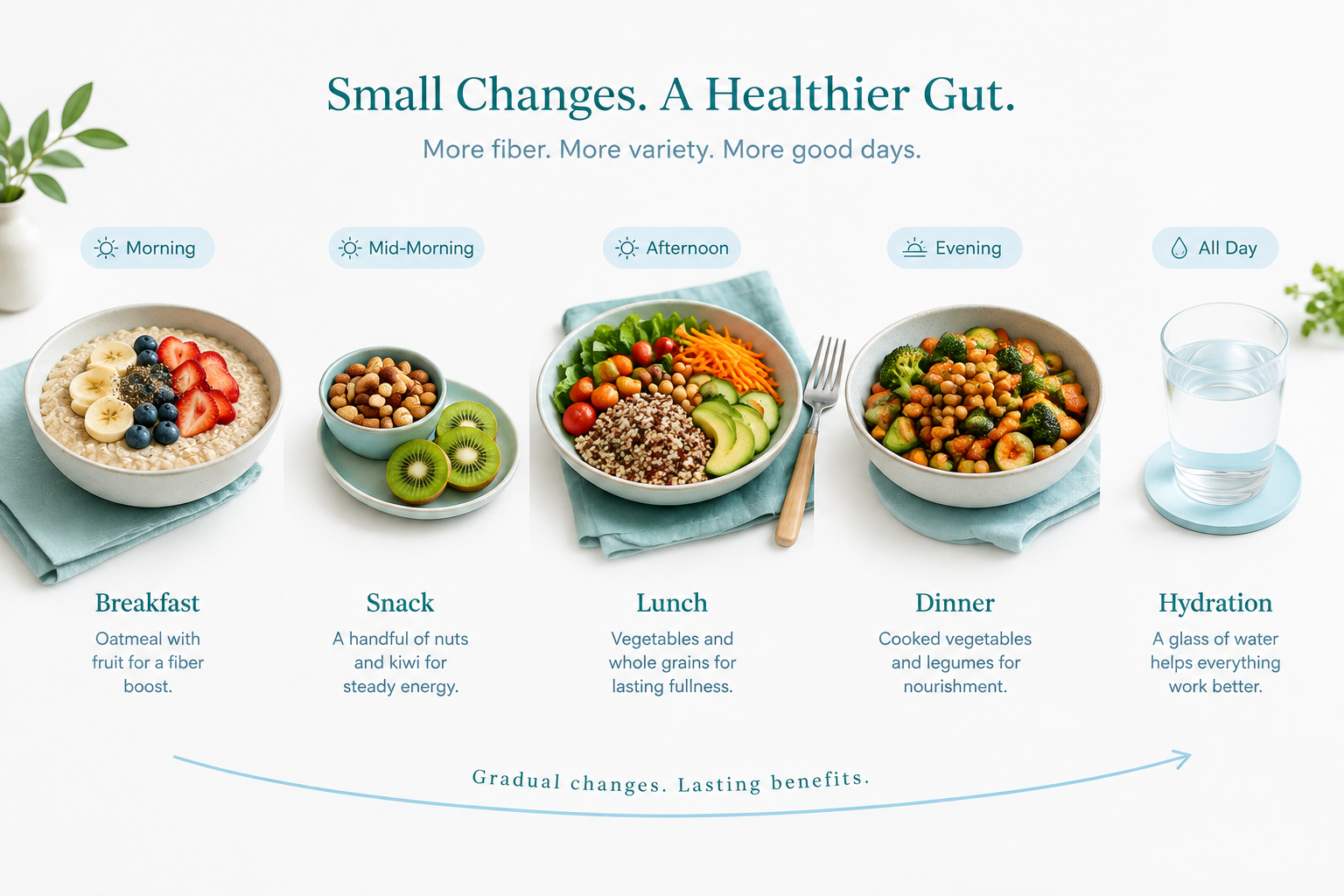
Add dietary fiber through small, steady changes instead of shifting to a high-fiber menu overnight. If your usual intake is low, make one modest food swap, then give your body time to adjust before adding another. This slower pace can make fiber and bloating easier to manage because a sharp increase may cause temporary gas, cramps, or stool changes.
Spreading foods that support smooth digestion across the day is often more comfortable than loading most of your fiber into one meal:
- Breakfast: Add oatmeal or fruit to your usual meal.
- Snack: Choose fruit or a small handful of nuts.
- Lunch: Include vegetables or a whole-grain option.
- Dinner: Start with a modest serving of cooked vegetables or legumes.
Fluids matter as fiber intake rises. Water is a practical default, while soups and water-rich foods also contribute to adequate fluids that can make higher-fiber meals more comfortable. Dry, bulky foods without enough fluid can worsen constipation or cramping.
Fiber for digestion is not about reaching the highest possible intake. Adjust both your pace and food choices around your symptoms, eating pattern, and tolerance. Constipation, diarrhea, IBS, vegetarian eating, and a low-FODMAP approach, which limits fermentable oligosaccharides, disaccharides, monosaccharides, and polyols, can all affect which high-fiber foods feel manageable.
When food alone falls short, a supplement can fill the gap. If psyllium repeatedly worsens gas, methylcellulose is a non-fermented alternative that adds bulk without feeding gas-producing bacteria (source).
Mild gas can occur while your gut adjusts. Major bowel-habit changes need attention.
How to add more fiber to your diet safely is the same advice everywhere: gradually increase fiber over a few weeks and drink water with it.
High Fiber Foods for Gut Health FAQs
These FAQs cover practical questions about high-fiber foods for gut health, including choices that fit your meals, symptoms, and IBS tolerance without making everyday eating feel overly restrictive.
1. Are Fiber Supplements as Effective as Whole Foods?
Fiber supplements can increase your intake, but they do not replace whole foods. Fruits, vegetables, beans, nuts, seeds, and whole grains provide soluble and insoluble fiber plus water, vitamins, minerals, and plant compounds that isolated fiber and processed fiber-fortified products often lack.
A specific supplement may help when food alone falls short or when constipation or IBS symptoms call for a particular fiber type. Persistent bloating, medication use, or worsening gas warrants a conversation about the product, dose, and gradual introduction.
2. Does Cooking Vegetables Reduce Their Fiber?
Cooking generally leaves vegetable fiber intact, although softening, shrinking, or absorbing water can change the amount that fits in a cup. A 1/2-cup serving of cooked green beans provides 2.8 grams of fiber, compared with 2 grams in the same amount of canned green beans. Steamed, roasted, or simmered vegetables may be easier to tolerate with bloating or IBS. Start with a comfortable portion and increase gradually while drinking fluids to help fiber support softer, easier-to-pass stools.
3. Do Frozen Fruits and Vegetables Retain Fiber?
Yes. Plain frozen fruits and vegetables retain meaningful fiber, making them useful when fresh produce is expensive, out of season, or likely to spoil. A 1/2-cup serving of frozen peas provides 4.3 grams of fiber. Rotate berries, peas, broccoli, spinach, and mixed vegetables with other plant foods to support dietary and gut-microbiome diversity. Choose plain, unsweetened options without cheese sauce, butter, breading, syrups, or heavily salted seasoning blends.
4. Does Peeling Fruit Reduce Its Fiber Content?
Yes. Removing the peel lowers the fiber in apples and pears because the skin holds a meaningful share. If the texture works for you, thoroughly washed fruit with its skin keeps more apples fiber and pears fiber, including pectin, a soluble fiber that helps nourish beneficial gut bacteria.
Skins are optional. Peeled fruit remains nourishing and may suit you better when skins feel tough, trigger bloating, or make fruit less appealing. The best preparation is one you tolerate and enjoy regularly.
5. Which High Fiber Foods Are Gluten-Free?
Many naturally gluten-free foods add fiber without wheat, including beans, lentils, chickpeas, black beans, split peas, edamame, fruits, vegetables, skin-on potatoes, quinoa, nuts, and seeds. Legumes also supply plant protein, resistant starch, and fermentable carbohydrates, so begin with a modest portion if beans cause gas. A 1/2-cup serving of black beans has 6.1 grams of fiber. Berries, apples with skin, pears, kiwi, bananas, and avocado add fluid, vitamins, and antioxidants. Check packaged foods for gluten-free labeling and possible cross-contact, especially with celiac disease.
6. What Are the Best Foods for Gut Health?
The best foods for gut health are the fiber-rich whole foods on this page plus fermented foods for gut health such as yogurt, kefir, sauerkraut, and kimchi. Foods that support the gut microbiome are the ones that bring prebiotic fiber, so beans, oats, onions, garlic, and cooked-and-cooled potatoes rank high.
7. How Much Fiber Should You Eat Per Day?
The recommended daily fiber intake is 25 grams for women and 38 grams for men, with a dietary fiber daily goal around 14 grams per 1,000 calories. Fiber intake for adults in the United States averages far less, so a daily fiber goal of 25 grams is a realistic first target for most people.