


A probiotic label and a high CFU count don't tell you whether Saccharomyces boulardii is the right choice for diarrhea after antibiotics, bloating, or recurring bowel changes. This live yeast probiotic may help prevent antibiotic-associated diarrhea in some settings, but its benefits are specific rather than broad.
Product claims often blur the difference between a species name and a researched strain. A practical label check focuses on strain identity, viable amount through expiration, storage instructions, and added ingredients that may worsen bloating, such as MOS. CNCM I-745 is the strain identifier connected to much of the clinical research, while a species-only product cannot be matched as closely to those findings.
Safety needs equal attention when choosing a product. People who are seriously ill, immunocompromised, or have a central venous catheter should avoid self-starting this live yeast, and severe or persistent diarrhea needs medical evaluation rather than supplement-only care.
Saccharomyces Boulardii Key Takeaways
- Saccharomyces boulardii is a live yeast probiotic, not a bacterial probiotic.
- Evidence is strongest for preventing antibiotic-associated diarrhea in selected situations.
- It does not treat active Clostridioides difficile infection or replace prescribed care.
- Probiotic benefits depend on the exact strain, not the CFU count alone.
- CNCM I-745 is linked to much of the available clinical research.
- Evidence for IBS, IBD, traveler's diarrhea, and Candida-related concerns remains limited or mixed.
- Avoid self-starting it with severe immune suppression, critical illness, or a central venous catheter.
What Is Saccharomyces Boulardii?
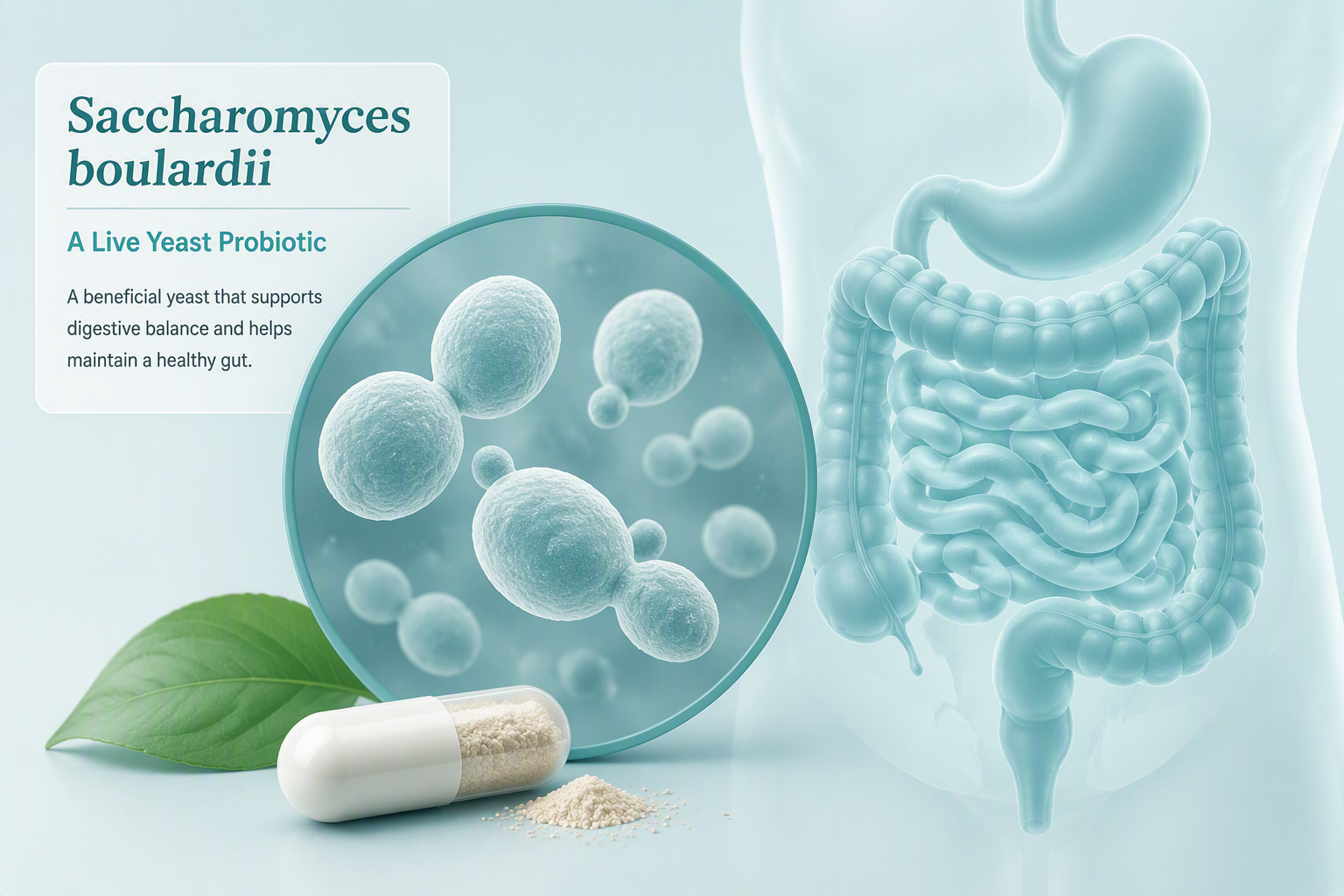
Saccharomyces boulardii is a probiotic yeast, meaning a live, single-celled fungus used in digestive-health supplements rather than a bacterium. Probiotics are live microorganisms that may provide a health benefit when taken in adequate amounts, but a Saccharomyces boulardii probiotic is not appropriate for every symptom or every person.
First isolated from lychee and mangosteen peels in 1923, this tropical yeast is genetically close to Saccharomyces cerevisiae, the yeast used in baking and brewing. Its physical and metabolic traits differ, however, so a yeast probiotic supplement is not interchangeable with food yeast simply because the organisms are related.
This fungal probiotic tolerates body temperature, stomach acid, and bile salts, which can allow live cells to reach the intestines. As a temperature-tolerant probiotic yeast, it is a temporary visitor rather than a permanent addition to your gut microbiome. It generally clears from the gut within three to five days after supplementation stops, and surviving digestion does not establish relief for every digestive concern.
Laboratory and clinical research suggests that S. boulardii may compete with unwanted microbes for nutrients and places to attach along the intestinal lining. Candida is among the yeasts that may be affected, but this does not mean the supplement treats Candida overgrowth, infections, or every cause of diarrhea.
Medical care matters more than a supplement-only approach when digestive symptoms include:
- Persistent diarrhea: Diarrhea that does not improve or keeps returning.
- Fever: Fever alongside diarrhea or abdominal symptoms.
- Blood in stool: Visible blood or black, tar-like stool.
- Dehydration: Signs such as very dark urine, dizziness, or trouble keeping fluids down.
- Worsening abdominal pain: Severe or increasing pain, especially with other warning signs.
Product labels need close reading because probiotic strains are specific versions of a microorganism. Research on one strain cannot automatically be applied to another, including bacterial options such as Bifidobacterium longum 35624.
A practical label comparison includes:
- Species name: Saccharomyces boulardii identifies the yeast type, not necessarily the exact organism studied.
- Strain code: CNCM I-745, also called CBS 5926 or ATCC 74012, identifies a particular strain. SB01 is different and should not be assumed to produce the same effects.
- Viable amount: Check the amount expected to remain alive through the stated shelf life, not only the amount present at manufacture.
- Research match: Compare the strain, formulation, viable amount, study population, and health outcome with the published study before expecting a similar benefit.
A higher colony-forming unit (CFU) number does not make two products equivalent. Exact strain identification and a research-matched label offer a sounder basis for comparing supplements with your healthcare professional.
Which Uses Have Evidence?
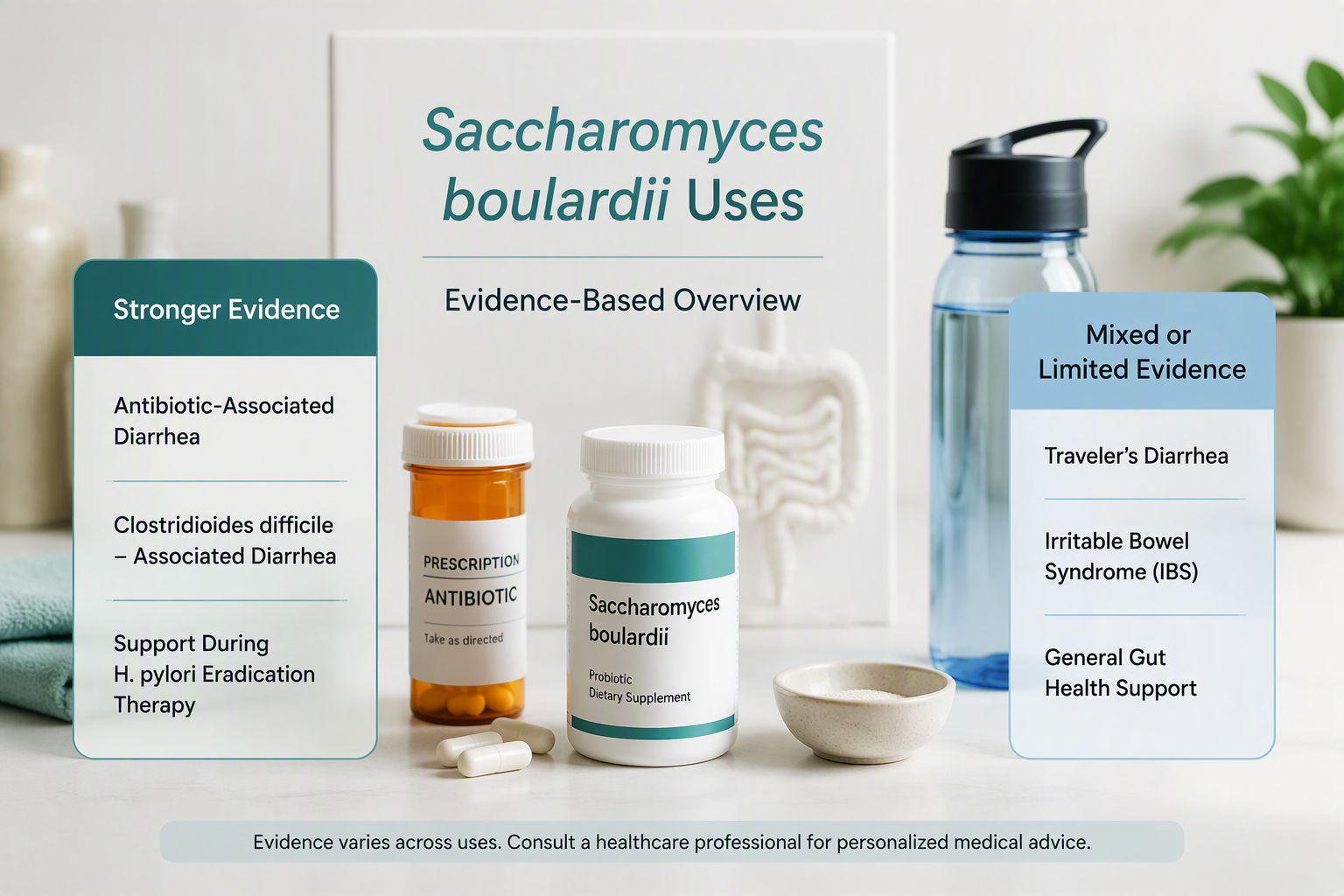
With strain-specific labels in mind, Saccharomyces boulardii uses are narrower than many supplement labels imply. Its potential role is better defined as prevention or added support in specific settings, not a way to help manage every case of bloating, diarrhea, or ongoing digestive symptoms. Results can differ by the health concern, the people studied, the named strain, the dose, and the study design, so a general digestive-health claim does not predict whether a product will help your particular symptoms.
The evidence falls into better-supported, mixed, and limited-use areas:
- Antibiotic-associated diarrhea prevention: This is among the more credible Saccharomyces boulardii benefits. Studies focus on lowering the chance of diarrhea during an antibiotic course, not on self-treating diarrhea without a known cause (source). Severe, persistent, or bloody diarrhea, fever, and dehydration need medical assessment rather than a supplement alone.
- Acute childhood gastroenteritis: Research has examined S. boulardii in children with sudden diarrhea and vomiting, often from an infection. That research does not create a universal treatment role for every child or adult with acute diarrhea. Prompt clinical care is important when a child is unusually sleepy, cannot keep fluids down, shows signs of dehydration, or has blood in the stool.
- Clostridioides difficile infection: Some evidence suggests that Saccharomyces boulardii may help lower the risk of recurrent Clostridioides difficile infection in selected people receiving clinician-directed care, but it is not a replacement for prescribed treatment. However, no optimal probiotic, dose, or duration has been established (source). S. boulardii is not primary treatment for an active Clostridioides difficile infection, which needs prompt evaluation and prescribed treatment.
- Traveler's diarrhea: Travel supplements often make broad protection claims, but findings on S. boulardii prevention are mixed. Safer food and water choices, handwashing, and other hygiene precautions do more to lower the risk of traveler's diarrhea than relying on a probiotic. If you are considering a product, look for the specific strain used in human travel studies instead of accepting a species-level marketing claim.
- Irritable bowel syndrome (IBS): Clinical guidelines do not generally recommend probiotics for overall IBS symptom relief because results are inconsistent and strain-specific. Evidence for Saccharomyces cerevisiae CNCM I-3856, a different yeast studied in IBS, does not apply to Saccharomyces boulardii. Individualized IBS care should account for your bowel pattern, food triggers, symptom changes, and medical history.
- Inflammatory bowel disease (IBD): Saccharomyces boulardii has been studied as supportive care for Crohn's disease and ulcerative colitis, but the evidence is limited. It does not control inflammation, replace prescribed medication, or manage an active flare. New or worsening symptoms warrant discussion with a qualified healthcare professional.
Strain identity is essential when comparing probiotics for different goals. A lactobacillus strains guide shows why findings for one organism do not automatically carry over to another, even when both are marketed for diarrhea or general digestion. The same principle applies to Bacillus coagulans GBI-30 6086, which has its own research record.
Recurring symptoms deserve an evaluation matched to the actual problem. Unexplained diarrhea, suspected infection, inflammatory bowel disease flares, and IBS are not interchangeable, and neither are the probiotic studies used to market supplements.
When Can It Help Prevent Antibiotic-Associated Diarrhea?
Among the better-supported uses, Saccharomyces boulardii may be worth discussing with a healthcare professional when you are starting or finishing an antibacterial antibiotic, especially if earlier courses caused loose stools or other digestive disruption. Because it is a yeast, not a bacterium, it is generally a probiotic not harmed by antibiotics and can usually be taken during the same antibiotic course rather than only afterward.
For antibiotic-associated diarrhea prevention, this specific yeast probiotic may lower the chance of treatment-related loose stools and support recovery from temporary microbiome changes. It is an add-on to prescribed care, not a replacement for your antibiotic, hydration, or medical assessment. A 2024 review found that probiotic effects vary by organism, study setting, and patient group (source).
Research on probiotics and antibiotics is strain- and condition-specific. A product listing only a general yeast blend, without the studied organism or strain, may not match the product used in research. This evidence concerns antibiotic-associated diarrhea prevention, not antibiotic-associated diarrhea treatment once symptoms have started, and it does not automatically apply to acute infectious diarrhea, IBS, general digestive wellness, Candida-related concerns, or preventing recurrent C. difficile diarrhea.
Whether Saccharomyces boulardii fits your situation depends on several details:
- Your antibiotic and history: The medication, your usual bowel pattern, and prior antibiotic-related diarrhea can affect the potential value of a probiotic.
- Your care setting: Findings and risks may differ for a generally healthy outpatient and someone receiving complex hospital care.
- The product label: Look for the studied organism or strain, an amount guaranteed through the use-by date, and appropriate storage instructions. A retailer’s suggestion of 5 billion CFU per capsule or several daily capsules does not prove an effective AAD regimen.
- Professional guidance: A pharmacist or clinician can help determine whether a product and dose fit your medication plan and health history.
Self-treatment is not appropriate for new severe diarrhea in people with significant immune suppression, serious illness, or a central venous catheter. Prompt medical guidance is important if diarrhea comes with:
- Fever
- Blood in the stool
- Severe abdominal pain
- Dehydration
- Symptoms that persist or worsen
These symptoms can have causes beyond routine antibiotic-related disruption, so personalized assessment matters.
Can It Prevent Recurrent C. Difficile Diarrhea?
Beyond antibiotic-associated diarrhea prevention, Saccharomyces boulardii may be considered as an add-on for recurrent C. difficile infection prevention after a previous episode, but it does not provide dependable C. DIFF protection for everyone. Some probiotic studies suggest a lower chance of another Clostridioides difficile infection, though results are inconsistent and do not support routine use for every person with a prior infection. A review of recurrent C. difficile studies reached similarly cautious conclusions (source).
Prevention and treatment serve different purposes, and S. boulardii does not treat an active C. difficile infection or replace clinician-directed prescription treatment, testing, or follow-up. Contact a qualified healthcare professional for new, severe, persistent, or worsening diarrhea, especially during or after antibiotics or if you have had C. difficile before.
Prompt medical evaluation matters when diarrhea includes any of these concerns:
- Fever, severe abdominal pain, dehydration, or blood in the stool.
- Frequent watery stools that are worsening or not improving.
- Diarrhea that begins during or after an antibiotic course.
- Symptoms that return after treatment for a previous C. difficile infection.
Supplement selection is not as simple as comparing colony-forming units, or CFUs. Probiotic effects may depend on the exact strain, yet research has not established the ideal S. boulardii strain, daily amount, timing with antibiotics or C. difficile treatment, or duration for preventing another episode. A higher CFU count, a multi-strain blend, or a label that only names S. boulardii does not mean the product matches one used in a study.
Keep these product-label limits in mind:
- Strain identification: A strain code offers more detail than a species-only label when one is available.
- Study matching: Findings from one identified probiotic do not automatically apply to a different S. boulardii product.
- Treatment fit: A clinician can help you weigh a probiotic against your health history and treatment plan.
- Returning symptoms: A supplement should not delay evaluation for possible recurrence.
Safety needs extra care after hospitalization or when immune defenses are reduced. Rare cases of fungemia, a Saccharomyces bloodstream infection, have occurred in people who are critically ill, severely immunocompromised, or otherwise vulnerable to invasive fungal infection. People with pancreatitis should not start S. boulardii without medical guidance.
Digestive symptoms can have many causes, so consult a qualified healthcare professional for persistent, severe, or worsening symptoms.
How Certain Is Evidence for Travel Diarrhea?
Evidence for Saccharomyces boulardii in traveler’s diarrhea and acute diarrhea remains mixed, so clinical recommendations differ. That is not the same as having a reliable way to prevent illness on a trip or shorten every episode. Any benefit is uncertain, and findings for one product do not automatically apply to every S. boulardii supplement.
Researchers study this organism for understandable reasons. These survival traits make Saccharomyces boulardii a practical candidate for gastrointestinal research. Laboratory work also suggests possible interactions with gastrointestinal pathogens such as Escherichia coli and Salmonella, and these probiotic mechanisms are useful research leads, but they do not show that travelers will have fewer infections, less severe symptoms, or faster recovery.
Human studies do not provide one clear expectation because they vary in important ways:
- Participants and settings: Studies may involve different traveler groups, destinations, and causes of diarrhea.
- Products and timing: Supplements can differ by strain, formulation, dose, and whether use begins before travel or after symptoms start.
- Outcomes measured: One trial may track whether diarrhea occurs, while another measures stool frequency, symptom duration, or recovery.
Those differences make it hard to translate a single result into dependable prevention or treatment guidance. A product-specific result should not be treated as a promise for all Saccharomyces boulardii products.
Marketing often blurs the line between convenience and effectiveness. NOW’s 5 Billion capsule listing promotes use during travel and for occasional diarrhea, but it does not provide strain-specific trial results or quantified outcomes. Claims that a supplement is acid-resistant, shelf-stable, or easy to pack describe practical features, not evidence that it prevents or treats traveler’s diarrhea.
A label can still help you judge how closely a product matches the research:
- Species name: “Saccharomyces boulardii” identifies the yeast, not a tested strain or a proven outcome.
- Strain code: A code may connect a product with its own evidence. Without one, findings from another preparation may not apply.
- Clinical outcome: Human randomized-trial evidence should match the exact strain and the benefit being claimed.
Travel-friendly packaging can make regular use easier, but it does not establish a supplement as preventive treatment. If travel-related diarrhea is a recurring concern, discuss the uncertain benefit with a qualified healthcare professional and prioritize food and water precautions. Seek prompt care for severe, persistent, bloody, or worsening diarrhea, especially with fever, dehydration, or significant abdominal pain.
Why Is Evidence Limited for IBS and IBD?
For IBS, evidence for probiotics is mixed, and clinical guidelines generally do not recommend them for global IBS symptoms. Less bloating or a change in stool frequency may improve your day, but it does not necessarily mean a product helps the full symptom picture, including abdominal pain, bowel habits, and quality of life.
Saccharomyces boulardii has several proposed probiotic mechanisms, yet a biological theory is not the same as reliable symptom relief. This yeast may move through the gut microbiome temporarily instead of becoming a lasting resident. Laboratory findings suggest it may support the intestinal barrier, interfere with certain pathogens, stimulate secretory immunoglobulin A (IgA), and affect local immune signaling involved in intestinal immune defense. Those effects help explain the research interest, but they do not demonstrate consistent IBS relief in people.
Probiotic studies also cannot be combined as if every product delivers the same intervention. Results can change based on:
- Organism and strain: A species name alone is not enough. Findings for Saccharomyces cerevisiae CNCM I-3856 do not apply to Saccharomyces boulardii, even though both are yeasts.
- Dose and formulation: The amount, delivery method, storage conditions, and whether other organisms are included can affect what reaches your digestive tract.
- Study population and outcome: IBS subtype, symptom severity, diet, and the symptom measured, such as pain, stool pattern, bloating, or global symptoms, all shape the result.
A label that identifies the strain gives you more useful information than one listing only S. boulardii. Evidence for S. boulardii in IBS-D remains limited and does not establish broad relief across IBS symptoms.
Inflammatory bowel disease support calls for added caution. A Crohn’s disease probiotic or ulcerative colitis probiotic may be presented as supportive, and S. boulardii has been studied in both conditions. However, small and varied studies, along with different background medications, do not show that it controls disease activity, prevents flares, or replaces prescribed treatment.
You may notice a personal symptom change with IBS, but that differs from dependable, wide-ranging relief. For Crohn’s disease or ulcerative colitis, a probiotic is not disease therapy.
Results vary by person, and any dietary or supplement advice should be individualized.
How Do You Choose and Use It Safely?
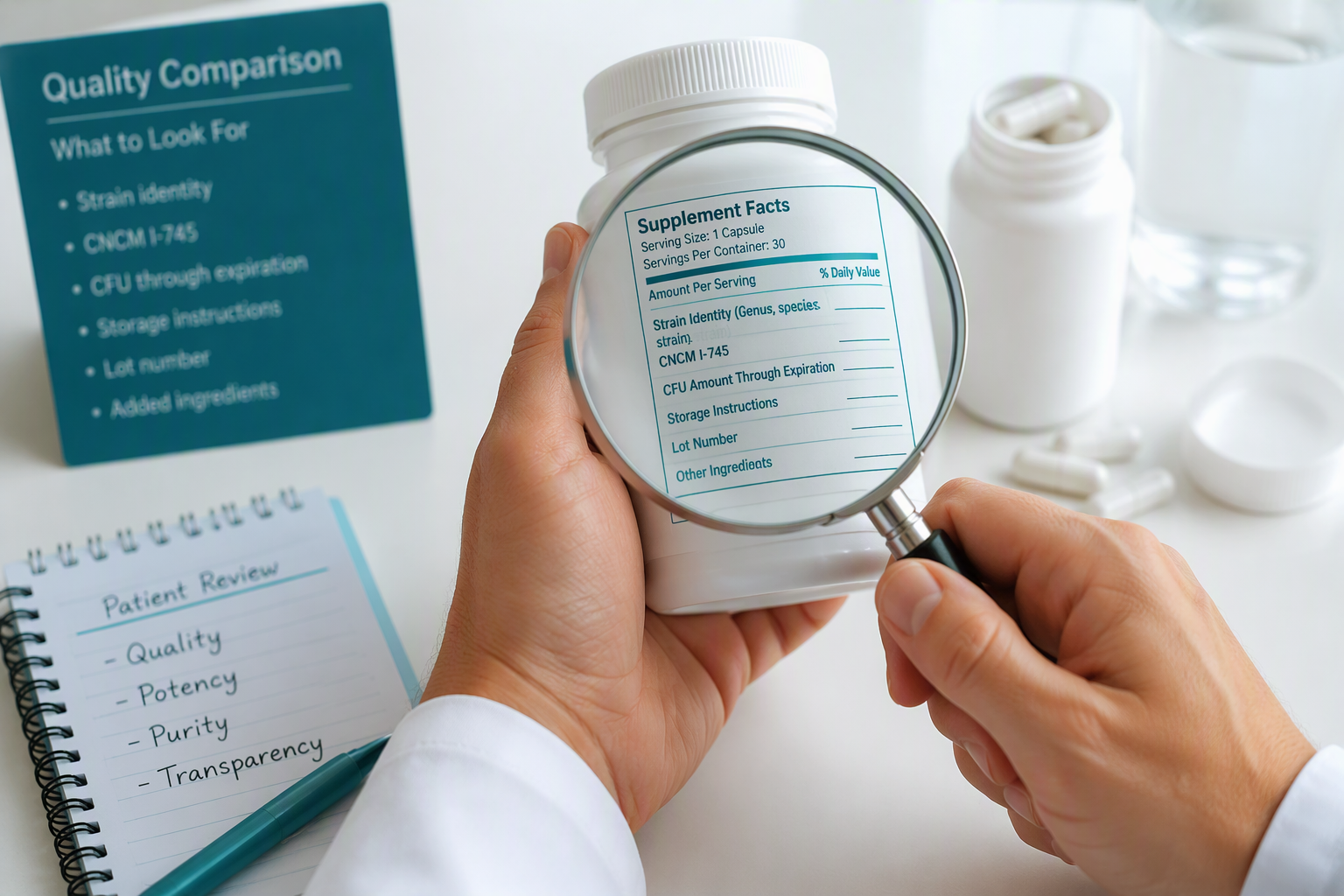
Given the evidence limits across uses, choose a Saccharomyces boulardii probiotic from its Supplement Facts panel, not its front-label promise. Saccharomyces boulardii identifies the organism, but the strain code and potency guaranteed through the expiration date show whether a product resembles one studied in people. A large CFU count alone does not establish effectiveness or the same level of digestive support.
The evidence is strongest when a label names a strain and that exact strain has human trials for the symptom or condition being considered. A species-only label cannot be matched to a specific study. For example, CNCM I-745 is a strain identifier found in some products. Product labels vary by brand, so compare the strain code, potency, and storage directions on the current package before choosing a Saccharomyces boulardii supplement. MOS may be poorly tolerated if fermentable fibers worsen your bloating.
Use this label check before buying a yeast probiotic supplement:
- Strain identity: Look for CNCM I-745 or another strain code, not only the species name.
- Amount and unit: Milligrams describe ingredient weight, while colony-forming units (CFUs) estimate viable organisms. Neither number can tell you much without a strain identifier.
- Potency timing: Favor products that guarantee the stated amount through expiry, rather than only at manufacture.
- Traceability: Confirm that the bottle includes a lot number and expiration date.
- Storage instructions: Compare the bottle with the retailer listing. When they conflict, follow the current bottle label.
Evidence and studied amounts vary by reason for use. A Saccharomyces boulardii probiotic may be a clinician-guided adjunct for antibiotic-associated diarrhea, recurrent Clostridioides difficile risk, and certain cases of acute or traveler's diarrhea. Suspected active C. difficile infection requires clinician-directed care. Evidence for IBS, inflammatory bowel disease, Candida-related concerns, and general gut health is mixed or insufficient, so these claims call for caution.
Timing matters when considering probiotics and antibiotics. Because S. boulardii is a yeast, ask your clinician how it fits your antibiotic plan. Antifungal medicines can reduce or eliminate it, so check with the prescriber or pharmacist before combining them. This supplement does not replace prescribed medicines, testing, hydration, or medical assessment when diarrhea is significant.
Extra care is appropriate before starting a probiotic supplement in these situations:
- Higher infection risk: You are immunocompromised, seriously ill, hospitalized, or have a central venous catheter.
- Pregnancy or breastfeeding: A clinician can weigh the limited safety information against your individual needs.
- Persistent symptoms: You are considering it for recurrent C. difficile, persistent diarrhea, or recurring bowel changes.
- Urgent warning signs: Seek prompt medical evaluation for severe, persistent, or worsening diarrhea, fever, dehydration, blood in stool, substantial abdominal pain, or unexplained weight loss.
A qualified healthcare professional can help fit any supplement choice into your medications, symptoms, food choices, and broader gut health plan.
Saccharomyces Boulardii FAQs

These FAQs address the practical questions that may arise as you consider Saccharomyces boulardii, from product labels and evidence to safety and digestive health concerns.
1. Is Saccharomyces Boulardii Safe Daily?
Daily Saccharomyces boulardii is generally reasonable for otherwise healthy adults when it suits why you are taking it and you follow the product directions. Mild gas, bloating, or abdominal discomfort can occur, especially when you first begin.
This yeast does not permanently colonize your gut microbiome. Its potential effects occur during use, and it usually clears within three to five days after you stop. If ongoing use feels uncertain because of recurring symptoms, medications, or your health history, discuss it with a clinician.
2. What Side Effects Can It Cause?
Saccharomyces boulardii is usually well tolerated in otherwise healthy people, although gas, bloating, or abdominal discomfort can occur when you start taking it. These effects are often temporary and may overlap with the digestive symptoms that prompted you to try the supplement.
Fungemia, a rare Saccharomyces bloodstream infection, is more serious and has mainly been reported in people who are seriously ill, severely immunocompromised, or otherwise medically vulnerable. Seek prompt medical care for fever, chills, or worsening illness rather than trying to manage these symptoms yourself.
3. Who Should Avoid Saccharomyces Boulardii?
People with severe immune suppression should generally avoid Saccharomyces boulardii unless their treating clinician recommends it. This includes people receiving active chemotherapy and some people living with HIV, though individual risk depends on immune status and medical history. Because it is a live yeast, it can rarely enter the bloodstream and cause a serious fungal infection in vulnerable people. Do not self-start it if you have a central venous catheter, critical illness, pancreatitis, or another elevated risk of invasive fungal infection. A catheter may provide a route into the bloodstream, so discuss safer symptom-support options with your healthcare professional.
4. Which Brands Contain Saccharomyces Boulardii?
Several widely sold supplements contain S. boulardii, but only a label naming CNCM I-745 can be directly connected to much of the clinical research. Before buying, check the current manufacturer bottle for the strain identifier, live-cell or CFU amount per serving, a complete Supplement Facts panel, added fermentable ingredients such as inulin or MOS, and storage directions. A large potency number or the word “probiotic” alone does not show a match to a study, and formulas, stated amounts, and storage needs can change.