


Choosing a Bacillus coagulans supplement for bloating or irregular bowel habits can seem simple until the label lists only a species name. Bacillus coagulans has limited, strain-specific evidence, so its potential benefits, safety, and label fit depend on the exact code, dose, and symptom studied.
A 2023 network meta-analysis of 81 randomized trials placed MTCC 5856 and Unique IS2 among better-performing single strains for IBS, but differences among studies limit predictions. Unique IS2 was tested at 2 billion CFU daily for eight weeks in 136 adults, while results for GBI-30, 6086 do not establish relief for IBS-like symptoms.
Match the full strain code and daily CFU with human research, and favor a viable-count guarantee through expiration over a headline number. Mild gas or bloating may occur early, while severe, persistent, or worsening symptoms and use during pregnancy, serious illness, or immunocompromise call for clinical guidance.
Bacillus Coagulans Key Takeaways
- Bacillus coagulans is a species, so benefits cannot be assumed across products or strains.
- Unique IS2 has direct human research for IBS-like symptoms, including bloating and abdominal pain.
- GBI-30, 6086 research does not show that it relieves IBS, constipation, diarrhea, or bloating.
- Match the complete strain code, daily CFU amount, and symptom to human research.
- Prefer labels that guarantee viable CFU through expiration and provide clear storage instructions.
- Temporary gas, bloating, or bowel-habit changes can occur when starting a probiotic.
- Seek clinical guidance before use if immunocompromised, seriously ill, pregnant, nursing, or managing persistent symptoms.
What Is Bacillus Coagulans?

Bacillus coagulans is a probiotic bacterium used in some foods and supplements. Its species name alone cannot tell you whether it fits bloating, irregular bowel habits, or irritable bowel syndrome (IBS)-like symptoms. Those questions depend on the exact strain, dose, and symptom studied, so types of probiotic supplements can differ substantially even when labels use similar species names.
Labels and online sources may use several names for the same organism:
- Bacillus coagulans
- B. coagulans
- Lactobacillus sporogenes
- Weizmannia coagulans
In 2023, the organism was reclassified as Heyndrickxia coagulans in FDA material that cited the taxonomic update (source). Familiar Bacillus labeling does not itself signal a new strain, formula, or evidence base.
It is a spore-forming probiotic, meaning it can form a dormant, durable state. These spores can tolerate heat, manufacturing, and stomach acid before becoming active under suitable conditions, which can support shelf stability. Spore formation alone does not show that a product will ease symptoms.
Although it is not a Lactobacillus species, it is a lactic acid-producing bacterium. It produces L(+), or L+, lactic acid, like lactic-acid-producing Lactobacillus species. Compare complete strain designations rather than genus names alone.
Seek qualified care for persistent, severe, or worsening digestive symptoms, which can have many causes.
Which Benefits Have Human Evidence?
Human research on Bacillus coagulans is limited, and each finding applies to a particular strain and purpose rather than every product sold under the species name. Evidence for irritable bowel syndrome (IBS)-like symptoms, constipation, diarrhea, gas, bloating, and symptoms after antibiotics should be considered separately. Broad promises about bowel regularity or general gastrointestinal upset often go further than the clinical research supports.
Small studies have reported improvements in abdominal pain and bowel symptoms, including diarrhea and constipation, and one trial found better outcomes than placebo with a synbiotic that contained Bacillus coagulans. Because synbiotics combine a probiotic with other ingredients, often prebiotic fiber, that result cannot be assigned to Bacillus coagulans alone. The overall evidence does not support expecting dependable relief for IBS, constipation, or diarrhea.
Post-antibiotic symptoms are a separate question. Results from one probiotic strain do not automatically apply to another organism, including S. boulardii CNCM I-745. A supplement marketed for digestive support may have no human evidence for antibiotic-associated diarrhea.
Early studies have also examined several non-digestive uses:
- Immune and respiratory support: Some preparations were associated with changes in mucosal immunity, inflammatory markers, or fewer or shorter upper-respiratory infections. These findings do not prove infection prevention, and a digestive strain’s results do not establish immune benefits for another strain.
- Oral health: Small studies found lower levels of cavity-associated Streptococcus mutans or less gum inflammation. Probiotics do not replace brushing, flossing, or regular dental care.
- Mental well-being: Among people with chronic gastrointestinal distress, MTCC 5856 showed possible improvements in stress, anxiety, and depression scores. This early, strain-specific result is not treatment for a mental health condition.
- Sports nutrition: GBI-30, 6086 has been studied alongside protein for protein and amino-acid absorption, carbohydrate breakdown, and markers of exercise-induced muscle damage. Those exploratory findings do not show broad athletic-performance benefits or replace adequate food and training.
The strain code is the detail that matters most. Match the full code on the label to the research question, rather than relying on Bacillus coagulans alone.
How Does It Affect IBS-Like Symptoms?
With strain-specific evidence in mind, small human studies suggest that Bacillus coagulans may reduce IBS-like abdominal pain, gas, bloating, and overall symptom severity for some people. It may be worth discussing with a healthcare professional, but it does not reliably help everyone or replace evaluation of ongoing digestive symptoms.
Reported changes in these studies include:
- Less abdominal pain, gas, and bloating
- Fewer diarrhea or constipation symptoms
- More regular bowel habits
- Lower overall IBS symptom severity
One randomized, placebo-controlled trial tested a Bacillus coagulans-based product for functional intestinal gas symptoms (source). Because that product included other ingredients, its results cannot be attributed to Bacillus coagulans alone.
A 2023 network meta-analysis of 81 randomized trials in adults with IBS placed Bacillus coagulans MTCC 5856 and Bacillus coagulans Unique IS2 among the better-performing single strains, although the studies differed in strain, dose, formulation, duration, and participant groups (source). Small trials and limited long-term follow-up mean the evidence cannot predict your response.
Mild gas or bloating can occur during the first few days in otherwise healthy adults and may resemble an IBS flare. Results vary by person, and worsening, severe, or persistent pain or bowel changes need guidance from a qualified healthcare professional rather than self-treatment alone.
How Do Strains Change the Evidence?
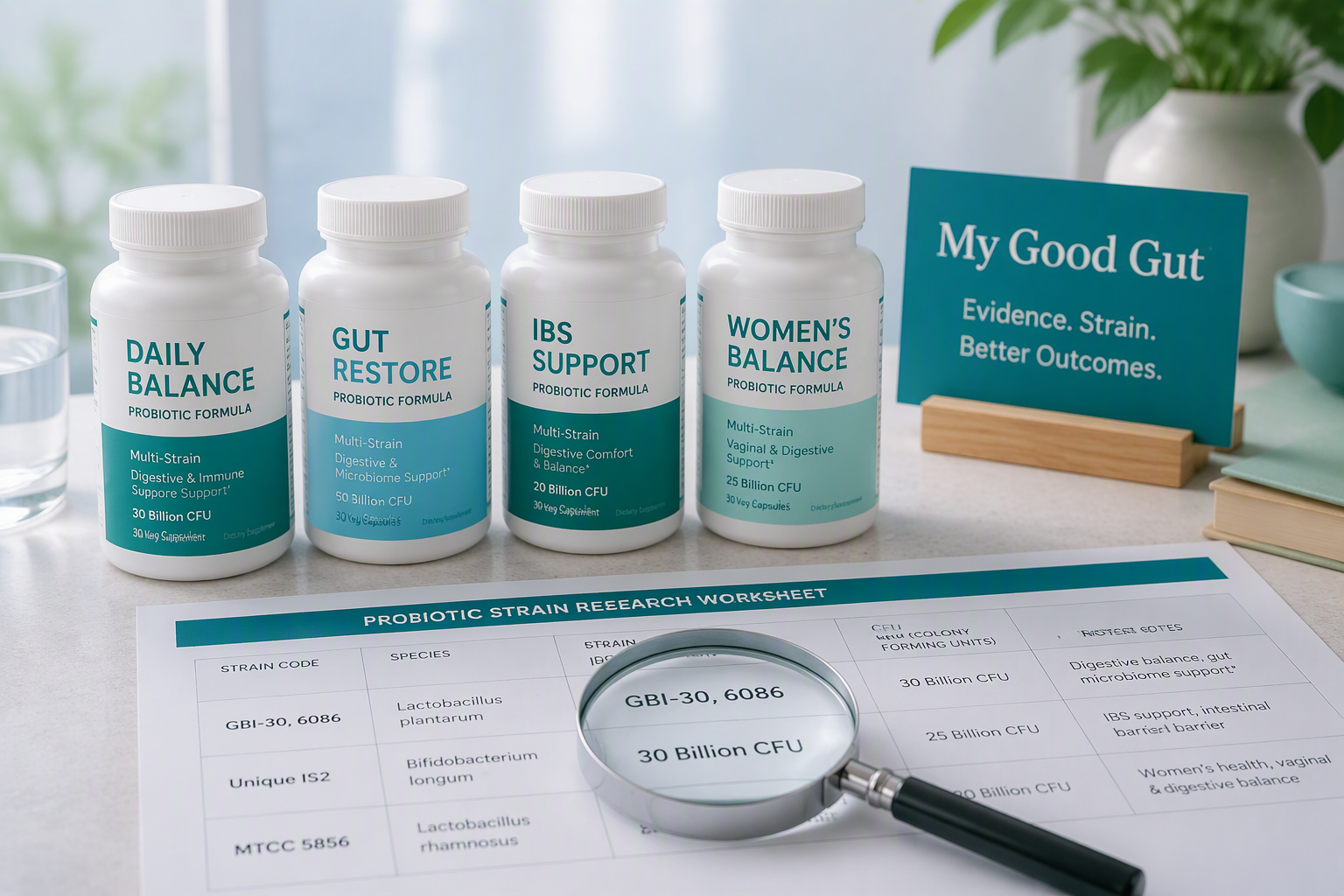
Bacillus coagulans is a species name, not a guarantee that every product will have the same effect. Unique IS2 has direct human research in adults with IBS, so it is one of the more relevant Bacillus coagulans strains for IBS-like complaints (source, source). Genetic differences can change how strains behave, so findings for one Bacillus coagulans supplement do not transfer automatically to another.
GBI-30, 6086 is also called GanedenBC30, but a label that names only the species does not confirm that it contains this studied strain. The same caution applies to spore-forming probiotics, since spore formation alone does not make products equivalent.
A study is most useful when it closely matches the product and symptom you are considering:
- Exact strain: The full strain code should match the one tested in people.
- Dose and formulation: CFU means colony-forming units, which measures viable microorganisms. The appropriate amount depends on the strain and the product label.
- Participants and symptoms: Results in adults with IBS-like symptoms may not predict benefits for occasional constipation, gas, bloating, or diarrhea.
- Study design: Placebo-controlled research carries more weight than a small or uncontrolled study, but it cannot predict your personal response.
The strain number matters with Lactiplantibacillus, formerly Lactobacillus, plantarum 299v as well, because "299v" connects the label to its research.
Check Supplement Facts and product information rather than relying on a front-label species claim or a large total CFU number. Without a tested strain code, a formula cannot be reliably tied to a clinical outcome.
Compare GBI-30, 6086, Unique IS2, and MTCC 5856
For that strain-by-strain comparison, a Bacillus coagulans species name does not identify the research that applies to a product. Bacillus coagulans GBI-30, 6086, Bacillus coagulans Unique IS2, and Bacillus coagulans MTCC 5856 are distinct strains, so findings for one do not transfer to a product with a different code, or to one that lists no strain code.
Strain | Main studied goal | Evidence and population | Daily amount | Key limit |
|---|---|---|---|---|
GBI-30, 6086 | Nutrient breakdown and use | Laboratory and animal research examining protein, carbohydrate, and amino-acid handling | Varies by product | This work cannot show that the strain relieves digestive symptoms in people |
Unique IS2 | IBS-like symptoms | Randomized, placebo-controlled trial in 136 adults meeting IBS criteria | 2 billion CFU for 8 weeks | One strain-specific study does not predict results from other Bacillus coagulans products |
MTCC 5856 | Chronic gastrointestinal distress | Human research in adults with ongoing gastrointestinal complaints, including digestive and mental-well-being measures | Study-specific amount | Mood-related findings do not establish that it treats stress, anxiety, depression, or sleep problems |
GBI-30, 6086 is often included in protein-focused supplements. That may suggest a biological mechanism, but it is not evidence that it improves bloating, abdominal pain, constipation, diarrhea, or IBS symptoms.
Unique IS2 has the most directly relevant human evidence here. In its trial, participants reported improvements versus placebo in selected IBS symptoms, including abdominal pain and bloating, along with quality-of-life measures. The trial’s completion rate and symptom changes are useful context if your symptoms resemble those of participants, but persistent, worsening, or disruptive symptoms still deserve medical evaluation.
MTCC 5856 requires separate consideration from the digestive evidence. Those results should remain separate from the digestive evidence, and they are not a reason to choose a digestive probiotic for mood, stress, or sleep. The same strain-by-strain caution applies to Bifidobacterium supplements.
When comparing labels, look for the exact strain code and its stated amount in the daily serving rather than relying on a large total CFU number. Strain-specific evidence is more useful than total potency when deciding whether a product matches the research.
How Do You Audit a Supplement Label?
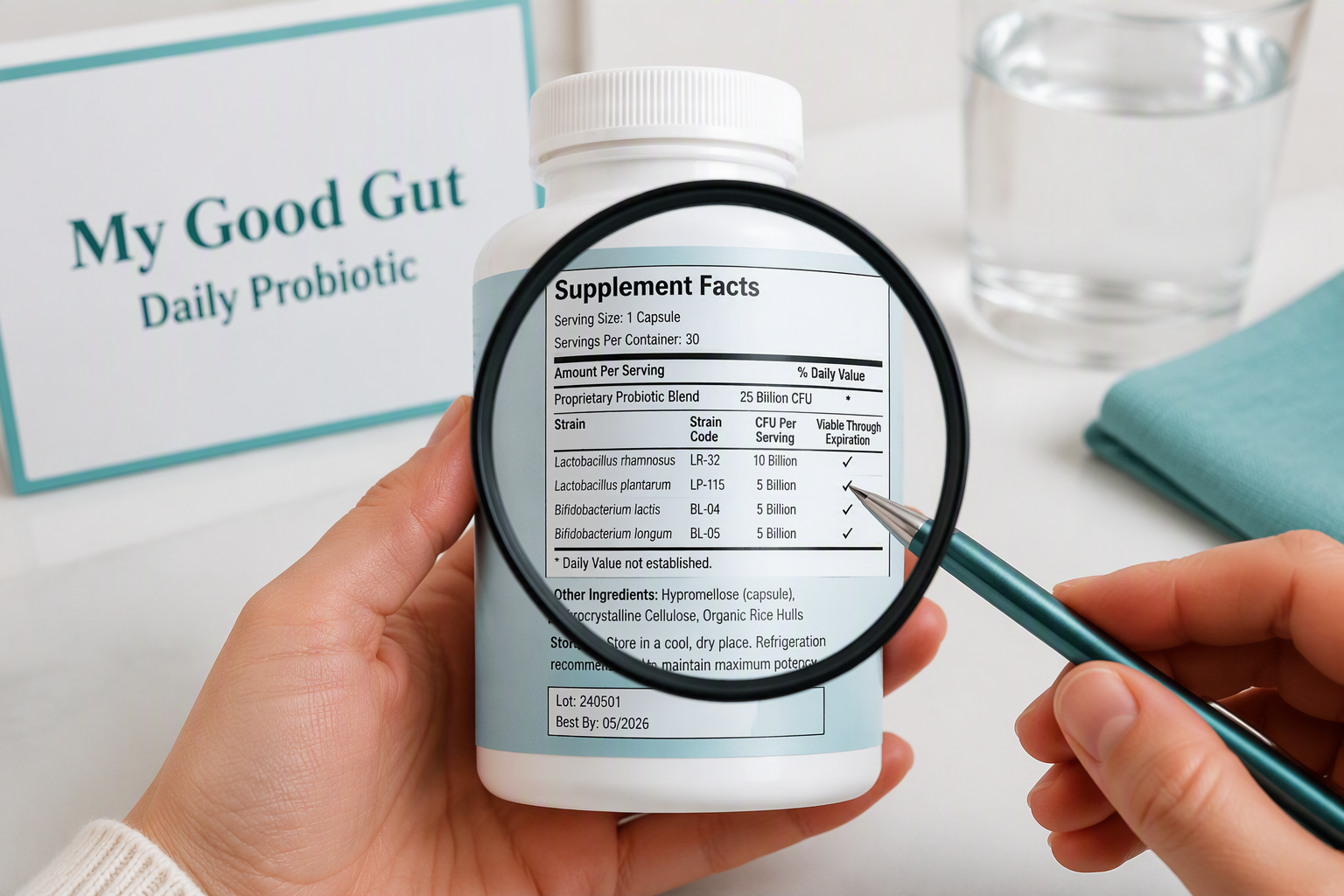
Start with the complete strain code, not just Bacillus coagulans. Probiotic supplements that share a species name are not automatically interchangeable. Compare the label’s daily CFU dosage, meaning colony-forming units, with the exact strain and dose studied for the symptom you want to address. A general digestive support claim is marketing, not evidence that a product fits your bloating, constipation, diarrhea, or IBS-like symptoms.
A useful label check includes:
- Strain and viable count: The full strain identifier and a CFU guarantee through expiration matter more than a milligram amount, which does not show how many live organisms remain.
- Serving and directions: Confirm whether the daily amount is one capsule, several chews, or a scoop, and whether the product is meant to be taken with food.
- Storage and expiry: Although spores can be shelf-stable, follow the product’s instructions. Skip labels with unclear storage or expiration information.
- Ingredients and manufacturer details: Check hypromellose, microcrystalline cellulose, maltodextrin, silica, and magnesium stearate against your tolerances. Favor clear strain disclosure, testing practices, contact details, and storage guidance.
Food and Drug Administration GRAS status supports broad ingredient safety, but it does not verify purity, potency, or whether the supplement suits your symptoms. Probiotic side effects can include temporary gas or bloating, and the biggest CFU number is not automatically the better choice.
Match the Strain and Daily CFUs
A Bacillus coagulans label should identify the daily-serving amount used for research comparison. The species name alone does not mean a product has the same studied effects as GBI-30, 6086, Unique IS2, or MTCC 5856. For probiotic supplements aimed at bloating, irregular bowel habits, or IBS-like discomfort, look for human studies involving the exact strain and a similar participant group.
CFU dose matters after the strain match. Many over-the-counter products supply 1 to 6 billion CFUs per day, while labels commonly fall within about 1 to 10 billion CFUs. This is a useful comparison range, not a standard dose or a reason to select the largest number.
A useful label review includes:
- Strain identifier: Confirm that the complete code matches the strain studied for your goal.
- Daily CFUs: Calculate the amount in the full daily serving, including all capsules or scoops.
- Expiration-date guarantee: Prefer a viable-count guarantee through expiration instead of a count stated only at manufacture.
A product with 6 billion CFUs may fit a study only when both its strain and daily amount align. Without a strain code or expiration guarantee, marketing claims cannot fill the evidence gap.
Is Bacillus Coagulans Safe for You?

Beyond matching a product to the evidence, for healthy adults, Bacillus coagulans is generally well tolerated when used as directed, though probiotic safety depends on the specific strain, product quality, and your health history. Some Bacillus coagulans ingredients have FDA Generally Recognized as Safe, or GRAS status, for particular intended uses. GRAS status does not mean that every supplement is FDA-approved, independently tested, or appropriate for everyone.
Check the full strain name and code on the label, not only the species name, and choose a reputable manufacturer. A product labeled simply Bacillus coagulans may not contain the same strain used in human studies.
Early probiotic side effects are often mild and may ease as your body adjusts, but they can be frustrating when you already have IBS-like discomfort:
- Gas or bloating: These symptoms may occur during the first few days of use.
- Bowel-habit changes: You might notice temporary constipation, looser stools, or a different pattern than usual.
- Clearly worsening symptoms: Stop use and seek medical advice if pain, bloating, diarrhea, or other symptoms become severe, persistent, or worse.
Short-term studies and consumer use offer some reassurance, but long-term safety data for individual Bacillus coagulans strains, especially higher-dose products, remain limited. No reported problems does not establish lifelong safety, and a probiotic should not replace an evaluation or treatment plan for ongoing digestive symptoms.
Talk with a clinician or pharmacist before use if you are immunocompromised, seriously ill, hospitalized, pregnant or nursing, taking medications, or managing a significant medical condition. Probiotics can carry a higher risk of complications for vulnerable groups.
Consult a qualified healthcare professional for persistent, severe, or worsening symptoms.
How Should You Decide Whether to Try It?
After considering safety, a Bacillus coagulans trial makes the most sense when you have one clear target, such as IBS-like bloating or gas, constipation, diarrhea, or symptoms after antibiotics. A broad goal of better gut health is too vague to evaluate. Evidence for one symptom does not establish digestive support for another, including immunity, mood, exercise recovery, or gut microbial balance.
The strain on the label matters as much as the species name. GBI-30, 6086, Unique IS2, and MTCC 5856 are distinct Bacillus coagulans strains, not interchangeable versions of the same supplement. Look for human research involving people with your specific symptom, then compare the outcome studied, daily dose, and study limits before deciding whether a product fits.
Useful label details include:
- Full strain identifier: A species name alone does not confirm that the product contains the strain studied in people.
- Viable CFU through expiration: A colony-forming unit (CFU) guarantee through the expiration date is more useful than a count measured only at manufacture.
- A matching serving size: The recommended daily serving should provide the amount used in the relevant human study.
- Per-strain amounts: A large total CFU number or multi-strain blend may show variety, but it cannot confirm a clinically relevant dose for each strain.
Check the label for a full strain code before comparing a product with research. Many products do not make that information easy to find, so a strain-level review is more useful than a species-only label. A high headline count or general digestive-support claim does not make products clinically equivalent.
Probiotic safety should come before a self-directed trial. Mild digestive changes can occur with short-term use, while long-term safety data are limited. Speak with a clinician first if you are seriously ill, immunocompromised, pregnant or nursing, take medication, or manage a medical condition.
Prompt medical care is appropriate for:
- Blood in the stool
- Unexplained weight loss
- Fever
- Severe or worsening abdominal pain
- Dehydration
- Persistent bowel changes
Results vary by person, and any dietary or supplement advice should be individualized.
Bacillus Coagulans FAQs
These Bacillus coagulans FAQs address strain-specific evidence, supplement labels, possible side effects, and situations where digestive symptoms warrant medical attention.
1. Is GanedenBC30 the Same as GBI-30, 6086?
Yes. GanedenBC30 is the trade name for the Bacillus coagulans strain GBI-30, 6086, so either label identifies the same organism. When matching a supplement to published research, use the GBI-30, 6086 strain code because studies typically list that identifier.
Its hardy spore form may help it remain stable without refrigeration, but a front-label trade name does not confirm the dose. Check that the Supplement Facts panel names GBI-30, 6086 and gives the amount in your daily serving.
2. Do You Need to Take Bacillus Coagulans Every Day?
Yes. Because Bacillus coagulans does not permanently colonize your gut, any effect on gut microbial balance depends on continued intake. Its spores can survive harsh conditions and become active in the small intestine, and studies that reported symptom changes used a daily dose of a specific strain.
Skipping days makes a personal trial harder to interpret. If daily use is not practical, discuss it with a healthcare professional rather than taking a larger dose occasionally.
3. How Long Should You Try Bacillus Coagulans?
Use the labeled daily amount for a named Bacillus coagulans strain for several weeks before judging results. Although a spore-forming probiotic uses probiotic spores with stomach acid survival, bile resistance, intestinal germination, and heat-resistant probiotics traits, those features do not predict symptom relief. This lactic acid-producing bacterium may temporarily influence gut microbes and produce bacteriocins, but it does not stay permanently. If nothing changes after the trial, try a different named strain rather than a higher dose. Stop sooner and seek care for worsening symptoms, fever, bleeding, severe pain, or unintended weight loss.
4. Which Bacillus Coagulans Strains Are Spore-Forming?
Bacillus coagulans, also known as Heyndrickxia coagulans, is spore-forming at the species level. Its protective endospores remain dormant in the bottle and may better withstand heat, storage, stomach acid, and bile salts than many Lactobacillus or Bifidobacterium probiotics. In the relatively neutral small intestine, spores can germinate into active cells that produce L(+)-lactic acid. This resilience does not ensure symptom relief, so look for a full strain identifier, such as GBI-30, 6086, and strain-specific evidence.