


Most advice about living with IBS is about food. Learn your triggers, watch your fiber, maybe try low FODMAP. All reasonable, and none of it tells you what to do when a flare starts twenty minutes into a meeting, or on a flight, or halfway through a dinner someone else chose the restaurant for.
That gap is what this guide is about. There's a section on where IBS actually shows up in an ordinary week: work and school days, eating out, travel, exercise, relationships, and the bathroom anxiety that most articles skip entirely, even though the worry itself can trigger the thing you're worried about.
The food side is here too, framed around whether it fits your life right now rather than as a protocol. Which fiber genuinely helps and which popular high-fiber foods make IBS worse. Whether this is the right month to attempt a low FODMAP trial, since a half-run one tells you nothing. A symptom log you can finish on a bad Tuesday instead of abandoning by Thursday. And meal timing built around the hours you can't step away from, which differs depending on your subtype.
It closes with a flare plan for a day you can't cancel, plus the symptoms that mean you should stop managing and get checked.
Living With IBS Key Takeaways
- The hardest part of IBS is usually logistics, not food: meetings, travel, restaurants, and bathroom access.
- Bathroom anxiety is a real trigger, because worrying about access can bring on the symptoms you're worried about.
- Locate bathrooms before you need them, and keep a small flare kit so leaving home feels less risky.
- Track four things once or twice a day, and log stress and sleep beside meals rather than separately.
- Choose soluble fiber over insoluble. Bran cereals are mostly insoluble and commonly make IBS worse.
- Start a low FODMAP trial only during a predictable stretch, since a half-run trial gives you no usable answer.
- Build meal timing around the hours you can't step away from, and adjust the plan by subtype.
- During a flare you can't cancel, aim to get through the day rather than fix it, and know the red flags that need care.
What Is IBS and What Makes It Flare Up
Irritable bowel syndrome (IBS) is a chronic functional gastrointestinal disorder. The gut may look normal on tests, yet changes in movement and function can still cause symptoms. Common symptoms include abdominal pain, cramping, bloating, diarrhea, constipation, or a mix of diarrhea and constipation. How IBS affects the gut covers the mechanism in more detail.
Daily life is often shaped by unpredictability rather than one symptom. Cramping may ease after a bowel movement, while bloating can make clothes feel tight by afternoon. Urgency may appear one day, followed by difficulty passing stool the next. A good week doesn't mean IBS has disappeared, and one difficult day doesn't automatically mean the condition is worsening.
IBS symptoms often move through cycles of flares and quieter stretches. Common factors that may contribute include:
- Stress and anxiety: Emotional strain can affect gut function and make symptoms harder to manage.
- Low mood: Changes in mood may occur alongside shifts in bowel symptoms.
- Previous intestinal infection: Symptoms can continue after an infection has cleared.
- Changes in food or routine: New trigger foods, irregular meals, travel, or disrupted sleep may affect your usual pattern.
Noticing early changes tends to be more useful than blaming yourself after a flare. These ups and downs are common, and they aren't a personal failure.
A healthcare professional should confirm the diagnosis because IBS can resemble inflammatory bowel disease (IBD) and celiac disease. Seek medical advice when symptoms persist, become severe, worsen, or feel different from your usual pattern.
The practical work becomes more manageable when you focus on your patterns rather than perfection. This guide helps you plan around symptoms, notice early shifts, and consider options such as IBS therapy options when a flare begins.
Where IBS Shows Up in a Normal Week

Managing IBS is often framed as a diet issue, but daily logistics can be harder. Knowing your food triggers doesn't tell you what to do when symptoms begin during a meeting, on a plane, or halfway through a meal at an unfamiliar restaurant. This practical layer focuses on the situations that general advice often leaves out.
- Work and school days: Locate nearby bathrooms before you need one, especially in a new office, building, or classroom. Back-to-back meetings can be harder than the work itself because there's no break to respond to urgency, bloating, or pain. Adjusting meal timing may place your most likely symptom window outside your busiest hours. Some people tell a manager, teacher, or school office, while others keep IBS private, and either choice can be reasonable.
- Eating out: Review the menu before you arrive so you aren't making decisions under social pressure. Simple preparations, such as grilled food with a plain side, are often easier to assess than meals covered in complex sauces. A small, familiar snack beforehand may be more practical than arriving very hungry with few workable choices. For many people, ordering differently feels more uncomfortable than the food itself, but a brief explanation is enough if one is needed.
- Travel and flying: Travel can disrupt your routine even when your meals stay the same, so a flare on the first day of a trip doesn't automatically mean you made a dietary mistake. An aisle seat can make bathroom access less stressful, and familiar snacks can help when airport or airplane options feel uncertain. Time-zone changes may shift bowel habits just as they shift sleep, so give your routine time to settle before judging the entire trip by day one.
- Exercise and movement: Gentle movement often helps with symptom management, while intense exercise can trigger symptoms, particularly with diarrhea-predominant IBS (IBS-D). Timing activity around meals may matter more than the exact type of exercise, so avoid testing a hard workout soon after a meal that already feels risky. Walking can be a practical option during a flare because it adds light activity without the strain of a hard workout (source, source).
- Bathroom anxiety: Not knowing where a bathroom is can become a symptom trigger by itself. Through the gut-brain connection, worry can increase gut sensations and urgency, creating a clear loop: fear of symptoms produces symptoms, which then strengthens the fear. Recognizing that pattern is a useful first step. Planning around bathroom access may make it easier to leave home than avoiding activities altogether.
- Relationships and intimacy: IBS can affect partners, family plans, and intimacy, yet many people manage those effects silently. Explaining your symptom pattern to someone close often lowers the pressure more than hiding it does. A trusted person may not need every detail, but they do need to know that changing plans can be part of managing a health condition.
- A flare kit: A small bag with spare clothes, wipes, water, a familiar snack, and any medication your clinician has recommended can reduce the mental load of "what if." The purpose isn't to expect the worst. It's to make an unexpected episode less disruptive and give you more confidence when leaving home.
Each situation has more detail than a short guide can hold. Life stages and circumstances raise their own questions, from IBS during pregnancy to whether symptoms are severe enough to support IBS disability claims. This week, choose one predictable difficulty and make one access-focused change, such as checking the bathroom location before your next meeting.
How Do You Build an IBS Tracking System This Week
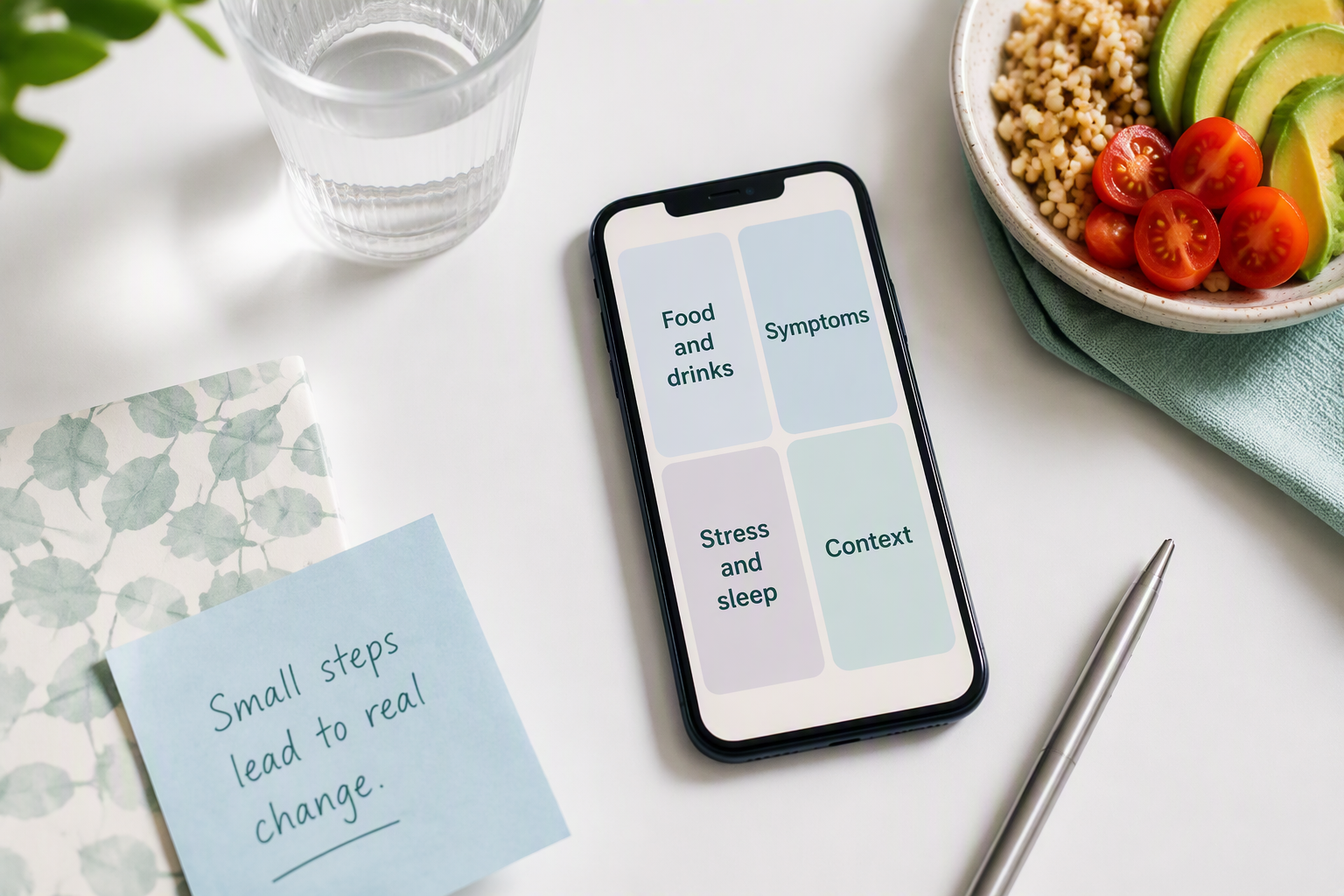
Most food and symptom diaries are abandoned within a week because they demand more detail than a working day allows. A useful food diary for IBS is one you can finish, even on a bad Tuesday. An imperfect week of notes is more useful than three perfect days followed by silence.
The advice itself is well established. NHS guidance recommends keeping a diary of what you eat and any symptoms you get (source), and Cleveland Clinic notes that a food diary can help identify triggers (source). What neither says is how to keep one going past day four, which is the part that actually decides whether it works.
Keep your log to four buckets, recorded once or twice daily. It should take about two minutes on your phone between meetings or during a break between classes:
- Food and drinks: Note the time, rough portion, and possible trigger foods such as dairy, high-fat foods, beans, or sweeteners.
- Symptoms: Rate bloating, pain, constipation, or diarrhea as none, mild, moderate, or severe. Ratings are faster to compare than long descriptions.
- Stress and sleep: Mark stress as low, medium, or high, then note whether sleep was adequate, poor, or interrupted.
- Context: Add one short detail, such as travel, a deadline, exercise, or your menstrual cycle.
Stress and sleep belong beside meals because symptoms may follow a difficult week more closely than one specific food. A late night before a rough morning is a pattern that separate records can hide, which is why they share a page rather than sitting in different apps.
At week's end, scan for the same food before symptoms that day or the next. Check whether poor sleep or sustained stress came first, then use the pattern to shortlist likely triggers. Choose one experiment for the following week, such as reducing one suspected category or protecting bedtime. One change at a time keeps the results readable.
A single week rarely gives a firm answer. It creates a shortlist to test over the next few weeks, which is enough to guide your next step. If designing your own log feels like one task too many, several IBS symptom tracking apps pre-build these same fields.
How Do You Use the IBS Fiber Chart for Safer Daily Choices
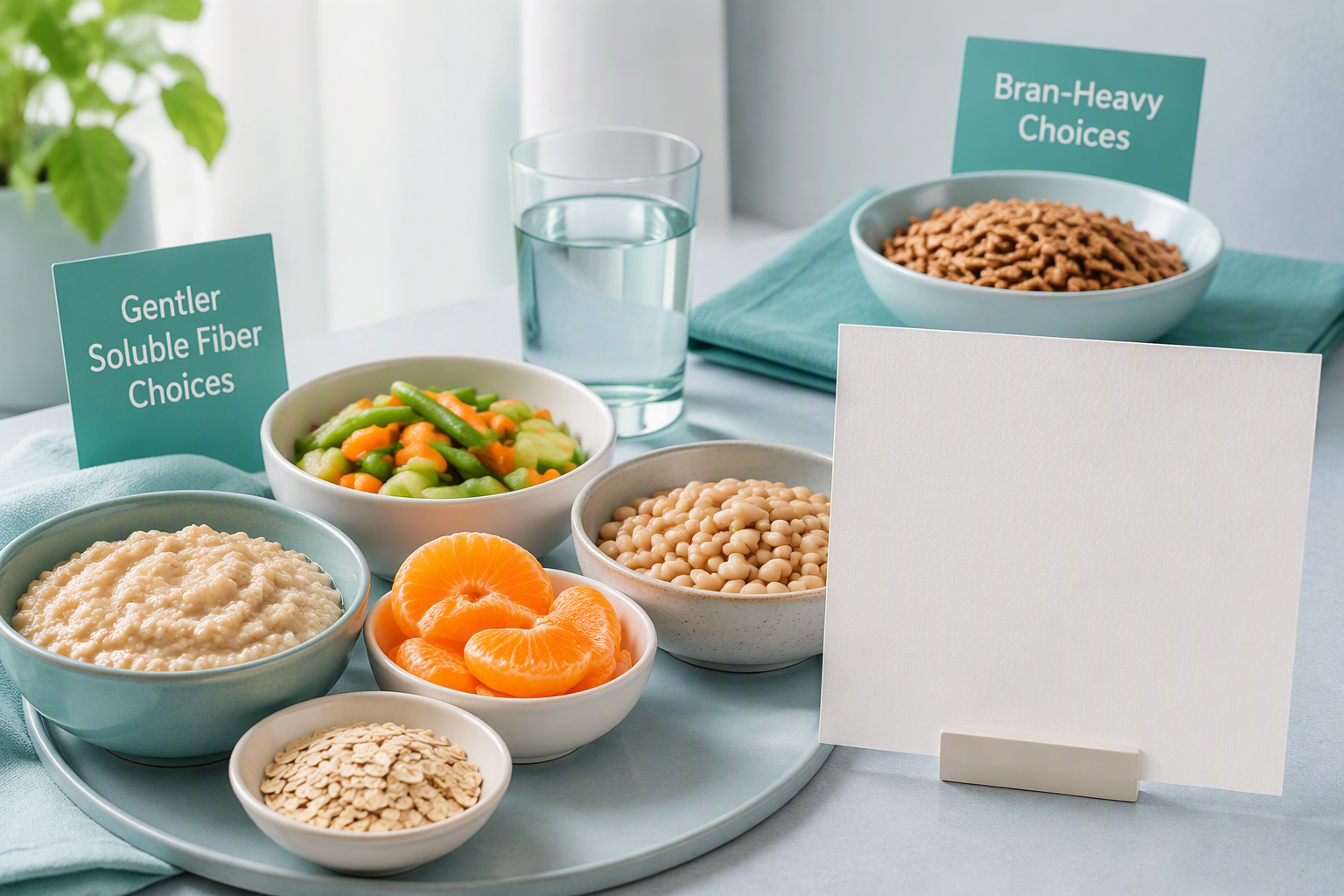
With patterns recorded, the key IBS fiber choice is soluble versus insoluble fiber. Soluble fiber dissolves in water and forms a gel, which can help regulate bowel movements and is generally better tolerated. Insoluble fiber adds bulk without forming a gel and commonly worsens IBS symptoms, especially gas, bloating, and cramping. Nutrition labels group both types under “fiber,” so generic advice to eat more can backfire.
Use the My Good Gut Fiber Chart to choose one soluble-fiber source at a time. These amounts are for the listed portions:
Food | Portion | Soluble fiber |
|---|---|---|
Artichoke, cooked medium | 1 | 4.7 g |
Dark kidney beans | 1/2 cup | 2.8 g |
Butter beans | 1/2 cup | 2.7 g |
Black beans | 1/2 cup | 2.4 g |
Oat bran cereal | 3/4 cup | 2.2 g |
Brussels sprouts | 1/2 cup | 2.0 g |
Orange | 1 small | 1.8 g |
Fresh apricots | 4 | 1.8 g |
Asparagus | 1/2 cup | 1.7 g |
Mango | 1/2 small | 1.7 g |
Turnip | 1/2 cup | 1.7 g |
Plain oatmeal | 1/3 cup | 1.4 g |
The common high-fiber trap is treating total fiber as the only number that matters. Wheat bran has 12.3 g of total fiber per 1/2 cup, but 11.3 g is insoluble. Fiber One cereal has 11.9 g total, including 11.1 g insoluble, while All-Bran has 8.6 g total and 7.2 g insoluble. Dry bran supplies about 6 g, nearly all insoluble. Adding bran cereal during an IBS flare can therefore increase discomfort rather than relieve it.
A safer daily pattern is to choose one soluble source instead of changing several meals at once. When symptoms are active, start with a smaller or gentler portion and keep it steady for several days. Increase gradually only after symptoms feel stable, since a rapid increase can worsen gas, bloating, and cramping.
Plan fluids whenever you add fiber. Soluble fiber needs water to form its gel and work properly, so take steady sips throughout the day when adding foods such as oats or linseeds. This measured approach helps you identify your tolerance without turning one adjustment into a full diet overhaul.
How Do You Run a Time-Boxed Low-FODMAP Trial Safely
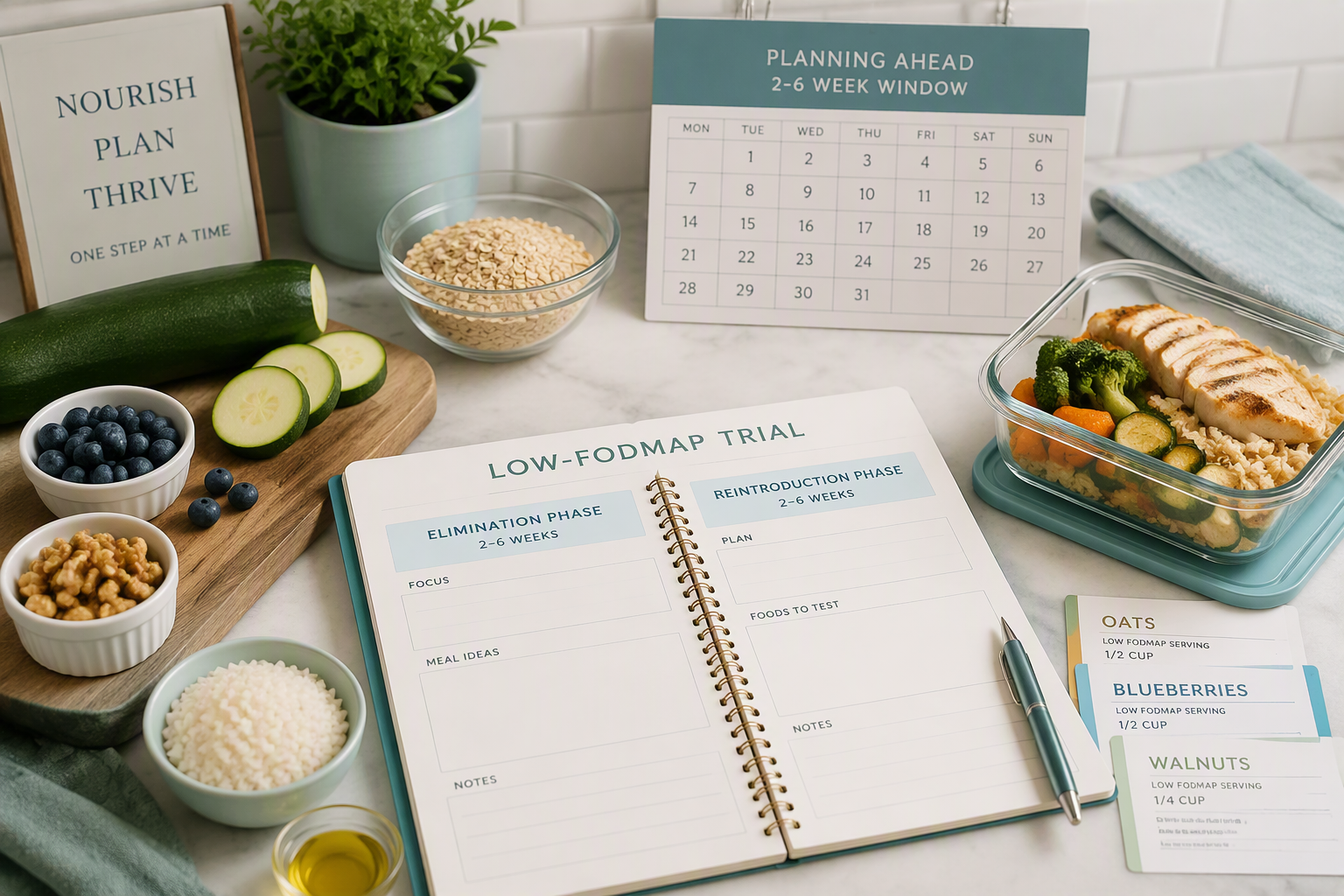
A low-FODMAP diet for IBS can be a helpful option, but start only when your schedule is predictable enough to follow it consistently. It's one of the better-supported dietary approaches for IBS, yet it demands more planning than the other options in this guide.
During elimination, most meals need to be cooked or carefully sourced. You'll also need to read labels and plan around restaurants, travel, and social events. Common IBS triggers may include:
- Dairy, caffeine, or alcohol
- Fatty or fried foods
- Spicy foods
- Gluten for some people
- Artificial sweeteners such as sorbitol
FODMAPs are fermentable carbohydrates: fermentable oligosaccharides, disaccharides, monosaccharides, and polyols. The full IBS diet food lists and low-FODMAP phases are worth reviewing before you start.
A quieter stretch with fewer restaurant meals and less travel is usually the right time to begin. A major work deadline, frequent trips, or a busy household can lead to partial restriction, which makes the outcome difficult to interpret. Waiting a few weeks may prevent you from spending time and energy on a trial that cannot give you a clear answer.
The elimination phase typically lasts about 2 to 6 weeks. After that, structured reintroduction brings foods or FODMAP groups back one at a time. Elimination may show that something triggers symptoms, but reintroduction is what identifies which carbohydrate is involved. Long-term strict restriction is not the goal.
Because these plans can limit food choices considerably, guidance from a registered dietitian is especially useful. Support matters even more during pregnancy, with a history of disordered eating, or when your diet is already substantially restricted.
If this isn't a workable month, track symptoms and test one change at a time instead. A slower plan you complete is more useful than a strict trial abandoned in week two.
How Do You Set Routines That Match Your IBS Subtype
Your IBS routine should fit the hours when you cannot easily step away, not just follow a generic meal plan. Smaller, more frequent meals at consistent times may support bowel habits, but the most useful first step is finding your least interruptible part of the day.
That window could be a commute, back-to-back meetings, or a class you teach. Arrange meals around it and test one change at a time. IBS-D means diarrhea-predominant IBS, IBS-C means constipation-predominant IBS, and IBS-M means mixed IBS with alternating diarrhea and constipation. Matching your routine to the pattern affecting you most can support day-to-day management and long-term symptom control.
The main scheduling difference by subtype is:
IBS subtype | Main scheduling lever | What to watch |
|---|---|---|
IBS-D | Leave more time between eating and your least interruptible window | Eating shortly before travel or a long meeting may trigger the gastrocolic response, which can stimulate a bowel movement |
IBS-C | Keep meals and your morning routine steady | Rushing, skipping meals, or frequently changing meal times may make regular bowel habits harder |
IBS-M | Follow the pattern that has dominated the past week or two | Re-anchor your routine when diarrhea or constipation becomes the main issue |
With IBS-D, move the meal before a restricted window earlier or make it the smallest meal of the day. Eating shortly before a commute or long meeting can bring on symptoms at an inconvenient time. Long gaps without food can also cause trouble, so spacing meals usually works better than skipping them or shrinking every portion.
For IBS-C, consistency tends to matter more than finding a perfect meal time. Eating at roughly similar times and protecting an unrushed morning may help establish a bowel pattern. The morning rush itself can be part of the problem when you have no time to respond to the urge to have a bowel movement.
IBS-M often requires a flexible routine. Follow the pattern that has been most common recently rather than designing one schedule for both phases, then adjust when diarrhea or constipation takes over.
Some schedules leave meal timing outside your control. Shift workers, teachers with fixed breaks, and people with assigned meal periods may need to pack suitable food for the window they have. Your symptom log can show whether timing or food is the stronger trigger when flares keep appearing at the same time of day.
What Should You Do During an IBS Flare and When to Get Care

Flare advice often assumes you can stop everything, go home, and rest. When work, caregiving, or teaching cannot be canceled, you need a plan for today and the next 48 to 72 hours. These steps can help you respond without trying to solve everything at once (source, source).
The aim during a committed day is to get through it, not to fix the flare:
- Find the nearest bathroom before urgency starts, especially in an unfamiliar building or classroom.
- Keep water nearby and sip steadily instead of drinking a large amount at once.
- Choose small, plain meals rather than skipping food entirely.
- Take the shortest gentle walk possible between commitments. Light movement may feel better than sitting rigidly for hours.
- Apply warmth over your abdomen if heat usually eases cramping, bloating, or discomfort.
Most flares aren't visible to other people. Fear of being noticed can feel larger than what others actually see, and that worry may reinforce the bathroom-anxiety loop. Knowing where you can step out and keeping supplies in your bag can reduce pressure.
Over the following two or three days, pause the triggers you already suspect rather than changing your entire diet. Return to simple meals you tolerate and stay with them until symptoms settle. Starting a new fiber routine during a flare can make it harder to tell which change helped. If the source of discomfort is unclear, discussing the possible cause of IBS pain with a clinician may help.
Let the leading symptom guide small adjustments:
- Constipation: Keep fluids steady and add fiber gradually as bowel movements become more comfortable.
- Diarrhea: Continue regular fluids throughout the day and temporarily reduce fiber sources that worsen urgency.
Keep your flare log short. Record your stool pattern, pain or cramping, and what you ate or what was happening at the time. A healthcare professional may also discuss medicines for cramping, constipation, or diarrhea, along with diet and stress-management options.
Seek medical evaluation for:
- Unexplained weight loss
- Blood in your stool
- Fever
- Persistent vomiting
- Symptoms that wake you from sleep
- New symptoms after age 50
- Rapidly worsening symptoms
A previous IBS diagnosis doesn't make every new symptom IBS. More frequent flares, longer episodes, or increasing disruption to work and sleep also warrant a clinician conversation.
Living With IBS FAQs
These FAQs about living with IBS cover common questions about symptoms, food choices, daily routines, and support. Use this IBS guide to find clear, practical context for managing everyday concerns with greater confidence.
1. Can you live normally with IBS long-term?
Yes, living with IBS can still include work, travel, and social plans. There is no cure, so the realistic goal is long-term symptom control rather than a quick fix.
Quality of life often improves when you identify your own trigger foods, adjust fiber or FODMAP intake, manage stress, and use medication if your clinician recommends it. Track patterns and make one manageable change at a time rather than several at once. If symptoms disrupt daily life, the long-term outlook for IBS is worth reading before you discuss next steps with a healthcare professional.
2. How long do IBS flares usually last?
IBS flares don't follow a set schedule. Pain, bloating, gas, cramping, diarrhea, and constipation may rise and fall in cycles, followed by calmer periods called remission. One flare can last several days or resolve sooner, while symptoms may continue on and off for six months or longer overall.
During remission, “track and adjust” means recording meals, stress, sleep, triggers, and symptom levels over several weeks. These patterns can guide small changes before symptoms build. The goal is to reduce flare intensity and duration, not make symptoms disappear instantly.
3. How bad can IBS pain get safely?
IBS can cause abdominal pain, bloating, gas, cramping, diarrhea, or constipation that flare and settle. Pain that follows your usual pattern and improves with rest, hydration, or your flare plan is generally less concerning.
Compare each episode with your own baseline, and seek prompt medical evaluation if pain changes location or character, keeps worsening, or stops responding to your usual steps. Unexplained weight loss, blood in stool, fever, persistent vomiting, symptoms that wake you regularly, new symptoms after age 50, or rapidly worsening symptoms also warrant care. Reviewing your IBS symptoms and triggers can help you spot when something has changed.
4. What everyday foods help IBS without strict low-FODMAP?
The most useful change is usually choosing soluble fiber rather than simply eating more fiber. Soluble fiber absorbs water and may help regulate bowel movements, especially when constipation is part of your symptoms.
Everyday options include oat bran cereal at 2.2 grams of soluble fiber per ¾ cup, plain oatmeal at 1.4 grams per ⅓ cup, an orange at 1.8 grams, asparagus at 1.7 grams per ½ cup, and black beans at 2.4 grams per ½ cup. Psyllium and chia seeds are also soluble sources, and peeled fruit is often easier to tolerate than fruit with the skin on.
The common mistake is reaching for wheat bran or bran cereals because they're marketed as high-fiber. Those are mostly insoluble fiber, which can increase bloating, gas, and discomfort. Start with one soluble-fiber food you already enjoy, increase gradually over several days, and drink extra fluids as you do, since soluble fiber needs water to work.
This content is for educational purposes only and is not a substitute for personalized medical advice. Digestive symptoms can have many causes, and results vary by person. Consult a qualified healthcare professional for persistent, severe, or worsening symptoms, and before making significant dietary changes.