


Across 17 randomized trials, antibiotic-associated diarrhea showed up in 8.0% of people taking a probiotic against 17.7% of those who weren’t. That’s the firmest number in this field, and it’s worth holding onto, because most of the other benefits are nowhere near as settled.
The distance between claim and evidence is where labels do their work. A capsule promising digestive support has usually never been tested for the symptom you have, and any effect belongs to a named strain code rather than to the genus or the CFU count on the front. Bifidobacterium longum subsp. infantis 35624 has trial evidence, and a generic Bifidobacterium blend doesn’t inherit it.
Separating the better-supported uses from the emerging ones is what turns a reasonable purchase into something other than a guess. Evidence strength varies far more between conditions than between brands.
Probiotic Benefits Key Takeaways
- Probiotic effects depend on the exact strain, dose, product quality, and symptom studied.
- Antibiotic-associated diarrhea is among the better-supported uses of probiotics.
- Probiotics may modestly ease some IBS symptoms, though results vary widely.
- Certain strains may support constipation, bloating, gas, and lactose digestion.
- Higher CFU counts do not make a probiotic more effective.
- Foods with live cultures supply probiotics, but strain amounts are often unclear.
- Ask a clinician first if you are immunocompromised or seriously ill.
What Are Probiotics?
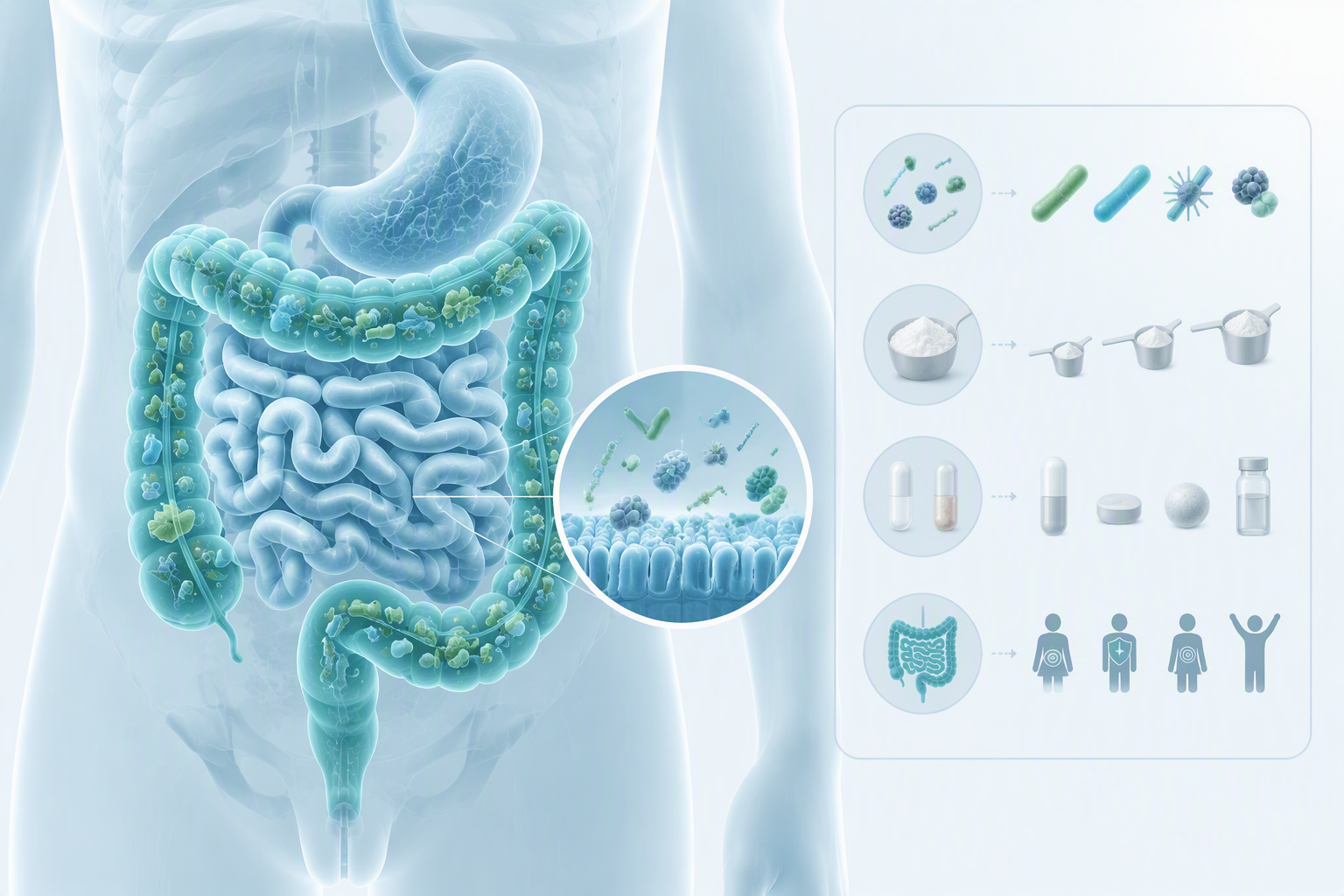
Probiotics are live bacteria and yeasts, or other microorganisms, intended to provide health benefits when consumed in adequate amounts. “Good” or “friendly” bacteria is only shorthand. It does not mean every product offers the same probiotic benefits for every person.
These organisms add to, rather than replace, your gut microbiome, the trillions of microorganisms that already live in and on your body. They may interact with that environment for a limited time, particularly after antibiotics, illness, or major dietary changes. Effects on gut health can vary widely from person to person.
The health benefits of probiotics depend on details beyond the species name:
- Probiotic strains: Different strains within the same species are not interchangeable, including for symptoms linked to irritable bowel syndrome (IBS).
- Formulation and storage: Manufacturing conditions and shelf life affect whether the organisms remain alive.
- Dose and digestion: A product needs to deliver viable microorganisms through the digestive tract.
- Health outcome studied: Evidence for one symptom or condition does not automatically apply to another.
Knowing how probiotics work helps you separate broad claims from strain-specific evidence. Whether you should take probiotics depends on your symptoms, health history, and the exact product label.
1. Supporting Digestive Function
Probiotics interact with the gut microbiome already in your digestive tract. After illness, antibiotics, or a major dietary change, they may support healthy gut bacteria and digestion. They do not return gut health to the same state for everyone. Evidence for broad digestive benefit is inconsistent, and outcomes vary by strain, dose, product quality, and person.
Possible effects include:
- Producing short-chain fatty acids
- Lowering gut pH
- Competing with unwanted microbes
- Supporting the intestinal barrier
These effects may relate to bloating, diarrhea, constipation, or irregular bowel movements, but they do not predict relief. Because digestive symptoms have many causes, seek care if they persist, worsen, or are severe. How probiotics help digestion explains the mechanisms, symptom-specific strain evidence, and an appropriate trial length.
2. Reducing Antibiotic Associated Diarrhea

Among digestive applications, antibiotic-associated diarrhea is among the better-supported uses of probiotics, though results vary by strain and individual circumstances. Antibiotics target harmful bacteria but can also reduce helpful gut bacteria, which may contribute to loose stools. Certain probiotics may help restore beneficial bacteria and lower this risk, but they do not replace prescribed antibiotics or infection treatment.
A 2017 review of 17 randomized trials involving 3,631 nonhospitalized participants found antibiotic-associated diarrhea in 8.0% of people taking probiotics, compared with 17.7% of controls (source). Among studied probiotics, Lactobacillus rhamnosus GG and Saccharomyces boulardii are often discussed for antibiotic-associated diarrhea, but the effect depends on the strain, dose, and study design.
For probiotics after antibiotics, the strain, spacing from the medication, and duration can affect whether they are appropriate. Probiotics for digestive problems puts this option in context with other digestive symptoms.
3. Easing Irritable Bowel Syndrome Symptoms

Beyond post-antibiotic recovery, probiotics for IBS may offer modest relief for some symptoms, but the evidence remains inconclusive and benefits can be small. Symptoms that may improve include:
- Abdominal discomfort
- Gas and bloating
- Changes in stool consistency
Effects are strain-specific. A product labeled only as Bifidobacterium cannot be assumed to act like another product in the same group, and a higher CFU count does not guarantee a better fit. Probiotics do not cure IBS or replace diagnosis or prescribed treatment.
A 2018 review of 53 randomized trials involving 5,545 patients found possible improvement in overall IBS symptoms and abdominal pain. However, no species, strain, or combination worked reliably for everyone (source).
Irritable bowel syndrome probiotics should match your main goal, whether that is IBS symptoms, constipation, diarrhea, post-antibiotic recovery, or another concern. A later section examines the best-evidenced IBS strain in more detail.
For condition-specific guidance, the digestive problems hub covers probiotics for bloating, constipation, diarrhea, SIBO, and lactose intolerance.
4. Improving Constipation And Bowel Regularity
Some probiotics may modestly improve stool frequency, stool consistency, or gut transit time in people with occasional constipation, but study findings are inconsistent. They do not reliably relieve all irregular bowel movements, and results from one strain do not carry over to every probiotic in the same genus.
Bifidobacterium animalis subsp. lactis HN019 and BB-12 have been studied in generally healthy adults, mainly for gut transit time and bowel movement frequency. This is not IBS evidence, and neither strain is among those with demonstrated IBS benefit, so constipation research alone should not guide an IBS supplement choice.
Look for the full strain name on the label, rather than only “Bifidobacterium” or a high CFU count. Strain-by-strain constipation information can help you set realistic timelines and avoid expecting immediate relief.
5. Managing Bloating And Gas
Some probiotics may modestly ease gas and bloating, abdominal discomfort, or changes in stool consistency for some people with IBS. Results vary, and benefits depend on the exact strain rather than the genus name or a high CFU count. Bifidobacterium longum subsp. infantis 35624 and Lactiplantibacillus plantarum 299v are examples with findings in IBS, but neither works reliably for every symptom pattern.
A new probiotic can cause temporary gas or bloating, and people with IBS or other sensitive digestive systems may notice these effects early in use (source). The bloating guide covers strains studied for these symptoms, what to expect from a trial, and when persistent, severe, or worsening bloating needs clinical assessment.
6. Supporting Lactose Digestion
Certain live cultures can help digest lactose, making this one of the better-supported uses of probiotics for digestion. Still, broad digestive benefits are inconsistent, and results depend on the specific strain. A genus name or high colony-forming unit (CFU) count does not show that a product has been studied for lactose digestion.
Yogurt and kefir may contain cultures associated with lactose breakdown. Check storage and processing details when choosing foods with live cultures.
Improved lactose digestion does not treat lactose intolerance. Persistent, severe, or worsening pain, diarrhea, or bloating deserves evaluation from a qualified healthcare professional, since digestive symptoms can have many causes.
7. Strengthening Immune Function
Selected probiotic strains may influence immune defenses, but they do not dramatically boost immunity or replace vaccination, sleep, balanced nutrition, or medical care. Possible effects include changes in the gut lining, immune-cell activity, and natural antibody production, linking gut health to how the body responds to germs.
Respiratory infections, including common colds, are the most studied outcome. Certain strains may reduce how long or severe an infection feels, but evidence for one product does not apply to every Lactobacillus strain or probiotic. Strain identity matters.
How probiotics support the immune system explains the proposed mechanisms, what human trials measured, and which strains were tested.
8. Influencing The Gut Brain Connection
The gut-brain axis is a two-way network connecting the gut microbiome, nervous system, immune signals, and stress pathways. Stress can change digestion, while ongoing bloating, pain, diarrhea, or constipation may affect mood and confidence, especially when symptoms feel unpredictable.
Some Bifidobacterium longum and Lactobacillus helveticus strains have been studied for stress, anxiety, and mood, with modest findings in some research. Evidence does not support broad claims that probiotics dramatically improve mood for most people, and they do not diagnose, prevent, or treat anxiety or depression.
Probiotics and mental health covers the strain-specific research, what studies measured, and when mental health support is important. Digestive and emotional symptoms both deserve care that considers your full health picture.
9. Supporting Skin And Allergy Health
Probiotics for skin health remain an early, strain-specific research area and do not replace prescribed creams or clinical care. Certain strains may affect eczema severity in infants and children, but age, strain, and formulation matter. Acne findings remain under investigation, so persistent breakouts, rashes, or worsening eczema need evaluation.
Seasonal allergy evidence is mixed. A systematic review of 23 studies involving 1,919 people found improved allergic rhinitis quality-of-life scores with probiotics versus placebo, but no significant improvement in total symptom scores (source). Differences in strains, participants, and methods prevent a general recommendation. Probiotics may complement standard allergy care, not replace it.
Important limits include:
- Vaginal microbial balance: Some products may reduce recurrent bacterial vaginosis, but universal prevention has not been established.
- Urinary tract infections: Evidence remains limited, so probiotics are not a reliable preventive measure.
- Broad claims: Probiotics are not broadly established to prevent disease, treat acne or allergies, cause weight loss, or dramatically improve mood.
Unusual discharge, odor, itching, pelvic pain, or recurring vaginal symptoms need clinical assessment.
10. Improving Heart And Metabolic Markers
Selected probiotic strains may have small effects on blood sugar, insulin sensitivity, cholesterol, or blood pressure, but they are not cardiometabolic treatment. Findings are preliminary and strain-specific, and they do not show that probiotics prevent or treat diabetes. Continue glucose monitoring, prescribed medicines, nutrition changes, and physical activity recommended by your healthcare professional.
For probiotics and cholesterol, some bacteria may affect bile acids and reduce their reabsorption. In theory, this may prompt the body to use more cholesterol to make new bile acids, contributing to a small reduction in low-density lipoprotein (LDL) cholesterol. Results vary by strain, dose, and population, so probiotics do not replace cholesterol testing or medication when needed.
Blood pressure research suggests a modest average effect, not a guaranteed personal benefit. A meta-analysis of nine randomized trials involving 543 participants found average reductions of 3.56 mm Hg in systolic pressure and 2.38 mm Hg in diastolic pressure versus control groups. Most trials used fermented dairy foods rather than probiotic supplements (source)).
Product-specific claims still need evidence.
Weight is a separate issue. Evidence on probiotics for weight loss is limited, with small and uncertain effects. Strains studied for weight are not necessarily the same strains studied for digestion. Persistent cardiometabolic symptoms or concerns need individualized medical care.
IBS Evidence for Bifidobacterium longum subsp. infantis 35624
The strain-specific limits discussed above are illustrated by Bifidobacterium longum subsp. infantis 35624, which shows why probiotics for IBS need to be matched to an exact strain, not simply a genus or product category. A multicenter, randomized, double-blind, placebo-controlled dose-ranging trial studied 362 women with IBS in primary care, across all bowel-habit subtypes (source). The findings apply to this specific organism, not to every Bifidobacterium supplement.
Earlier clinical research found that 35624 performed better than placebo for measured IBS symptoms, with the exception of bowel-movement frequency and stool consistency. Some people may have less abdominal discomfort, bloating, or gas, while others may notice no meaningful change. Irritable bowel syndrome probiotics can help manage certain symptoms for some people, but results vary by strain and person.
A label listing Bifidobacterium or a high colony-forming unit count does not show that the studied strain is present. Look for the code 35624, though older labels may say Bifidobacterium infantis, while newer taxonomy uses B. longum subsp. infantis. The strain number is the reliable match, and Align maps to 35624.
Lactobacillus offers a useful contrast. In one small IBS study, Lactiplantibacillus plantarum 299v, also called DSM 9843, was linked to better abdominal pain relief than placebo (source). That result cannot predict your response or transfer to every Lactobacillus product.
Choose a product by the symptom you hope to help manage and the exact strain listed on its label, not marketing claims alone.
Getting Probiotics From Foods and Supplements

Because full strain identification matters when choosing a product, fermented foods with probiotics can fit easily into meals, but they rarely tell you the strains or amounts you receive. Seeing how probiotics stack up against foods, prebiotics, and other supplements helps you judge which form fits your goal. Yogurt and kefir labeled with live cultures are common options, along with sauerkraut, kimchi, kombucha, miso, and tempeh. Check food labels and storage because live-culture content can differ by product.
Probiotic supplements come as capsules, powders, and liquids and often contain Lactobacillus or Bifidobacterium. The most suitable option depends on your goal, whether that is IBS symptoms, constipation, diarrhea, or probiotics after antibiotics. Probiotic strains are not interchangeable, even when their names appear closely related.
A useful label includes details you can compare with the research:
- Complete strain code: Look beyond the genus and species for a designation such as B. longum subsp. infantis 35624 or L. plantarum 299v.
- Intended use and directions: Check the stated purpose, serving instructions, and storage needs.
- CFU guarantee: Colony-forming units should be guaranteed through the expiration date, not only at manufacture.
In our own review of roughly 30 top-selling IBS and digestive probiotics, almost none printed a clinical strain code on the front of the pack, so look for the full strain identifier before choosing a supplement. More CFUs do not automatically mean better results. Effectiveness depends on the identified strain, studied dose, product stability, and outcome measured.
Persistent, severe, or worsening symptoms need medical evaluation rather than supplements alone.
Recognizing Probiotic Safety Limits and Side Effects
Probiotics have an extensive history of apparently safe use in healthy people, but they can cause minor side effects such as cramping, nausea, gas, bloating, or changes in bowel habits, and people with serious illness or a weakened immune system should be more cautious. These effects may fade as your body adjusts. Stop the product and contact a healthcare professional if symptoms are severe, persistent, or clearly worsening.
Extra caution is warranted in these situations:
- Serious illness: Rare probiotic-related infections have been reported, so a clinician should guide use.
- A weakened immune system: If you are immunocompromised, discuss the specific strain, dose, product, and health history with a clinician before trying probiotic supplements.
- Major underlying conditions: A healthcare professional can consider potential risks alongside your medications, treatments, or medical devices.
Across 81 randomized trials with 9,253 participants, adverse events were reported by 11.62% of probiotic users and 10.61% of placebo users. Serious events were uncommon, affecting 0.15% and 0.22%, respectively. These are raw pooled counts, not a formal probiotic safety comparison. The authors did not perform an adverse-event meta-analysis because many trials did not determine whether the product caused the event, and some recorded ordinary IBS symptoms as adverse events (source).
The U.S. Food and Drug Administration does not approve probiotic supplements as treatments. They cannot replace diagnosis, prescribed care, or follow-up. Broad claims about weight loss, major mood changes, or disease protection are also not well supported for most products.
Benefits of Probiotics FAQs
These FAQs cover common questions about probiotic benefits, including digestive symptoms, food sources, supplement labels, and safety. They can help you decide when probiotics may fit your needs and when personalized medical guidance matters.
1. How Quickly Can Probiotics Provide Benefits?
There is no reliable timeline for probiotic benefits. Studies may track changes over days, weeks, or longer, and results can vary by strain, dose, symptom, and study design. For example, Bifidobacterium longum subsp. infantis 35624 has IBS-specific research, but its findings do not apply to every probiotic.
Relief is not usually immediate or guaranteed to last. Changes may be modest, inconsistent, or temporary, while broad claims about weight loss, mood, or disease prevention remain poorly supported. Judge a product by its strain code and evidence for your specific symptom.
2. Do Probiotic Benefits Differ By Strain?
Probiotic benefits are strain-specific, so a genus or species name alone cannot predict how a product will work. Lactobacillus, Bifidobacterium, and Saccharomyces boulardii products can differ in biological activity, survival through digestion, and viability through the expiration date. Match the full strain identifier, such as B. longum subsp. infantis 35624 or L. plantarum 299v, to research for your goal, whether that is IBS, constipation, post-antibiotic diarrhea, or digestion. Results vary by person and product.
3. Are Probiotic Benefits Permanent?
Probiotic benefits may fade after you stop taking them. A strain can affect your gut without becoming a permanent part of your microbiome, and results vary by strain, dose, health concern, and your existing gut ecosystem. Evidence for one product does not apply to every probiotic.
Antibiotics, illness, and diet changes can alter that environment. Fiber-rich foods, fermented foods, and consistent meals may support microbial balance, but they cannot guarantee lasting effects. Discuss persistent symptoms or long-term supplement use with a qualified healthcare professional.
4. What Are Signs A Probiotic Is Working?
A probiotic may be helping when the symptom you targeted gradually improves, such as less bloating, fewer loose stools, or a steadier bowel pattern. Track symptoms with meals, stress, medications, and other changes so normal IBS variation is not mistaken for a response. Mild gas or bloating can occur at first, but persistent, worsening, or new symptoms may mean the product is not a good fit. If there is no clear benefit after a reasonable trial, especially with an underlying condition, speak with a qualified healthcare professional.