


Choosing between probiotics and prebiotics can feel difficult when bloating, constipation, or loose stools keep disrupting meals and routines. Neither is automatically better. Probiotics are live microbes, while prebiotics are fibers that feed microbes already living in the colon.
Constipation alongside a low-fiber eating pattern often responds best to a gradual food-first increase toward 25 to 35 grams of dietary fiber daily. That approach can still worsen gas or cramping in IBS, especially with inulin or FOS, so portion size and symptom pattern matter more than quickly reaching a target. When stable meals and fiber habits haven't eased IBS symptoms, one probiotic with a full strain code is easier to assess than a large-CFU blend.
Safety depends on keeping each change simple. A dated symptom log and one new food, fiber, or supplement at a time can show what helps, while blood in stool, unexplained weight loss, fever, dehydration, or persistent severe symptoms need medical evaluation.
Probiotics vs. Prebiotics Key Takeaways
- Probiotics provide selected live microorganisms, while prebiotics feed resident gut microbes.
- Constipation or low fiber intake usually calls for gradual food-first fiber increases.
- IBS and fermentable-fiber sensitivity can make inulin or FOS worsen gas and bloating.
- For probiotics, match the full strain code to research, not CFU count alone.
- Change one food, fiber product, or supplement at a time and track symptoms.
- Synbiotics combine probiotics and prebiotics, but taking both does not guarantee better IBS relief.
- Seek medical care for blood in stool, unexplained weight loss, fever, dehydration, or persistent severe symptoms.
How Do Probiotics and Prebiotics Differ?
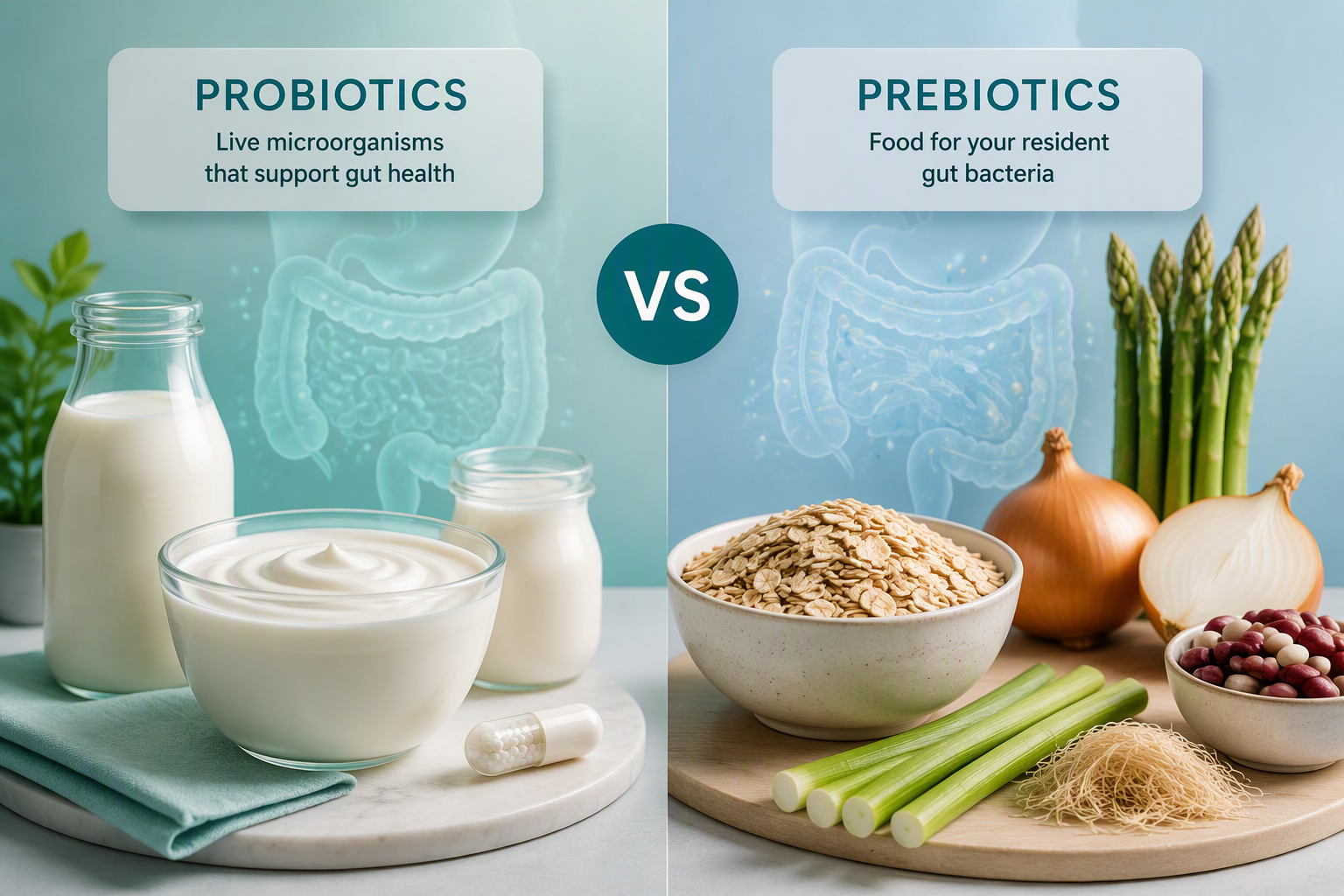
Probiotics vs prebiotics differ in what they contribute to your digestive tract. Probiotics are live microorganisms, usually bacteria or yeast, that may offer a health benefit when consumed in adequate amounts. Prebiotics are nondigestible food components, often carbohydrate fibers, that reach the colon and feed microbes already living there. The International Scientific Association for Probiotics and Prebiotics defines probiotics this way (source).
Option | Main role | Common examples |
|---|---|---|
Probiotics | Temporarily introduce selected live microbes | Yogurt, kefir, some fermented foods, supplements |
Prebiotics | Nourish resident microbiota in the colon | High-fiber plant foods and added fibers such as inulin |
The difference between prebiotics and probiotics matters because neither suits every digestive symptom. Yogurt, kefir, and other fermented foods may contain Lactobacillus and Bifidobacterium, but a species name alone does not identify a studied strain. A strain’s identifying code matters because results from one strain do not automatically apply to another in the same species. How probiotics compare to other supplements puts supplement-label claims into context.
Inulin is a fermentable plant fiber, not a source of live Lactobacillus or Bifidobacterium. Some of your gut microbiota, often called the gut microbiome, break it down after it reaches the colon. Prebiotics are part of many high-fiber plant foods, so a food-first approach can be a practical starting point.
For people with irritable bowel syndrome (IBS), bloating, or food sensitivities, a sudden increase in fermentable fiber can worsen gas or discomfort. Fermented foods vs probiotic supplements can help you weigh those options.
Both approaches can work together, but they are not interchangeable and responses vary. The association also describes prebiotics as selectively used substrates for beneficial microorganisms (source).
Which Option Fits Your Gut Symptoms?

Because the differences matter most when symptoms guide the choice, no single option fits every symptom. Bloating, constipation, loose stools, and abdominal discomfort can have different triggers, and your gut microbiome may respond differently from someone else's. When deciding which to choose, focus on your main symptom pattern and change one thing at a time. Prebiotics and probiotics may help manage symptoms for some people, but neither is guaranteed to help.
Constipation or a low-fiber eating pattern usually calls for a gradual food-and-fiber approach first. Increase tolerated prebiotic-rich foods slowly, particularly if you have IBS, because fermentable fiber can initially worsen gas, cramping, or bloating. If gas remains a problem, psyllium or methylcellulose may be easier to tolerate. Methylcellulose does not ferment, and an unflavored powder can reduce the chance that sweeteners or flavorings muddy the picture.
A probiotic trial may make sense when IBS symptoms continue despite stable meals and fiber habits. Look for the full strain code rather than choosing by species name, a long ingredient list, or a high colony-forming unit (CFU) count. Evidence for Bifidobacterium longum subsp. infantis 35624 or Lactiplantibacillus plantarum 299v should be matched to the exact strain on the label, because results for one strain do not automatically transfer to a different product with a similar name. Probiotics vs postbiotics are also different categories, not interchangeable supplements.
These starting points can help keep a trial easier to interpret:
- Constipation with low fiber intake: Add food-based fiber gradually or try a simple, unflavored psyllium product.
- IBS symptoms with a stable diet: Consider one probiotic that names a researched strain code.
- Mixed or unclear symptoms: Avoid products that combine enzymes, prebiotics, and probiotics, since they make it harder to identify what affects your symptoms.
Neither fiber nor supplements should be your first step for new, severe, persistent, or worsening digestive symptoms. Seek prompt medical care for:
- Unexplained weight loss
- Rectal bleeding
- Fever, anemia, or dehydration
- Severe pain or symptoms that wake you at night
Digestive symptoms can have many causes, and supplements do not replace diagnosis, prescribed care, or personalized medical advice.
When Should You Choose Probiotics?
Match probiotics to a condition studied with one exact strain, rather than choosing a product labeled simply as probiotics. For IBS, evidence is mixed and strain-specific. Findings for Bifidobacterium longum subsp. infantis 35624 or Lactiplantibacillus plantarum 299v do not mean every Bifidobacterium or Lactobacillus product will help manage symptoms. Results vary, and a health benefit for one person does not mean a cure for IBS.
Food can be a gentle first step. Probiotic foods include yogurt or kefir labeled with live and active cultures, along with live-culture sauerkraut and tempeh if you tolerate them. Fermented foods are not automatically probiotic foods because processing can kill live microorganisms. A live-culture statement on the label matters more than fermentation alone.
If you choose a supplement, match its complete identity to the symptom or condition studied:
- Full identification: Look for the genus, species, and strain code, such as 35624 or 299v. Genus names can change, but the strain number is the dependable identifier.
- Evidence over CFUs: A high colony-forming unit count or a long list of species does not replace strain-level research. Avoid species-only labels for a specific digestive concern.
- Timing: When to take probiotics depends on the strain, product directions, your symptoms, medications, and whether you are taking probiotics with antibiotics.
Speak with a qualified healthcare professional before or after antibiotics, a gastrointestinal illness, or another major microbiome disruption. They can help rule out other causes and account for medications or health conditions that affect safety. Persistent, severe, or worsening symptoms need medical evaluation, and supplements do not replace diagnosis or prescribed treatment.
When Should You Choose Prebiotics?
When a low-fiber pattern rather than a strain-specific probiotic is the main concern, prebiotics may fit if your dietary fiber intake is low, constipation is a concern, or you want to support beneficial gut bacteria through everyday meals. Prebiotic foods are usually the practical first step. General guidance is about 25 to 35 grams of dietary fiber a day, yet many adults fall short. Supplements are optional, not necessary for good gut health.
Increase fiber gradually instead of making a large change all at once. Some research suggests that 3 to 5 grams of prebiotics daily may support gut health, but no official serving recommendation exists. Tolerance matters more than reaching a target quickly. Introduce one new food or a small amount at a time, then watch for changes in:
- Gas or abdominal pressure
- Fullness or bloating
- Stool frequency or consistency
- Cramping or discomfort
Inulin and fructo-oligosaccharides (FOS) can increase Bifidobacterium, but symptom responses differ. You may tolerate a modest amount of inulin yet experience more gas or bloating with FOS. Extra caution is sensible if you have IBS, food sensitivities, or a history of symptoms after fermentable fibers.
A gradual trial can make sense when symptoms are manageable. During a flare with prominent gas or bloating, a high-dose prebiotic supplement may be a poor fit. Step back if symptoms consistently worsen rather than pushing through discomfort.
Persistent, severe, or worsening symptoms should be evaluated by a qualified healthcare professional.
How Can You Try Both Safely?

If you want to combine the two approaches without losing track of tolerance, synbiotics combine a probiotic, which adds a live microorganism, with a prebiotic that supports beneficial gut organisms. You can get either component from foods or supplements, but combining them does not guarantee better IBS relief. Results can vary with the strain, prebiotic ingredient, amount, and whether pain, constipation, diarrhea, bloating, or urgency is your main concern. Probiotic colonization is not a dependable goal because many probiotic organisms pass through the digestive tract rather than becoming permanent residents.
A cautious trial changes one thing at a time:
- Begin with one simple option: Try one digestive-friendly food or a clearly labeled, single-ingredient supplement, such as plain psyllium, before adding another new item.
- Choose a traceable probiotic: Look for a product that names its strain code, not only the species or a large CFU count. Avoid blends with probiotics, prebiotics, enzymes, and multiple unfamiliar ingredients because they make a reaction difficult to pinpoint.
- Add the second component after symptoms settle: Increase prebiotic foods or fiber gradually. Larger amounts can cause gas or bloating, including with nutritious foods.
- Keep a dated symptom log: Note abdominal pain, bloating, bowel-movement frequency and consistency, urgency, constipation, diarrhea, and meaningful food changes. A written record can reveal patterns that memory misses.
For IBS, plain, unflavored fiber is often easier to assess than flavored sugar-free products, which may still contain sweeteners and flavoring. If gas does not settle with psyllium, methylcellulose is a nonfermenting fiber alternative.
Pause or reduce the trial if symptoms clearly worsen or do not settle. In healthy adults, probiotic side effects are often mild, but people who are immunocompromised, seriously ill, or have a central venous catheter should talk with a clinician before using probiotic supplements because rare infections have been reported (source). Supplements do not replace diagnosis or prescribed treatment.
Digestive symptoms can have many causes, so consult a qualified healthcare professional for persistent, severe, or worsening symptoms.
How Do You Start With Food First?
Begin with familiar foods that sit well with you, then rotate your choices instead of relying on a single “superfood.” Different prebiotic foods support different gut bacteria, including beneficial bacteria sometimes called friendly bacteria.
A practical mix can include:
- Oats or whole-grain toast at breakfast.
- A slightly green banana or apple for a snack.
- Beans, lentils, peas, onions, garlic, asparagus, nuts, or seeds with meals.
- Boiled-and-cooled potatoes, which provide resistant starch.
Build dietary fiber toward 25 to 35 grams per day gradually by trying one manageable change at a time, such as oats at breakfast, a small portion of beans at lunch, or another fruit or vegetable at dinner. Regular fluids also help as fiber intake rises.
A fast increase in fiber can worsen gas, cramping, or bloating, particularly when you have IBS or food sensitivities. If symptoms flare, reduce the portion, pause the new food, or choose an option you tolerate better before adding more.
Probiotic foods can sit alongside prebiotic choices when they work for you. Yogurt or kefir with live cultures are simple options, while other fermented foods are optional. Digestive enzymes vs probiotics explains why these products have different roles.
Keep changes easy to interpret by adding only one new food or meaningful portion change at a time. For several weeks, use a dated paper or printable journal to note the food, portion, meal timing, bowel habits, bloating, pain, gas, and urgency. Patterns may emerge, but digestive symptoms can have more than one cause.
How Do You Evaluate Supplements?
Start with the active ingredient, not a front-label promise. For probiotics, the useful formula is genus + species + strain code, while for prebiotics, look for a named fiber, such as inulin, FOS, or psyllium. A broad “gut health blend” does not tell you what supports your resident microbiota or what might trigger a reaction.
For an initial trial, choose one active ingredient. A product that combines fibers, probiotics, enzymes, vitamins, sweeteners, and flavorings makes new gas, pain, constipation, or diarrhea much harder to connect to a single cause.
A large CFU number is less useful than a probiotic’s full identity. Evidence-based probiotics list the genus, species, and strain, such as Bifidobacterium longum subsp. infantis 35624 or Lactiplantibacillus plantarum 299v. “10 strains” or “60 billion CFUs” cannot show whether a product matches your symptoms when strain codes are absent.
Check these details before buying:
- Dose guarantee: Prefer a dose guaranteed through the expiration date, not only at manufacture.
- Storage: Follow label directions. Heat, moisture, stomach acid, and time can reduce live cultures, so avoid leaving probiotics in a hot car or humid bathroom.
- Evidence match: Look for studies of the exact strain or fiber at a similar dose in people with your concern. An IBS randomized controlled trial is more relevant than animal research or studies in another population.
- Formula changes: Evidence for one strain does not transfer automatically to another strain in the same species, a reformulated product, or a multi-strain blend.
- Tolerability: Prebiotics can worsen bloating, cramping, or gas above your personal tolerance. Prebiotic fibers are usually shelf-stable, but a plain single-fiber product is easier to assess than a flavored formula with added sweeteners.
Probiotics may require medical guidance if you are severely ill, immunocompromised, or have a central venous catheter. Stop use and seek care for severe or worsening symptoms, and speak with a qualified healthcare professional about persistent digestive problems or supplements used alongside prescribed treatment. Results vary by person, and dietary or supplement choices should be individualized.
Which Should You Choose?
After weighing food options and supplement labels, which to choose depends on your symptoms, usual fiber intake, and tolerance of fermentable foods. For constipation or a low-fiber diet, begin with varied food-first prebiotic sources and raise portions slowly. If fermentable fiber repeatedly causes gas, bloating, or pain, reduce the amount instead of pushing through symptoms. Methylcellulose is a less-fermentable option, and most people do not need routine supplements.
A practical way to narrow the choice is:
- Constipation or low fiber intake: Add prebiotic foods gradually and watch for changes in stool pattern, pain, and bloating.
- Diarrhea-predominant IBS or symptoms after antibiotics: A time-limited trial of one strain-identified probiotic may be easier to evaluate for IBS symptoms after antibiotics than a large increase in prebiotic fiber, especially when the goal is to track symptom changes one step at a time. This approach can help you decide when to take probiotics and whether probiotics with antibiotics suit your situation.
- Mixed or sensitive symptoms: Change only one food, fiber product, or supplement at a time so you can identify what helps or aggravates symptoms.
A high CFU count does not show that a probiotic matches your needs. Check the label for the genus, species, strain code, intended outcome, and study population. IBS trials exist for Bifidobacterium longum subsp. infantis 35624, Lactiplantibacillus plantarum 299v, and Bifidobacterium bifidum MIMBb75. Results for one strain do not apply to products that list only a species or a different strain code.
Consider synbiotics, which are optional, only after you tolerate each component separately.
Seek medical advice before supplements if you are immunocompromised or seriously ill. Prompt evaluation is needed for:
- Blood in stool
- Unexplained weight loss
- Fever, dehydration, or persistent severe symptoms
Probiotics vs Prebiotics FAQs
These FAQs address common questions about probiotics, prebiotics, food sources, supplements, and IBS. They can help you consider everyday options while keeping symptom patterns, ingredient labels, and medical guidance in view.
1. Can You Take Probiotics and Prebiotics Together?
Yes. Taking probiotics and prebiotics together creates synbiotics: the probiotic provides live microorganisms, while the prebiotic supplies fermentable material that may support them. The combination is optional, and tolerance varies. Start with a small amount of one probiotic or prebiotic-rich food, then give your body time before adding anything else. Cut back and contact a clinician if gas, bloating, pain, diarrhea, or constipation is new or worsening, especially with IBS, a significant medical condition, or a weakened immune system.
2. What Are Signs You Need Prebiotics?
Low fiber intake or constipation may be practical reasons to gradually add prebiotic foods, especially if you eat few plant foods. Bloating, gas, and irregular bowel habits do not confirm a prebiotic deficiency because many conditions can cause them. A sudden increase in fermentable fiber may temporarily worsen gas and bloating, particularly with IBS. If your diet is already varied and fiber-rich, you likely do not need a supplement for general gut health. Seek healthcare guidance for symptoms that persist, worsen, or feel severe.
3. Is Avocado a Prebiotic or Probiotic?
Avocado is a fiber-rich food that provides prebiotic material, not a probiotic. About 1/8 of a fresh avocado has 1.2 grams of total fiber, which reaches the large intestine and can feed resident microbes. Probiotic foods contain live microorganisms and should have an appropriate live-culture statement. If avocado increases bloating, reduce your portion. Persistent, severe, or worsening symptoms warrant evaluation by a qualified healthcare professional.
4. Which Foods Contain the Most Prebiotics?
Foods especially high in prebiotic fiber include onions and garlic in savory meals, asparagus and Jerusalem artichokes as vegetables, and oats or slightly green bananas for breakfast or snacks. Beans, peas, lentils, and other legumes are useful meal additions. Chicory root is also rich in prebiotic fibers, but it can be difficult for some people to tolerate.
If you have IBS, try one new food in a small portion, such as oats, half a small banana, or a modest serving of legumes. Larger amounts may trigger gas or bloating, so let your comfort guide portion increases.