


Sleeping flat isn't the only reason nighttime acid reflux keeps waking you. To sleep better with GERD, create a gradual upper-body incline, try your left side, finish dinner about three hours before bed, and take reflux medicine on its prescribed or labeled schedule. GERD can cause recurring heartburn, regurgitation, coughing, or hoarseness after you lie down.
An extra pillow may lift only your head and bend your torso at the waist, which can work against reflux relief. Raising the head of the bed 6 to 8 inches or using a stable wedge pillow supports your upper body while gravity helps keep stomach contents down. Reduced swallowing and saliva during sleep can also slow acid clearance, making nighttime symptoms last longer.
Recurring wake-ups, a sour taste, or coughing don't always point to reflux alone, since sleep apnea and other conditions can disrupt sleep in similar ways. Trouble swallowing, vomiting blood, black stools, unexplained weight loss, chest pain, or shortness of breath need prompt assessment.
Sleeping With GERD Key Takeaways
- Raise the head of your bed 6 to 8 inches for a stable upper-body incline.
- Left-side sleeping may reduce reflux episodes compared with right-side sleeping.
- Finish dinner about three hours before bed when possible.
- Test one evening trigger at a time with a 7- to 14-day symptom diary.
- Take reflux medicine exactly as directed rather than changing doses for nighttime symptoms.
- Reflux and sleep apnea can cause similar nighttime awakenings but require different assessment.
- Seek prompt assessment for swallowing problems, bleeding, black stools, chest pain, or shortness of breath.
What Causes Nighttime Acid Reflux Symptoms?
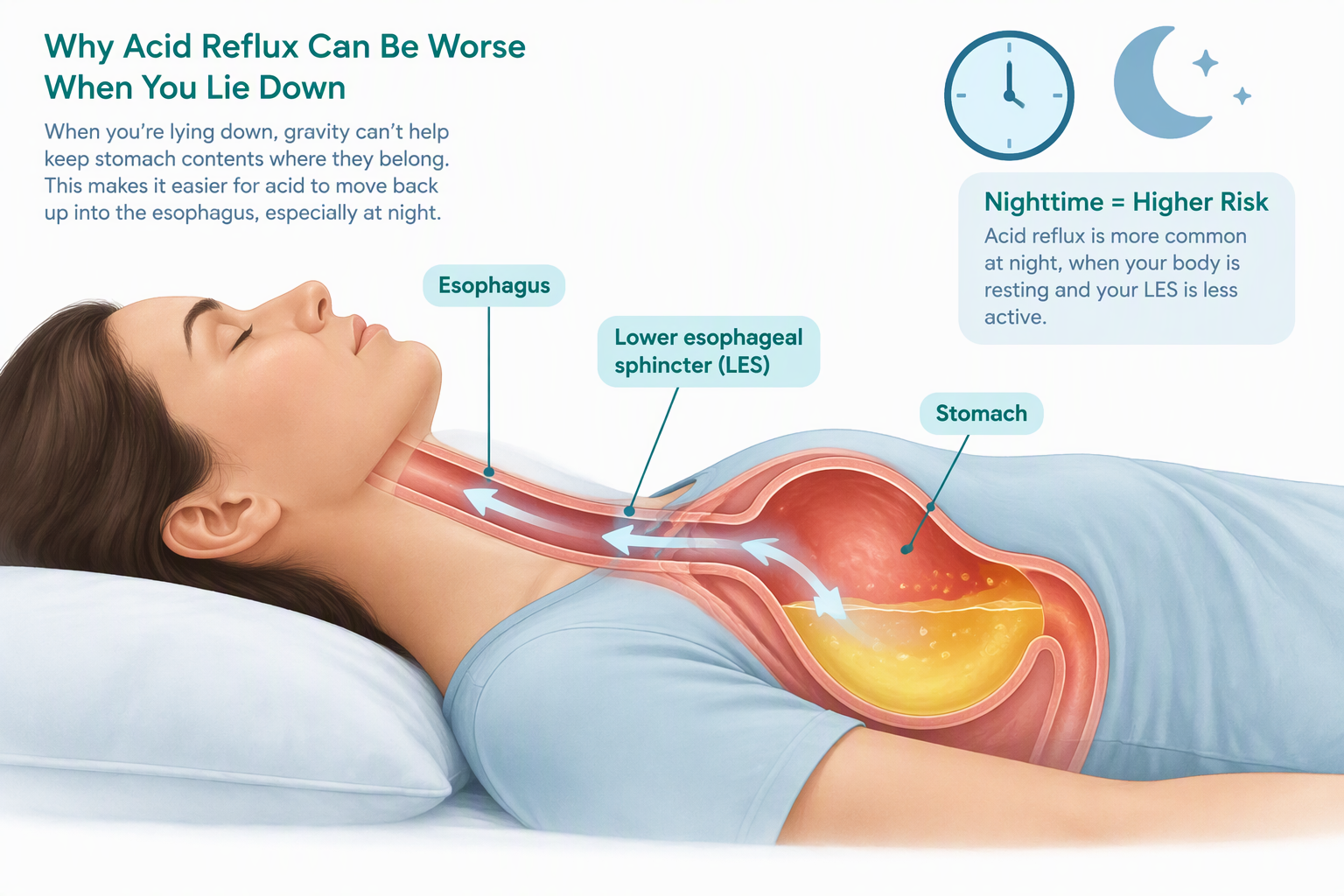
Nighttime acid reflux often feels worse because lying down removes gravity's help in keeping stomach contents below the lower esophageal sphincter (LES), the valve-like muscle between the stomach and esophagus. Acid can travel upward more easily and irritate the esophagus for longer, so acid reflux at night may become noticeable soon after you get into bed.
Common signs include:
- Heartburn or burning behind the breastbone
- Regurgitation, a sour taste, or fluid reaching the throat
- Coughing, throat irritation, or a hoarse voice
- Discomfort that wakes you or disrupts sleep
Sleep can slow acid clearance because swallowing and saliva production decrease during sleep. Swallowing stops during sleep, so the wave that normally clears acid is not triggered, and nighttime heartburn can last longer than daytime symptoms (source).
A large dinner or snack close to bedtime adds another layer. A full stomach creates more pressure near the LES and leaves more stomach contents available to reflux once you lie flat. Food and drink triggers differ from person to person, but late meals combined with a horizontal position are a common after-dark pattern.
Some physical factors raise the likelihood of nighttime GERD. Excess abdominal weight and pregnancy can increase pressure on the stomach, while a hiatal hernia, in which part of the stomach moves through the diaphragm, can weaken the barrier against reflux. Smoking and alcohol may aggravate symptoms for some people.
One episode after a heavy late meal differs from recurring nocturnal GERD symptoms. Repeated waking with heartburn, sour taste, cough, or hoarseness may point to gastroesophageal reflux disease (GERD), also called nocturnal GERD when symptoms regularly disturb sleep. The full acid reflux picture helps put these recurring patterns in context.
What causes acid reflux at night, then, is the combination of position, a full stomach, and slower clearance, which is why acid reflux gets worse when you sleep and why GERD symptoms at night, sometimes called nocturnal acid reflux or nocturnal gastroesophageal reflux, feel different from daytime episodes.
How Can You Set Up Your Bed Tonight?

Because lying down makes reflux more likely, a stable upper-body incline, left-side sleeping, and less pressure at your waist can reduce the chance of reflux reaching your esophagus overnight. This is a practical way to ease heartburn during sleep, though frequent, severe, or worsening symptoms still need medical assessment.
Try this bedtime setup:
- Elevate your upper body gradually. Head-of-bed elevation means raising the head of the bed 6 to 8 inches with secure bed risers or blocks (source). A wedge pillow can also create a gradual, stable incline that supports your upper body. Raising the head of your bed helps gravity keep stomach contents down rather than lifting only your head.
- Sleep on your left side. Relief on the left side may come from the stomach’s position relative to the esophagus, and a 2022 systematic review puts head-of-bed elevation, a longer dinner-to-bed gap, and left-side sleeping first in line for nighttime reflux (source). Right-side sleeping can lead to more reflux episodes for some people, so treat this as a comfortable trial rather than a guarantee. A pillow between your knees or behind your back can help you stay in place.
- Remove pressure around your waist. Loose pajamas can be more comfortable than tight waistbands, shapewear, or belts, which may increase pressure on your abdomen.
Avoid stacking ordinary pillows under your head and shoulders. They can bend your torso forward at the waist and create a steep head-only lift, which may work against you. If risers or a wedge are not available tonight, aim for the gentlest, best-supported upper-body slope possible.
These changes are the first half of sleeping well with GERD. Dinner and medicine timing are the rest.
Sleep positions for GERD come down to two rules: an incline and your left side, since right-side sleeping and reflux go together for many people.
That is the short version of how to sleep with GERD, and the sleeping position for acid reflux that most people settle on is left side, head raised.
How Can You Change Your Evening Routine?

Alongside changes to your sleep setup, finishing dinner several hours before bed can give your stomach more time to empty before you lie down. The ACG guideline suggests avoiding meals within 2 to 3 hours of bedtime (source). Treat that window as a flexible target, not an all-or-nothing rule. An after-work meal or a modestly later bedtime may create enough space on busy evenings.
A smaller, satisfying dinner is often easier on nighttime symptoms than saving most of the day's food for late evening. Eat slowly, and if you need a snack, have it early enough to preserve the three-hour buffer. The dinner choices that come back at bedtime differ from person to person, so test one suspected trigger at a time instead of cutting several foods at once.
A calmer evening routine can include:
- Hydrating earlier: Drink regularly throughout the day, then sip with dinner as needed. Large amounts of water, tea, alcohol, or other drinks in the hour before bed can leave your stomach uncomfortably full when you recline.
- Pausing after meals: Give yourself a calm transition rather than moving directly from dinner to bed. Quiet reading, slow breathing, or another relaxing activity can help when stress worsens heartburn or delays sleep.
- Keeping sleep times steady: Similar bedtimes and wake times make the routine easier to maintain, including during hectic workweeks.
- Noticing patterns without blame: Track whether heartburn after late-night eating, oversized meals, heavy evening drinks, stressful nights, or irregular sleep lines up with coughing, sour taste, hoarseness, or waking discomfort.
Change one routine factor at a time for several nights so you can see what helps. Persistent or worsening nighttime symptoms, especially when sleep is regularly disrupted, are worth noting in your symptom pattern.
Heartburn at night usually has an evening cause, so acid reflux triggers after dark get the first look before acid reflux treatment changes.
How Can You Test Your Dinner Triggers?
A 7- to 14-day food and symptom diary can show whether heartburn after late-night eating is tied to dinner, bedtime, or both. Keep your usual evening routine reasonably steady at first, creating a useful baseline without cutting out foods you may tolerate.
Each evening, note:
- Dinner and drinks: Foods, approximate portions, dinner size, fat content, alcohol, carbonated drinks, and coffee after dinner.
- Timing: Dinner time, bedtime, the gap before bed, and whether you lie down soon after eating.
- Symptoms: Heartburn, sour taste, regurgitation, cough, throat irritation, hoarseness, sleep disruption, symptom onset, severity, and nighttime awakenings.
- Context: Stress, an unusually late bedtime, and reflux-medication timing.
The full trigger-food list lives on the trigger-foods page. For nighttime symptoms, look for repeat patterns involving a larger or richer dinner, alcohol, coffee after dinner, or too little time between eating and bed.
Test one suspected factor at a time for several comparable dinners. For example, choose water instead of alcohol while keeping the meal and dinner-to-bed interval similar. If symptoms improve, reintroduce a normal portion when you feel comfortable. A repeatable change is more useful than one difficult night, and tolerated foods can remain in your routine.
Frequent, severe, or sleep-disrupting symptoms despite these adjustments should be recorded in your diary.
How Should You Time Reflux Medicine?

Alongside the dinner patterns you track, take reflux medicine exactly as directed on the prescription or package label, or as a pharmacist advises. Timing can affect symptom control, but recurring nighttime reflux is not a reason to double doses, add medicines, or change a prescribed schedule without clinical guidance.
PPIs are very effective for daytime symptoms but give more limited relief at night, and adding a bedtime H2 blocker has not been shown to help, which is why timing and the choice of medicine matter more than the dose. Which reflux medicine works at night can help explain why medicine types and schedules are not interchangeable.
Nighttime episodes can be difficult to control. Avoid repeated over-the-counter changes, particularly when gastroesophageal reflux disease is possible.
A few notes can make a clinician or pharmacist conversation more useful:
- Medicine details: The name, dose, and time you take it.
- Symptom pattern: Whether symptoms follow dinner, begin after you lie down, or wake you overnight.
- Associated symptoms: Coughing, a sour taste, hoarseness, or disrupted sleep.
- Recent changes: Missed doses, new medicines, or worsening symptoms.
Bring this record to your appointment or pharmacy conversation so the treatment plan can be considered alongside your nighttime pattern.
How Are Reflux and Sleep Apnea Connected?
Because nighttime symptoms can have more than one cause, acid reflux and sleep apnea can disrupt sleep in similar ways, but one does not automatically explain the other. Nighttime GERD can bring heartburn, regurgitation, a sour taste, cough, hoarseness, choking sensations, and frequent awakenings. Obstructive sleep apnea involves repeated upper-airway blockage during sleep, which can cause breathing pauses, gasping or choking awakenings, and unrefreshing sleep.
Refluxed stomach contents can irritate the throat and voice box, leading to throat clearing, coughing, wheezing, or a choking feeling at night. Sleep apnea, by contrast, occurs when the upper airway narrows or collapses while you sleep, but throat symptoms cannot prove that reflux causes apnea or that apnea causes reflux, even though acid reflux and sleep apnea may occur together.
Sleep disruption can also intensify symptoms. Reflux discomfort may interrupt your sleep, while short or poor-quality sleep can make the esophagus more sensitive to acid and may prolong acid exposure. How poor sleep affects digestion can help explain why digestive symptoms may feel worse after a rough night.
Not every awakening comes from reflux, and some reflux episodes cause no noticeable symptoms at all. A cough, choking episode, or poor night’s sleep can have several causes, so a symptom and sleep log may help you spot patterns without identifying the cause.
Assessment is important when nighttime symptoms include:
- Loud, habitual snoring
- Witnessed breathing pauses
- Repeated gasping or choking awakenings
- Marked daytime sleepiness
- Persistent nighttime cough or choking despite earlier dinners and changes to your evening routine
Sorting out reflux, sleep apnea, and other possible causes matters when symptoms continue, because each may need different care.
Sleep and GERD feed each other, so sleep disturbance from reflux and reflux-related awakenings are worth tracking as their own line in your diary.
When Should Nighttime Reflux Be Assessed?
Recurring nighttime acid reflux merits assessment when it repeatedly wakes you, continues after a short, consistent trial of routine changes, or leaves you tired, unfocused, or less able to enjoy daily life. An occasional flare after a late, heavy meal may improve with earlier dinners, left-side sleeping, and bed elevation. Repeated nighttime heartburn, however, can signal nighttime GERD that needs a closer look.
Prompt assessment is important when symptoms of acid reflux at night include:
- Swallowing changes: Trouble or pain with swallowing, or a sensation that food is sticking.
- Vomiting or bleeding: Persistent vomiting, blood in vomit, or material that resembles coffee grounds.
- Bowel or weight changes: Black stools or unexplained weight loss.
- Chest or breathing symptoms: Chest pain or shortness of breath. New or severe chest pain needs urgent care, particularly when it occurs with other symptoms.
Persistent nocturnal GERD symptoms may inflame or injure the esophagus, the tube that carries food to the stomach. More severe or long-lasting GERD can be associated with erosive esophagitis and Barrett's esophagus. Erosive esophagitis itself raises the chance of Barrett’s developing later, which is why persistent nighttime symptoms deserve assessment (source).
Chronic regurgitation, cough, wheezing, hoarseness, or worsening asthma also deserve a clinician's attention. These symptoms do not confirm gastroesophageal reflux disease, but they should not be dismissed (source).
A clinician may review medications, meal and symptom timing, sleep disruption, and a food, symptom, and sleep log. Depending on the pattern, testing may include upper endoscopy or impedance-pH monitoring, which tracks acid, non-acid, and gas reflux and links episodes with symptoms.
Trigger tracking can reveal patterns, but it should never delay prompt care. If nighttime reflux keeps returning despite practical changes, make a routine appointment.
Nighttime GERD symptoms that persist mean nocturnal esophageal acid exposure is continuing, and late-night meals and reflux are the first pattern a clinician will ask about.
GERD at night, nocturnal reflux, acid reflux during sleep: whatever the label, GERD sleep problems that outlast these changes are the cue to book, and how to stop acid reflux at night becomes a clinical question.
Nighttime Acid Reflux FAQs
These nighttime acid reflux FAQs address common concerns about symptoms, sleep, evening meals, and when recurring discomfort may need more attention. The answers can help you spot patterns and consider practical next steps.
1. Can Nighttime Reflux Cause a Sore Throat?
Yes. Repeated reflux while you’re lying down can expose the esophagus and throat to stomach acid, causing irritation and slower acid clearance. A sore throat may occur with regurgitation, a sour taste, hoarseness, coughing, or a lump-in-the-throat feeling, even when you do not notice burning heartburn.
Reflux is not the only possible cause. Infections, allergies, postnasal drip, and voice strain can also lead to throat pain. Seek assessment if symptoms persist, recur often, become severe, or include difficulty swallowing.
2. Can Nighttime Reflux Damage Your Teeth?
Repeated nighttime regurgitation can expose your teeth to stomach acid for longer, since esophageal acid exposure may clear more slowly during sleep. Over time, frequent reflux may wear down protective enamel, unlike an occasional episode. If you often wake with a sour taste, tooth sensitivity, or regurgitation, discuss reflux management with your clinician and schedule a dental evaluation. A dentist can check for erosion and suggest appropriate ways to protect your teeth.
3. Can Pregnancy Worsen Nighttime Acid Reflux?
Pregnancy can make nighttime acid reflux more common because hormones relax the valve between the stomach and esophagus, while the growing uterus increases pressure on the stomach. Lying down may make heartburn, a sour taste, or a chronic cough more noticeable (source). Smaller evening meals, staying upright after dinner, elevating the head of your bed, and sleeping on your left side may help. Discuss new, severe, or persistent symptoms with your prenatal clinician, and ask an obstetric clinician or pharmacist before changing reflux medicine.
4. Can Nighttime Reflux Cause Coughing?
Yes. Acid reflux can reach your throat when you lie down, irritating the upper airway and causing coughing, choking, a sour taste, hoarseness, or a lump-in-the-throat feeling. It can also worsen wheezing or asthma symptoms, and the cough itself may further disturb sleep.
A chronic cough is not always caused by reflux. Coughing after late meals or with heartburn, regurgitation, or a sore throat can point to reflux, but colds, postnasal drip, allergies, smoking, and respiratory conditions are also possible. Get medical assessment if the cough recurs, worsens, affects breathing or sleep, or comes with trouble swallowing.