


Cutting out gluten, dairy, and every food that causes a little gas is not a practical gut health diet for most people. A steadier approach adds plant variety, fiber, fermented foods when tolerated, and regular meals while limiting the foods and portions that repeatedly worsen your symptoms. Small, gradual changes can support digestion without turning family meals or workday snacks into a restrictive project.
Claims about a single superfood, probiotic, or cleanse overlook how differently bloating, constipation, diarrhea, and heartburn can respond to the same meal. NIDDK notes that dietary changes may help some people manage IBS, while a food and symptom diary can show whether onions, garlic, rushed eating, or large late meals line up with discomfort. Fiber works best when you increase it gradually and track how your body responds over several meals.
Gut Health Diet Key Takeaways
- Build meals around varied plant foods instead of relying on a single gut-health food.
- Increase fiber gradually to reduce the chance of gas, bloating, or stool changes.
- Choose soluble fiber sources like oats, beans, lentils, apples, and berries.
- Add fermented foods in small servings and assess your personal tolerance.
- Limit ultra-processed foods, excess alcohol, large fatty meals, and sugar alcohols when symptoms recur.
- Keep meal timing workable to avoid long gaps followed by rushed, oversized meals.
- Track meals, symptoms, stool changes, sleep, and stress to identify repeat patterns.
What Does a Gut Health Diet Include?
A gut health diet centers on plant variety, enough fiber, some fermented foods, fewer ultra-processed foods and less alcohol, plus regular meals. These habits, close to a Mediterranean diet pattern, matter because diet can influence the gut microbiome, the community of microbes living in your digestive tract, its microbial diversity, and the healthy gut flora that crowd out harmful bacteria (source).
Gut health from the ground up puts those principles into everyday terms.
A practical starting point includes:
- A mix of vegetables, fruits, beans, lentils, whole grains, nuts, and seeds instead of relying on one “superfood.”
- Fiber-rich foods such as oats, barley, quinoa, brown rice, legumes, and produce, added gradually if you tend to get gas or bloating.
- Prebiotic fibers from foods like onions, garlic, leeks, asparagus, bananas, apples, berries, broccoli, and leafy greens. These fibers reach the colon and feed certain gut bacteria.
- Fermented foods, including yogurt with live cultures, kefir, sauerkraut, kimchi, fermented pickles, miso, tempeh, natto, and low-sugar kombucha.
- Meals eaten at reasonably consistent times, which can help prevent long gaps followed by rushed, oversized meals.
The NHS also identifies fiber-rich choices, fluids, and regular eating as useful foundations for digestion (source).
This page is a map of what to eat for gut health, with guidance on fiber, foods to add or limit, meal timing, and symptom tracking. Since a food that helps one person may trigger bloating in another, gradual changes give you a clearer picture of what works.
How Much Fiber, and From Where?
Within a gut health diet, fiber is the most useful lever because it feeds gut bacteria, which is the heart of how food feeds your gut microbiome, and can help shape stool (source). Soluble fiber holds water and can make stools softer, while insoluble fiber adds bulk and may support regular bowel movements. Some prebiotic fibers and resistant starches are fermented into short-chain fatty acids (SCFAs) that nourish the intestinal mucosal lining, and a high-fiber diet is the most reliable way to raise gut bacterial diversity. MedlinePlus recommends getting fiber from plant foods (source).
Useful food choices include:
- Oats, lentils, and chickpeas: These provide beta-glucan, resistant starch, and other complex carbohydrates.
- Almonds, chia seeds, and flaxseeds: These add fiber and polyphenols, plant compounds that gut bacteria can use.
- Olive oil, avocado, nuts, seeds, and fatty fish: Salmon, mackerel, sardines, chia, flax, and walnuts also provide omega-3 fats that may help reduce gut inflammation.
Increase fiber gradually over several weeks, especially with bloating, constipation, diarrhea, reflux, or a restricted eating pattern. Supplements are a backup when food changes are not enough, not the starting point.
How Much Fiber You Need
Most adults fall short of the daily fiber target. With fiber, the gap matters more than reaching a number overnight. MedlinePlus puts the adult target at 21 to 38 grams a day depending on age and sex, yet a rapid increase can bring on gas, bloating, or changes in stool.
Bring fiber into meals gradually with familiar foods:
- Fruit and vegetables
- Beans and whole grains
- Nuts and seeds
Start with one added serving, then give your gut several days to adjust before increasing more. Needs also vary by age, and how much fiber you need for digestion covers age-based targets and ways to raise fiber without worsening bloating.
High-Fiber Foods
Fiber-rich eating is easiest to sustain when familiar foods appear across your meals, rather than relying on a single “perfect” ingredient. The best foods for gut health include a mix of fiber sources, with portions that fit your digestion and routine.
Useful options include:
- Beans and lentils: Add them to soups, grain bowls, tacos, or salads.
- Whole grains: Choose oats, brown rice, or whole-wheat bread.
- Vegetables: Keep frozen options ready for busy weeknight meals.
- Fruit with skin: Apples, pears, and berries make practical snacks.
- Nuts and seeds: Stir small amounts into yogurt, oatmeal, or salads.
If gas or bloating is already bothering you, start with modest portions and build gradually. The high-fiber foods for gut health that fit most meals come with portion ideas so you can build gradually.
Soluble Fiber Foods
Soluble fiber dissolves in water to form a gel in your digestive tract. This gel can soften stool and give certain gut bacteria material to ferment, which may help when constipation or irregular bowel habits are part of the picture.
Common sources include:
- Oats, such as oatmeal at breakfast
- Beans and lentils in soups, salads, or grain bowls
- Fruit, including apples, citrus, berries, and pears
Use these foods in familiar meals instead of changing several meals at once. A fast increase in fiber can bring on gas or bloating, especially if your usual diet is low in fiber.
Serving ideas, a fuller food list, and guidance on who may benefit most are covered in soluble fiber foods.
Insoluble Fiber Foods
Insoluble fiber gives stool more bulk and can move food through your digestive tract faster. It may be useful when constipation is the main issue, but a large increase can worsen bloating or feel rough during loose stools.
Common food sources include:
- Whole grains: Brown rice, whole-wheat bread, and bran cereal.
- Vegetable skins: Potato skins and the outer layers of many vegetables.
- Nuts: Almonds, peanuts, and other nuts that fit easily into snacks or meals.
Try one familiar source in a modest portion before adding more. Insoluble fiber foods range from wheat bran to vegetable skins, and knowing when they help and when easing back feels better is the point of that page.
Fiber Supplements
Fiber supplements can fill a gap when high-fiber foods worsen symptoms, do not fit a busy routine, or are not enough to support regular bowel habits. They are not interchangeable. More-fermentable fibers can create more gas, which matters when bloating is already disruptive.
Common options differ in how they behave:
- Psyllium: Often used to support stool regularity.
- Methylcellulose: Usually less fermentable and may be easier to tolerate for some people.
- Partially hydrolyzed guar gum (PHGG): Another option that may suit people who do not tolerate psyllium well.
Start with a small amount and change only one thing at a time. Choosing a fiber supplement comes down to matching the fiber type to your symptom, without assuming one fiber suits every gut.
Psyllium Husk
Psyllium is the fiber supplement with the strongest evidence for easing IBS symptoms. NIDDK notes that soluble fiber can help some people with IBS, and psyllium is a common option. Mixed with water, it forms a gel that can soften hard stools while giving loose stools more shape, which may help when symptoms alternate between constipation and diarrhea.
Track stool changes as you adjust the dose because adding fiber too quickly can cause gas or bloating, especially when fluid intake is low. If psyllium repeatedly worsens your symptoms, methylcellulose or partially hydrolyzed guar gum may be options to discuss with a clinician or dietitian.
Preparation, dosing pace, and possible side effects are covered in psyllium husk for digestion.
What to Add and What to Limit
Beyond fiber supplements, fermented foods and practical snacks are easy foods for a healthy gut to add, while foods to limit usually come down to portion size and frequency rather than strict bans. USDA ARS recommends a varied eating pattern centered on plant foods (source).
Easy additions include:
- Fermented foods: Try yogurt, kefir, or refrigerated, unpasteurized fermented vegetables if they agree with you. Pasteurized versions may not retain live cultures, and not every fermented food is a proven probiotic.
- Polyphenol-rich snacks: Berries, walnuts, almonds, green or black tea, and dark chocolate contain plant compounds that gut bacteria can metabolize, but the effect depends on the rest of the diet and your tolerance.
Limit ultra-processed foods, refined grains, artificial sweeteners, added sugar, and excessive alcohol when they crowd out whole foods, and treat bone broth, collagen, and antioxidant powders as optional rather than gut treatments, since these choices may affect microbial balance or the gut barrier. A food and symptom log can help you spot the portions and foods that fit your routine.
Fermented Foods
Fermented foods can add live microbes and natural acids to meals, but they are not a universal answer for bloating, constipation, or irregular bowel habits. Their effects are usually modest and depend on the food, the amount you eat, and your personal tolerance.
Common choices include:
- Yogurt
- Kefir
- Sauerkraut
- Kimchi
- Miso
Start with a small serving and notice how your body responds over several meals. Tangy, spicy, or salty options can trigger discomfort for some people, and some fermented products do not contain live cultures by the time you eat them.
Which ones carry live cultures, and how to add them without extra gas, comes down to fermented foods and what they do.
Foods to Limit
Some foods bad for gut health cause trouble mainly because of portion size, timing, and your personal sensitivity. Ultra-processed foods, alcohol, large high-fat meals, sugar alcohols, caffeine, and carbonated drinks can contribute to bloating, gas, loose stools, fullness, or heartburn.
Common triggers to watch for include:
- Ultra-processed foods: Packaged snacks and fast foods can crowd out fiber-rich choices.
- Alcohol and caffeine: Both may affect bowel habits or reflux for sensitive people.
- Large fatty portions: Heavy meals can worsen uncomfortable fullness or heartburn.
- Sugar alcohols and carbonated drinks: These may increase gas, especially when eaten or sipped quickly.
Portion guidance, symptom patterns, and realistic swaps appear in foods to limit for a calmer gut.
Carbonated Drinks
Sparkling water, soda, and diet soda all deliver carbon dioxide to the stomach, and how much of it arrives at once decides whether you feel refreshed or stretched. Sipped slowly, most of the gas escapes in the mouth. A large, cold, fast drink sends more of it down, and that is when belching, bloating, and a tight upper belly follow.
Reflux and IBS change the picture. A burp can carry acid upward, and a gas-sensitive gut can read normal stretch as pain, so the same drink that a friend tolerates can bother you. Plain sparkling water is close to still water for the gut, while sugar and sweeteners do most of the harm in soda. The details, including who does fine with fizz, are in what carbonation does in your stomach.
Sprite for an Upset Stomach
Sprite is the drink many people reach for when nausea hits, and it does offer something: a cold, sweet, mild sip that is easy to keep down while a wave passes. What it does not offer is rehydration. It is low in sodium and high in sugar, so it replaces little of what vomiting or diarrhea take out, and a full glass can make loose stools worse.
Small sips are fine as comfort. Once fluid loss is the real problem, water, broth, and a proper rehydration drink take over, and children and older adults reach that point sooner. When to lean on it and when to stop is covered in sprite for an upset stomach.
Coke and Diarrhea
Flat Coke for diarrhea is an old family remedy, and the reasoning behind it is thin. Letting the fizz out removes the belching and bloating, but the sugar load and caffeine stay, and both push fluid through the bowel faster. The sodium a recovering gut needs is barely there.
Diet versions bring their own problem, since sugar alcohols and some sweeteners loosen stools in sensitive people. The better choices are plain: water in small, frequent sips, broth for the salt, and a rehydration drink when the losses are heavy. Why the myth persists and what to drink instead is the subject of flat coke and diarrhea.
Portable Snacks
Many packaged snacks contain little fiber and are high in added sugar or fat, so they may not keep you full or support regular bowel habits. Gut healthy snacks are more satisfying when they combine a fiber-rich food with protein or fat.
Easy options for a desk, car, or carry-on include:
- Banana with peanut butter: A filling choice between meetings or errands.
- Plain oatmeal cup with walnuts: Choose an unsweetened cup when hot water is available.
- Whole-grain crackers with a small cheese portion: A more balanced travel option than chips.
If bloating is a concern, try one familiar snack at a time instead of adding several higher-fiber foods on the same day. A longer list of portable gut-friendly snacks includes portion ideas.
Timing, Triggers, and Tracking
Beyond the foods and snacks you choose, the same food can affect you differently based on meal timing, portion size, eating pace, stress, sleep, and the rest of the meal. Stress belongs in any food diary too, because how stress shows up in the gut can mimic a food reaction. FODMAP sensitivity is a common pattern behind food triggers in IBS, and a food and symptom diary can help show whether it fits your symptoms (source). The National Institute of Diabetes and Digestive and Kidney Diseases notes that dietary changes may help some people manage IBS symptoms (source).
Track meals, bowel movements, bloating, gas, reflux, and rushed eating. Eating slowly and chewing thoroughly may reduce swallowed air.
- Breakfast: Oatmeal with berries, seeds, walnuts, and plain yogurt with live cultures.
- Lunch: Lentils or chickpeas with vegetables and whole grains.
- Dinner: Salmon, chicken, or tofu with vegetables, rice, potatoes, or fermented vegetables.
Let your symptoms, goals, and preferences, including dairy-free, gluten-free, or vegetarian eating, shape each gradual food experiment.
Meal Timing
Regular meal timing can help keep your digestive rhythm more predictable, especially when bloating, heartburn, or irregular bowel habits show up on rushed days. Long gaps between meals can leave you very hungry and more likely to eat quickly or heavily. Late, large meals may also feel uncomfortable when you are trying to rest.
A workable pattern matters more than eating by a rigid clock. Notice whether skipped breakfasts, working through lunch, or meals close to bedtime line up with symptoms. Small changes that fit your workday and family routine are easier to maintain and assess over several days.
A realistic schedule can make those adjustments feel more manageable with gut-friendly meal timing.
Onion and Garlic Sensitivity
Onion and garlic often trigger digestive symptoms because their fructans, a type of carbohydrate, ferment quickly in the gut. If you have IBS or a sensitive digestive system, that process can lead to gas, bloating, cramping, or changes in bowel habits, especially when a meal includes several high-fructan foods.
The onion and garlic FODMAP issue does not mean flavor has to disappear from your meals. Garlic-infused oil adds garlic flavor without the same fructans because fructans do not dissolve in oil. Green onion tops and chives may also be easier to tolerate for some people.
A meal and symptom log can help you tell a one-time reaction from a repeat pattern. Practical swaps, portion ideas, and reintroduction guidance are covered in onion and garlic sensitivity.
FODMAP Reintroduction
The low-FODMAP restriction phase is temporary, not a permanent way to eat. It can reduce symptoms enough to help you identify which FODMAP groups, serving sizes, and food forms you tolerate instead of avoiding a wide range of foods indefinitely. The National Institute of Diabetes and Digestive and Kidney Diseases notes that a low-FODMAP eating plan can help some people with IBS manage symptoms.
FODMAP reintroduction works best after symptoms have settled. Test one food group at a time, and use a food and symptom log to distinguish a response to the challenge food from discomfort related to stress, poor sleep, or an unusually large meal.
This process can broaden your eating pattern while limiting only the foods that consistently cause trouble. A clear order for reintroducing FODMAPs keeps each trial manageable.
Food and Symptom Diary
A food symptom diary can turn frustrating guesses into patterns you can test. One bloated afternoon may reflect a rushed lunch, poor sleep, stress, or the effect of several meals rather than a single food.
Over a two-week stretch, record details that help reveal repeat patterns:
- Meals and drinks: Note what you ate, approximate portions, and meal times.
- Bowel changes: Record timing, stool changes, urgency, constipation, or diarrhea.
- Symptoms and context: Track bloating, pain, gas, heartburn, stress, sleep, travel, and menstrual-cycle changes when relevant.
Review the full record before blaming the last food you ate. A simple format for keeping a food and symptom diary makes tracking manageable on busy days.
Hydration
Water is the quiet half of every fiber change. Fiber holds water to soften stool, so raising fiber without raising fluids is the most common reason a good diet change ends in harder stools and more bloating. Most of what you drink counts, and so does the water in fruit, vegetables, and soup.
Thirst and pale urine are better guides than a fixed number of glasses, and diarrhea is the one time plain water is not enough on its own. How much to drink, what counts, and when electrolytes matter are the subject of fluids and digestion.
How Food Feeds Your Microbiome
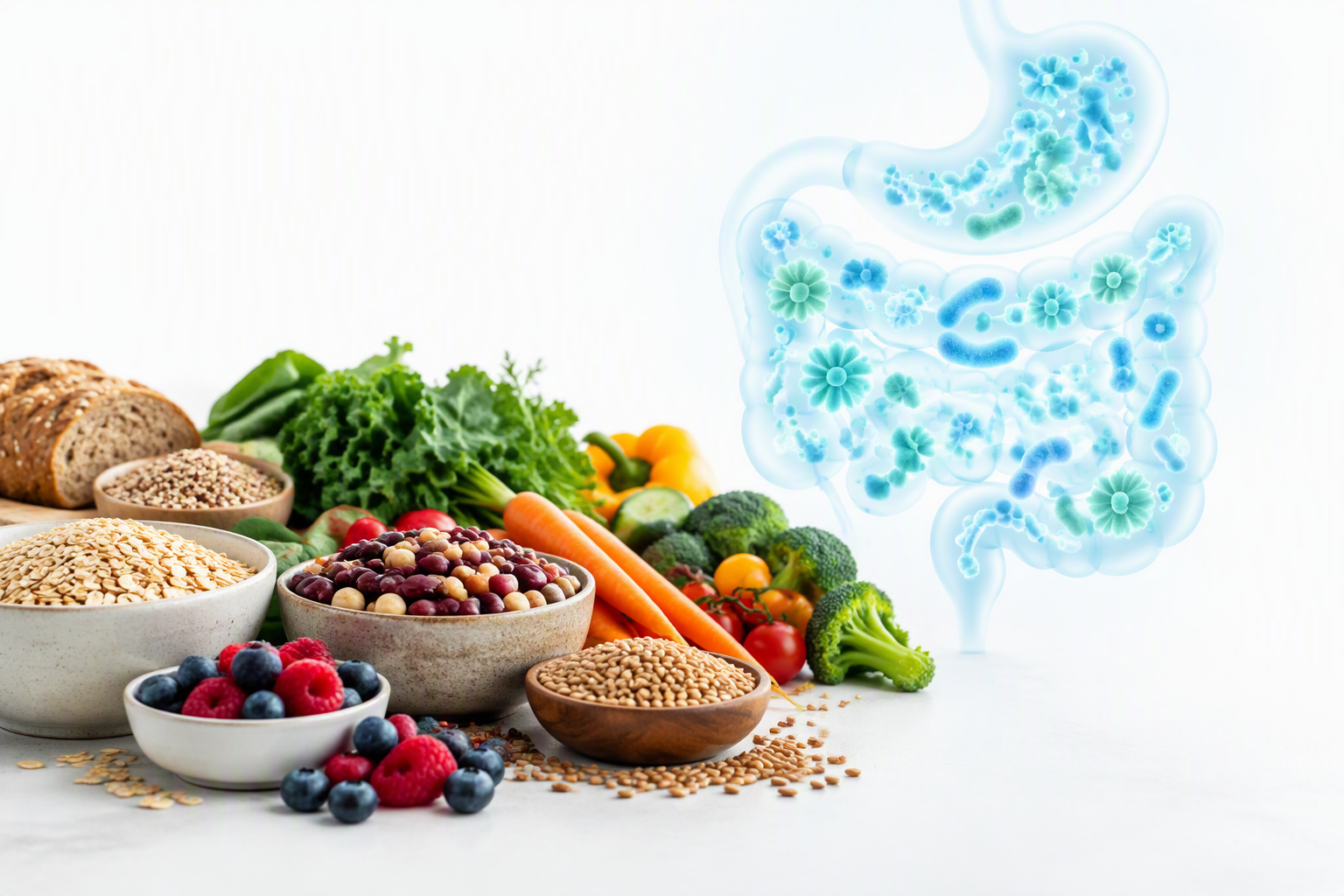
Behind the patterns a food and symptom diary can reveal, much of a gut health diet’s effect happens in the colon, where bacteria ferment fibers that reach it without being fully digested. That relationship also explains why a gradual increase in fiber often feels easier than adding several high-fiber foods at once.
Your gut microbiome responds to more than the food on your plate. Antibiotics, sleep, exercise, and stress all shift it, and gut health and mood run through the same microbes. The amount and type of fiber, your usual eating pattern, and your individual symptoms can all shape how a meal feels. That is why one person may feel more regular after beans or oats while another notices extra gas when introducing the same foods too quickly.
Rather than chasing a perfect menu, watch for patterns over several meals. Foods that help you feel comfortably regular are usually a better fit than foods that seem healthy but repeatedly leave you bloated.
Gut Health Diet FAQs
These FAQs cover common gut health diet questions, including everyday food choices, meal routines, and symptom-aware adjustments that can fit a busy life. They can help you sort through general guidance without assuming one eating pattern suits everyone.
1. Do You Need to Cut Out Gluten or Dairy for Gut Health?
Most people do not need to remove gluten or dairy to support digestive health. These restrictions matter for diagnosed celiac disease or lactose intolerance, but unnecessary removal can limit the plant-food variety that feeds your gut microbiome and gut bacteria. A food and symptom diary can help identify onion and garlic sensitivity and guide reintroduction instead of blanket rules. Focus on varied plant foods and fiber rather than a single superfood or automatic probiotic supplement, as USDA ARS notes.
2. What Are Signs of an Unhealthy Gut?
Bloating, gas, constipation, diarrhea, reflux, and changing bowel habits do not confirm an unhealthy gut or an imbalance in gut bacteria, though they can be frustrating. The microbiome supports digestion, immune function, metabolism, and mood, but symptoms may also stem from food choices, stress, medicines, infections, or conditions. Fermented foods and probiotic foods may suit some people yet worsen symptoms in others.
Track timing, duration, stool changes, meals, routines, and responses to gradual diet changes. Blood or black stools, unexplained weight loss, persistent vomiting, fever, severe or worsening abdominal pain, trouble swallowing, or a lasting unexplained bowel change need medical evaluation.
3. Can Probiotics Improve Gut Health?
Probiotics are live microorganisms that may support gut health, though results vary by strain, amount, and your symptoms. Probiotic foods can include plain yogurt with live and active cultures, kefir, kimchi, and sauerkraut when tolerated. Fermentation alone does not make a food a proven probiotic, and refrigerated, unpasteurized vegetables are more likely to contain live cultures than pasteurized versions. Start with a small portion, and remember that with supplements, a familiar name or high culture count does not show that a product will help your specific digestive concern.
4. When Should You See a Dietitian?
Persistent or severe digestive symptoms, unexplained weight loss, rectal bleeding, or a highly restricted diet need prompt clinical attention, not increasingly strict food rules. Once urgent causes are assessed, a registered dietitian can tailor digestive health changes for bloating, constipation, diarrhea, reflux, weight maintenance, and dairy-free, gluten-free, or vegetarian eating. They can also guide FODMAP reintroduction without automatically removing dairy, wheat, onions, acidic foods, or fizzy drinks. NIDDK notes that IBS eating plans should reflect personal symptoms.